
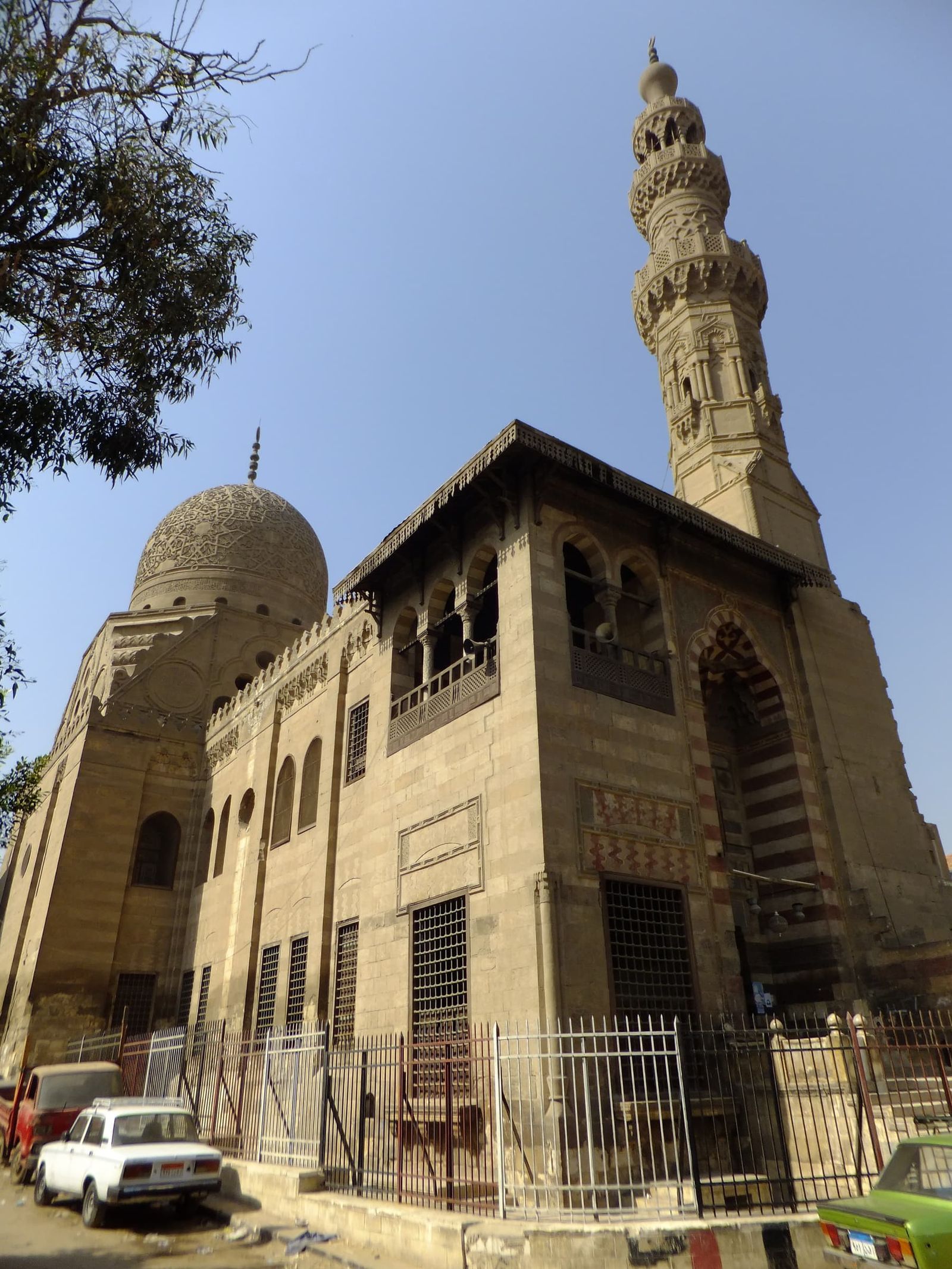
Funerary Complex of Sultan Qaytbay
The jewel of the Northern Cemetery — the carved stone dome pictured on Egypt's one-pound note.
A great patron's foundation
Sultan al-Ashraf Qaytbay came to the throne in 1468 at the age of fifty-four and ruled for nearly twenty-nine years, the second-longest reign of any Mamluk sultan, and he was one of the most prolific patrons of architecture in Mamluk history, building across Egypt, Syria and the Hijaz. His funerary complex in the Northern Cemetery, east of the medieval city, was one of his earliest commissions: work began around 1470 and the mausoleum was completed in 1474. The complex stands close to the shrine of the mystic Abd Allah al-Manufi, over whose tomb Qaytbay built a new dome in the same year.
A desert complex
Originally the complex covered a large walled area on the desert caravan routes leading to Syria and the Red Sea. Besides the surviving mosque-madrasa, mausoleum, sabil-kuttab and minaret, it included residences, a hostel for travellers, troughs for animals and gardens; one gate of the enclosure, Bab al-Gindi, still stands to the south of the mausoleum.
The dome and the interior
The complex is often considered the most accomplished monument of late Mamluk architecture. Its stone dome is carved with two superimposed patterns — a star pattern of straight lines laid over a network of undulating arabesques — a technical and artistic peak of Cairo's stone carving, and it is the image on the Egyptian one-pound note. The minaret rises in three elegant storeys, and the street façade combines the portal, the sabil-kuttab and the domed mausoleum in a carefully balanced composition. Inside, the mosque has the compact covered plan of the period, with a central space flanked by iwans, polychrome marble floors and panelling, a painted and gilded wooden ceiling and a lantern above. The mausoleum holds the sultan's tomb and stones said to bear the footprints of the Prophet, brought by Qaytbay from Mecca. A smaller domed mausoleum nearby, built by Qaytbay before he became sultan, now houses the tomb of the Ottoman-era Sufi Gulshani.
Exhibo editorial
Pull a one-pound note out of your wallet and there it is, the dome. In real life it is better: the carved stone looks soft, almost woven, two patterns laid one over the other like lace over silk, and in the late-afternoon light the whole surface seems to move. It may be the most beautiful thing in Cairo.
The setting is the other half of the experience. Around the complex the City of the Dead goes about its life — children, workshops, families living among the tombs — and inside, the mosque is cool, coloured and calm, a caretaker happy to show you the Prophet's footprints for a tip. Go with someone who knows the area, go in the afternoon, and give the dome the time it deserves.
How to find it
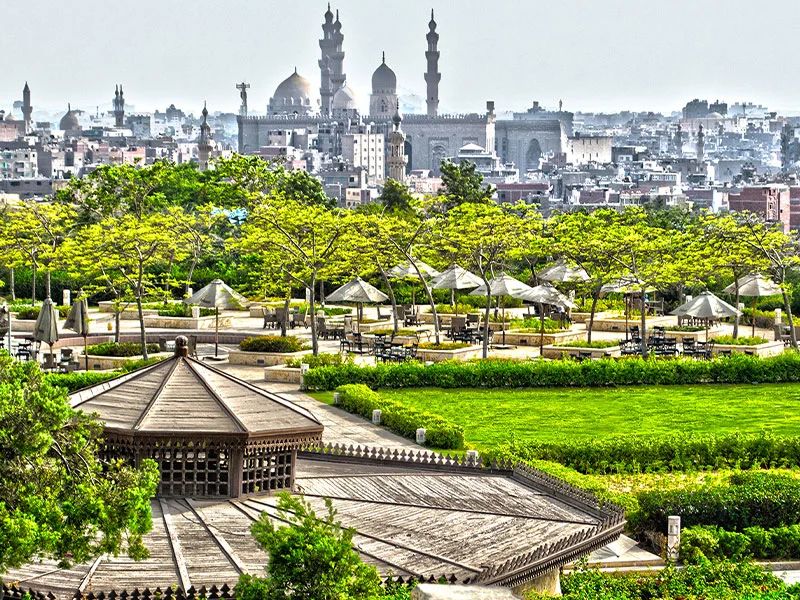
The complex stands in the Northern Cemetery east of the medieval city, best reached by taxi or ride-hailing to 'Masjid Qaytbay, al-Qarafa'. From Al-Azhar Park the minaret and dome are visible across the cemetery. Enter through the portal on the street; the mausoleum with the famous dome is on the east side of the mosque.
Similar places
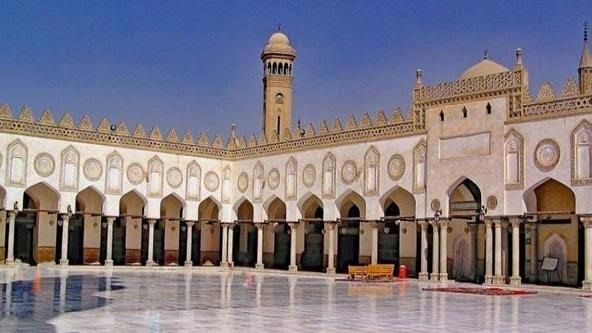
All places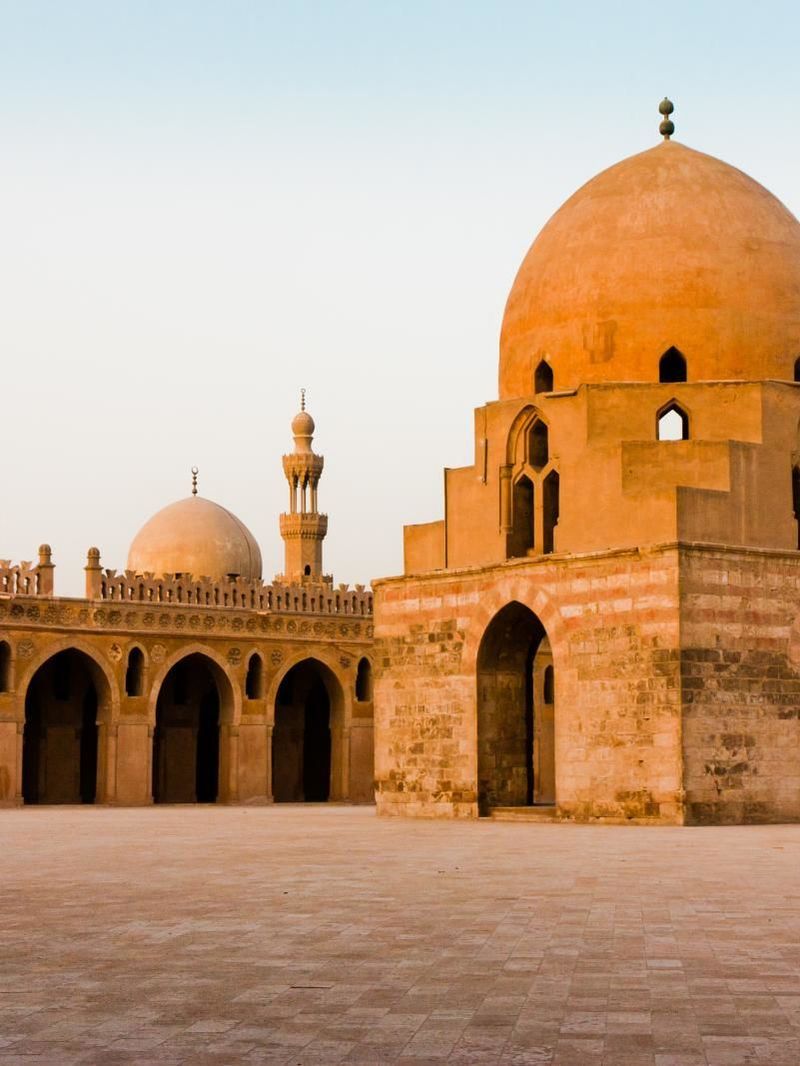
News by Exhibo
Editorial coverage on Exhibo
Unearthing the Golden City: Daily Life in Ancient Egypt
How a newly excavated workers' quarter reframes pharaonic history
A major survey travels to the West Coast, bringing ancient artefacts that shift focus from royal opulence to the daily lives of those who built the empire.
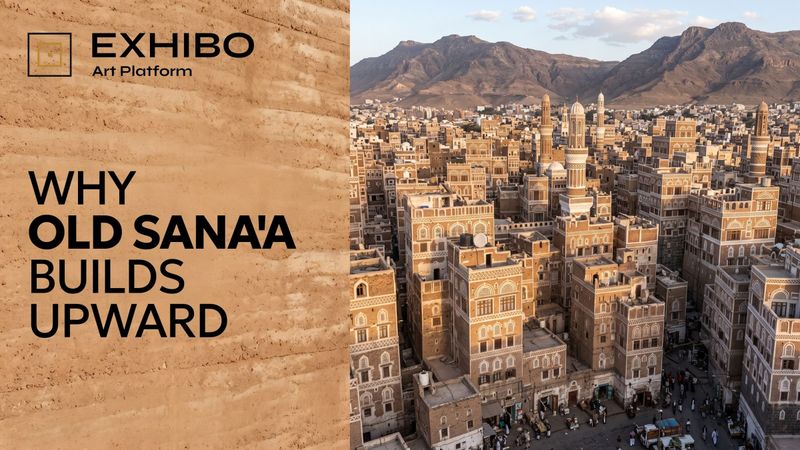
Why Old Sana'a Builds Upward
The tower houses of Old Sana'a rise five to nine storeys of stone and mud — and the usual reasons, defence and lack of space, are both too small.
In one of the oldest cities on earth, families live stacked from the animals on the ground floor to the poetry room at the top, in mud towers nine storeys high. Why Sana'a built vertically has half a dozen answers, heat least of all — and the system that raised the towers is the same one now dissolving them.
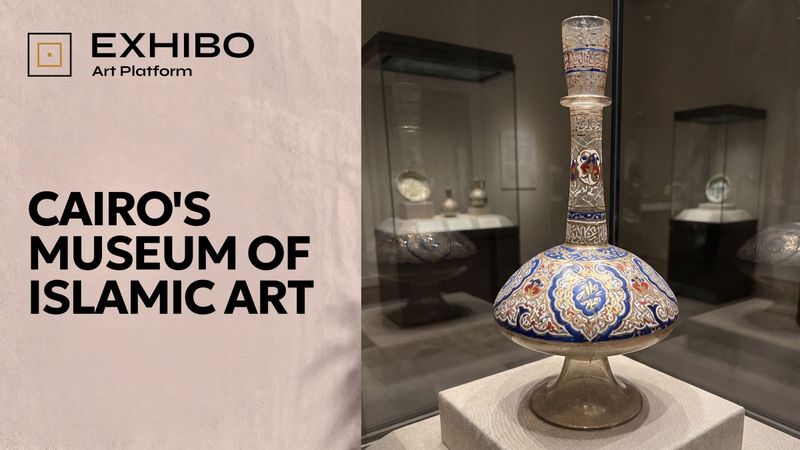
The Bottle That Was in Pieces on the Floor
A car bomb left one of the world's great collections of Islamic art in fragments on the floor. What the Museum of Islamic Art chose to do with the repair — mark it, rather than hide it — turns out to be the most quietly radical decision in the building.
Near the entrance of Cairo's Museum of Islamic Art stands an eight-hundred-year-old Syrian glass bottle with a small gold mark on its label. The mark does not mean the bottle is precious, though it is. It means it was broken — shattered on the floor by the 2014 bombing across the street, then patiently glued back into a single shape.