
Bab Zuwayla
Fatimid Cairo's last southern gate, crowned by two Mamluk minarets you can climb for a rooftop view of the old city.
The southern gate of Fatimid Cairo
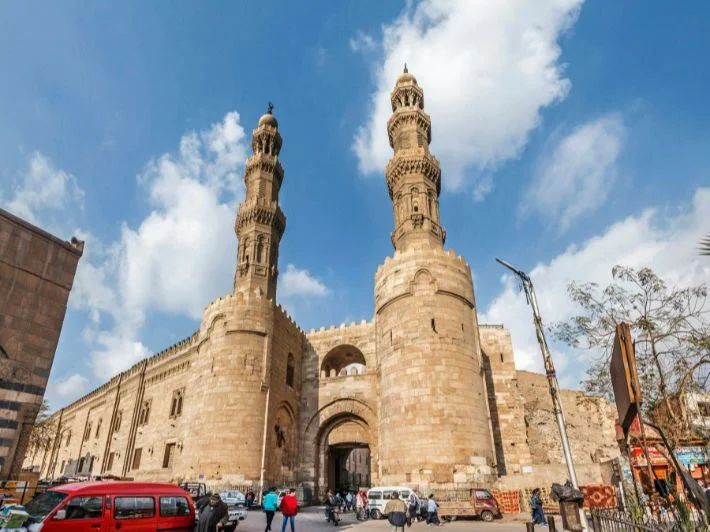
Bab Zuwayla is the last surviving southern gate of the walled Fatimid city of al-Qahira. It was built in 1092 by Badr al-Jamali, the Armenian-born commander and vizier of the caliph al-Mustansir, who rebuilt Cairo's fortifications in stone after a period of crisis; together with the northern gates of Bab al-Futuh and Bab al-Nasr, it is among the finest surviving examples of eleventh-century military architecture in the Islamic world. The gate is named after the Zuwayla, a Berber tribe from North Africa whose soldiers formed part of the Fatimid army and were quartered nearby. It consists of a deep vaulted passage flanked by two massive rounded towers, with a platform above from which the gate could be defended.
A stage for the city
For centuries Bab Zuwayla marked the southern end of the city's main street, the Qasaba — today's al-Muizz Street. Caravans set out from it, festivals and processions passed through it, and it was the site of public executions: in 1517 the Ottoman conquerors hanged Tumanbay II, the last Mamluk sultan, from its gate. Popular tradition associated it with the saint Mutawalli, whose presence was believed to inhabit the gate, and passers-by left nails, hair and pieces of cloth on its doors as votive offerings.
The minarets of al-Mu'ayyad
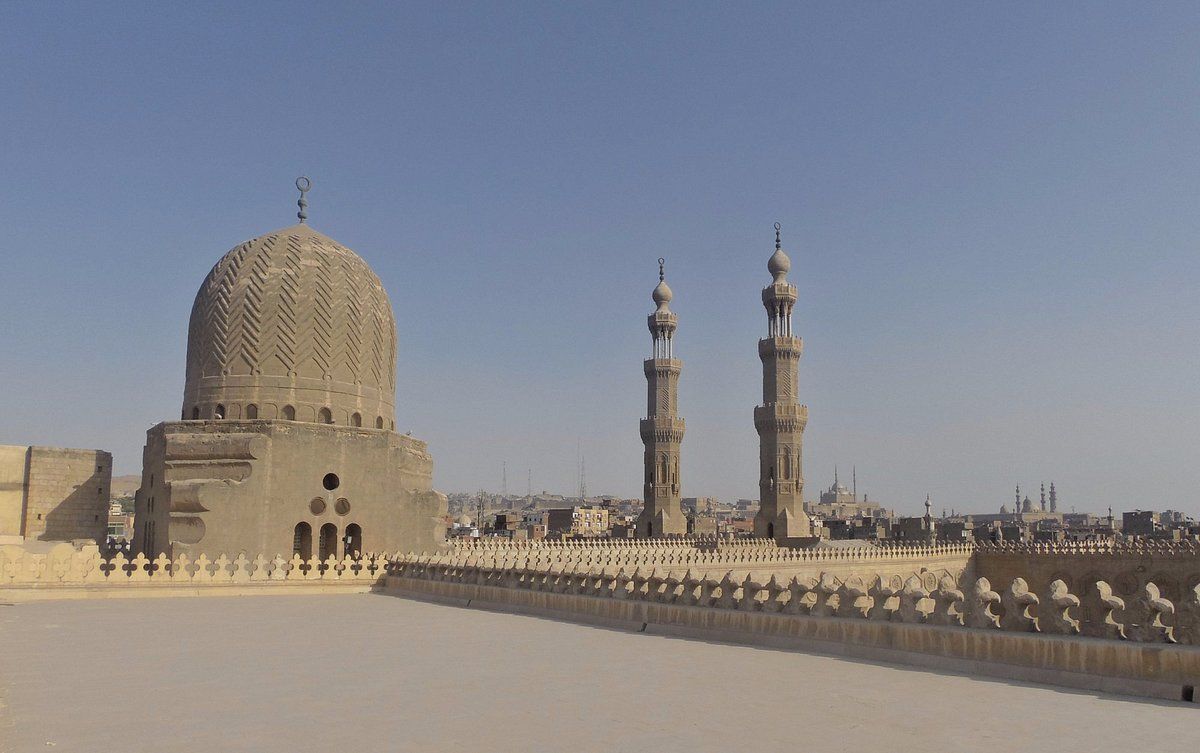
In 1415–1420 Sultan al-Mu'ayyad Shaykh built his great mosque against the inner side of the gate — on the site of the prison in which he had once been held, and where he had vowed to build a mosque if he survived. Uniquely, its two minarets were built on top of the Fatimid towers of Bab Zuwayla, giving the gate the silhouette it has today. Restored by the American Research Center in Egypt with Egyptian partners at the turn of the twenty-first century, the gate's interior, roof and minarets are open to visitors, who can climb up through the towers onto the minarets' balconies.
Exhibo editorial
From the street, Bab Zuwayla is a frown of stone: two blind towers, a dark mouth, the noise of the Tentmakers' market spilling through it. Then you climb. The stair goes up inside the Fatimid masonry, comes out on the roof, and continues up the Mamluk minaret until the whole old city is under you — domes, laundry, satellite dishes, the minarets of a dozen mosques at eye level.
It's the best cheap view in Cairo and one of the strangest buildings in it: a Fatimid gate wearing a Mamluk mosque's minarets like a crown it was never meant to have. Go late afternoon, when the muezzins start up around you and the light turns the stone the colour of honey.
Gallery
How to find it
Bab Zuwayla stands at the southern end of al-Muizz Street, where it meets the covered Street of the Tentmakers (al-Khayamiya); walk south from Al-Azhar Street past the al-Ghuri complex and you reach it in about five minutes. The ticket office is at the foot of the gate on the inner side, next to the Mosque of al-Mu'ayyad. Stairs inside the towers lead to the roof and then up to the minaret balconies.
Similar places
All places
News by Exhibo
Editorial coverage on Exhibo
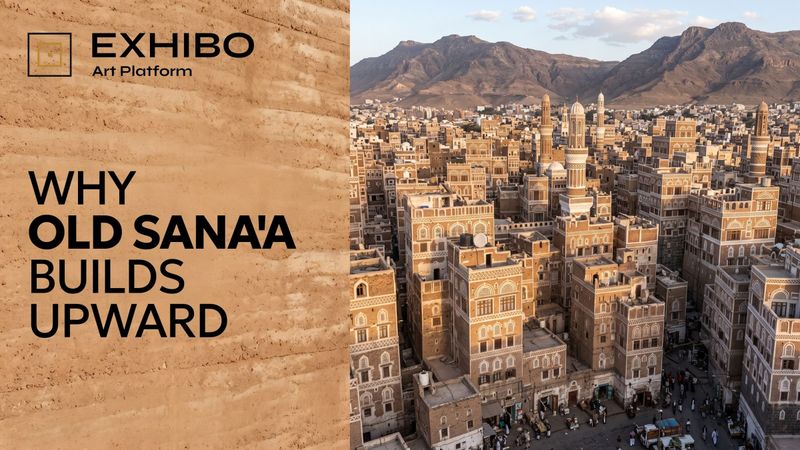
Why Old Sana'a Builds Upward
The tower houses of Old Sana'a rise five to nine storeys of stone and mud — and the usual reasons, defence and lack of space, are both too small.
In one of the oldest cities on earth, families live stacked from the animals on the ground floor to the poetry room at the top, in mud towers nine storeys high. Why Sana'a built vertically has half a dozen answers, heat least of all — and the system that raised the towers is the same one now dissolving them.
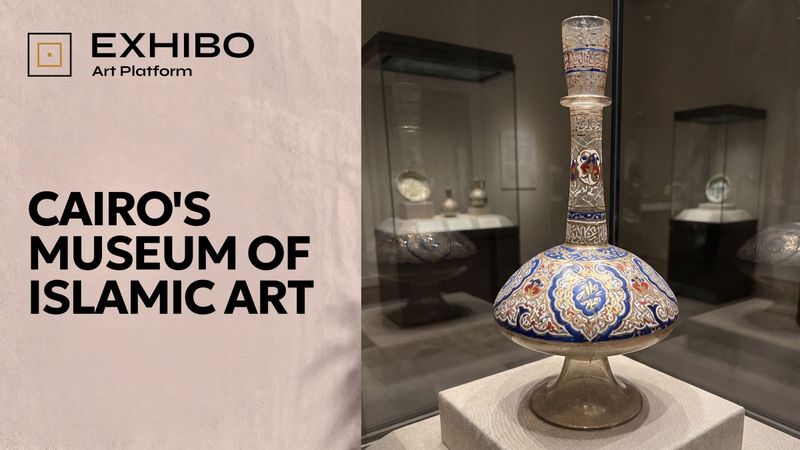
The Bottle That Was in Pieces on the Floor
A car bomb left one of the world's great collections of Islamic art in fragments on the floor. What the Museum of Islamic Art chose to do with the repair — mark it, rather than hide it — turns out to be the most quietly radical decision in the building.
Near the entrance of Cairo's Museum of Islamic Art stands an eight-hundred-year-old Syrian glass bottle with a small gold mark on its label. The mark does not mean the bottle is precious, though it is. It means it was broken — shattered on the floor by the 2014 bombing across the street, then patiently glued back into a single shape.
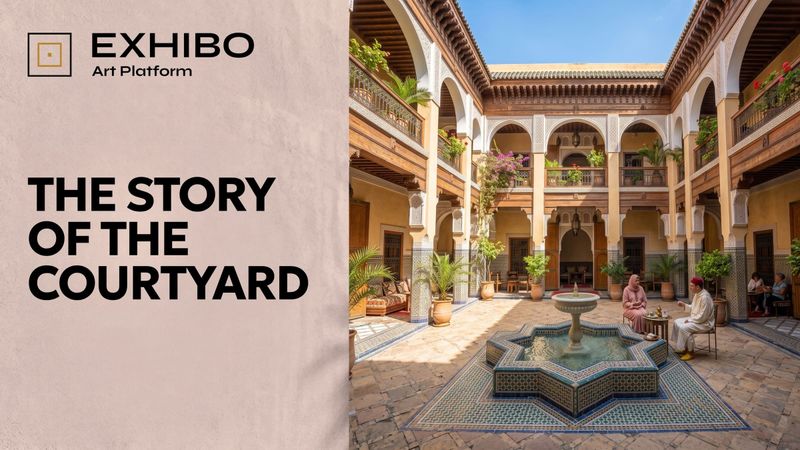
Why North African Cities Turn Inward: The Story of the Courtyard
A courtyard plan far older than Islam turned North African houses — and the medinas built from them — to face inward. Climate and religion only half-explain why, and what finally displaced the courtyard says the rest.
The blank walls and inward courtyards of Fez, Tunis, Algiers and Cairo are usually explained by heat or religion. Both are true; neither is the whole story. The clue is in what eventually pushed the courtyard out of the modern city.