
Cairo Citadel (Citadel of Salah al-Din)
Saladin's twelfth-century fortress on the Muqattam spur — seven centuries of rulers, palaces and the best view over Cairo.
Saladin's fortress
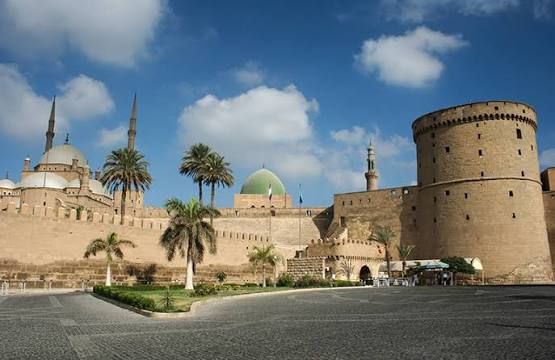
The Citadel of Cairo stands on a spur of the Muqattam hills overlooking the city. Its construction was begun in 1176 by Salah al-Din al-Ayyubi — Saladin — a few years after he ended the Fatimid caliphate, to protect Cairo against Crusader attack and to give his new regime a secure seat of government. The works were overseen by his emir Baha al-Din Qaraqush and largely built between 1176 and 1183, with walls and round towers designed according to the latest military thinking of the Crusader era. A deep well, the Bir Yusuf, was cut through the rock to supply water to the garrison.
Seat of power for seven centuries
From the early thirteenth century, under Saladin's nephew al-Kamil, the Citadel became the residence of Egypt's rulers, and it remained so until the 1870s. The Mamluk sultans, above all al-Nasir Muhammad in the early fourteenth century, rebuilt and expanded it with palaces, halls and mosques; his mosque of 1318–1335, with its tiled minarets, still stands in the southern enclosure. In the nineteenth century Muhammad Ali Pasha remodelled the Citadel again, demolishing much of the Mamluk palace quarter and building the Gawhara Palace, administrative buildings and, on the highest point, the great Ottoman-style mosque that now dominates Cairo's skyline. It was here, in 1811, that he had the Mamluk beys massacred in the narrow passage leading to the Bab al-Azab.
What to see
Today the Citadel is a vast museum site of several enclosures. The main sights are the Mosque of Muhammad Ali, the Mamluk mosque of al-Nasir Muhammad, the Ottoman mosque of Suleiman Pasha, the Gawhara Palace, the National Military Museum and the Police Museum, and the terraces of the southern enclosure, from which the view takes in the mosques of Sultan Hassan and Al-Rifa'i below, the domes of Historic Cairo and, on clear days, the pyramids of Giza on the horizon. The Citadel is part of the UNESCO World Heritage Site of Historic Cairo.
Exhibo editorial
Saladin chose the hill, the story goes, because meat hung out here stayed fresh longer than anywhere in the city below. Whatever the reason, he picked the one spot in Cairo from which you can see all of it — and every ruler for the next seven hundred years agreed with him.
Go for the terrace at the edge of the southern enclosure, late in the day. Below you, Sultan Hassan and Al-Rifa'i sit side by side like two ships moored in a stone harbour; behind them, minaret after minaret until the haze swallows the rest. On a clear winter afternoon the pyramids show up on the horizon, small and certain. It is the view that explains why everyone wanted to rule from here.
How to find it
The visitor entrance is on the eastern side, off Salah Salem Street; taxis and ride-hailing drivers know it as the Citadel gate by the car park. From the ticket office, walk up into the southern enclosure, where the Muhammad Ali Mosque, the al-Nasir Muhammad Mosque and the Gawhara Palace stand close together; the view terraces are along the western wall beside the Muhammad Ali Mosque. The Military Museum is in the northern enclosure, reached through the Bab al-Qulla gate.
Similar places
All places
News by Exhibo
Editorial coverage on Exhibo
Why Old Sana'a Builds Upward
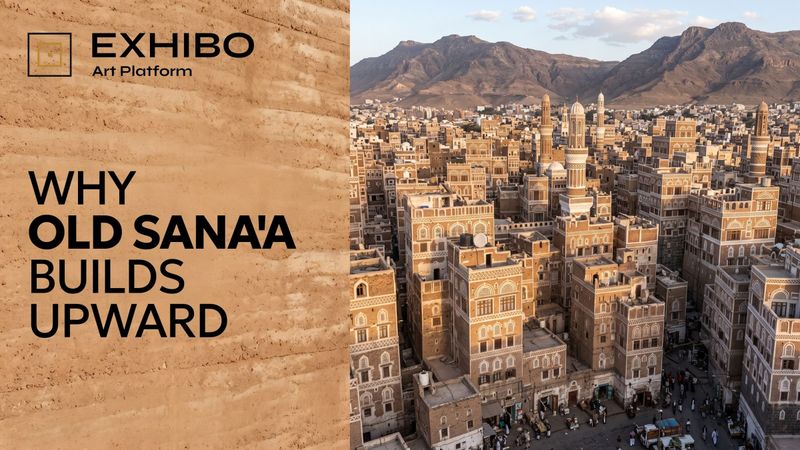
The tower houses of Old Sana'a rise five to nine storeys of stone and mud — and the usual reasons, defence and lack of space, are both too small.
In one of the oldest cities on earth, families live stacked from the animals on the ground floor to the poetry room at the top, in mud towers nine storeys high. Why Sana'a built vertically has half a dozen answers, heat least of all — and the system that raised the towers is the same one now dissolving them.
The Bottle That Was in Pieces on the Floor
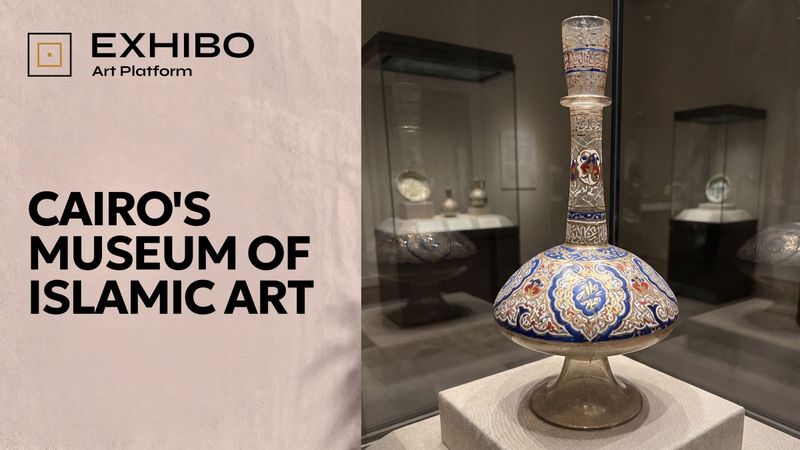
A car bomb left one of the world's great collections of Islamic art in fragments on the floor. What the Museum of Islamic Art chose to do with the repair — mark it, rather than hide it — turns out to be the most quietly radical decision in the building.
Near the entrance of Cairo's Museum of Islamic Art stands an eight-hundred-year-old Syrian glass bottle with a small gold mark on its label. The mark does not mean the bottle is precious, though it is. It means it was broken — shattered on the floor by the 2014 bombing across the street, then patiently glued back into a single shape.
Why North African Cities Turn Inward: The Story of the Courtyard
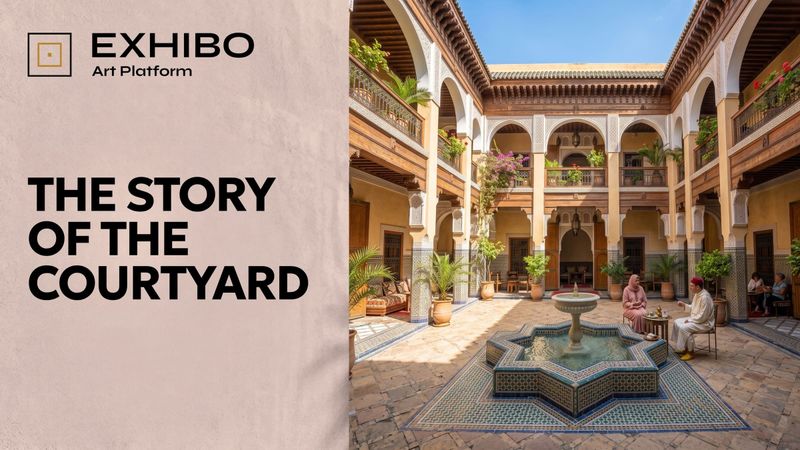
A courtyard plan far older than Islam turned North African houses — and the medinas built from them — to face inward. Climate and religion only half-explain why, and what finally displaced the courtyard says the rest.
The blank walls and inward courtyards of Fez, Tunis, Algiers and Cairo are usually explained by heat or religion. Both are true; neither is the whole story. The clue is in what eventually pushed the courtyard out of the modern city.