
Bayt al-Razzaz
A vast Mamluk and Ottoman palace on Bab al-Wazir Street — 190 rooms, mashrabiya windows and Qaytbay's blazon.
A palace in two parts
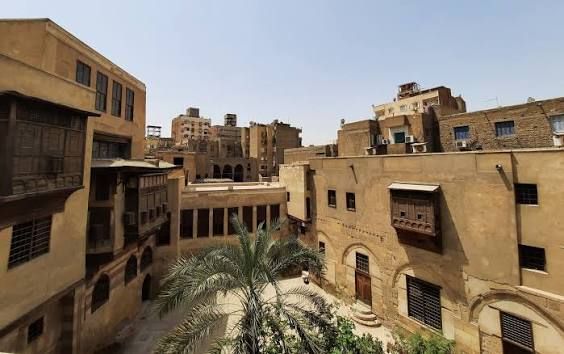
Bayt al-Razzaz is one of the largest surviving houses of medieval Cairo: an urban palace of some 190 rooms on Bab al-Wazir Street in the al-Darb al-Ahmar quarter, between Bab Zuwayla and the Citadel. It was built in stages from the late fifteenth to the late eighteenth century. Its eastern part dates to the reign of the Mamluk Sultan Qaytbay in the 1480s; one doorway in its courtyard still bears the sultan's blazon, and highly decorated mashrabiya windows on the upper floor overlook the street and the courtyard. In the eighteenth century the house was greatly enlarged with a western wing, and it took its name from the Razzaz family of merchants who lived in it.
Abandonment and restoration
The palace was abandoned in the 1960s and passed into the ownership of the Egyptian antiquities authorities. From the late 1970s, a team led by the American Research Center in Egypt carried out a long programme of documentation and restoration of the eastern complex, completed in 2007, stabilising the structure and restoring its stonework, woodwork and mashrabiyas. The western building still awaits restoration, and the World Monuments Fund has listed the project as at risk.
Visiting
The house stands on the walking route between Bab Zuwayla, the Blue Mosque and the Citadel, beside the Madrasa of Umm al-Sultan Sha'ban. Interior access is not always possible, but its street façade, with its carved stone and wooden mashrabiya, is one of the finest of al-Darb al-Ahmar.
Exhibo editorial
Bab al-Wazir Street is lined with Mamluk mosques and emirs' tombs, and halfway along it this enormous house leans over the road, its mashrabiya windows hanging above the traffic like wooden lanterns. It is the kind of building that makes you realise how grand the domestic life of medieval Cairo could be.
You may not get inside — access depends on the day and the guardian — but even from the street it rewards a pause, ideally on the walk from Bab Zuwayla to the Citadel. Look for the sultan's blazon if the door is open: it is a small sign of how close this house once stood to power.
How to find it
Walk south-east from Bab Zuwayla along Darb al-Ahmar Street, which becomes Bab al-Wazir Street, towards the Citadel; Bayt al-Razzaz stands on the street beside the Madrasa of Umm al-Sultan Sha'ban, not far beyond the Blue Mosque. Look up for its large mashrabiya windows.
Similar places
All places
News by Exhibo
Editorial coverage on Exhibo
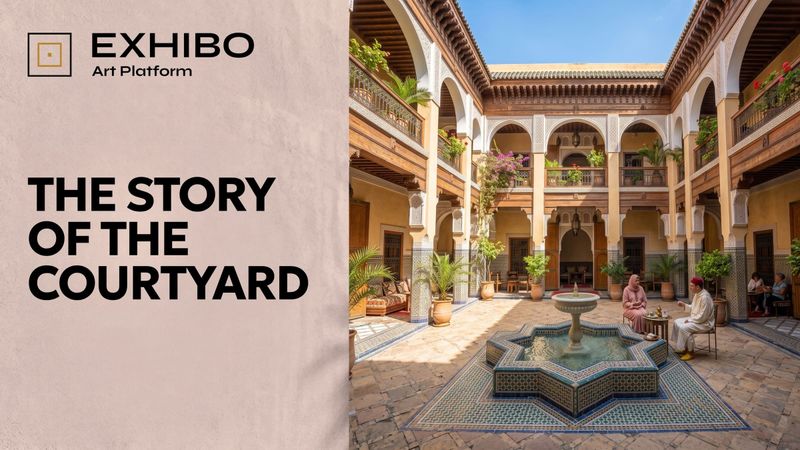
Why North African Cities Turn Inward: The Story of the Courtyard
A courtyard plan far older than Islam turned North African houses — and the medinas built from them — to face inward. Climate and religion only half-explain why, and what finally displaced the courtyard says the rest.
The blank walls and inward courtyards of Fez, Tunis, Algiers and Cairo are usually explained by heat or religion. Both are true; neither is the whole story. The clue is in what eventually pushed the courtyard out of the modern city.
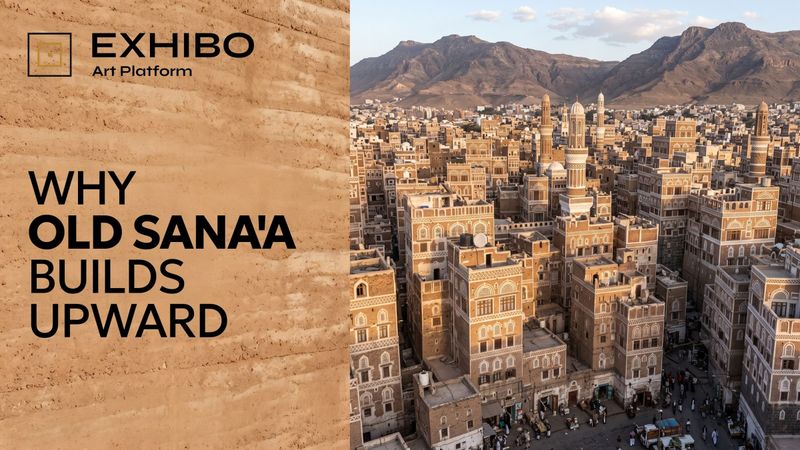
Why Old Sana'a Builds Upward
The tower houses of Old Sana'a rise five to nine storeys of stone and mud — and the usual reasons, defence and lack of space, are both too small.
In one of the oldest cities on earth, families live stacked from the animals on the ground floor to the poetry room at the top, in mud towers nine storeys high. Why Sana'a built vertically has half a dozen answers, heat least of all — and the system that raised the towers is the same one now dissolving them.
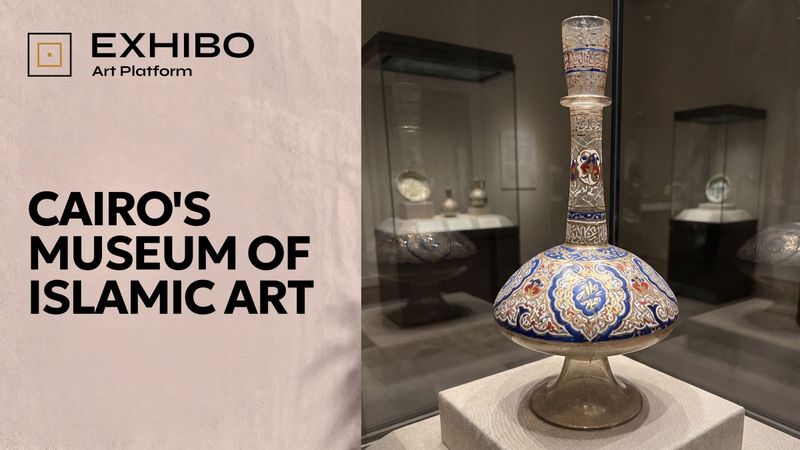
The Bottle That Was in Pieces on the Floor
A car bomb left one of the world's great collections of Islamic art in fragments on the floor. What the Museum of Islamic Art chose to do with the repair — mark it, rather than hide it — turns out to be the most quietly radical decision in the building.
Near the entrance of Cairo's Museum of Islamic Art stands an eight-hundred-year-old Syrian glass bottle with a small gold mark on its label. The mark does not mean the bottle is precious, though it is. It means it was broken — shattered on the floor by the 2014 bombing across the street, then patiently glued back into a single shape.