News

The National Gallery

Editorial from Exhibo and official announcements from The National Gallery.

News by Exhibo

Editorial coverage on Exhibo

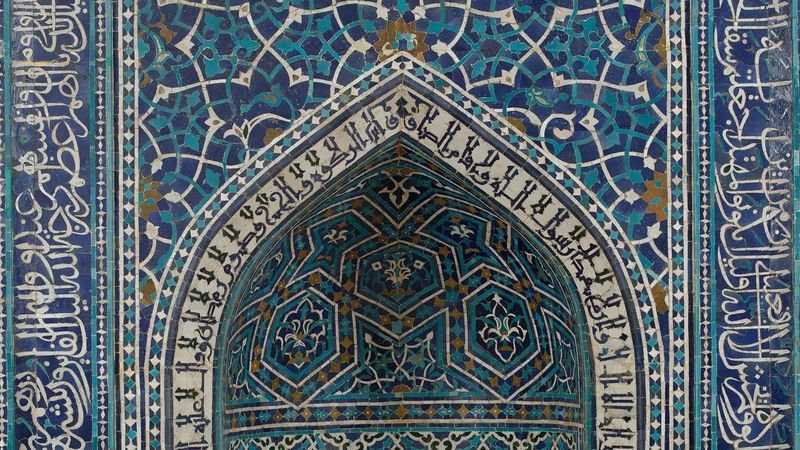
Blue and turquoise glazed tile mosaic of a mihrab, a prayer niche, from Isfahan, Iran, dated 1354–55, with a pointed arch framed by bands of Arabic calligraphy
Editorial

56 English Words With Arabic Roots: Art, Colour, Fabric and Architecture

Azure lost a letter, alcohol was once eye make-up, and a sofa was a carpeted platform. A field guide to the art words English borrowed from Arabic — and how sure we can be about each one.

Your sofa, your cotton shirt and the sequins on a party dress all have Arabic roots. We checked 56 English words from the world of art — colour, cloth, architecture and the studio — against two major dictionaries to trace where each came from, which languages carried it, and which famous etymologies are still disputed.
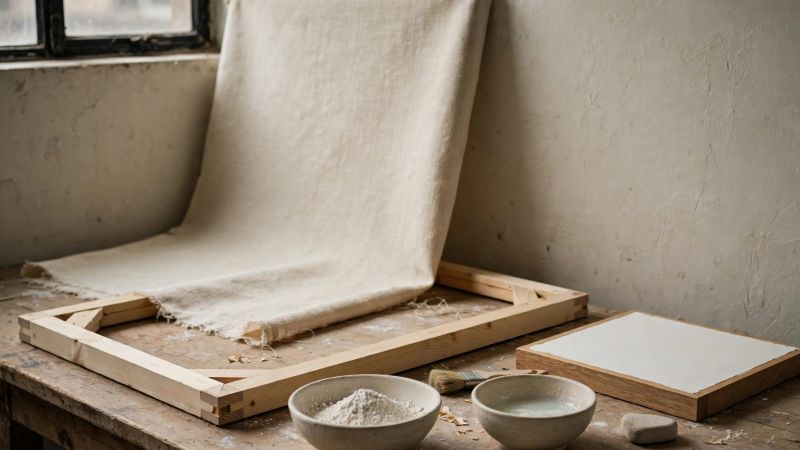
Primed linen canvas on wooden stretcher bars beside a small oak panel with chalk gesso, rabbit-skin glue jar and gesso tub in background, cool north-light studio
Guide

What Artists Paint On

Canvas, panel, linen, paper, metal and wall: how painting supports are built, prepared, and why the wrong substrate fails decades later

A painting support is the surface paint adheres to: stretched linen, oak panel, watercolour paper, copper sheet, or lime plaster on a wall. This guide maps the main support types, how sizing and gesso prepare them, linen versus cotton weave, stretcher bars and panel cradling, named works in major museums, typical failure modes, and what each option costs in a studio today without turning into a gear catalogue.
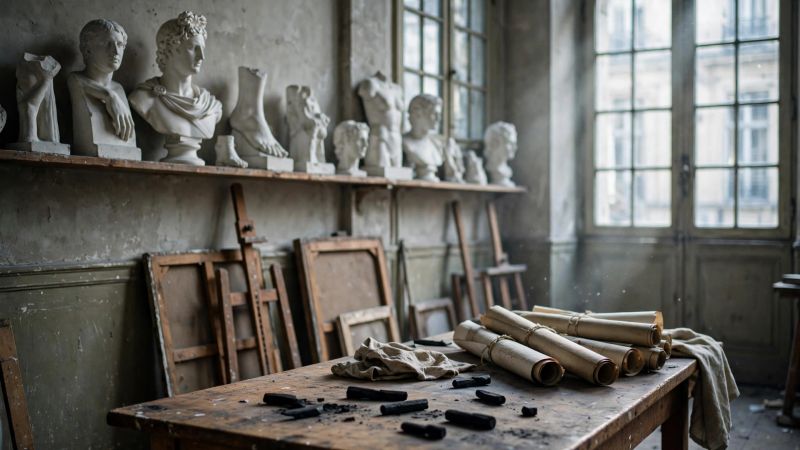
Oak table in north light with pewter cup, snuffed wick, hourglass and folded linen in a seventeenth-century still-life studio, no readable text and no copy of a famous painting.
Guide

Vanitas Painting, Explained

Netherlandish still life as a moral argument: how painters built vanitas tables, six named works, and how to recognise the type.

Vanitas is a Netherlandish still-life type: a table of goods and mortality markers arguing that status and pleasure do not last. This guide defines the type, shows how Haarlem and Leiden workshops built it, reads six named works from 1603 to 1977, and keeps it distinct from memento mori history, object dictionaries, and pop-culture namesakes.

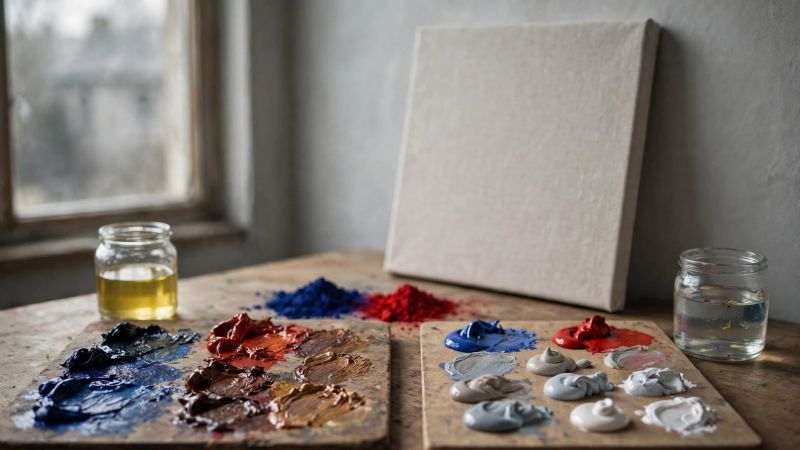
Oak studio table with a worn leather sketchbook, earth-green and sky-blue pigments in ceramic dishes, and a rain-heavy sky beyond a north-facing window, suggesting European landscape practice.
Guide

Landscape Painting: A History

How Western painters turned scenery from a backdrop into a genre, from Dutch mills and Claude’s ports to Constable and Impressionist weather

Landscape painting became a European specialism in the seventeenth century, then a vehicle for national feeling, scientific looking and modern colour. This history follows the genre from antiquity’s backgrounds through Dutch naturalism, Claude, the picturesque, Romantic weather and Impressionist light, with four works read in museum collections.

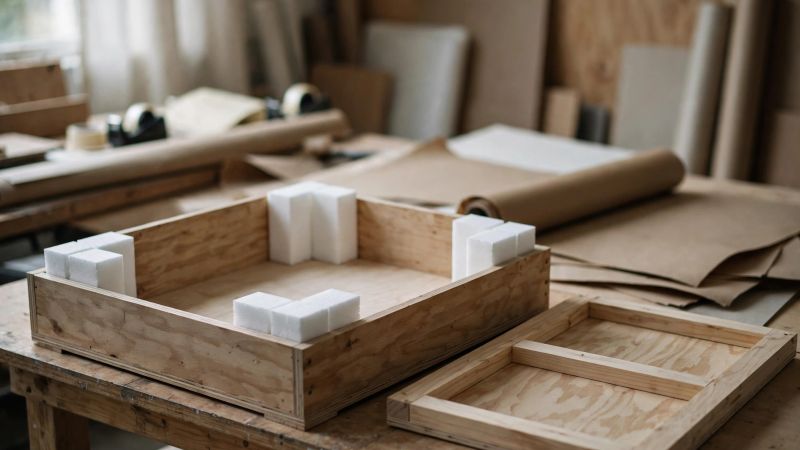
Oak study table with brass calipers, an hourglass, a plaster wing fragment and a closed old book under cool north-window light, no readable text.
Guide

Iconography: How to Read Symbols in Art

Panofsky’s three levels, attributes and source-checking: a method for reading Western pictures without treating every object as a code.

Iconography in art history is a method: name what you see, match it to a conventional type, then test that match against a dated source. This guide walks Panofsky’s levels, Ripa and ICONCLASS, and six museum works from Botticelli to Beuys, and keeps Christian saints, MENA symbol lists and the Symbolist movement on their own pages.

Conservation-science still life with linen canvas scrap, oak panel end-grain, and bowls of white and blue pigment on a north-lit bench
Guide

Radiocarbon and Pigment Dating

How carbon-14, pigment first-use dates and tree rings date a painting, and why those laboratory results still cannot name the artist

A date on a painting is a date on a material: flax in the canvas, oil in the binder, a growth ring in a panel, a pigment that did not exist before a given year. This guide covers radiocarbon including the bomb peak, pigment terminus post quem, dendrochronology and lead isotopes, then the failure modes that keep a calendar from proving authorship.

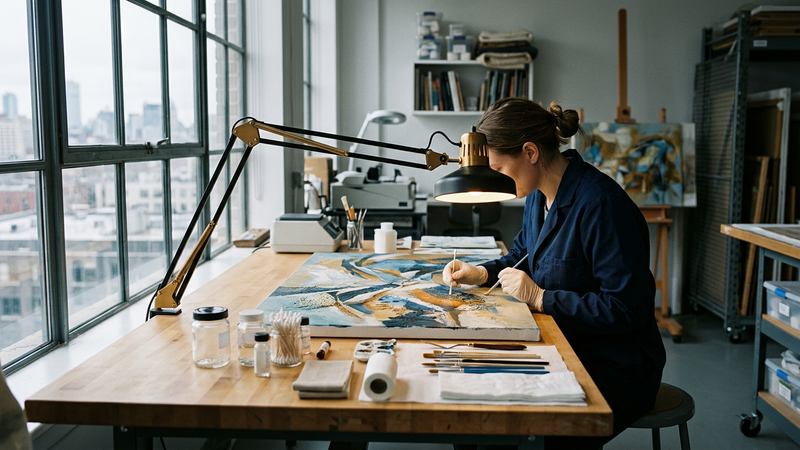
Close-up of linseed oil, amber resin tears and green copper pigment on a scarred oak bench, with a yellowed varnish film catching raking light
Guide

Why Paintings Darken and Yellow

Linseed oil, aged varnish, dirt and unstable pigments each yellow or darken a picture, and cleaning reverses only some of those changes

Old pictures look brown for mixed reasons: soot, oxidised varnish, yellowed linseed oil, and pigments that have changed in the film. Conservators can lift dirt and later varnish in many cases. They cannot restore copper greens gone brown or lead white turned transparent. The chemistry, the history of noticing it, and the limits of treatment.