
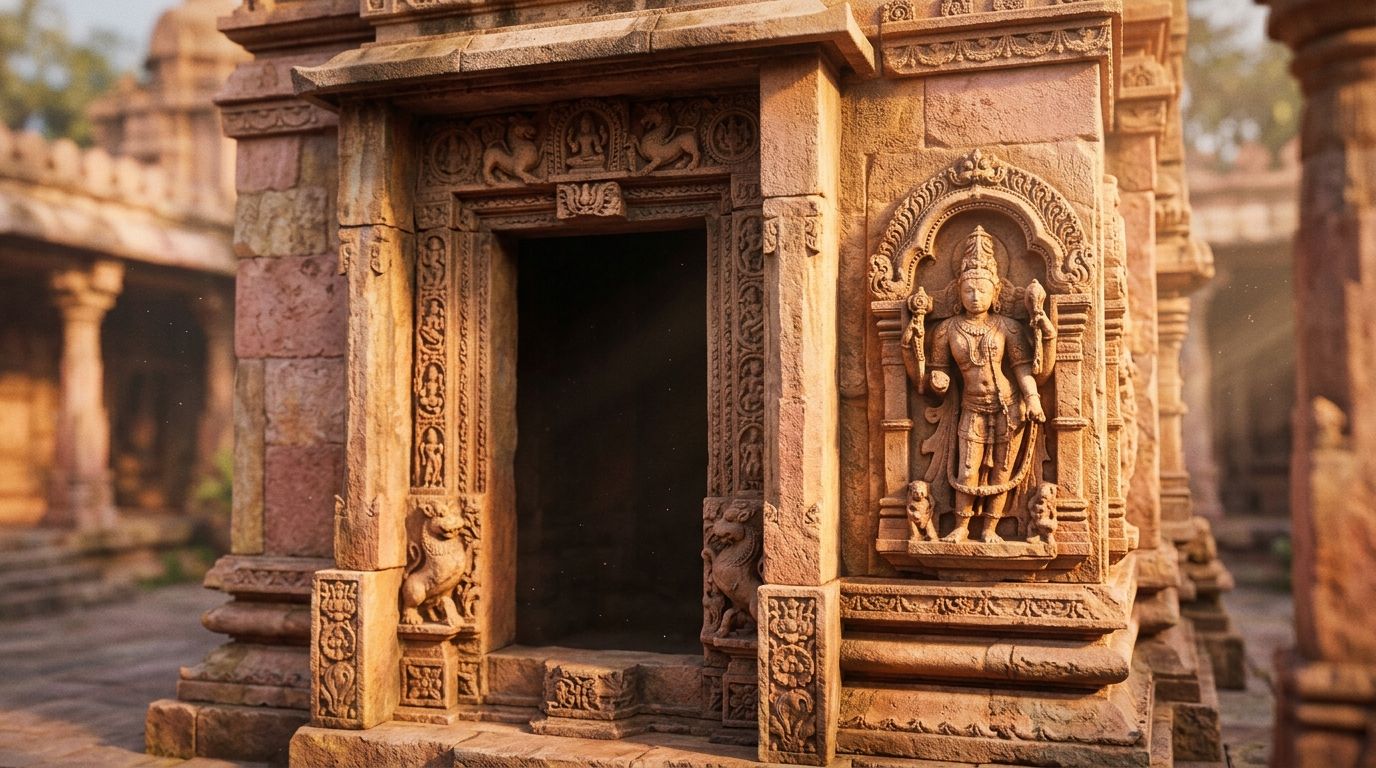
Exhibo Editorial
Indian Art: A History
Indus seals, Buddhist sculpture, temple towers and court painting on the subcontinent, from Harappa to the Bengal School
Indian art history names the visual cultures made across the South Asian subcontinent from Indus urban craft through Buddhist and Hindu sacred programmes, regional temple building and court painting. Museums and textbooks use the phrase as a field label. A steatite seal from Mohenjo-daro, a sandstone Buddha from Mathura, a Chola bronze Nataraja and a Rajput album leaf share geography and long exchange more than they share one look. Stone, bronze, terracotta, mural pigment and paper carry different briefs for different patrons.
Search results for “indian art history” lean toward Wikipedia surveys, auction blogs and shopping pages that flatten millennia into a colour palette. Those pages name dynasties. They seldom walk you through how an aniconic stupa railing became a human Buddha, why a northern temple tower curves while a southern vimana rises in steps, or how Company ateliers and the Bengal School re-opened the question of what counted as Indian painting. This article stays with historical traditions. Deep treatment of Mughal and Persian miniature workshops belongs with the pending sibling Mughal and Persian miniature painting. Broader comparative reading sits in the World Art Traditions series. Collection routes for the museums named below sit in the museums directory. Living gallery scenes and contemporary biennial circuits sit outside this fence.
What Indian art history covers
Curators treat Indian art as linked media traditions organised by region, religion and court, not as a single style stretching from 2600 BCE to 1900 CE. Indus seals and figurines open the durable record. Mauryan polished sandstone and Buddhist stupas reorganise sacred space in the third and first centuries BCE. Mathura and Gandhara invent human Buddha images under Kushan rule. Gupta workshops refine Buddhist and Hindu icons that later travel into Southeast and East Asia. Structural temples in Nagara and Dravida idioms absorb sculpture into architecture. Court ateliers on paper, from early manuscript painting through Rajput and Mughal schools, form a later chapter that this survey only maps at the doorway.
Three habits recur. First, sacred function drives form: the stupa, the garbhagriha and the processional bronze answer ritual needs before they answer gallery taste. Second, regional workshops keep distinct materials and body types even when empires claim wide territory. Third, later makers cite earlier models. Gupta Buddhas remember Mathura and Gandhara. Bengal School painters cite Ajanta and Mughal albums. Continuity is argument, not accident.
The modern borders of India, Pakistan, Bangladesh, Nepal and Sri Lanka do not match ancient polities. Met Heilbrunn chronologies and Smarthistory surveys therefore speak of South Asia when they track Indus cities, Gandhara or Ashokan edicts. This article uses “Indian art” as the search term and museum field name while keeping that geographic honesty in view. Parallel regional surveys in this series, including Chinese art history, follow the same museum-led method without forcing one hierarchy of civilisations.
Conditions that shaped the traditions
Geography set the workshop map. The Indus system and the Gangetic plain supported early urban and imperial centres. The Deccan plateau and Tamil south developed rock-cut caves and structural temples under Pallava, Chalukya, Rashtrakuta and Chola patronage. Mountain routes through the northwest carried Hellenistic imagery into Gandhara and later carried Buddhism toward Central Asia and China. Coastal ports moved ivory, beads and ideas across the Indian Ocean.
Religion supplied briefs rather than a single iconography. Vedic ritual culture, Buddhism and Jainism, then temple-centred Hindu worship, each demanded different spaces and images. Early Buddhist art often marks the Buddha with footprints, a tree or an empty throne. Later workshops carve him in human form. Hindu temples house a primary deity in a dark sanctum and wrap narrative relief around walls and towers so pilgrims meet stories in motion. Jain Tirthankaras emphasise stillness and austerity in seated or standing meditation.
Patronage decided scale. Ashoka raised inscribed pillars and sponsored stupas. Kushan and Gupta rulers funded monasteries and icons that advertised dharma and kingship together. Chola emperors poured granite and copper into temples that still dominate Thanjavur’s skyline. Village donors, merchants, monks and nuns appear in hundreds of Sanchi inscriptions; sacred art was never only palace art. When you stand before a museum Buddha or a temple doorway, you are looking at organised labour, quarry control and a public claim about authority as much as at a beautiful surface.
Indus cities and the earliest durable arts
Between about 2600 and 1900 BCE, urban settlements along the Indus and its tributaries, in present-day Pakistan and northwestern India, produced the first large corpus of South Asian art that museums can still display. Met Heilbrunn essays describe grid-planned cities such as Mohenjo-daro and Harappa, uniform brick modules, public water works and long-distance trade. Writing appears on seals and pottery, yet the script remains undeciphered. That silence forces you to read objects without the help of royal chronicles.
Steatite stamp seals carry animals, composite creatures and short inscriptions. Unicorn-like beasts and seated figures in yoga-like postures appear often enough that scholars debate ritual meaning without settling it. Terracotta animals and human figurines survive in bulk. Some look like toys; some may be votive. Jewellery in shell, carnelian and gold shows craft specialisation. Lost-wax bronze casting already works at small scale. The corpus is urban and portable. Monumental stone temples belong to later centuries.
Partition of British India in 1947 split Indus finds between successor museums. The so-called Priest-King, a steatite bust from Mohenjo-daro dated around 2000–1900 BCE, is now in the National Museum of Pakistan, Karachi. The bronze Dancing Girl, about 10.5 cm high, excavated at Mohenjo-daro in 1926, is in the National Museum, New Delhi. Both works travel in textbooks as emblems of Indus skill. Their split custody is itself part of the modern history of the field.
Seals, terracotta and undeciphered script
Seals were likely tools of trade and administration as well as carriers of images. A modern impression from a Met seal shows how the carved face prints as a raised design. Animals dominate: bulls, elephants, tigers, rhinoceroses. Occasional human or divine figures sit among them. Without readable texts, you cannot name the patrons. You can still see a shared visual grammar across sites hundreds of kilometres apart, which is evidence of an integrated urban culture rather than isolated villages.
Terracotta production runs from crude animals to more careful human figures. Balochistan and Mehrgarh earlier Neolithic traditions feed into Indus craft. Painted pottery and bead-making workshops sit beside seal cutters. Copper and bronze tools and ornaments appear with the mature urban phase. Environmental change features in standard explanations for urban decline after 1900 BCE; later Vedic and Gangetic cultures build a different artistic map.
Two small sculptures that carry a civilisation’s fame
The Priest-King combines a patterned robe, a drilled trefoil motif once filled with colour, a fillet and a carefully modelled beard. The head is only a few centimetres high, yet museum lighting makes it feel monumental. Scholars treat the title as a modern nickname, not a proven office. Naturalistic flesh and stylised hair sit together, a combination that later Indian stone sculpture will replay in other materials.
The Dancing Girl stands with one hand on her hip, bangles stacked on one arm, weight shifted in a pose that Gregory Possehl and others have read as confident rather than ceremonial. Ernest Mackay excavated her in the HR area of Mohenjo-daro. Lost-wax casting at this date already delivers thin limbs and a tilted head. A second, less finished bronze female from the same city is in Karachi. Together they prove that Indus metalworkers could make independent figurative sculpture, not only tools and jewellery.
Stupas, caves and the rise of Buddhist imagery
Buddhism and Jainism take shape in the Magadha region in critical dialogue with Vedic ritual culture. The Buddha’s death date sits near 400 BCE in current scholarly consensus. Relics go into stupas. Railings and gateways receive narrative relief long before workshops settle on a standard human Buddha. Ashoka (r. c. 268–232 BCE), third Mauryan emperor, converts after the Kalinga war and sponsors pillars, rock edicts and early stupas. The Lion Capital from Sarnath, carved about 250 BCE and now in the Archaeological Museum, Sarnath, crowns four addorsed lions on a drum with animals and wheels. Independent India later adopted its form as the national emblem. Prakrit, Greek and Aramaic versions of Ashokan messages show an empire speaking to local audiences rather than imposing one script everywhere.
The Great Stupa at Sanchi in Madhya Pradesh grows from an Ashokan core into a stone-faced mound with four carved toranas in the first century BCE. More than six hundred donative inscriptions name merchants, monks and nuns. Reliefs tell jataka stories and scenes from the Buddha’s life while still using aniconic signs: footprints, a riderless horse under parasols, an empty seat. Bharhut and Amaravati develop related railing programmes. Rock-cut chaityas and viharas at sites such as Karle, Bhaja and later Ajanta cut the same sacred programme into living rock. Wooden ribbing imitated in stone at Karle preserves the memory of timber chaitya halls that no longer stand. Yakshi brackets and mithuna couples on sacred facades keep older fertility imagery inside Buddhist space.
Mathura, Gandhara and the human Buddha
Under the Kushans, workshops in Mathura (Uttar Pradesh) and Gandhara (Pakistan and Afghanistan) begin to carve the Buddha in human form. Mathura prefers red sandstone, broad chests and a sense of weight drawn from earlier yaksha sculpture. Gandhara works grey schist and stucco with heavy draped robes and facial types shaped by long contact with Hellenistic and Parthian imagery. British Museum and V&A holdings include standing bodhisattvas and seated Buddhas transferred from older India Museum collections. The two schools answer the same need for an image one can meet face to face, yet they keep distinct bodies.
Kanishka’s patronage helps Buddhism move along trade routes into Central Asia and China. Begram ivories and other luxury goods show how South Asian workshops supplied Silk Road demand. Aniconic and iconic modes can coexist on one site for generations. Ajanta’s earlier caves keep plain stupas as focal points; fifth-century caves under Vakataka patronage add painted narratives and Buddhas attached to stupas. Met Heilbrunn notes Ajanta’s fifth-century murals among the earliest surviving paintings in India.
Gupta refinement and early Hindu temples
Gupta rule from the fourth century CE consolidates northern patronage and develops a Buddhist sculptural style that later Asia treats as classical. Soft modelling, transparent robes and calm faces mark Mathura and Sarnath Buddhas of the fifth century. Hindu rock-cut programmes expand at Udayagiri near Bhopal under Chandragupta II, including the large Varaha relief of Vishnu as the boar avatar. Early freestanding temples house the deity in a garbhagriha. The Dashavatara Temple at Deogarh and the brick temple at Bhitargaon show structural temple language taking durable form.
Ajanta’s late caves, painted under Harisena of the Vakatakas (r. c. 460–478), depict Buddha lives with courtly dress, architecture and landscape in mineral colour. Those murals later feed nationalist painters who want a pre-colonial Indian painting ancestry. For this survey the point is narrower: by 500 CE, South Asia has a full toolkit of stupa, cave monastery, iconic Buddha, Hindu rock relief and early structural temple.
Temple architecture and sacred sculpture
From the sixth century onward, regional kingdoms pour labour into temples that are both ritual machines and political statements. Treatises and later scholarship sort the major idioms into Nagara (northern, with a curving shikhara), Dravida (southern, with a stepped pyramidal vimana and compound walls entered through gopurams) and hybrid Vesara forms in the Deccan. Shared ancestry shows in dormer windows, pillared balconies and railing motifs that earlier Buddhist reliefs already pictured in wood and brick cities. Ritual needs expand the plan: mandapa halls for assembly, a circumambulatory path for pradakshina, and a dark garbhagriha for the primary image.
Pallava rulers at Mamallapuram carve monolithic rathas and the Shore Temple in the seventh and eighth centuries, early statements of southern stone temple design. The open-air relief often called Arjuna’s Penance or the Descent of the Ganges turns a granite cliff into narrative sculpture at landscape scale. The Rashtrakuta king Krishna I sponsors the Kailasa Temple at Ellora, a freestanding complex cut downward from the basalt hillside and covered inside and out with carving. Met Heilbrunn treats that monument as a peak of rock-cut Hindu building before freestanding construction dominates. Chola emperors push the Dravida idiom to imperial scale. Rajaraja I builds the Brihadishvara Temple at Thanjavur between about 1003 and 1010 CE; its granite vimana rises near sixty metres and still anchors active worship. UNESCO groups it with later Chola temples at Gangaikondacholapuram and Darasuram as the Great Living Chola Temples.
Sculpture and architecture fuse. Wall niches hold deities in prescribed sequences. Narrative friezes walk pilgrims around the sanctum. Processional bronzes, especially Chola-period Shiva as Nataraja and related forms, leave the dark cella for festival streets. Museums such as the Met display Nataraja bronzes as independent sculptures; on site they belong to a calendar of movement. Northern programmes at Khajuraho under the Chandellas pack exterior walls with deities, attendants and erotic mithuna that still draw contested modern readings. Hoysala temples in Karnataka favour soapstone and dense, jewellery-like carving. Jain temples and manuscript painting in Gujarat and Rajasthan run in parallel, with angular figures and protruding farther eyes on painted wooden book covers and palm-leaf pages.
This section stays brief on purpose. Temple typology alone can fill a book. The fence for this article is a historical survey of Indian art, not a gazetteer of every regional school. Southeast Asian temples that absorb Indian plans and icons belong with the sibling on Southeast Asian traditions rather than here.
Four works to look at closely
Close looking anchors a survey that otherwise risks becoming a dynasty list. A wall label can name a dynasty in eight words and still leave you unsure what the object asked of its first viewers. The four works below force that question back onto stone, bronze-adjacent polish and painted plaster. Each sits in a public museum or a protected site you can still visit. Dates follow institutional catalogues and Smarthistory consensus. Where older colonial scholarship and newer museum teaching diverge, as with the weight given to Gandhara, the notes below name both positions.
Read them as a sequence rather than as isolated masterpieces. The Lion Capital shows imperial Buddhist speech in polished sandstone. The Mathura Buddha shows a local body type claiming the human image. Brihadishvara shows temple architecture absorbing sculpture into pilgrimage movement. Ajanta’s murals show painting bound to monastic rock-cut space long before easel pictures exist in India. Together they cover Mauryan, Kushan–Gupta, Chola and Vakataka patronage without pretending the list is complete.
Lion Capital of Ashoka, Sarnath (c. 250 BCE)
Four lions sit back to back on an abacus carved with a bull, horse, elephant, lion and Dharma wheels. A bell-shaped lotus forms the base. The whole capital, about 2.1 metres high, was cut from a single sandstone block and polished to the Mauryan sheen that still startles in museum light. F. O. Oertel excavated it in 1904–05; the shaft remains at Sarnath while the capital stands in the site museum. Ashoka raised the pillar at the place of the Buddha’s first sermon. The animals and wheel translate Buddhist teaching into imperial public art. Modern India lifted the capital into national heraldry, which can hide how specific the original Buddhist commission was.
Standing Buddha, Mathura style (Kushan–Gupta sequence)
Mathura’s Government Museum and related collections hold standing Buddhas with scalloped halos, transparent lower garments and the abhaya mudra of reassurance. Compared with Gandharan drapery, Mathura keeps a fuller torso and a more Indic garment logic. Gupta-period examples soften the surface further until the body reads through the cloth as a continuous volume. When you move from a Kushan Mathura Buddha to a fifth-century Sarnath or Mathura Gupta Buddha, you watch workshops refine an already local invention rather than import a finished Greek statue type. Colonial-era scholarship overweighted Gandhara’s Mediterranean look; current museum teaching stresses parallel origins in Mathura, Gandhara and the Swat Valley.
Brihadishvara Temple, Thanjavur (completed 1010 CE)
The temple is architecture as sculpture at city scale. A high basement, axial halls and a towering vimana organise movement toward Shiva’s sanctum. Inscriptions record Rajaraja’s gifts of land, cattle and metal images. Granite blocks and a massive cupola stone required ramp logistics that later chronicles still debate in detail. Reliefs and painted programmes (layers from Chola and later periods) turn the walls into a theological encyclopaedia. Standing in the courtyard, you feel patronage as engineering. The temple’s UNESCO “living” status reminds you that ritual use continues; museum bronzes extracted from such contexts lose that calendar.
Ajanta Cave 1 murals (late fifth century CE)
Cave 1’s porch and hall carry painted Bodhisattvas, palace scenes and jataka narratives in a palette of earth reds, greens and whites. Faces turn in three-quarter view; jewellery and textiles receive careful attention. The cave functions as a vihara with a Buddha shrine, so painting serves monastic space rather than a portable frame. Later photographers and nationalist painters made Ajanta a charter for “Indian painting” against colonial academic oil. That modern afterlife matters for historiography. On site, the murals remain tied to rock-cut architecture and Buddhist devotion under Vakataka patronage.
Court painting: Rajput and Mughal as a doorway only
From the twelfth century, painted manuscripts multiply for Jain, Buddhist and Hindu texts. Gujarat and Rajasthan workshops favour flat colour, strong outlines and figures with projecting farther eyes. The Gita Govinda and Krishna devotion feed later album painting. Sultanate courts and then the Mughals reorganise patronage on paper and cloth.
Mughal painting under Humayun’s returning artists and, above all, under Akbar (r. 1556–1605), Jahangir and Shah Jahan, synthesises Persian workshop practice with Indian painters, European prints and court chronicle. Imperial albums, the Akbarnama and refined portraiture belong to that story. Rajput courts in Mewar, Bundi, Kishangarh and the Pahari hills develop parallel schools with bolder colour and Vaishnava themes. Those traditions deserve their own essay length.
This survey therefore stops at the doorway. Technique, atelier organisation, European print influence and close readings of named miniatures sit in the pending guide to Mughal and Persian miniature painting. Treating them at full depth here would cannibalise that brief. Keep one fact for orientation: by 1600, paper painting is a major Indian art form alongside temple sculpture, and later Bengal School artists will cite both Ajanta and those albums when they argue for a national style.
How forms spread and mutated
Indian sacred forms travel with monks, merchants and courts. Gupta and post-Gupta Buddha types shape early Buddhist art in Southeast Asia and East Asia. Temple plans and iconographies move with traders into Cambodia, Java and beyond; the detailed Southeast Asian story belongs elsewhere in this series. Within the subcontinent, styles mutate by region: Hoysala soapstone density in Karnataka, Chandella programmes at Khajuraho, Kerala murals, Himalayan bronze and wood traditions.
Islam on the subcontinent from the late twelfth century adds mosque and tomb architecture, calligraphy and new court tastes without erasing temple cultures in the south and in many Hindu kingdoms. Vijayanagara in the south builds a late Hindu imperial architecture that absorbs and answers Sultanate forms. Portuguese arrival from 1498 introduces Christian ivory and church arts on the coasts. Mutation is cumulative. Workshops borrow, resist and translate.
Colonial collecting after the eighteenth century mutates the field again by moving sculpture and paintings into European museums. The British Museum’s Amaravati sculptures and Gandhara holdings, the V&A’s South Asia galleries and the Met’s Indian collection all reflect that extraction history. Site museums at Sanchi, Sarnath and Thanjavur keep other works near their original landscapes. Both kinds of custody shape what students can still see.
Colonial ateliers and the turn toward modern Indian painting
Company painting names work by Indian artists for East India Company officers and other Europeans from the late eighteenth century. Painters in Calcutta, Murshidabad, Patna, Delhi and other centres adapt miniature skill to naturalistic studies of trades, costumes, architecture, plants and animals. Paper and opaque watercolour dominate. The brief is documentation and souvenir as much as devotion. V&A and British Library collections hold large groups of these sheets. They record a negotiation of taste under colonial patronage, not a simple decline of “real” Indian art. Tipu’s Tiger in the V&A, an automaton from Tipu Sultan’s court that voices a British soldier under a tiger, shows how objects from the same colonial century can carry satire and violence into the museum at once.
Government art schools in Madras, Calcutta, Bombay and Lahore teach European academic drawing and oil. Raja Ravi Varma (1848–1906) uses oil and oleographs to circulate Hindu epic subjects to a mass audience. Nationalist critics later attack that academic naturalism as derivative. Abanindranath Tagore (1871–1951), working with E. B. Havell at the Calcutta School of Art, builds the Bengal School as a counter-programme. He draws on Mughal and Pahari albums, Ajanta, and Japanese wash methods taught after Okakura Kakuzo’s circle reaches Calcutta. Soft, atmospheric watercolours and historic or literary subjects argue for an “Oriental” modernism against Company and academic models. Works such as Bharat Mata tie goddess imagery to nationalist feeling. The National Gallery of Modern Art in New Delhi holds key paintings and documents that shift.
This article ends at that hinge. Progressive Artists’ Group modernism, Partition’s effects on collections, and today’s gallery circuit are separate subjects. The historical traditions surveyed above supply the forms those later debates still cite.
Critics, museums and what the field left behind
Colonial scholarship wrote much of the first English-language Indian art history. James Fergusson on architecture, Ananda Coomaraswamy on ideals and metaphysics, and Stella Kramrisch on the Hindu temple shaped vocabularies still in use. Nationalist writers reused Ajanta and Mughal painting to claim continuity against colonial academies. Post-independence museums in Delhi, Mumbai, Kolkata and regional sites rebuild narratives for citizens as well as tourists. Western encyclopaedic museums continue to revise labels as provenance research and restitution debates advance.
Critics still argue about period labels, about how much weight Gandhara should carry, about whether “Indian art” erases regional names, and about sacred objects displayed as sculpture. Those arguments are healthy. They keep the field from freezing into a postcard of the Taj Mahal and a few bronzes.
What remains for a visitor is a practical path. Start with one Indus object, one Buddhist image, one temple visit or reliable photographic survey, and one painting school, then widen. Use the chronology table below as a spine. Return to the World Art Traditions hub for parallel regional deep cuts such as Chinese art history. When court miniatures become the question, follow the pointer to Mughal and Persian miniature painting. Institution pages for National Museum Delhi, Sarnath Museum, the British Museum, the V&A and the Met appear in the museums directory.
| Period / tradition | Approx. dates | Core media and sites | Where to see key examples |
|---|---|---|---|
| Indus Valley urban arts | c. 2600–1900 BCE | Steatite seals, terracotta, bronze; Mohenjo-daro, Harappa, Dholavira | National Museum, New Delhi (Dancing Girl); National Museum of Pakistan, Karachi (Priest-King); Met seals |
| Mauryan Buddhist public art | 3rd century BCE | Polished sandstone pillars, early stupas; Sarnath, Sanchi | Lion Capital, Archaeological Museum, Sarnath; Sanchi complex |
| Early stupa railings | 2nd–1st century BCE | Narrative relief, aniconic Buddha signs; Sanchi, Bharhut, Amaravati | Sanchi toranas; British Museum Amaravati sculptures |
| Mathura and Gandhara Buddhas | 1st–3rd century CE | Red sandstone (Mathura); schist and stucco (Gandhara) | Government Museum Mathura; British Museum and V&A Gandhara figures; Met |
| Gupta sculpture and Ajanta | 4th–6th century CE | Refined Buddhas; Hindu rock-cut; cave murals | Mathura/Sarnath museums; Ajanta Caves; Udayagiri |
| Early structural temples | 5th–8th century CE | Brick and stone garbhagriha temples; Deogarh, Bhitargaon, Mamallapuram | Site visits; regional ASI museums |
| Ellora and imperial rock-cut Hindu temples | 8th century CE | Monolithic Kailasa complex | Ellora Cave 16 (UNESCO) |
| Chola temple and bronze programmes | 10th–12th century CE | Granite vimanas; processional bronzes; Thanjavur | Brihadishvara Temple; museum Natarajas (Met and others) |
| Manuscript and early court painting | 12th–16th century | Jain and Hindu manuscripts; emerging album traditions | Museum manuscript rooms; later Rajput/Mughal collections |
| Mughal and Rajput painting (pointer) | 16th–18th century | Imperial and regional miniatures on paper | See pending persian-miniature-painting; V&A, British Library, Met |
| Company painting to Bengal School | late 18th–early 20th century | Documentary watercolours; nationalist wash painting | V&A; NGMA New Delhi; British Library |
FAQ
What is the history of art in India?
Indian art history runs from Indus urban craft in the third millennium BCE through Buddhist stupas and iconic sculpture, Hindu and Jain temple programmes, regional court painting and the colonial-to-nationalist transition of Company painting and the Bengal School. Dynastic labels organise museum galleries. Medium and ritual function cut across those labels. No single style covers the whole span.
What is Indian art known for?
Museum audiences meet it most often through Indus seals and bronzes, Buddhist stupas and Buddha images, densely carved temple exteriors, Chola bronzes and painted miniatures. Sacred architecture that fuses sculpture with ritual space is a recurring strength. Viewers who expect one “Indian look” miss Mathura versus Gandhara body types, Nagara versus Dravida towers, and the jump from rock-cut murals to paper albums. Regional variation is the rule.
What is the oldest art found in India?
Rock paintings at Bhimbetka in central India include prehistoric layers often cited from around 9000 BCE onward, though dating of individual shelters varies and later historical paintings share the same cliffs. The earliest large urban art corpus is Indus (c. 2600–1900 BCE), with seals, terracotta and small bronzes. Monumental polished sandstone arrives with Mauryan pillars in the third century BCE. “Oldest” depends on whether you mean rock art, urban craft or imperial stone sculpture.
Who is the father of Indian art?
No serious museum survey names one father. Popular answers sometimes offer Raja Ravi Varma or Abanindranath Tagore, who matter for modern painting debates, or mythic craftsmen from texts. The field is collective: anonymous Indus and temple workshops, named court painters in Mughal albums, and modern artists who reopened historical styles. Treat “father of” claims as exam folklore.
What are the two main types of temple architecture in India?
Nagara (northern, curving tower) and Dravida (southern, stepped vimana with compound and gopurams) are the two primary classical idioms. Vesara and many regional hybrids complicate the binary. Both grow from earlier wooden and Buddhist architectural vocabularies visible in relief and rock-cut facades.
How is Mughal painting related to this history?
Mughal and Rajput miniatures are central to later Indian painting. This article only maps their place after temple and Buddhist sculpture. Full workshop history, Persian connections and close readings sit in the pending Mughal and Persian miniature painting guide so the two briefs do not repeat each other.
Where can I see Indian art in museums?
Start with the National Museum in New Delhi, site museums at Sarnath and Sanchi, and active temples such as Brihadishvara at Thanjavur. Outside South Asia, the British Museum, the V&A and the Metropolitan Museum of Art hold deep collections. Use the museums directory to locate those institutions and related holdings.
Does this history include contemporary Indian art?
No. The fence stops at historical traditions and the early modern hinge of Company painting and the Bengal School. Living artists, art fairs and city scenes are separate editorial subjects.
Related reading
Sharjah Biennial 17 Unveils Curatorial Vision and Opening Schedule
Angela Harutyunyan and Paula Nascimento frame the 2027 edition around archival residue and spatial memory
The seventeenth iteration of the Sharjah Biennial runs from January to June 2027, presenting a dual curatorial methodology that examines historical legacies and infrastructural critique across multiple emirate locations.
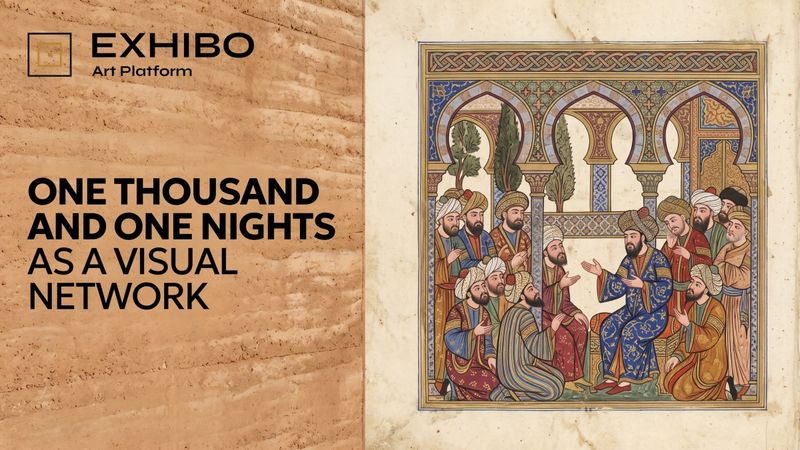
One Thousand and One Nights as a Visual Network
The book that taught Europe to picture the East arrived with no pictures at all. Three centuries of illustrators — Dutch, Egyptian, Persian, French, German, Iraqi — each gave it a face, and every face was a self-portrait.
Open Galland's Thousand and One Nights, the edition that conquered Europe, and there is nothing to look at: no genie, no lamp, not one illustration. The most visually imagined book in the world began blind — and because its text was never fixed either, no picture of it could ever be a copy.
Curating Tomorrow's Archive: Hamburger Kunsthalle Seeks Contemporary Collections Lead
A new permanent appointment will steer the museum's post-1960 holdings across paper, photography, and media formats.
The Hamburger Kunsthalle is inviting applications for a senior curatorial position focused on contemporary acquisitions, exhibition strategy, and digital collection management. Applications close October 2026 for a January 2027 start.