
Whilst We Are Savages: Colonial Constructs and Atlantic Dialogues
A critical survey at TEA Tenerife exploring how colonial frameworks shaped identity, territory, and knowledge across Europe, Africa, and Latin America.
Editorial from Exhibo and official announcements from Ethnographic Museum, Mut.
Editorial coverage on Exhibo
A critical survey at TEA Tenerife exploring how colonial frameworks shaped identity, territory, and knowledge across Europe, Africa, and Latin America.
How a 1970s feminist archive inspires contemporary photographers to rethink spatial inequality
A new exhibition at MoMA pairs Marianne Wex's pioneering street photography with seven modern creators exploring gender, race, and Indigenous sovereignty through the lens.
Kumu Art Museum pairs Sámi activist practice with Finno-Ugric ethnography in a dual autumn programme
Two concurrent exhibitions at Tallinn's Kumu Art Museum examine how visual culture, institutional authority, and academic frameworks have historically shaped minority identities across Northern Europe.
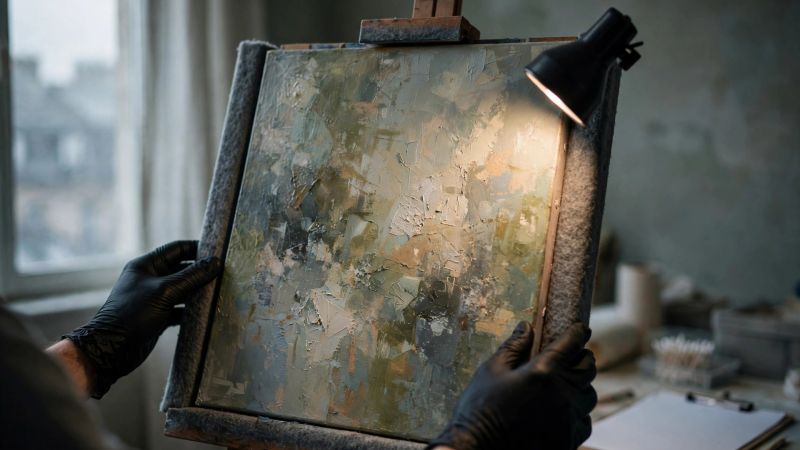
A dated record of an artwork’s physical state for loans, sales, claims and intake, with the fields examiners actually fill
An art condition report records the physical state of a work at a named date, with photographs and controlled vocabulary. This practical guide covers when you need one, standard fields, CCI and Spectrum report types, who writes it, typical fees, and how the document differs from an appraisal or a treatment proposal.
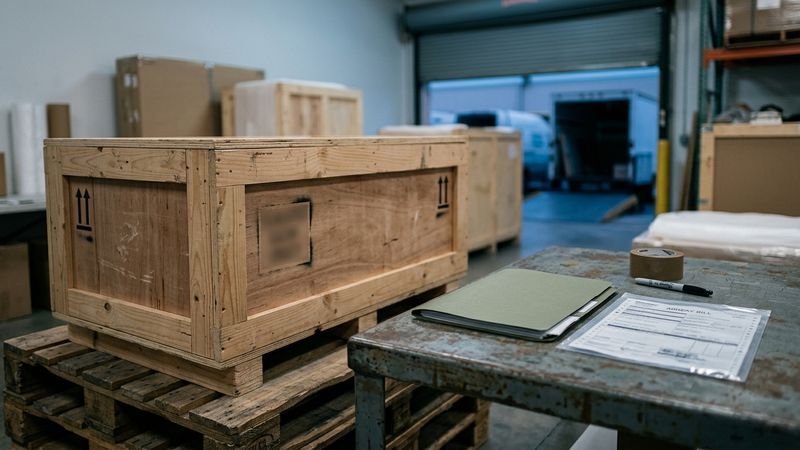
Cross-border customs routes, ATA Carnets, UK export licences and Gulf import notes for exhibition and sale shipments
Moving a work across a border means choosing temporary or permanent entry, lining up licences and invoices, and clearing customs with values that stand up to audit. This guide covers carnets, UK export controls, document packs, GCC route differences and when to hire a broker rather than a parcel label.
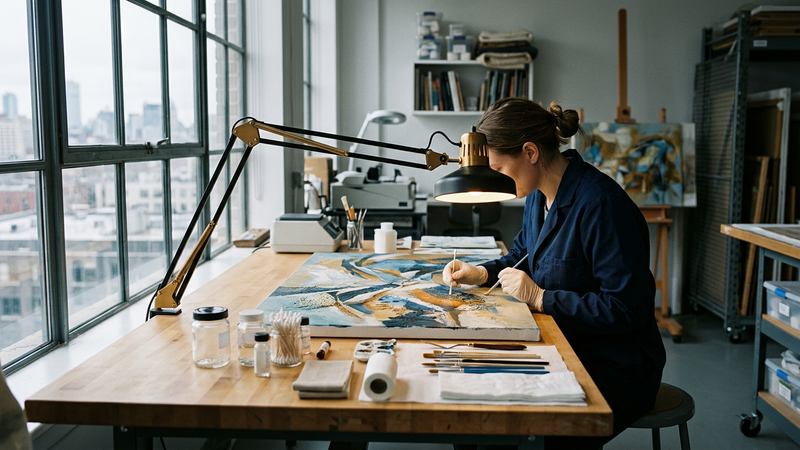
Day-to-day examination and treatment, ethics, museum labs versus private studios, and how owners commission care work
An art conservator examines, documents, stabilises and treats cultural objects under professional codes. This guide covers daily work, AIC and Icon ethics, institutional versus private practice, material specialisms, commissioning costs, and when to hire a conservator rather than clean at home.
Viking carving to Golden Age light, national romantic myth and early modern museums, mapped through named museum holdings
Scandinavian art history runs from Viking animal ornament through Danish Golden Age painting, national romanticism and early modern experiments. This museum map names periods, painters and rooms in Oslo, Copenhagen, Stockholm and Helsinki, and leaves furniture-shop “Scandi style” to a different search intent.
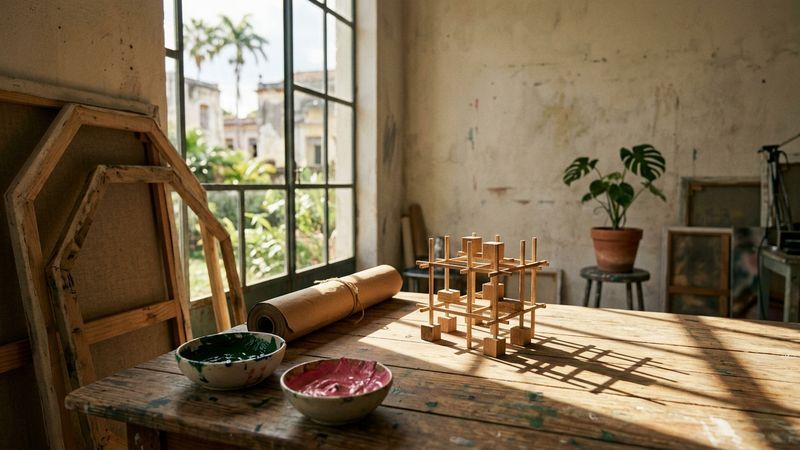
From São Paulo’s 1922 Week and Antropofagia to Torres-García, Madí, Lam and neo-concrete colour: modernisms south of the US border
Latin American modernism is a cluster of twentieth-century programmes, not one school. This guide maps Brazilian Antropofagia, Río de la Plata constructivism, Caribbean Afro-Atlantic painting and later concrete and kinetic work, with named museum holdings and a visit chronology.
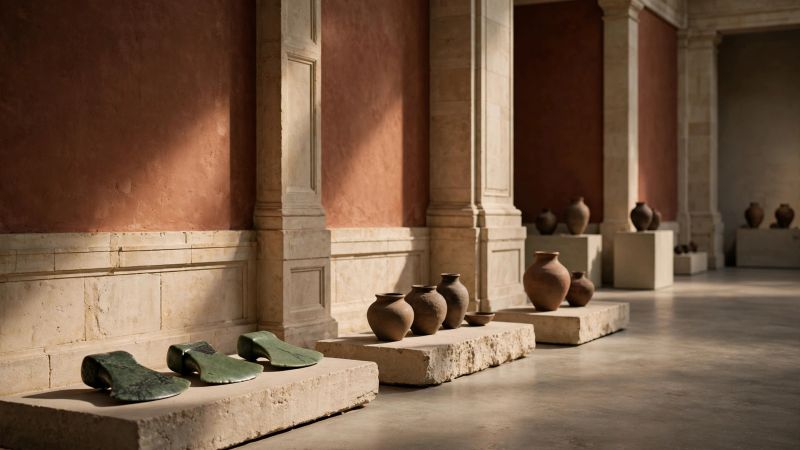
Olmec jade and basalt, Maya court carving, Mexica Tenochtitlan stone, and Andean clay, metal and fibre before European contact
From Gulf Coast basalt heads to Andean textiles, Pre-Columbian art covers millennia of Indigenous making in Mesoamerica and the Andes. This guide maps Olmec, Maya, Mexica, Chavín, Moche and Inca forms, names museum pieces you can visit, and faces how colonial collecting shaped what galleries still show.
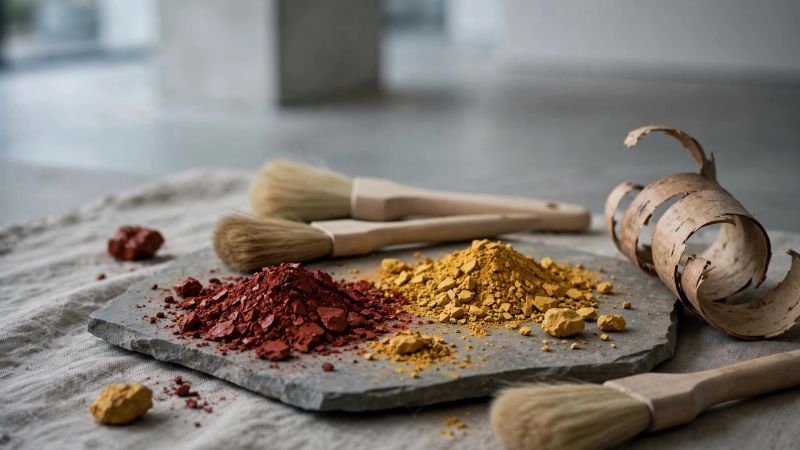
From Kakadu rock galleries and Arnhem Land bark to Papunya Tula acrylics: a museum-led history with cultural protocols first
Aboriginal Australian art spans deep-time rock painting, Arnhem Land bark, and the Papunya Tula acrylic movement that remade contemporary painting after 1971. This guide follows institutional histories, names museum-held works with published consent framing, and opens with cultural protocols before any style survey.
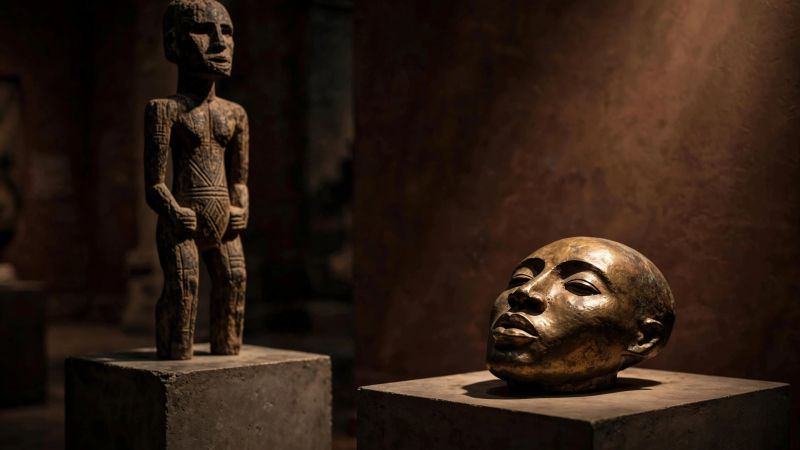
Named West, Central and southern African traditions in museum collections, from Nok terracotta to Benin brass and Kongo power figures.
African art in museum speech covers thousands of years and many peoples across distinct regions. This historical survey names Benin, Yoruba, Kongo, Dogon and related court and community arts with museum examples, and tracks how colonial collecting shaped what European and American viewers met first.
How nineteenth-century European painters built an “Orient” of harems, mosques and deserts, and how Said and museums rewrite that gaze
Orientalism in Western art names European pictures of North Africa and the Middle East shaped by empire, travel and studio fantasy. This guide traces Ingres, Delacroix, Gérôme and Matisse through dated museum works, then follows Said, Nochlin, and museum debates on display, provenance and restitution.
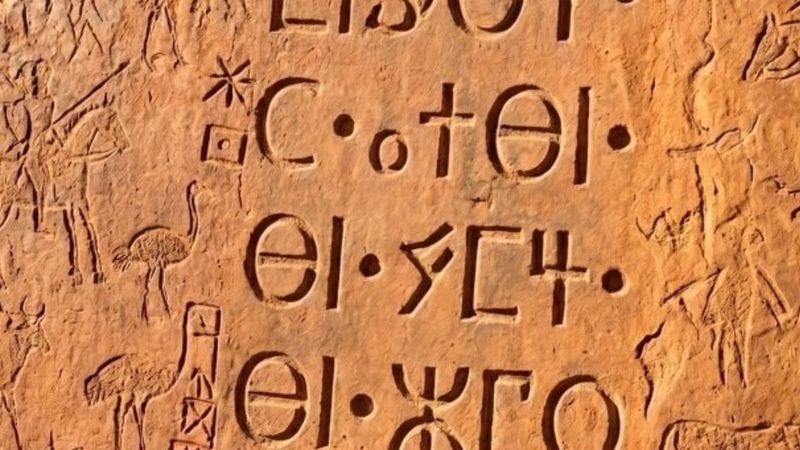
How one of North Africa's oldest writing traditions survived conquest, colonial classification and the loss of its readers — and why, for much of it, we still cannot say what the marks mean.
A flat rock in southern Morocco is covered in a script you can see is writing and still cannot read a word of. It belongs to the Amazigh — a visual language older in North Africa than the Arabic alphabet, carried onto skin and wool and silver, nearly erased, and now reassembled into an alphabet on ministry walls. This is the story of what survived, what didn't, and why almost everything we "know" these signs mean was added later.
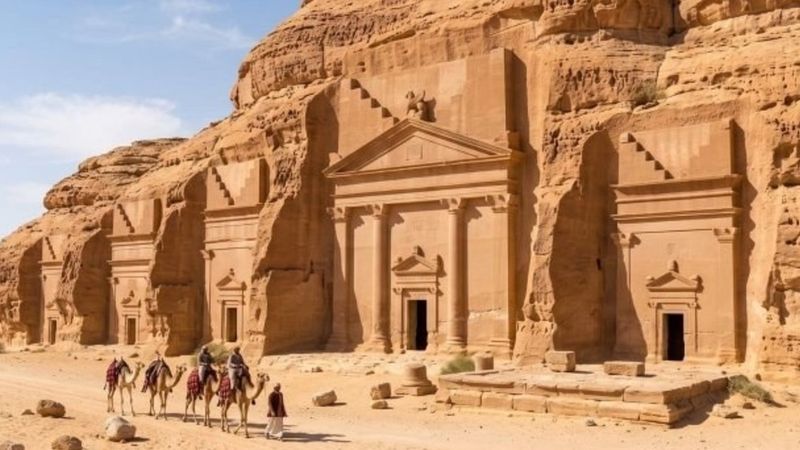
Hollywood came to AlUla to build Iraq and Afghanistan. Saudi Arabia is using the same landscape to build AlUla itself — destination, museum, cultural stage — and the old stone is being asked to say something new.
Hollywood built Iraq and Afghanistan in AlUla; Saudi Arabia is building AlUla into itself. On carved kings, a warning old as scripture, a mirror the size of a building, and who gets to author a place.
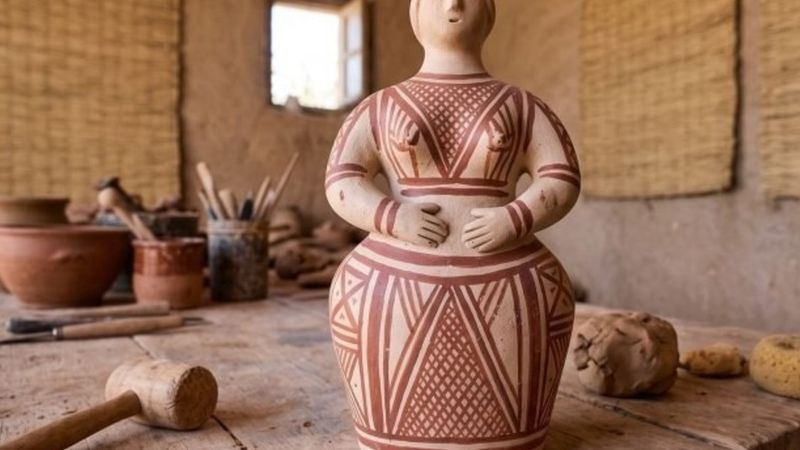
How the women of Sejnane and the Sadu tents made a world of geometric art the museum system had no shelf for — and how it is finally being called by its name.
Two women's traditions — the clay of Sejnane in Tunisia, the woven tents of the Arabian Peninsula — share no bloodline, only a rhyme: the same spare geometry, held and passed down by women, in whatever material their world gave them. This is the story of the visual knowledge the West filed under "craft," the makers it kept downstairs, and the contemporary artists now carrying it back up into the room where "art" is defined.
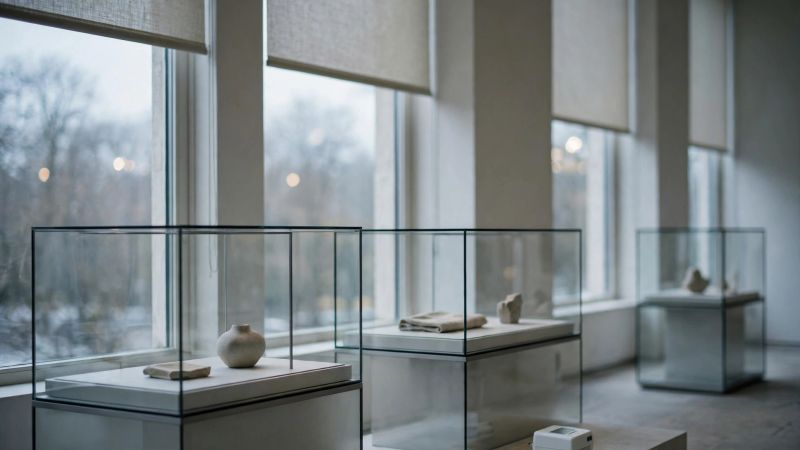
How museums slow collection damage with climate, pests and risk, using sourced ranges rather than a single 50% RH target
Staff keep collections usable by managing climate, pests, storage and risk at room scale. This guide sets out ICOM-CC and AIC definitions, CCI’s ten agents of deterioration, and museum humidity, temperature and light bands with their source caveats. It covers risk ranking, historic-house limits, monitoring costs and when to hire a specialist.
USPAP, ASA, AAA and ISA ladders, plus comps libraries: the practical career route into professional art valuation work
Art appraisal is a standards-bound career built on market hours, report discipline and association credentials. This guide maps USPAP and IVS awareness, ASA, AAA and ISA membership routes, RICS for UK practice, specialisms, liability and how you assemble a usable comparable-sales library for paid work.
Science prerequisites, master’s programmes, internships and specialisms on the route from first degree to bench work
Art conservation trains you to examine, stabilise and treat cultural objects under ethical codes. The route runs through chemistry and studio prerequisites, competitive master’s places, and post-graduate fellowships. This guide maps UK and US programmes, specialisms, costs and when a technician or allied role fits better.
How European art academies set training ladders, genre ranks and the polished Salon style that dominated the nineteenth century.
From plaster-cast rooms to Prix de Rome scholarships, academic art was a career system as much as a look. This guide maps French and British academies, the hierarchy of genres, painters from Ingres’s line to Cabanel and Bouguereau, and how modernists turned “academic” into a slur before ateliers revived the craft.
A period survey of prehistoric art: Ice Age conditions, parietal and portable media, major sites, and debates over meaning.
From South African ochre workshops to Chauvet’s sealed chambers and Altamira’s painted ceiling, prehistoric art shows how Ice Age and early farming communities marked stone, bone and ivory. This survey covers media, key sites via museums and replicas, and debates over magic, shamanism and authorship.

A historic restitution marks a new chapter in Pacific heritage recovery
The Sydney institution has formally transferred skeletal remains to their homeland, continuing a broader movement to rectify colonial-era acquisitions.

Tracing severed connections through suspended filaments and collective memory
The Japanese artist reimagines Milan's central atrium with a site-specific thread installation exploring loss, cyclical time, and public participation.
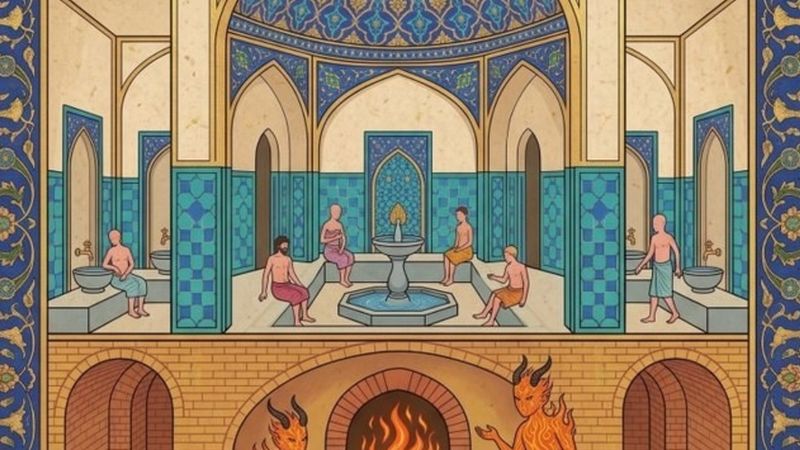
Seven kings, one for each day of the week. A portrait of Fever. Two spirits keeping a bathhouse warm. What the manuscripts actually show — and what the lamp replaced.
Folio 35v of a manuscript in Oxford shows the public baths at Tiberias in cutaway. Upstairs, people washing. Downstairs, two jinn tending the furnace, mid-conversation. It is not what most of the world expects — and it is much closer to what the unseen was actually understood to be for. A long read across twelve centuries of manuscripts, fieldwork, survey data and horror cinema.
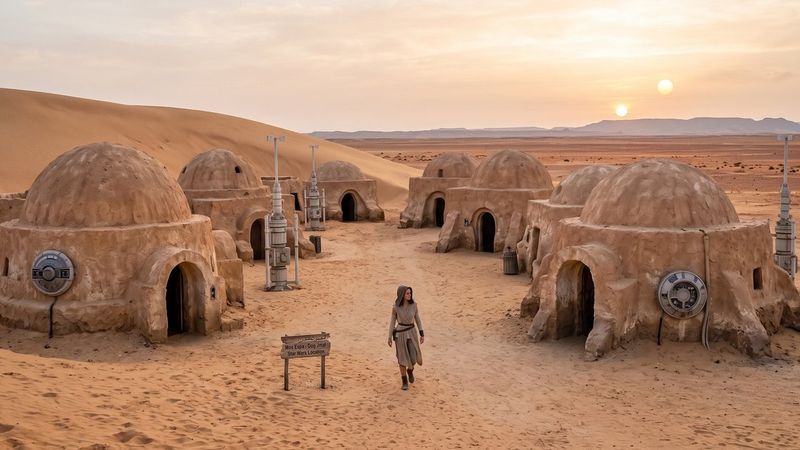
Every Star Wars filming location in Tunisia, from the sand-swept Mos Espa set to the cave hotel where Luke grew up — with maps, tips and a 3-to-7-day route.
Tunisia is the real Tatooine. George Lucas filmed here across five films, and most of the locations still stand. Here's every major Star Wars site — Mos Espa, Matmata, the Tataouine ksour, Djerba — plus how to link them into one desert trip.