
Exhibo Editorial
Nordic and Scandinavian Art
Viking carving to Golden Age light, national romantic myth and early modern museums, mapped through named museum holdings
Scandinavian art history names the painting, sculpture, wood carving and related visual arts produced in Denmark, Norway and Sweden, with Nordic usage also pulling in Finland, Iceland and associated territories. Searchers who type the phrase often meet wall-print shops and pale-wood interiors. The historical answer is older and narrower: animal-ornament metalwork and ship carving, medieval church programmes, academy training after 1800, national romantic myth-making, then early modern breaks that still hang in public museums.
This page sits in the World Art Traditions series. A parallel regional survey of Southeast Asian art covers another cluster in the same series. Collection pages for many of the institutions named below sit in the museums directory. Furniture design, mid-century chairs and shopping lists for “Scandi” living rooms belong elsewhere; they are a different search intent and stay outside this fence.
What “Scandinavian” and “Nordic” name in art history
In English museum labels, Scandinavian means Denmark, Norway and Sweden. Nordic widens the map to Finland, Iceland, the Faroe Islands and related territories. Finnish painting belongs in Nordic art history even when a strict Scandinavian list excludes it. Icelandic manuscript illumination and modern painting sit in the same wider frame. Tourist copy often collapses both words into one soft brand. Curators keep the distinction because patronage systems, languages and national museums diverged.
Inside the region, makers worked under local words for craft and school: guldalder for Denmark’s early nineteenth-century painting boom, nationalromantik for late-century nation-building images, friluftsmåleri for outdoor study. Period labels are scholarly tools. They help you hang a canvas in time. They do not prove that every painter of that decade shared a manifesto.
English-language search still treats “Scandinavian art” as if one look should answer it: birch, fog, folk flower, quiet room. Those motifs exist. They sit inside longer workshop histories. Viking craftsmen carved gripping beasts into wood and metal. Medieval workshops painted churches and carved portals. Nineteenth-century academies taught drawing from casts and nature. National museums later sorted those objects into rooms labelled Danish, Norwegian, Swedish or Finnish. The usable definition for a general reader is this: Scandinavian and Nordic art history is the body of dated objects and pictures made in those countries (and by artists from those countries working abroad) whose techniques, subjects and display formats were shaped by local materials, court and church patronage, academy training and modern national collections.
Conditions that shaped the northern traditions
Long winters, short summers and coastal light trained painters who later made a career of atmosphere. Pine, oak, birch and softwood forests supplied carving and construction. Iron, silver and amber fed metal workshops. Stone churches and timber farm buildings set the surfaces where medieval images lived. Climate alone does not invent a school. Patronage and training do.
From the late eighth century, long-distance trade and raiding linked Scandinavian workshops to the British Isles, the Baltic and further east. Imported silks and glass sat beside local wood carving in elite graves. After Christianisation, bishops and kings funded churches that needed sculpture, wall painting and liturgical metal. Reformation iconoclasm in parts of the region damaged or whitened earlier programmes; what survives is uneven and often fragmentary. Early modern courts imported Netherlandish and German painters, then built academies on European models.
The nineteenth century reorganised the field. Defeat, bankruptcy and national self-fashioning pushed Danish painters toward local landscape after the Napoleonic wars. Norway’s union politics and later independence fed images of fjord, farm and saga. Sweden’s industrial growth sat beside rural nostalgia in Dalarna scenes. Finland’s language politics and the Kalevala epic gave painters a mythic repertoire. Paris studios, Düsseldorf schools and German exhibitions trained northern artists who then returned with plein-air methods and Symbolist colour. Public museums in Copenhagen, Oslo, Stockholm and Helsinki became the rooms where those stories hardened into canons.
Religion, folklore and literature never sat outside that map. Lutheran interiors favoured restraint; folk painting on furniture and walls kept brighter colour in farmhouses. Poets and historians revived Norse texts that painters later illustrated. You meet those sources as “art history” only after museums and schools decide which objects count.
Viking and medieval arts, kept brief
Viking Age visual culture (late eighth to eleventh centuries) is workshop ornament more than easel painting. Animal styles evolve across finds: ribbon-animals, gripping beasts with claws locked on frames, later Urnes-style interlacing on stave-church portals. The Oseberg ship burial near Tønsberg, excavated in 1904 and dated to the early ninth century, remains the richest Norwegian ensemble. The Museum of the Viking Age in Oslo (the rebuilt former Viking Ship Museum on Bygdøy) holds the ship, carved sleds, a wagon and five animal-head posts whose gripping-beast and ribbon motifs define what textbooks still call the Oseberg style. The public galleries have been closed for rebuilding since 2021, with a planned reopening around late 2027; until then, related Viking objects are shown at the Historical Museum downtown (VÍKINGR / Miðgarðr). Broa bridle-mounts from Gotland show related gilt-bronze animals with oversized eyes. Everyday oval brooches carried the same grammar into wider society.
Medieval church art after conversion includes painted wooden churches, stone fonts, crucifixes and carved portals. Surviving programmes are local and incomplete. Stave-church portals such as Urnes show how Viking ornament mutated into Christian architectural sculpture. Wall paintings in Danish and Swedish churches preserve saints and Passion cycles in a northern tempera tradition. Metal workshops continued liturgical commissions. Treat this medieval stretch as a foundation layer: materials, animal ornament and church patronage. The museum story that English searchers want for “scandinavian art history” thickens after 1800, when academies and national galleries invent portable canons.
A chronology looking map
Period boundaries are scholarly conventions with soft edges. Dates below follow museum essays and standard school chronologies for the nineteenth and early twentieth centuries. Use the table as a looking map, then check the wall label when you stand in front of an object. Absolute dates for Viking style phases remain debated among archaeologists; museums prefer broad style names tied to type-sites.
| Phase (approx.) | Rough dates | What makers concentrated on | Named museum anchor |
|---|---|---|---|
| Viking Age ornament | c. 750–1050 | Ship carving; gripping beasts; metal brooches | Oseberg ship and animal-head posts (Museum of the Viking Age collection, Oslo; galleries closed until planned 2027 reopen) |
| Medieval church arts | c. 1050–1500 | Portals, wall painting, fonts, liturgical metal | Urnes-style portals; regional church collections |
| Early modern academies | 1600s–1700s | Court portraiture; imported Netherlandish models | Nationalmuseum, Stockholm; older Danish court holdings |
| Danish Golden Age | c. 1800–1850/1864 | Nature study; Copenhagen views; Italy travel pictures | C. W. Eckersberg circle, SMK (Statens Museum for Kunst), Copenhagen |
| Mid-century landscape & genre | c. 1850–1880 | National landscape; rural labour; Düsseldorf training | National Museum of Norway; Nationalmuseum landscape rooms |
| National romanticism | c. 1880–1910 | Folk costume; saga and Kalevala; rural ideal | Zorn, Larsson, Gallen-Kallela, Werenskiold holdings in Nordic capitals |
| Early modern breaks | c. 1880–1920 | Skagen plein-air; Symbolism; Munch; quiet interiors | Skagens Museum; MUNCH / National Museum, Oslo; Hammershøi at SMK |
The table stops before postwar design branding and living gallery scenes. After about 1920, Nordic artists kept working in abstraction, photography, installation and public art. Those decades answer different series on this site. Here the job ends when national romantic programmes and early modern experiments are in place, because those rooms still organise how museums caption historical Nordic painting.
Between the rows, two stretches repay a slower walk. Golden Age painters trained under Christoffer Wilhelm Eckersberg at the Royal Danish Academy turned Rome studies and Copenhagen edges into a grammar of clear light and measured composition. A generation later, painters at Skagen and in Kristiania (Oslo) broke that clarity with outdoor labour scenes, blue twilight beaches and psychological Symbolism. Keep both grammars in mind when a label says “nineteenth century.”
The Danish Golden Age
Denmark’s Golden Age of painting sits between 1800 and 1850, with some museum surveys extending to 1864. The years brought British bombardment of Copenhagen in 1807, state bankruptcy and the loss of Norway in 1814. Painters answered with close attention to local light, streets, harbours and family interiors. Grand history painting lost prestige in the same years. Christoffer Wilhelm Eckersberg (1783–1853), trained under Nicolai Abildgaard and later under Jacques-Louis David in Paris, became professor at the Royal Danish Academy in 1818. Museum texts still call him the father of Danish painting because he insisted on nature study and trained the next generation: Christen Købke, Martinus Rørbye, Constantin Hansen, Wilhelm Marstrand and others.
Typical Golden Age pictures look ordinary until you stay with them. A Copenhagen rampart, a boat on a lake, a cast collection at Charlottenborg, a Roman courtyard measured with perspective lines. Colour stays controlled. Edges stay crisp. Figures sit in believable light. Travel pictures from Italy brought southern architecture home without abandoning northern observation. SMK in Copenhagen holds the core public collection; Nationalmuseum in Stockholm and the Petit Palais in Paris co-organised major Golden Age exhibitions with SMK around 2019–2020, and the Metropolitan Museum of Art and Getty later staged related nineteenth-century Danish shows. International curators now treat the period as a European peak of intimate realism, not a provincial footnote.
Golden Age painting also prepared later nationalism. Flags, castles such as Frederiksborg, and suburban edges of Copenhagen appear as quiet claims about place. Købke’s lake views from Dosseringen are local walks as much as landscapes. When later artists painted folk costume and saga kings, they inherited a public already trained to read national meaning in ordinary northern scenes.
National romanticism across the North
Late nineteenth-century painters in Sweden, Norway and Finland built national images from rural life, folklore and medieval or mythical pasts. Critics and artists used terms such as nationalromantik for this programme. The movement overlaps Symbolism and Art Nouveau without collapsing into either. Painters rejected pure cosmopolitan fashion and also refused empty academic allegory. They wanted motifs that felt local: Midsummer dances, Karelian forests, Hardanger weddings, Norse sacrifice scenes.
In Sweden, Anders Zorn painted Dalarna villagers and water with a bravura brush that made rural life look modern and expensive at once. Carl Larsson designed domestic idylls at Sundborn and also proposed monumental Norse subjects; his Midwinter Sacrifice (final version completed for a Nationalmuseum commission debate in the early twentieth century) drew on saga material and sparked public argument about what a national mural should show. Prince Eugen painted Swedish landscape as an aristocratic modernist. In Norway, Erik Werenskiold illustrated the 1899 Heimskringla edition and helped fix how readers pictured saga kings. Earlier, Adolph Tidemand and Hans Gude’s collaborative Bridal Procession on the Hardangerfjord (1848, National Museum of Norway) had already sold a tourist-ready Norway of costume and fjord. In Finland, Akseli Gallen-Kallela turned from Bastien-Lepage realism toward Symbolist Kalevala cycles such as The Aino Triptych and The Defence of the Sampo, shaping how Finns still visualise the epic. Karelianism, the trek to eastern Finnish and Karelian culture for “authentic” motifs, fed that turn.
National romanticism was a construction, not a pure folk survival. Artists selected costumes, edited landscapes and borrowed medieval ornament for modern canvases and buildings. Architecture of the same decades (National Romantic style banks, museums and churches) made the same claim in brick and granite. Treat the paintings as arguments about identity under industrialisation and language conflict, then check them against the folk objects in ethnographic museums when you want the craft source.
Key painters and workshops
Names dominate textbook chapters. Workshops, academies and artist colonies did as much work. Eckersberg’s classroom at Charlottenborg set Danish looking habits for decades. Skagen’s boarding houses and Brøndum’s Hotel networked Danes, Norwegians and Swedes around shared models and dunes. Kristiania’s Bohemian circles argued over Naturalism and Symbolism in print. Paris ateliers and the Académie Julian trained northern women and men who then renegotiated home markets.
Three clusters repay close naming. First, the Golden Age academy circle around Eckersberg. Second, the national romantic generation that illustrated epics and rural festivals. Third, the early modern break led in global fame by Edvard Munch but prepared by Skagen plein-air and by quieter Danes such as Vilhelm Hammershøi. Biography alone misleads: many canvases were finished in studios from outdoor sketches; many “folk” scenes used paid models in arranged costume.
Golden Age teachers and pupils
Eckersberg’s Rome views from around 1815 showed Danish painters how measured perspective and observed light could replace older idealising rhetoric. Back in Copenhagen he taught cast drawing and outdoor study. Christen Købke (1810–1848) became the pupil later museums treat as the period’s lyric centre: citadel gates, plaster cast rooms, Frederiksborg towers, Østerbro mornings. Martinus Rørbye travelled farther, including early visits to Skagen that later colonies mythologised. Constantin Hansen painted Italian subjects and Danish gatherings with classicising structure. Wilhelm Marstrand turned to genre and literary scenes. J. Th. Lundbye and P. C. Skovgaard pushed Danish landscape toward national woodland and coast.
These painters shared training more than a signed manifesto. Bankruptcy and small markets kept many of them close to Copenhagen subjects. Academy medals funded travel. Royal and bourgeois collectors bought modest formats. When you walk SMK’s Golden Age rooms, you meet a school of looking: clean edges, sober colour, respect for weather and brick. That school later looked conservative to Skagen naturalists, yet it remains the foundation northern museums use to teach nineteenth-century seeing.
National romantic makers
Anders Zorn (1860–1920) moved between Mora, Stockholm, Paris and the United States, painting society portraits and naked bathers with the same wet, confident stroke he used for Midsummer dancers. Carl Larsson (1853–1919) made Sundborn domestic scenes that later design culture recycled, while his mural ambitions reached for saga gravity. In Norway, Harriet Backer and Kitty Kielland claim space beside better-known men for interior light and landscape. Christian Krohg painted social subjects that fed Naturalist debate. Erik Werenskiold’s saga illustrations taught a generation of readers what Viking-age bodies should look like on the page.
Finland’s Gallen-Kallela (1865–1931) finnicised his name from Gallén in 1907 and built Tarvaspää as house and studio. His Paris pavilion frescoes of 1900 exported Finnish myth to a world’s fair audience. Louis Sparre and other Karelian travellers shared the hunt for eastern motifs. Across the region, Artists’ Unions and secession-style groups fought academy juries for hanging rights. National romanticism was as much institutional politics as folklore costume.
Munch and the modern break
Edvard Munch (1863–1944) trained in Kristiania, showed in Berlin and Paris, and built a serial practice around love, sickness, jealousy and death that he grouped as the Frieze of Life. The Scream (1893 painted version, National Museum of Norway; related pastels and a later painted version at MUNCH) turned a fjord sunset into a universal anxiety icon. Tempera and crayon on cardboard, fragile enough that museums rotate light exposure, the Oslo painting refuses academic finish. Distorted figure, blood-red sky, two distant friends walking on: the picture treats landscape as psychic weather.
Munch’s lithographs of the motif (from 1895) multiplied the image before mass culture finished the job. Other early modern Nordics took different roads. Skagen painters brought French-trained outdoor light to Danish fishermen. Hammershøi emptied Copenhagen rooms of rhetoric and left dust-grey quiet. Swedish and Finnish Symbolists painted mood landscapes (stämningsmåleri) that sit beside national romantic costume scenes in the same decades. Early modernism in the North is plural. Munch is the name global search knows; he is not the only break.
Four works, read closely
Classroom summaries list periods and stop. The search gap is objects with dates, media and rooms, read for decisions you can see. The four below run from Viking carving to Golden Age lake light, national romantic myth and early modern anxiety. Each section stays with one work or ensemble. Together they sample wood, oil paint and the move from workshop ornament to modern icon.
Stand in front of the object when you can. Reproduction flattens carved depth, Prussian blue fading and cardboard glare. Museum lighting and case glass add their own distortions. The looking notes below assume you have a catalogue page or a clear photograph to hand.
Oseberg animal-head posts (Museum of the Viking Age, Oslo)
The five carved wooden animal-head posts from the Oseberg burial (early ninth century) are among the most studied Viking Age sculptures that survive. Each head sits on a post; surfaces swarm with gripping beasts and interlace cut at varying depths so light catches ridges in a ship-hall or burial chamber. The ship itself, an oak vessel buried with two women and a rich textile and tool assemblage, carries related prow ornament. The posts are carved from maple, a hard deciduous wood chosen for fine undercuts; archaeologists still debate their exact ritual use. What you can verify with your eyes is workshop skill: control of grain and silver-rivet detail on some heads, rhythm of claws and tendrils, balance between surface pattern and three-dimensional snout.
These carvings answer the shopping-SERP fantasy of “Scandinavian art” with a harder fact. Northern visual culture begins in portable wealth and burial display. Minimalist prints are a later retail fiction. Later national romantic painters revived Norse subjects with modern oil technique. They left Oseberg’s carving grammar behind. When you move from the Viking Age collection (once the galleries reopen, or via Historical Museum Viking displays in the interim) to a nineteenth-century saga canvas, you cross a break in medium, patronage and meaning. Keep both chapters; do not let the later picture overwrite the earlier wood.
Christen Købke, View from Dosseringen near Sortedam Lake (SMK, Copenhagen)
Købke’s 1838 oil of the view from Dosseringen toward Nørrebro shows two figures on a jetty, a small boat and a Danish flag on a tall pole above still water. SMK acquired the painting early; it has become a Golden Age textbook image. Conservation research published by the museum notes that unstable Prussian blue has faded, shifting later readings toward a romantic sunset mood. Digital reconstructions of the original midday clarity change how you understand Købke’s intent: bright water and sky, not only dusk melancholy.
The flag sits in the compositional centre. In the 1830s ordinary citizens needed permission to fly the Dannebrog; Købke’s placement speaks to national feeling as well as to local walking routes from his Østerbro world. Little “happens” in the picture. That restraint is the point. Golden Age looking trains you to care about edge, reflection and weather. Compare this jetty to a Skagen beach fifty years later and you will see how outdoor light and brushstroke loosen while the northern habit of weather-as-subject remains.
Akseli Gallen-Kallela, Kalevala painting (Ateneum / Finnish National Gallery context)
Gallen-Kallela’s Kalevala paintings of the 1890s, including works such as Lemminkäinen’s Mother and The Defence of the Sampo, translate Elias Lönnrot’s epic compilation into Symbolist colour, flattened pattern and heroic body types. The Ateneum Art Museum in Helsinki holds major examples and remains the first stop for Finnish national romantic painting. Earlier realist canvases by the same artist show Bastien-Lepage influence; the mythic turn after Karelian travel hardens contour and deepens reds and blacks.
Read these pictures as nation-building tools made for a bilingual empire on the edge of Russian rule, not as timeless folk art. Gallen-Kallela designed furniture, textiles and architecture as well as canvases; the total programme matches National Romantic architecture elsewhere in the Nordic region. If you only know Nordic art through Munch, stand here to see a parallel modern myth system with different politics and a different museum home.
Edvard Munch, The Scream (National Museum of Norway, Oslo)
The National Museum’s 1893 version of The Scream (tempera and crayon on cardboard, 91 × 73.5 cm) is the version most textbooks reproduce. MUNCH holds further versions, including a crayon drawing of 1893, a later painted version often dated around 1910, and multiple 1895 lithographs. Museum wall texts quote Munch’s prose of a walk at sunset above the Kristiania fjord when the sky turned “blood-red” and he felt a great scream through nature. The painted figure is genderless and skull-like; friends continue along the bridge behind. Form and feeling lock: wavy colour acts like sound.
Nasjonalmuseet keeps light low because the cardboard support is fragile. That conservation fact is part of looking. So is the motif’s later life as emoji and poster, which the museum acknowledges without letting kitsch erase the 1893 object. Pair The Scream with a Golden Age Copenhagen view on the same trip if you can. The distance between measured jetty and screaming bridge is the distance northern painting travelled across the nineteenth century.
Early modern currents after the academies
By the 1870s and 1880s, Scandinavian artists joined European art colonies and Naturalist debates. Skagen, at Denmark’s northern tip where seas meet, drew Michael and Anna Ancher, P. S. Krøyer, Laurits Tuxen, Christian Krohg, Oscar Björck and others. Hirschsprung Collection notes and Skagens Museum histories stress outdoor study, fishermen as modern labouring subjects, and sand grains trapped in paint as evidence of beach work. Krøyer’s arrival in 1882 brought Paris-trained light and social polish; Michael Ancher kept a tougher realist line on rescue crews and weather-beaten faces. Anna Ancher’s interiors and colour experiments claim equal weight in recent curatorship.
Symbolist and quietist roads ran beside the colony. Hammershøi’s emptied rooms in Copenhagen turn domestic space into near-abstraction. Swedish mood landscape painters softened national romantic clarity into dusk and reflection. Finnish Symposion circles linked painters, composers and writers. Women artists fought academy limits and built careers in interiors, landscape and portraiture that museums still under-hang relative to male peers. Early modernism here means a set of breaks with Golden Age finish: looser stroke, modern subjects, psychic content, serial printmaking. It does not mean a single Nordic Bauhaus story. Design modernism of the mid-twentieth century is a later chapter with its own commercial SERP; this article leaves it aside on purpose.
How the tradition travelled and mutated
Northern artists studied in Paris, Düsseldorf, Munich and Berlin, then sent pictures home and abroad. World’s fairs displayed national pavilions. German dealers and critics took up Munch with scandal and profit. Anglo-American collectors bought Zorn portraits. Twentieth-century blockbuster tours of Golden Age and Munch shows reintroduced museum publics to canons that tourist shops had flattened into folk pattern.
Mutation also happened inside the region. Norwegian independence in 1905 reframed how museums told national stories. Finnish independence in 1917 did the same for Gallen-Kallela’s generation. Swedish institutions argued over mural subjects and modern hanging. Photography and graphic arts took over some documentary roles painting once held. Later artists quoted national romantic motifs with irony or grief. The historical tradition remains legible because major works stayed in public collections rather than dispersing into private décor markets alone.
Cross-border looking helps. A Danish Golden Age room and a Finnish Kalevala room share nineteenth-century nation-building pressures while differing in myth source and colour. A Skagen fisherman canvas and a Munch sickroom share modern subject matter while differing in psychic temperature. Series essays on other world traditions on this site use the same comparative habit: conditions, objects, museums.
Critics then and now
Nineteenth-century critics argued over finish, morality and national duty. Academy juries rejected secessionist hangings. Church and press voices attacked Munch’s Berlin exhibitions in the 1890s as diseased. Supporters answered with Nietzschean and Symbolist vocabularies. National romantic illustrators won popular audiences and later faced charges of kitsch or chauvinism. Golden Age painters once seemed local; recent international exhibitions have revised that judgment upward.
Contemporary scholarship stresses construction: how museums invent canons, how folk costume is staged, how colonial and Sámi histories fit poorly inside “Nordic” frames that older textbooks ignored. Conservators revise colour readings when pigments fade, as with Købke’s lake. Provenance research tracks wartime and market movements of Munch prints and Golden Age oils. Feminist curatorship has pulled Anna Ancher, Harriet Backer and others toward the centre of permanent displays. Critics still argue over fame, yet the useful work is to keep periods, nations and media distinct while offering a usable map.
What these traditions leave in museum practice
Walk the capitals with a short list. In Copenhagen, SMK for Golden Age and Hammershøi; Hirschsprung for Skagen-related holdings; Skagens Museum on the peninsula for colony paintings in place. In Oslo, the National Museum for Tidemand and Gude, Werenskiold and the 1893 Scream; MUNCH for the larger Munch corpus and rotating Scream versions; the Museum of the Viking Age for Oseberg once it reopens (planned late 2027), with Historical Museum Viking displays available in the meantime. In Stockholm, Nationalmuseum for Swedish nineteenth-century painting and Larsson debates; Zorn collections in Mora for Dalarna context. In Helsinki, Ateneum for Gallen-Kallela and Finnish national romanticism.
What remains for students and travellers is a sequence you can verify: ornamented wood, academy light, national myth, modern anxiety. What the commercial SERP sells as Scandinavian art is a later lifestyle filter. Keep the filter off when you read wall labels. The historical pictures still reward slow looking, and the museums directory is a practical next step for planning those rooms.
FAQ
Is Scandinavian art the same as Nordic art?
Scandinavian art history centres Denmark, Norway and Sweden. Nordic art history adds Finland, Iceland and related territories. Museum labels and university courses often use Nordic when Finnish painting is in scope. Everyday English collapses the words. For looking and reading, keep the wider Nordic frame available and note which country a painter worked for.
What is the difference between Scandinavian art history and Scandinavian design?
Art history here means dated paintings, sculptures, carvings and related museum objects from Viking workshops through early modern painting. Scandinavian design in popular search means twentieth-century furniture, ceramics and interior styling. The two fields share geography and sometimes designers who also painted. They answer different questions. This article stays with historical visual arts and leaves shopping guides aside.
Who is the most famous Scandinavian artist?
Global fame points to Edvard Munch, whose Scream versions in Oslo museums are among the most reproduced images in modern art. Inside the region, Golden Age painters such as Eckersberg and Købke, and national romantic figures such as Zorn and Gallen-Kallela, carry equal weight in local canons. “Most famous” depends on whether you measure tourist recognition, auction headlines or school curricula.
What was the Danish Golden Age?
The Golden Age was a period of Danish painting centred on the early nineteenth century, often dated about 1800–1850 and sometimes extended to 1864. Eckersberg’s teaching at the Royal Danish Academy trained painters who favoured nature study, Copenhagen views and Italian travel pictures. SMK holds the primary public collection. Recent touring exhibitions have argued for the period’s European importance.
What is national romanticism in Nordic art?
National romanticism was a late nineteenth- and early twentieth-century programme that used folk life, landscape and mythic or medieval subjects to build national images. Swedish, Norwegian and Finnish painters led different local versions. Architecture of the same decades used related medievalising forms. The pictures are modern constructions, not transparent windows onto Viking life.
Where can I see The Scream?
The National Museum of Norway in Oslo holds the celebrated 1893 painted version. MUNCH in Oslo holds further versions, including drawing, later painting and lithographs, and rotates display for conservation. Related prints appear in other museum collections worldwide. Check current display before travel; cardboard supports limit continuous lighting.
Did Viking art influence nineteenth-century Nordic painting?
Viking ornament shaped stave-church sculpture and later craft revival more than it shaped Golden Age oil painting. National romantic artists revived Norse stories and motifs with modern techniques. They seldom copied Oseberg carving stroke for stroke. Treat Viking wood and metal as an earlier chapter, then national romantic saga pictures as a selective modern reuse.
What should I read or visit first if I am new to the subject?
Start with one Golden Age room at SMK, one national romantic room in Stockholm or Helsinki, and the Munch rooms in Oslo. Add the Museum of the Viking Age when it reopens (or the Historical Museum’s Viking displays meanwhile) if you want the medieval and Viking foundation. Pair those visits with this series hub on World Art Traditions for comparative context across regions.
Related reading
Sharjah Biennial 17 Unveils Curatorial Vision and Opening Schedule
Angela Harutyunyan and Paula Nascimento frame the 2027 edition around archival residue and spatial memory
The seventeenth iteration of the Sharjah Biennial runs from January to June 2027, presenting a dual curatorial methodology that examines historical legacies and infrastructural critique across multiple emirate locations.
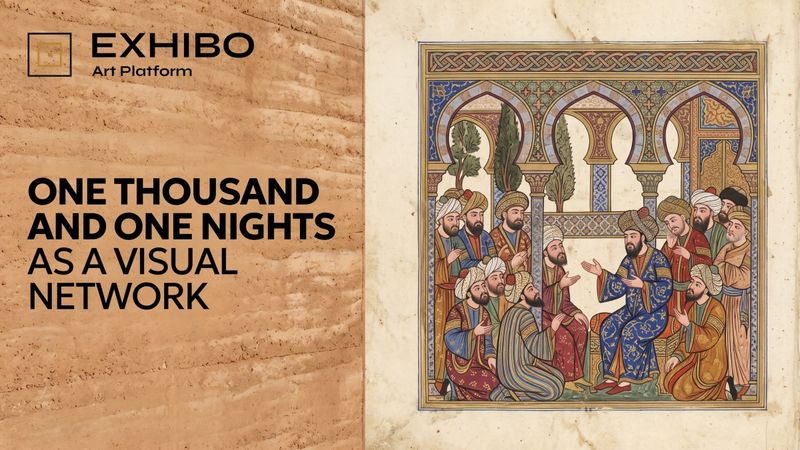
One Thousand and One Nights as a Visual Network
The book that taught Europe to picture the East arrived with no pictures at all. Three centuries of illustrators — Dutch, Egyptian, Persian, French, German, Iraqi — each gave it a face, and every face was a self-portrait.
Open Galland's Thousand and One Nights, the edition that conquered Europe, and there is nothing to look at: no genie, no lamp, not one illustration. The most visually imagined book in the world began blind — and because its text was never fixed either, no picture of it could ever be a copy.
Curating Tomorrow's Archive: Hamburger Kunsthalle Seeks Contemporary Collections Lead
A new permanent appointment will steer the museum's post-1960 holdings across paper, photography, and media formats.
The Hamburger Kunsthalle is inviting applications for a senior curatorial position focused on contemporary acquisitions, exhibition strategy, and digital collection management. Applications close October 2026 for a January 2027 start.