Exhibo Editorial

Blog

Latest articles from Exhibo: city guides, market reports, gallery news, and art world coverage across Dubai, London, New York, and global hubs.

RSS feed

Regions

Editorial

All editorial
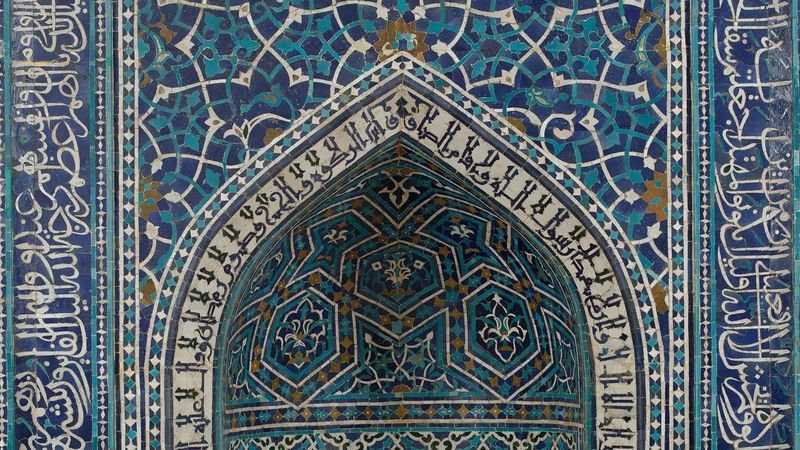
Blue and turquoise glazed tile mosaic of a mihrab, a prayer niche, from Isfahan, Iran, dated 1354–55, with a pointed arch framed by bands of Arabic calligraphy
Editorial

56 English Words With Arabic Roots: Art, Colour, Fabric and Architecture

Azure lost a letter, alcohol was once eye make-up, and a sofa was a carpeted platform. A field guide to the art words English borrowed from Arabic — and how sure we can be about each one.

Your sofa, your cotton shirt and the sequins on a party dress all have Arabic roots. We checked 56 English words from the world of art — colour, cloth, architecture and the studio — against two major dictionaries to trace where each came from, which languages carried it, and which famous etymologies are still disputed.
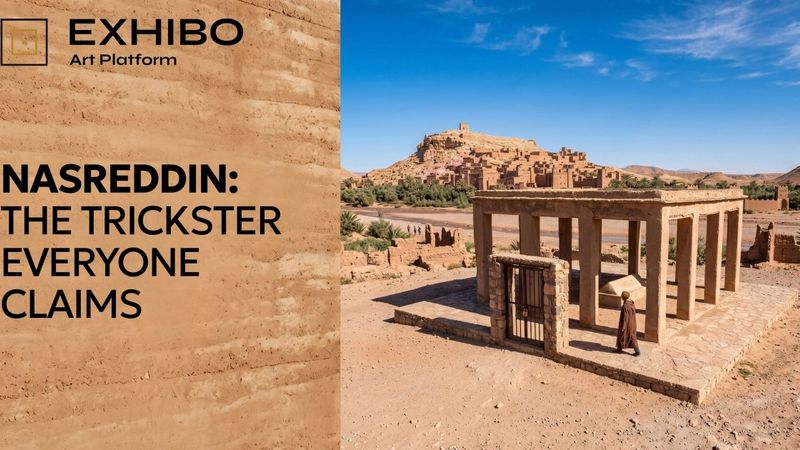
An open, columned tomb pavilion with a padlocked iron gate standing on one side and no walls around it, so the locked gate can simply be walked around.
Editorial

Nasreddin: The Trickster Everyone Claims

A padlocked gate with no walls, two rival graves, and stories told among two dozen peoples: how the wise fool of the Islamic world became a shape every culture fills with itself.

In Akşehir, a tomb said to hold Nasreddin Hodja stands in an open pavilion behind a heavy padlocked gate — with no wall on either side. It is the perfect monument to a man who may not be in it. The stories told under his name belong to more than one tradition and more than one century: Turkish, Persian, Arab, Central Asian, Uyghur. Reformist satirists, Soviet novelists, Chinese animators and UNESCO have each tried to give him a fixed home.

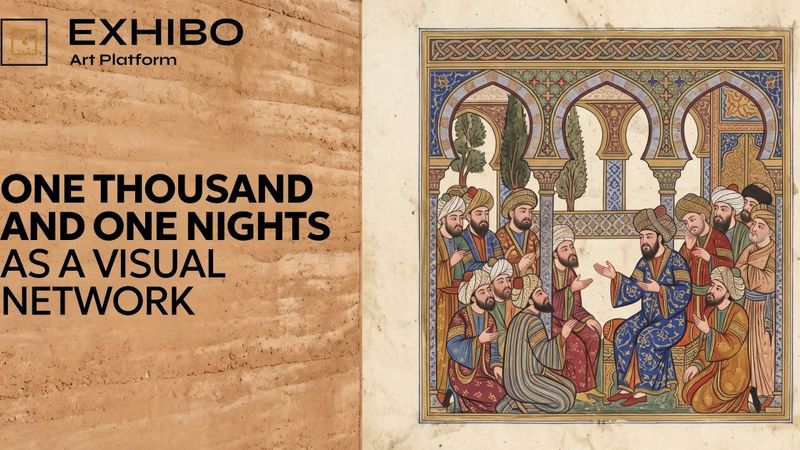
An illustrated miniature in the style of the medieval Baghdad school: robed figures gathered under arches, painted in flat jewel colours with gold outlining.
Editorial

One Thousand and One Nights as a Visual Network

The book that taught Europe to picture the East arrived with no pictures at all. Three centuries of illustrators — Dutch, Egyptian, Persian, French, German, Iraqi — each gave it a face, and every face was a self-portrait.

Open Galland's Thousand and One Nights, the edition that conquered Europe, and there is nothing to look at: no genie, no lamp, not one illustration. The most visually imagined book in the world began blind — and because its text was never fixed either, no picture of it could ever be a copy.

A robed, veiled crowd gathered in a red desert landscape in the style of a science-fiction epic — the visual vocabulary Hollywood reuses to signal an alien world.
Editorial

Why Every Sci-Fi Desert Looks Arab

From Arrakis to Tatooine, when a film wants a desert to feel ancient, prophetic and alien, it reaches for an Arab and Berber vocabulary — and reveals more about the West that built it than the region it borrows from.

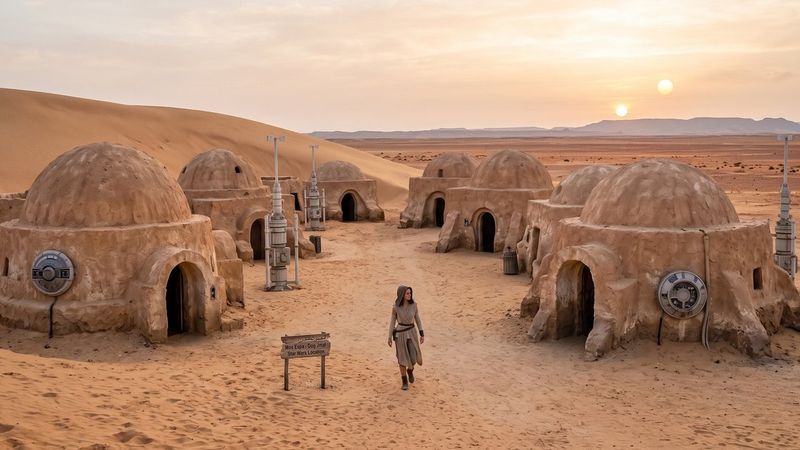
The wrapped faces, the trilling women, the barely-displaced Arabic: cinema's alien deserts keep sounding Arab. But the vocabulary was assembled in the West — from Orientalist painting to Lawrence to Dune — and it says more about who is looking than about anyone being looked at.

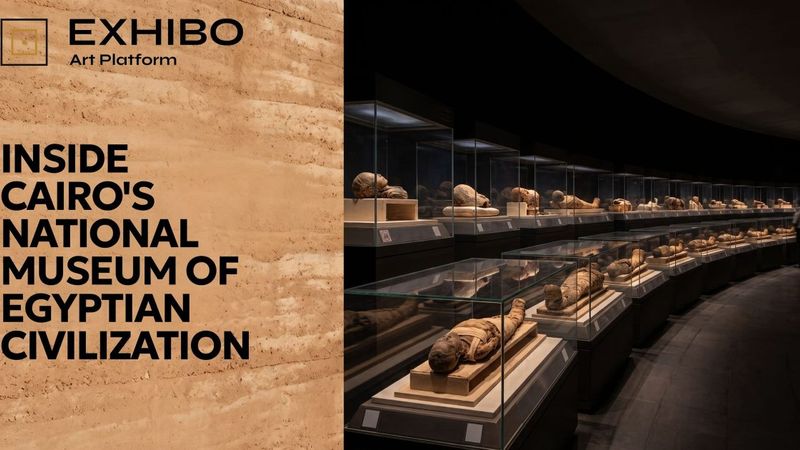
The dim, black-walled Royal Mummies Hall of the National Museum of Egyptian Civilization in Fustat, Old Cairo
Editorial

The Museum of Everything That Became a Tomb

Egypt built a museum to tell the story of an entire civilisation — seven thousand years of it, from flint tools to the present. The public knows it for one thing: the room where twenty dead kings lie in the dark.

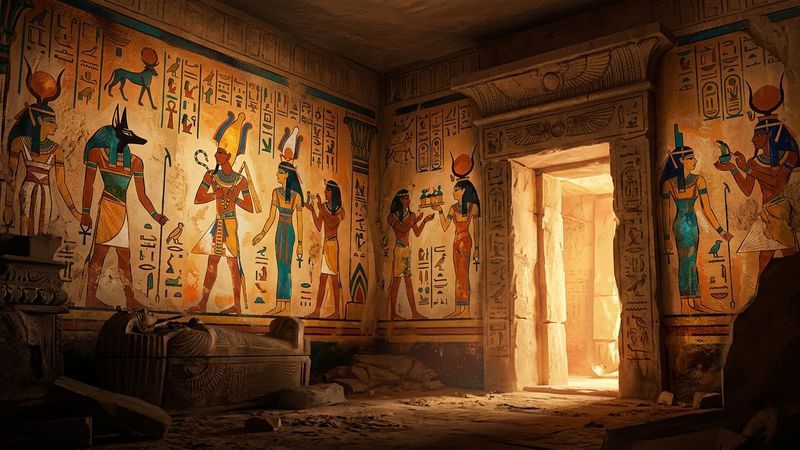
In a black, hushed hall beneath the National Museum of Egyptian Civilization in Old Cairo lie the mummified bodies of Ramesses II, Hatshepsut, and eighteen other rulers of the New Kingdom — carried here in 2021 in a televised parade watched around the world.

Guides

All guides
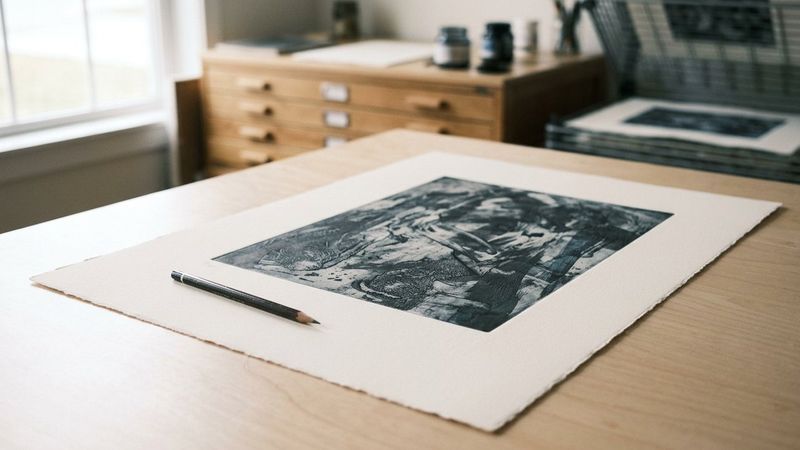
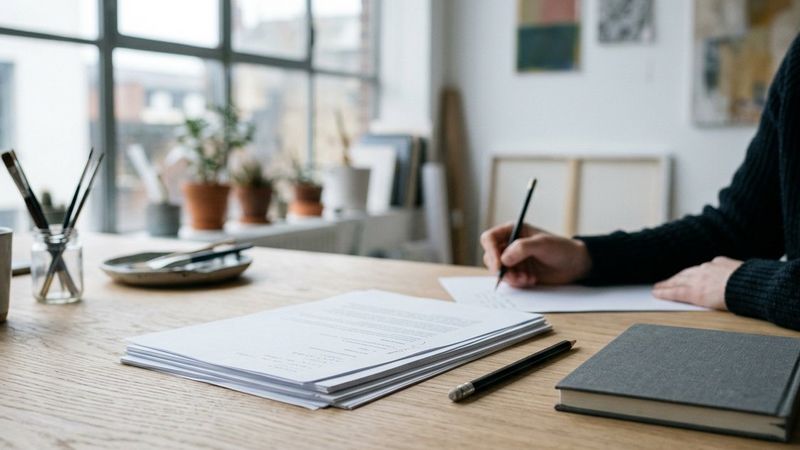
Printmaker’s table with a finished print, hard graphite pencil and edition fraction being written in the lower left margin
Guide

How to Sign and Number an Edition

Pencil layout, fraction numbering and AP/HC/PP marks so every impression in your limited edition reads as authorised studio practice

Sign and number limited edition prints with standard pencil placement: edition fraction left, optional title centre, signature right. Covers AP, HC, PP and BAT marks, 2H pencil habits, full-bleed and verso signing, workshop chops, a materials table, professional studio practice, costs and when to bring in a master printer or publisher.

Latest articles

Civic Fame statue atop Manhattan Municipal Building cupola observation deck

Manhattan's Municipal Building Opens Historic Cupola as Free Observation Deck

After a six-million-dollar restoration, the David N. Dinkins Municipal Building at 1 Centre Street welcomes visitors to its newly accessible rooftop terrace, offering fresh perspectives on the city's architectural heritage.

The century-old civic skyscraper's restored cupola provides a unique vantage point, while revealing the overlooked story of Hettie Anderson, the Black model who inspired its iconic Civic Fame statue.

Abstract illustration of a Tyrannosaurus rex skeleton in a threatening pose, rendered in geometric shapes and earth tones.

Tyrannosaurus Rex 'Gus' Sets New Auction Record at Sotheby's

The 67-million-year-old skeleton fetches $50.1m, surpassing the previous high set by a Stegosaurus in 2024.

A remarkably preserved Tyrannosaurus rex skeleton named 'Gus' sold for $50.1m at Sotheby's New York, becoming the most expensive dinosaur fossil ever auctioned. The 38-foot specimen, 61% complete by bone count, was discovered in South Dakota and prepared with 3D-printed elements. The sale raises questions about private ownership limiting scientific access.