
Salzburg · Austria
Salzburger Kunstverein's Summer 2026 Program Explores Uncertainty and Social Chance
Two exhibitions and a lecture performance series examine the spaces between certainty and probability
Uncertain Realities
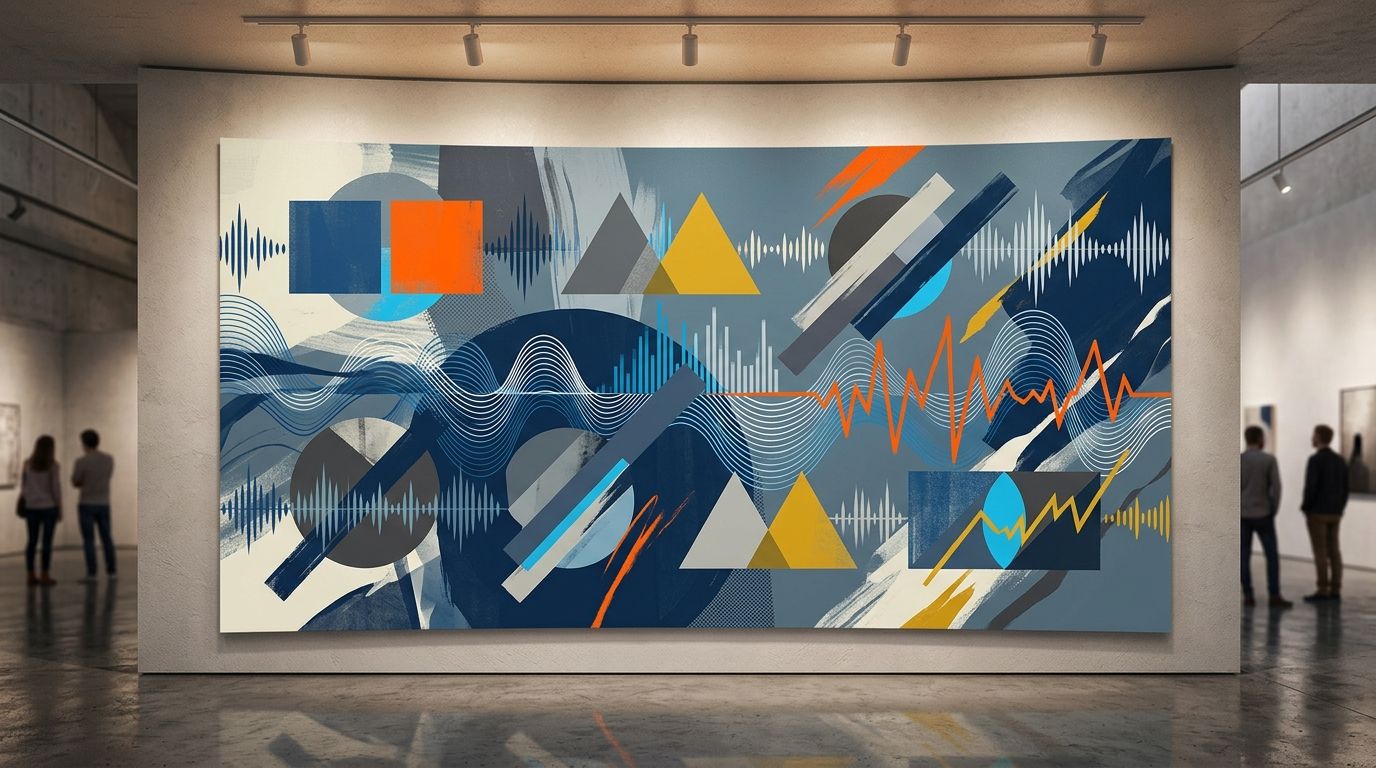
Salzburger Kunstverein's summer programme continues its year-long investigation into CAPTCHA Realism, presenting two concurrent exhibitions that probe the unstable ground between certainty and ambiguity. The shows open on 24 July and run through September, accompanied by an evening event featuring DJ Bell Towers.
Ryan Gander: One Hundred Things Twice
In the Grand Hall, Ryan Gander offers an inventory of potential realities through paired objects, near-matches and subtle misalignments. Classical logic demands binary states: present or absent, true or false. Gander's practice instead inhabits the moment before meaning crystallises, asking what occurs when objects resist singular definition.
The exhibition title implies systematic enumeration, yet the relationships between elements generate meaning beyond individual objects. Each piece becomes a node in a network of associations, shaped by viewing time, interrupted expectations, and the viewer's path through space. Meaning circulates rather than resides.
Hac Vinent: [unintelligible]
The Studio space hosts Hac Vinent's exploration of bodily classification systems. Challenging the myth of complete, autonomous embodiment, the installation employs low-frequency sound structured around the artist's hearing prosthesis. Vinent's deafness informs a sonic field that questions normative assumptions about perception and communication.
The title's 'hard' persistence references ongoing labour navigating systems that measure and reformulate bodies. Here, persistence means appearing across multiple registers without reduction to any single category. The resulting figure is contradictory: technologically mediated yet materially vulnerable, exceeding containment attempts.
The Distribution of Luck
A lecture performance series brings together Harun Morrison, Filipka Rutkowska, Urok Shirhan and Gernot Wieland across two evenings in August. The events examine how chance operates within technological and social frameworks, addressing love, class, money and identity through gambling, citizenship and institutional structures.
The performances ask whether algorithms can believe in luck while revealing how random forces shape both digital systems and lived experience. Events take place on 5 and 12 August at various locations throughout the city.
Both exhibitions open together on 24 July at 8pm, with an after-party continuing until midnight. The programme is curated by Mirela Baciak, with the lecture series co-curated by Denis Maksimov and co-produced with Salzburg International Summer Academy of Fine Arts.
The summer programme demonstrates how contemporary art might navigate between certainty and probability, offering frameworks for understanding bodies and systems that exceed conventional categorisation.
Galleries mentioned
Related reading
Curating Tomorrow's Archive: Hamburger Kunsthalle Seeks Contemporary Collections Lead
A new permanent appointment will steer the museum's post-1960 holdings across paper, photography, and media formats.
The Hamburger Kunsthalle is inviting applications for a senior curatorial position focused on contemporary acquisitions, exhibition strategy, and digital collection management. Applications close October 2026 for a January 2027 start.
Whilst We Are Savages: Colonial Constructs and Atlantic Dialogues
A critical survey at TEA Tenerife exploring how colonial frameworks shaped identity, territory, and knowledge across Europe, Africa, and Latin America.
William Morris Gallery Reopens With Intimate Restoration and New Focus
A comprehensive overhaul at the Walthamstow venue explores the designer's contradictions through newly displayed archives and a domestic curatorial approach.