
Luxor · Egypt
Ancient Egyptian Tomb with Vibrant Murals Unearthed in Luxor
Dutch excavation reveals well-preserved Ramesside period burial with rare coloured wall paintings
Discovery Details
A remarkably preserved tomb dating to approximately 3,000 years ago has been uncovered on the west bank of Luxor, Egypt, by a Dutch archaeological team led by Karina van den Hoeven from Leiden University. The discovery, made during the current excavation season in the Sheikh Abd el-Qurna area, offers promising new perspectives on the lives of Thebes' ancient inhabitants.
The burial dates to the Ramesside period, encompassing the 19th and 20th Dynasties of Egypt's New Kingdom, which stretched from roughly 1292BC to 1077BC. This era represents a significant chapter in Ancient Egyptian history, marked by extensive building programmes and artistic innovation.
The Tomb's Owner
Inscriptions found within the tomb identify its occupant as Paser, a name frequently associated with priestly or high-ranking officials in Theban society. The tomb's location east of an established cemetery, where the archaeological team has conducted fieldwork since 2018, supports this interpretation. Hisham Alithi, secretary general of Egypt's Supreme Archaeological Council, confirmed these details in an official statement.
Artistic Treasures
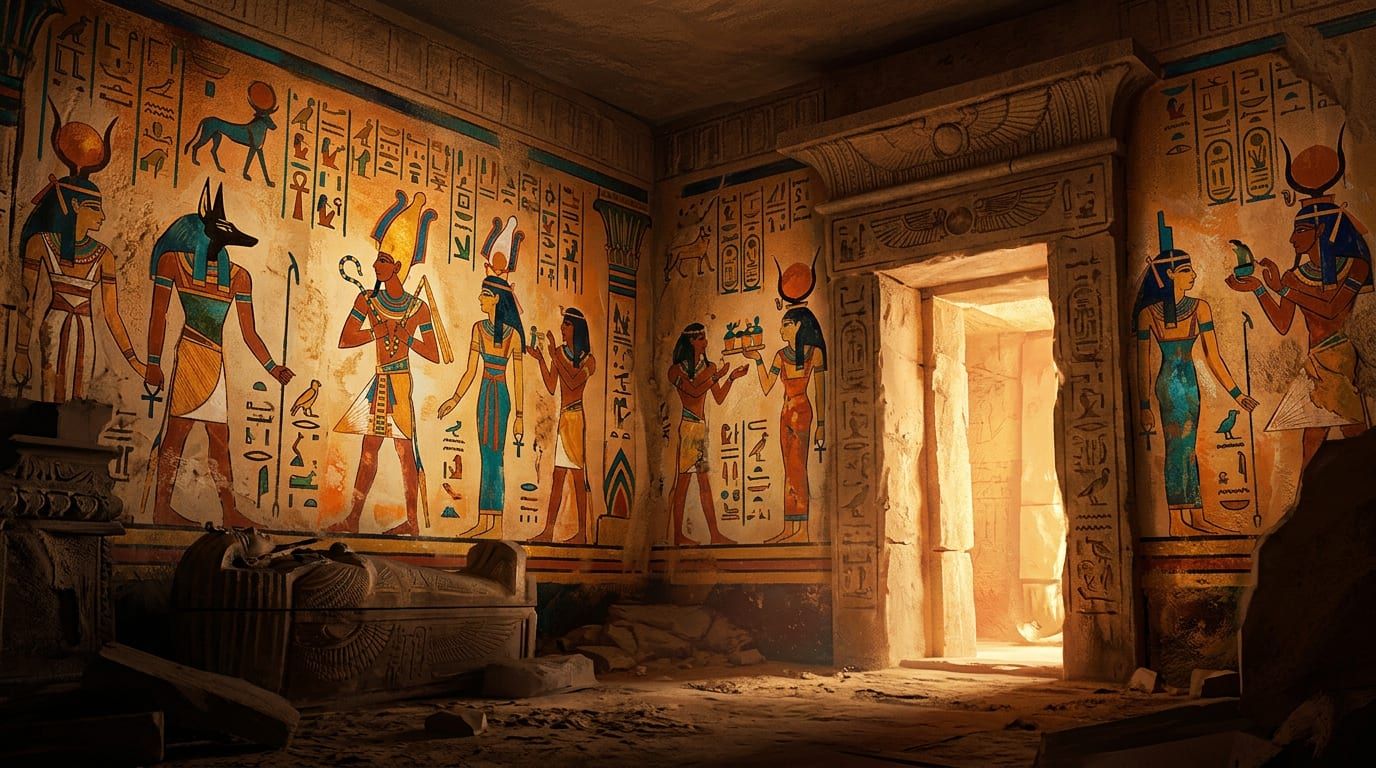
The most striking feature of the discovery comprises brightly coloured murals adorning the tomb walls. These paintings depict Paser engaged in worship before various deities within shrine settings, alongside scenes showing him with his wife presenting offerings to the gods. Notably, the wife figure holds a sistrum – an ancient percussion instrument – suggesting she may have served as a temple chantress or singer, according to Egyptologist Steve Harvey.
Harvey emphasised that whilst such imagery is not unprecedented, these murals represent important examples of Ramesside period tomb painting that will aid comparative studies with other sites across western Thebes. The artistic quality and preservation state make them particularly valuable for understanding the period's visual culture.
Architectural Features
Mohamed Abdel-Badie, head of the Egyptian Archaeological Department, described the tomb's layout as conforming to typical Theban individual burial styles from the modern state era. The structure includes an outdoor courtyard, a rock-cut chamber in the shape of a 'T', and subterranean burial chambers. The courtyard retains several well-preserved elements, including mud-brick features buffered by a funerary plaque, plus a ramp-flanked staircase leading to the entrance.
Future Work
The archaeological team plans to continue documenting the surrounding cemetery with the objective of identifying those interred there and reconstructing their biographical details. Conservation and restoration of the murals is scheduled to commence this autumn, which should reveal additional details crucial to ongoing research. As Harvey noted, further cleaning work will undoubtedly uncover more information about these significant painted scenes.
Establishing Paser's precise social rank and connections to other nearby tombs remains a priority, given that the name was common among Theban nobility during this period. Such research will contribute meaningfully to our understanding of local elite networks and their funerary practices.
Historical Context
Ancient Thebes, designated a UNESCO World Heritage site in 1979, served as Egypt's religious capital during multiple periods of the Middle and New Kingdoms. The site encompasses both the eastern Nile bank – home to the monumental temples of Karnak and Luxor – and the western bank, which contains an extensive necropolis including royal burials and private tombs such as the recently discovered Paser burial.
This latest discovery adds to the rich archaeological landscape of western Thebes, reinforcing the area's importance for understanding ancient Egyptian society, particularly during the prosperous Ramesside era when Thebes maintained its status as a major religious and administrative centre.
Museums mentioned
Related reading
Unearthing the Golden City: Daily Life in Ancient Egypt
How a newly excavated workers' quarter reframes pharaonic history
A major survey travels to the West Coast, bringing ancient artefacts that shift focus from royal opulence to the daily lives of those who built the empire.
Sharjah Biennial 17 Unveils Curatorial Vision and Opening Schedule
Angela Harutyunyan and Paula Nascimento frame the 2027 edition around archival residue and spatial memory
The seventeenth iteration of the Sharjah Biennial runs from January to June 2027, presenting a dual curatorial methodology that examines historical legacies and infrastructural critique across multiple emirate locations.
One Thousand and One Nights as a Visual Network
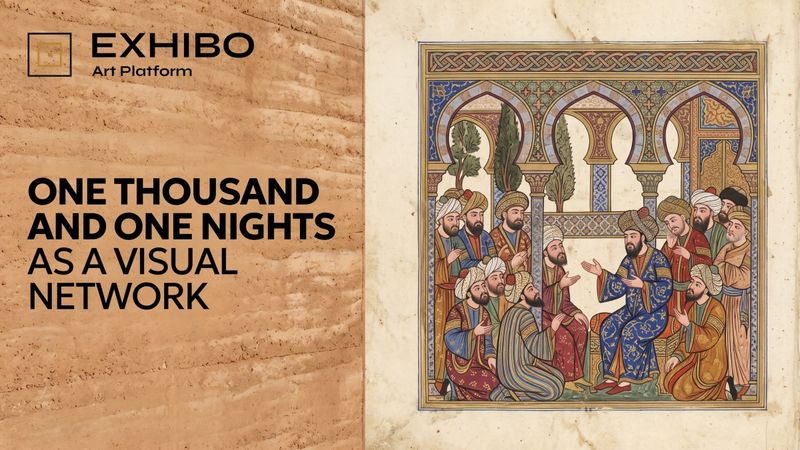
The book that taught Europe to picture the East arrived with no pictures at all. Three centuries of illustrators — Dutch, Egyptian, Persian, French, German, Iraqi — each gave it a face, and every face was a self-portrait.
Open Galland's Thousand and One Nights, the edition that conquered Europe, and there is nothing to look at: no genie, no lamp, not one illustration. The most visually imagined book in the world began blind — and because its text was never fixed either, no picture of it could ever be a copy.