
Dubai · United Arab Emirates
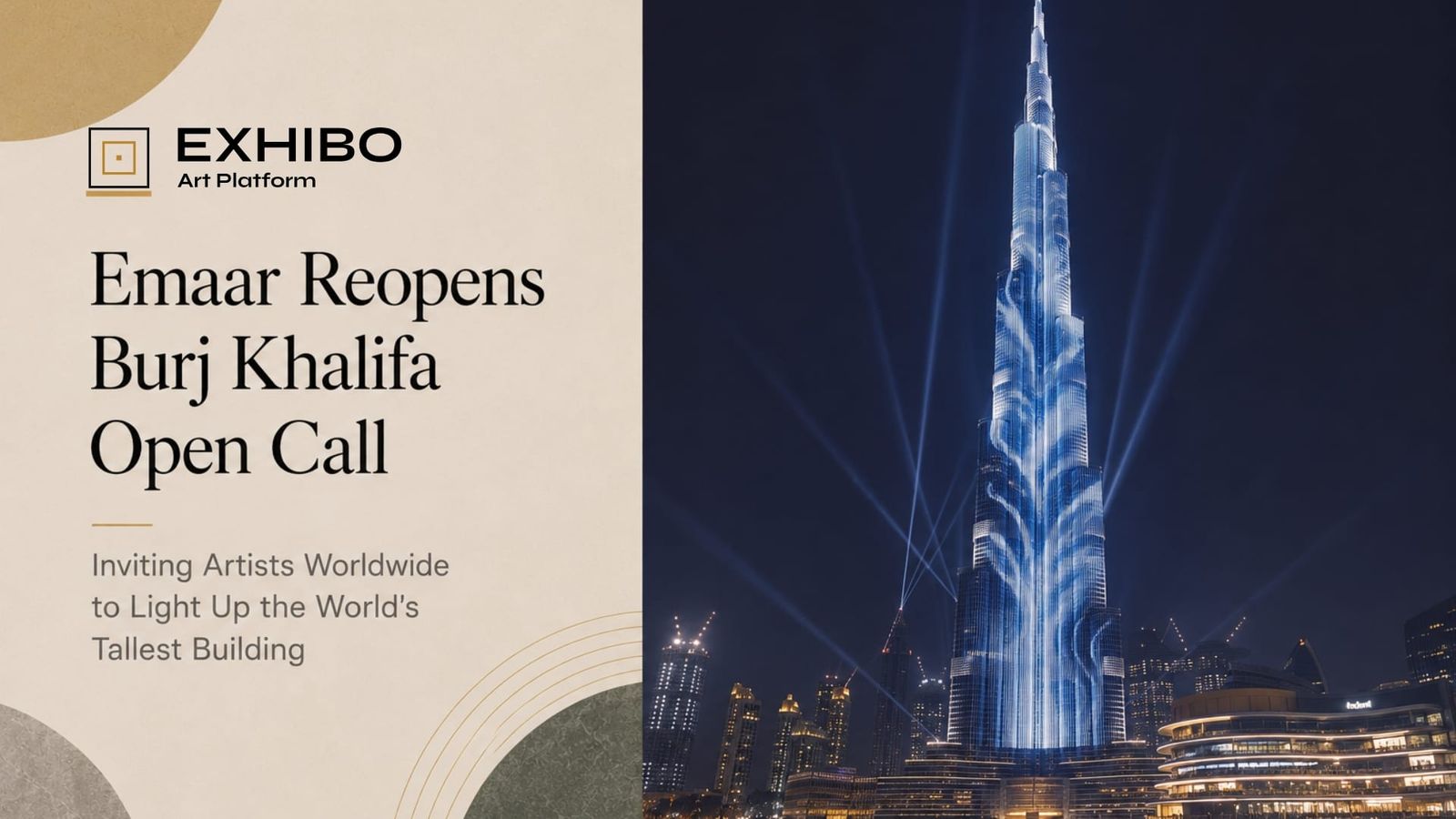
Emaar Reopens Burj Khalifa Open Call, Inviting Artists Worldwide to Light Up the World's Tallest Building
This year's projection design competition drops the AED 100,000 cash prize of 2025 in favour of a longer, fully global submission window — and rules out any AI-generated entries.
Emaar has relaunched its Burj Khalifa Open Call, inviting artists, designers and creative professionals to submit original projection designs for a chance to see their work displayed on the facade of the world's tallest building. Submissions opened on 8 July and close on 18 August 2026 at 11.59pm Dubai time — a window of close to six weeks, considerably longer than the previous edition.
The call asks for a three-minute audio-visual projection reflecting themes of innovation, creativity and "the vibrant spirit of Dubai." Entrants must prepare an MP4 preview with integrated, copyright-free music, a separate high-resolution MOV file for the actual projection, and a concept note of up to 300 words explaining their creative vision. Files should be shared via WeTransfer, Dropbox or Google Drive, and submissions go directly to opencall@emaar.ae, with a downloadable template, technical specifications and a full guidance manual available on the Burj Khalifa website.
PRACTICAL INFORMATION
Organiser | Emaar |
Submissions open | 8 July 2026 |
Deadline | 18 August 2026, 11.59pm (Dubai time) |
Eligibility | UAE-based and international artists |
Format required | 3-minute projection; MP4 preview + MOV final file; 300-word concept note |
File delivery | WeTransfer, Dropbox or Google Drive, to opencall@emaar.ae |
Prize | Projection on Burj Khalifa facade (no cash prize this year) |
AI-generated work | Not accepted, will be disqualified |
Rights | Entry may be used by Emaar across its own media channels, beyond the projection itself |
Global for the First Time
The most significant change from the previous edition is who can enter. The 2025 call was restricted to UAE residents; this year's edition is open to artists "from the UAE and around the world," a shift that considerably widens the pool of eligible talent and signals Emaar's ambition to position the Open Call as an international platform rather than a domestic showcase.
Mohamed Alabbar, founder of Emaar, framed the initiative in characteristically expansive terms when the format first launched, describing Burj Khalifa as more than an engineering feat — a canvas open to "every dreamer, artist, and innovator" with a story to contribute to the tower's own.
No Cash Prize This Year — Exposure Is the Offer
Where the 2025 edition carried a headline AED 100,000 prize for the winning designer, this year's call is notably silent on cash. Under the official terms, the stated prize is the projection of the winning design, in whole or in part, on the Burj Khalifa facade on a date determined by Emaar — with no cash figure mentioned anywhere in the current rules. The shift from a cash-driven, UAE-only contest to a longer, exposure-driven, global one suggests Emaar is betting that the prestige of the platform carries enough weight on its own — a wager that will be tested by the calibre and volume of submissions it draws internationally.
Strict Content Rules — and No AI
Emaar's terms are unusually specific about what will and will not be accepted. Entries are judged on creativity, originality, impact and technical feasibility, and the company reserves the right to select no winner at all if submissions fall short of its expectations — a clause that leaves the bar for a genuinely "winning" design entirely at the company's discretion.
Designs generated by artificial intelligence tools, including chatbots or similar software, are explicitly disqualified, as are incomplete entries and anything involving copyrighted visuals or music. Content must also be culturally appropriate, free of profanity or political sensitivity, and suitable for a family audience — reflecting the fact that the winning work will sit above one of the most photographed public squares in the world, rather than in a gallery context where a narrower audience opts in.
Participants should also note that by entering, they grant Emaar broad rights to use, adapt and publish their submission across its own media channels, not solely the tower projection itself — a detail worth reading closely in the full terms before submitting.
A Facade With a History of Storytelling
Burj Khalifa's facade has hosted large-scale projections before, including a 2018 video montage marking the centennial of the birth of Sheikh Zayed, the UAE's Founding Father, alongside recurring light shows for occasions such as New Year's Eve and International Women's Day. The Open Call format itself dates back to at least 2018, when a similar competition sought new designs for the tower's then record-breaking LED light show — suggesting Emaar treats the facade less as a fixed installation than as a rotating commission, periodically refreshed through public submission.
For galleries and artists working in projection, video and digital media across the region, the Open Call remains one of the very few routes to genuinely mass-scale public exposure — a different kind of opportunity from a gallery show or fair booth, but one that speaks directly to the growing overlap between fine art practice and large-format public technology in Dubai's cultural landscape.
Museums mentioned
Places mentioned
Related reading
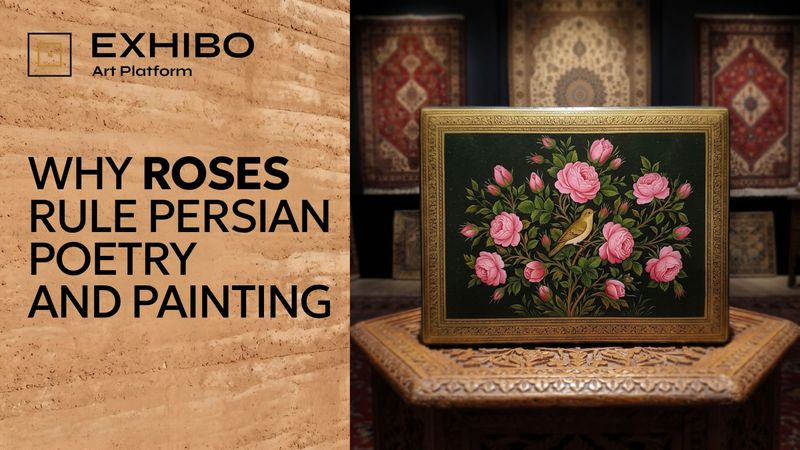
The Flower That Was Never Only Beautiful
The rose rules Persian poetry and painting — but under the sweetness sits a thorn, a bleeding bird, and a national emblem quietly assembled out of Chinese, European and Persian parts. A history of gol o bolbol, from a medieval still to a Dubai gallery.
Gol o bolbol — the rose and the nightingale — is among the most beautiful images in a thousand years of Persian art, and in modern Persian it also means sweet, empty talk. Under the tile, the picture is darker: a bird singing in blood for a flower that will not answer and will not last.
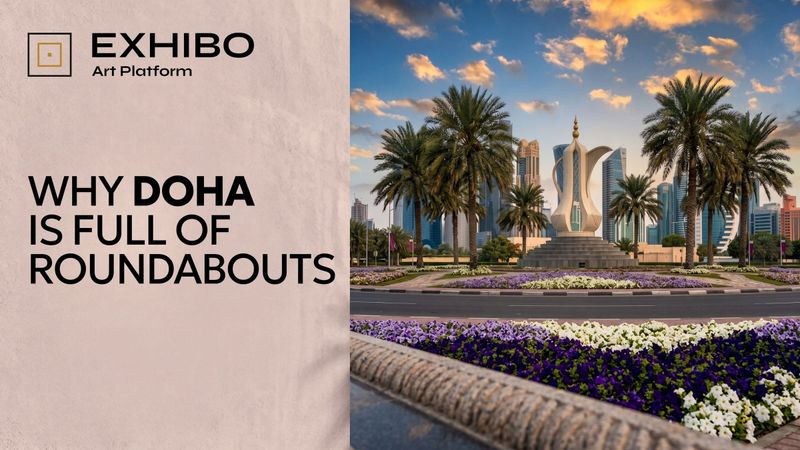
Why Doha Is Full of Roundabouts
An old circle at a crossroads, sharpened by British road engineering, became the way an Arabian city found its way and remembered itself — and it took the bulldozers to reveal it.
In a city where a landmark was more useful than an address, Doha's roundabouts became its navigation, its landscaping and its national image all at once. Now they're being torn out for signalled junctions — and the affection for them arrived, as one scholar put it, only posthumously.
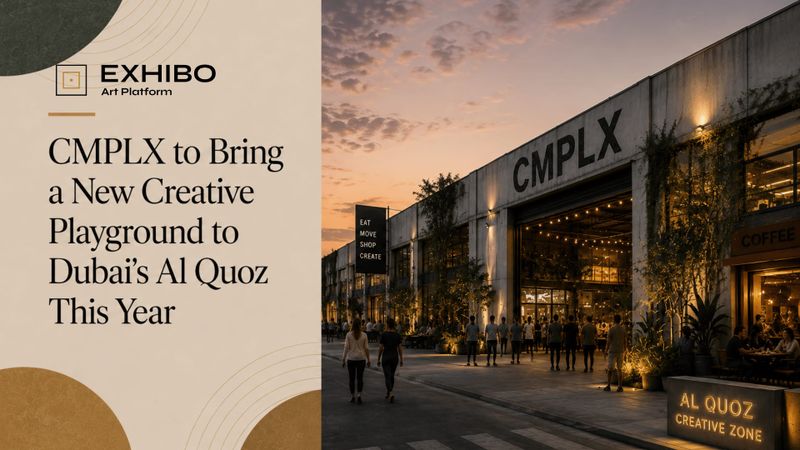
CMPLX to Bring a New Creative Playground to Dubai's Al Quoz This Year
A seven-warehouse lifestyle hub combining food, wellness, retail and creative studios is set to open in Al Quoz Creative Zone by the end of 2026, adding a new anchor to the neighbourhood built around Alserkal Avenue.
CMPLX, a new warehouse-style lifestyle destination combining food, wellness, retail and creative studios, is set to open in Dubai's Al Quoz Creative Zone by the end of 2026 — adding a fresh anchor to a neighbourhood already defined by Alserkal Avenue's galleries and cultural spaces.