
Dubai · United Arab Emirates
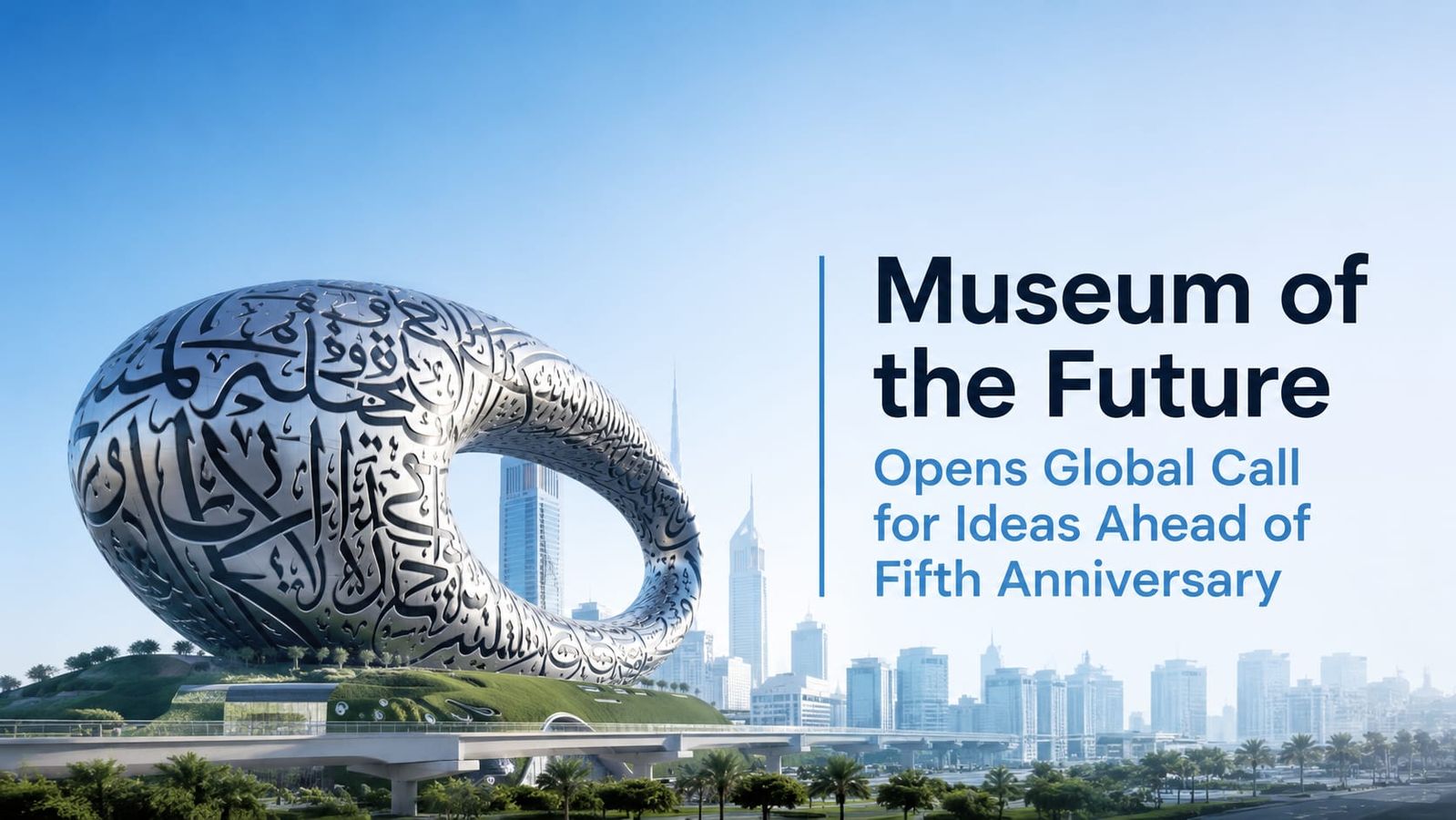
Museum of the Future Opens Global Call for Ideas Ahead of Fifth Anniversary
Chairman Mohammad Abdullah Al Gergawi says transformative ideas "may come from anyone, anywhere in the world" as Dubai's landmark institution invites public submissions for its next generation of experiences.
The Museum of the Future in Dubai has launched a global open call, inviting residents of the UAE and members of the public elsewhere to submit ideas and creative concepts for the next generation of its interactive and immersive exhibitions.
The initiative is timed to coincide with the museum's approaching fifth anniversary since it opened in February 2022. Since then, the institution has positioned itself less as a repository of finished exhibits and more as a platform in continuous revision — one intended to track the scientific, technological and social shifts likely to shape the coming decades rather than fix a single vision of the future in place.
A Platform, Not a Collection
The museum describes itself as an international meeting point for scientists, researchers, technologists and innovators to discuss emerging solutions and develop responses to pressing global challenges. Its programming places particular emphasis on interactive formats that explore the trajectory of specific industries and the technologies reshaping them.
This distinguishes it structurally from most museums, which are built around the documentation and preservation of the past.
Mohammad Abdullah Al Gergawi, Chairman of the Museum of the Future, framed the distinction directly: "Unlike traditional museums that document the past, the Museum of the Future explores what tomorrow could become" and the opportunities that science and technology create for building it.
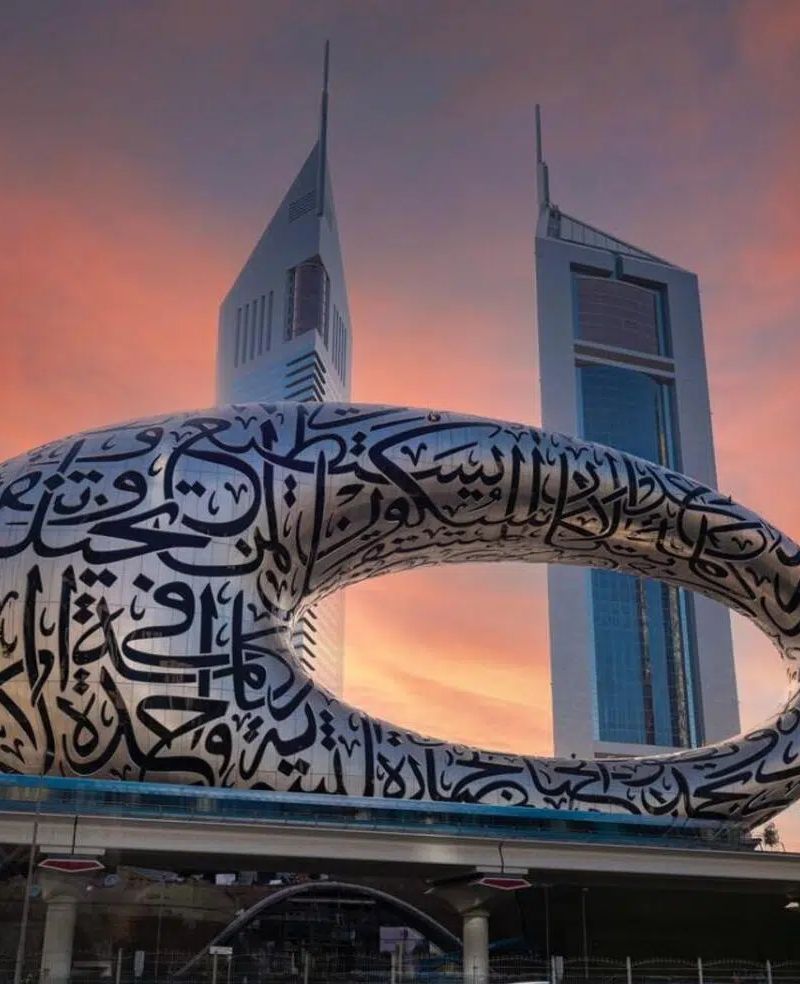
Museum of the Future
Museum of the Future is a Dubai government institution dedicated to imagining and prototyping what comes next. Opened on 22 February 2022 and operated by the Dubai Future Foundation, it occupies a 77-metre torus designed by Shaun Killa of Killa Design — a hollow steel ring raised on a landscaped podium above Sheikh Zayed Road, its façade clad in 1,024 robot-fabricated stainless-steel panels that carry three lines of Arabic calligraphy by Sheikh Mohammed bin Rashid Al Maktoum. The void at the building's centre is part of the design language: the solid ring stands for what is known, the open space for the future still to be written. Inside, seven floors move beyond the display-case model. The museum's core is "Journey of the Pioneers", a continuous experience set in the year 2071 that carries visitors in sequence through an orbital space station, an ecosystem-restoration institute, and a wellbeing sanctuary, with further floors devoted to near-future technologies and a future-skills landscape for children. Conceived as an authored environment rather than a collection — built by an international team of exhibition designers, technologists and artists — it operates as a working laboratory as much as a destination, running a continuous programme of talks, workshops and research partnerships alongside the visitor experience. It welcomed more than a million paying visitors in its first year.
Why an Open Call
What sets this initiative apart from a standard anniversary campaign is the explicit invitation for public — rather than purely institutional or expert — input.
Al Gergawi was direct about the reasoning: "The ideas capable of changing people's lives may come from anyone, anywhere in the world," he said, describing the open call as an extension of the UAE's broader approach to foresight as an institutional practice rather than a specialist activity.
That framing matters for how the museum positions itself within Dubai's cultural landscape. The initiative reinforces the Museum of the Future's role as a global platform that brings together scientists, innovators, researchers, technologists, and changemakers from around the world to explore bold ideas and develop solutions to humanity's most pressing challenges.
What the Open Call Involves
Al Gergawi has said the next phase will emphasise deeper, more interactive experiences that examine major scientific and technological shifts expected to reshape economies, societies and daily life in the coming decades.
Members of the public in the UAE and around the world are invited to submit their ideas through the Museum of the Future's official social media channels, with submissions considered as part of the museum's ongoing plans to refresh its experiences, exhibitions, and innovations. Further details on the submission process and selection criteria are expected to follow.
For a museum whose entire premise rests on anticipating change rather than archiving it, opening the exhibition pipeline to public submission is a logical, if still notable, next step — and one that gives Dubai's cultural sector a rare example of a major institution treating audience participation as a curatorial input rather than a marketing exercise.
Museums mentioned

Related reading
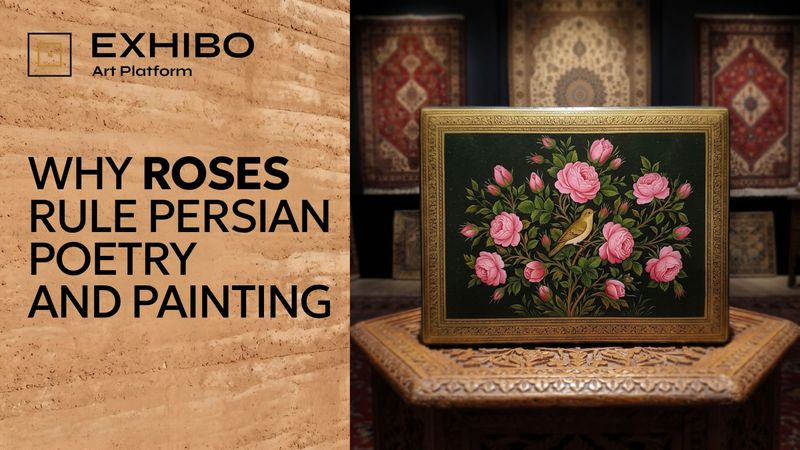
The Flower That Was Never Only Beautiful
The rose rules Persian poetry and painting — but under the sweetness sits a thorn, a bleeding bird, and a national emblem quietly assembled out of Chinese, European and Persian parts. A history of gol o bolbol, from a medieval still to a Dubai gallery.
Gol o bolbol — the rose and the nightingale — is among the most beautiful images in a thousand years of Persian art, and in modern Persian it also means sweet, empty talk. Under the tile, the picture is darker: a bird singing in blood for a flower that will not answer and will not last.
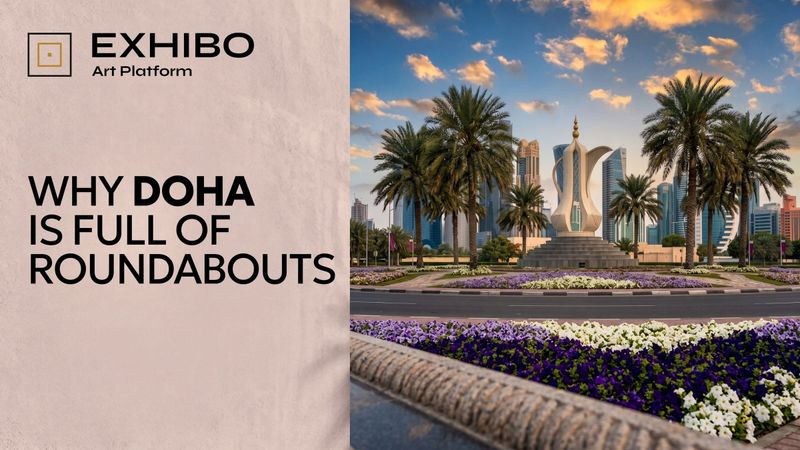
Why Doha Is Full of Roundabouts
An old circle at a crossroads, sharpened by British road engineering, became the way an Arabian city found its way and remembered itself — and it took the bulldozers to reveal it.
In a city where a landmark was more useful than an address, Doha's roundabouts became its navigation, its landscaping and its national image all at once. Now they're being torn out for signalled junctions — and the affection for them arrived, as one scholar put it, only posthumously.
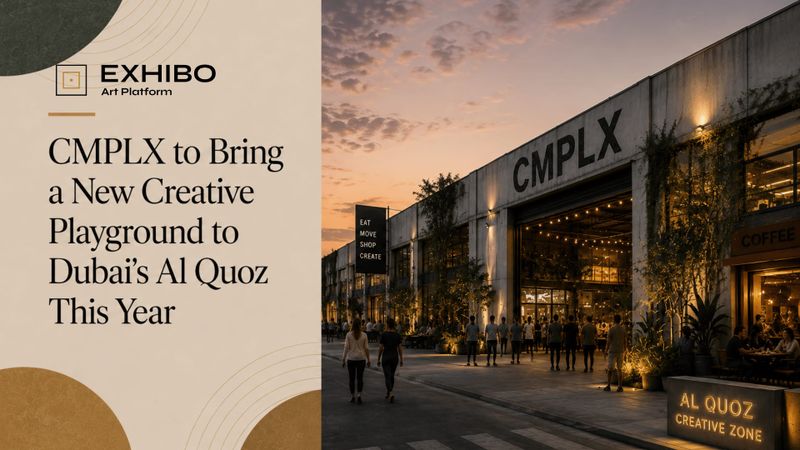
CMPLX to Bring a New Creative Playground to Dubai's Al Quoz This Year
A seven-warehouse lifestyle hub combining food, wellness, retail and creative studios is set to open in Al Quoz Creative Zone by the end of 2026, adding a new anchor to the neighbourhood built around Alserkal Avenue.
CMPLX, a new warehouse-style lifestyle destination combining food, wellness, retail and creative studios, is set to open in Dubai's Al Quoz Creative Zone by the end of 2026 — adding a fresh anchor to a neighbourhood already defined by Alserkal Avenue's galleries and cultural spaces.