
New York · United States
Wiener Werkstätte Women Rediscovered in New York Exhibition
The Jewish Museum explores how a Viennese design collective preserved craftsmanship amid industrial change
Reclaiming Craft in the Machine Age
Established in 1903 at the periphery of Vienna's historic centre, the Wiener Werkstätte emerged from the Vienna Secession as a radical experiment in uniting artistry with daily life. While German counterparts like the Bauhaus embraced mechanised production, this collective of craftspeople and artists pursued something different: the preservation of handmade beauty in an increasingly industrial world.
Operating until 1932, the workshop transformed ordinary objects—furniture, ceramics, textiles, jewellery and toys—into vessels of creative expression. Their philosophy feels remarkably prescient today, as questions around automation and artisanal value dominate contemporary discourse.
Women at the Heart of Innovation
The current exhibition at New York's Jewish Museum, 'Modernity and Opulence: Women of the Wiener Werkstätte', presents over 200 works by approximately 200 female contributors to the collective. Roughly a quarter of these artists were Jewish, making their stories particularly resonant within this institution's remit.
Curator Kristina Parsons notes that the group's founders were deeply concerned about industrialisation's impact on craftsmanship and quality of life. Their response was to embed artistic sensibility into everyday objects, ensuring that modern living retained its human dimension.
The show draws heavily from the Museum of Applied Arts in Vienna's 2021 survey of Wiener Werkstätte women, offering a transatlantic perspective on these overlooked figures. Particular attention is given to ceramicist Vally Wieselthier and textile designer Felice Rix-Ueno, whose innovative approaches exemplify the collective's fusion of functionality and aesthetic ambition.
Patrons and Perspectives
Beyond makers, the exhibition illuminates a network of Jewish women who supported the Wiener Werkstätte financially and culturally. Among them, Adele Bloch-Bauer—immortalised by Gustav Klimt—appears alongside journalist Berta Zuckerkandl, artist Broncia Koller-Pinell, gallerist Friederike Maria Beer-Monti, and women's rights advocate Magda Mautner von Markhof.
These patrons enabled the collective's experimental ethos whilst navigating their own positions within Vienna's cultural landscape. Their involvement demonstrates how progressive design movements relied upon networks of educated, influential women who understood both artistic merit and commercial viability.
Remembering Lost Voices
Perhaps most poignantly, 'Modernity and Opulence' acknowledges those artists whose lives were cut short by persecution. Grete Neuwalder, whose ceramic work survives through pieces hidden in a Viennese chocolate shop before reaching New York relatives, represents dozens of Jewish women whose creative legacies were nearly erased.
An accompanying booklet documents Neuwalder's story alongside those of other Jewish artists connected to the Wiener Werkstätte, serving as both memorial and research catalyst. Parsons hopes the exhibition will 'rediscover and reintroduce many once-known artists into our histories' so they might finally receive recognition.
Legacy in Contemporary Context
The Wiener Werkstätte's commitment to handcraft feels especially relevant amid today's debates around artificial intelligence and mass production. Their insistence that everyday objects deserve artistic consideration prefigures contemporary movements in craft and design that prioritise sustainability and human skill over efficiency.
By centring women's contributions—particularly those from Jewish backgrounds—the Jewish Museum exhibition reveals how creative networks operated across cultural and religious boundaries in early 20th-century Vienna. It also demonstrates how museums can recover suppressed narratives through careful scholarship and cross-institutional collaboration.
'Modernity and Opulence: Women of the Wiener Werkstätte' runs from 17 July to 15 November at the Jewish Museum, New York.
Galleries mentioned
Museums mentioned
Related reading
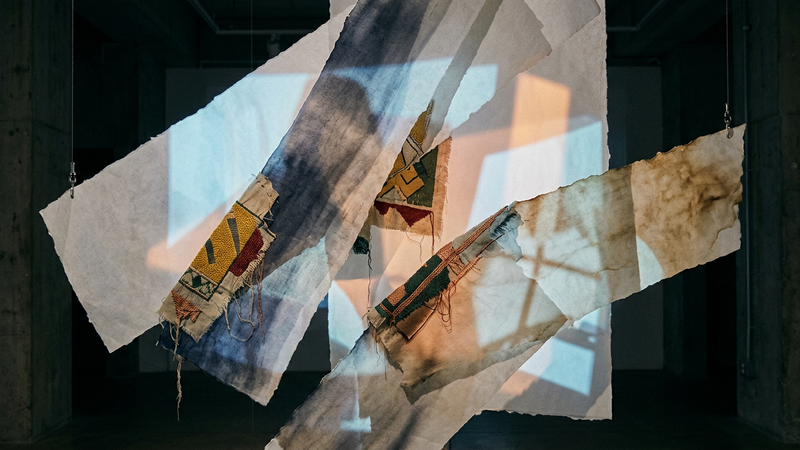
Ukrainian Museum Celebrates Half-Century With Community-Led Lobby Project
Molly Gochman transforms archive fragments into a projected collage marking five decades of cultural preservation
Mourning Keepsakes: Victorian Hairwork Arrives in Brooklyn
From Missouri to Brooklyn: preserving Victorian mourning crafts
New York's Museum Building Boom Continues
How institutional expansions are reshaping the city's cultural geography