
New York · United States
Tyrannosaurus Rex 'Gus' Sets New Auction Record at Sotheby's
The 67-million-year-old skeleton fetches $50.1m, surpassing the previous high set by a Stegosaurus in 2024.
A Record-Breaking Sale
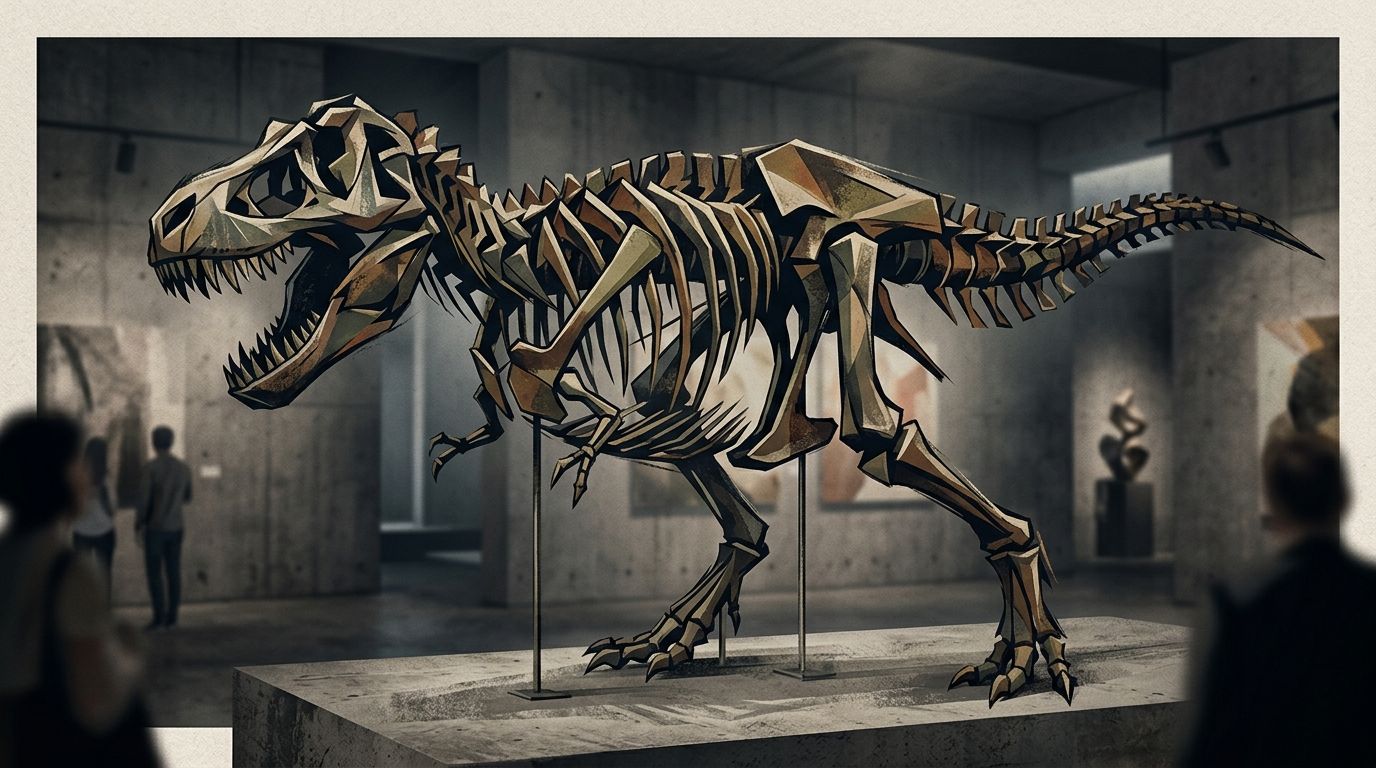
This morning (14 July), Sotheby's New York witnessed a historic moment as a fossilised Tyrannosaurus rex skeleton realised $50.1m, eclipsing the previous record for dinosaur fossils. The 67-million-year-old specimen, nicknamed 'Gus', hammered at $43m—well above its pre-sale estimate—after a ten-minute bidding war involving seven participants. The anonymous phone bidder secured the 38-foot-long skeleton, which had been on public display at the auction house's Breuer Building earlier this month.
A New Benchmark
The sale surpasses the 2024 record held by a Stegosaurus skeleton, 'Apex', which fetched $44.6m at the same venue. That specimen was acquired by hedge-fund billionaire Ken Griffin, who has since loaned it to New York's American Museum of Natural History. While both fossils highlight growing commercial interest in palaeontological specimens, they also underscore tensions between private ownership and scientific accessibility.
Discovery and Preparation
Gus's remains were unearthed over three years at a South Dakota cattle ranch, named after the property's owner. Comprising 183 fossilised bones, the skeleton is 61% complete by bone count (75-80% by mass). Its preparation involved meticulous cleaning and the creation of missing segments, including 3D-printed components. The 12.5-foot-tall mount, displayed in a dynamic predatory stance, required a steel armature to support its structure.
Public Display and Scientific Significance
Prior to the auction, Gus was exhibited at Sotheby's Breuer Building, with its fragile skull showcased separately in the lobby. Wall text highlighted the specimen's unique pathologies, including tyrannosaurid bite marks and healed fractures, offering insights into Late Cretaceous predator-prey dynamics. However, the sale has reignited debates over whether such specimens should remain in private hands, potentially limiting future research opportunities.
Controversy Over Ownership
Vertebrate palaeontologist Richard Butler recently warned that fossils removed from museum collections are 'lost to research'. While commercial fossil trading has historical precedent, escalating prices increasingly exclude public institutions from acquiring specimens critical to scientific study. The sale of Gus exemplifies this growing divide, raising ethical questions about preserving natural heritage for collective knowledge rather than private collections.
Related reading
Ukrainian Museum Celebrates Half-Century With Community-Led Lobby Project
Molly Gochman transforms archive fragments into a projected collage marking five decades of cultural preservation
As the institution turns fifty, an immersive lobby installation invites locals to contribute personal artefacts, weaving private histories into a broader narrative of Ukrainian heritage and resilience.
Mourning Keepsakes: Victorian Hairwork Arrives in Brooklyn
From Missouri to Brooklyn: preserving Victorian mourning crafts
A curated selection of commemorative hair artefacts opens at Brooklyn's Morbid Anatomy Library, exploring nineteenth-century grief rituals and the legacy of Leila's Hair Museum.

New York's Museum Building Boom Continues
How institutional expansions are reshaping the city's cultural geography
From avant-garde venues in the Lower East Side to historic collections scaling up across Manhattan, New York's architectural ambitions are fundamentally altering how audiences experience visual culture.