
Venice · Italy
Taus Makhacheva's Gossip-Inspired Performance Opens at UAE Pavilion for Venice Biennale
The artist's new commission explores how rumour circulates through bodies and communities in a two-part work combining dance and sound installation.
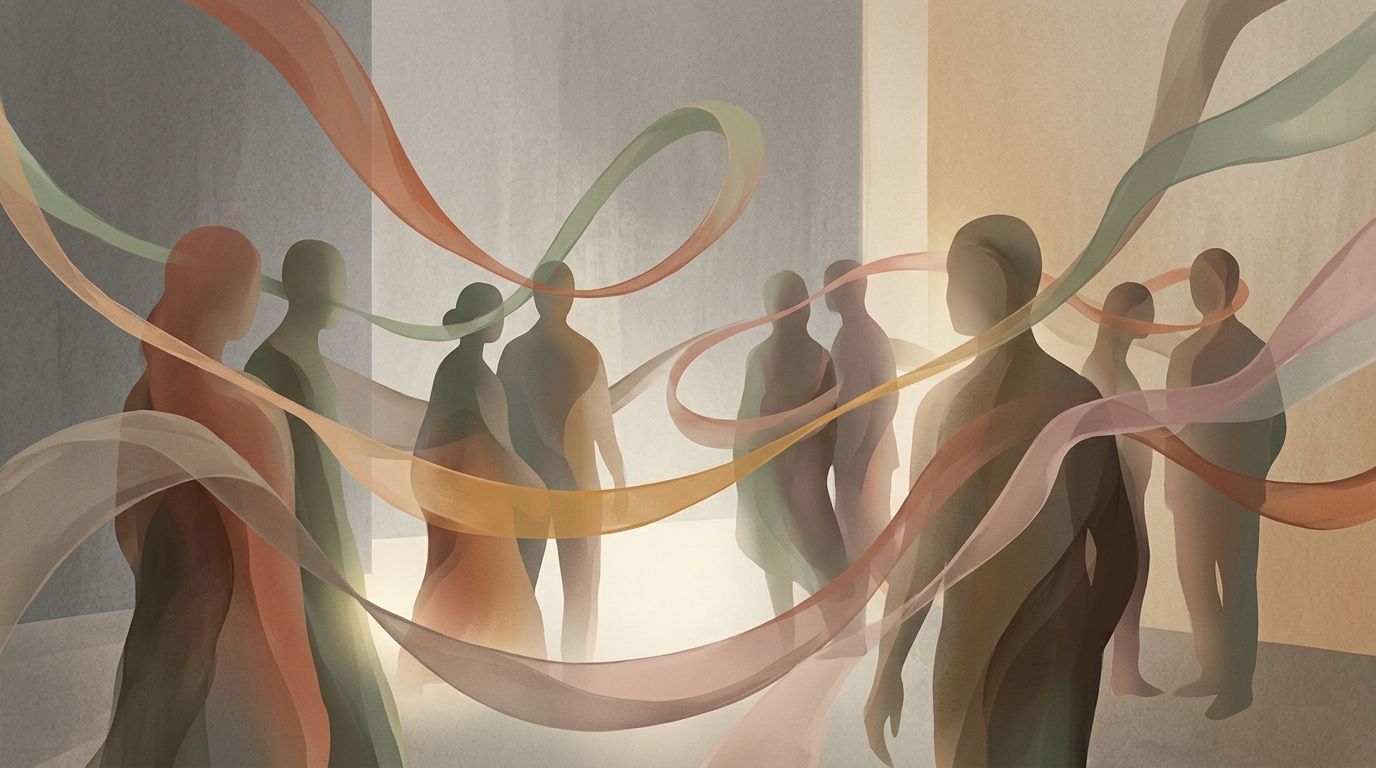
Gossip as Social Choreography
The National Pavilion of the United Arab Emirates has unveiled a new performance commission by Taus Makhacheva for the 61st International Art Exhibition of La Biennale di Venezia. Running from 24 to 26 July and 28 July 2026, the piece forms part of the group show Washwasha, curated by Bana Kattan with Tala Nassar as assistant curator.
Makhacheva's work, titled And What Did You Say?, takes gossip as its subject matter—not merely idle chatter, but a complex social phenomenon with multiple functions. The performance unfolds in two parts: a choreographed presentation and an interactive bench installation equipped with headphones that guide visitors through internal monologologues and recorded conversations.
Embodied Rumour
The bench sits at the pavilion entrance, its compartments containing costumes and props that feature in the live performance. Through the headphones, audiences encounter layered dialogues exploring gossip's historical and contemporary manifestations—from acts of care and alliance to mechanisms of exclusion and damage.
During the thirty-minute performances at 2pm and 5pm, dancers Anna Abalikhina, Rei Kassandra Co, and Salvatore De Simone embody three distinct phases of rumour's lifecycle: origin, dissemination, and reception. Their movements trace how gossip enters the body, how it transforms during transmission, and how it eventually leaves physical and social traces.
"Gossip moves inside the body and between bodies, voices, and communities," explains Makhacheva. "It constantly changes shape as it travels. In this work, gossip becomes both material and method—a way of thinking through how information, care, power, and imagination circulate."
Kattan positions the performance within Washwasha's broader investigation of unofficial knowledge systems. "Gossip operates as a form of social choreography," she notes. "It moves through networks, influences relationships, and carries histories that often exist outside official records."
Listening to the Overlooked
The exhibition Washwasha—phonetically transliterated from the Arabic for 'whispering'—brings together six artists working across generations and disciplines. Alongside Makhacheva's contribution, the show includes works by Mays Albaik, Jawad Al Malhi, Farah Al Qasimi, Alaa Edris, and Lamya Gargash. Together, these pieces examine movement, technology, oral histories, and the intersections between language, embodiment, and identity.
The Venice Biennale 2026 marks the UAE's fifteenth participation in the International Art and Architecture Exhibitions, and its ninth appearance in the Art Exhibition specifically. The National Pavilion UAE operates from a permanent space at the Arsenale—Sale d'Armi, commissioned by the Salama bint Hamdan Al Nahyan Foundation and supported by the UAE Ministry of Culture.
Makhacheva's performance offers visitors an intimate encounter with gossip's physical dimensions, transforming whispered exchanges into visible, felt experiences. In doing so, it reveals how unofficial communication shapes collective memory and social bonds within rapidly evolving cultural contexts.
Related reading
A Defiant Stance on Global Participation at the Venice Biennale
Pietrangelo Buttafuoco justifies Russian inclusion amid sanctions and political backlash
Digital Horizons at the Venice Biennale's Collateral Shows
How independent pavilions are redefining technology-driven practice beyond the main competition
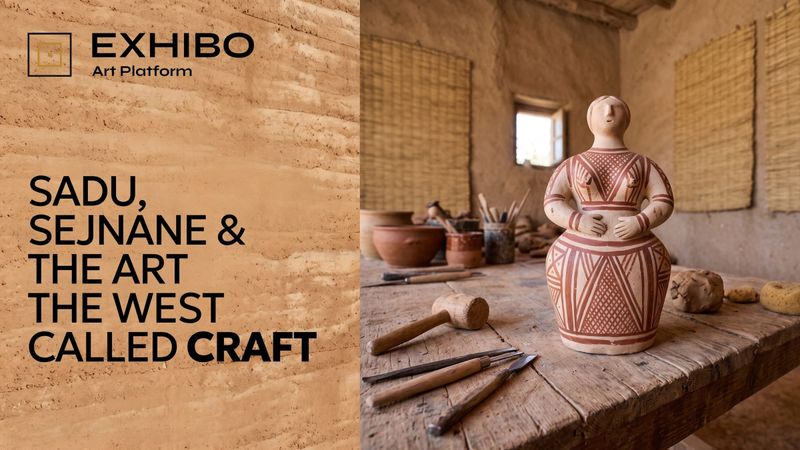
Women Makers: Sadu, Sejnane and the Art the West Called Craft
How the women of Sejnane and the Sadu tents made a world of geometric art the museum system had no shelf for — and how it is finally being called by its name.