From Phoenician colony to Mediterranean power
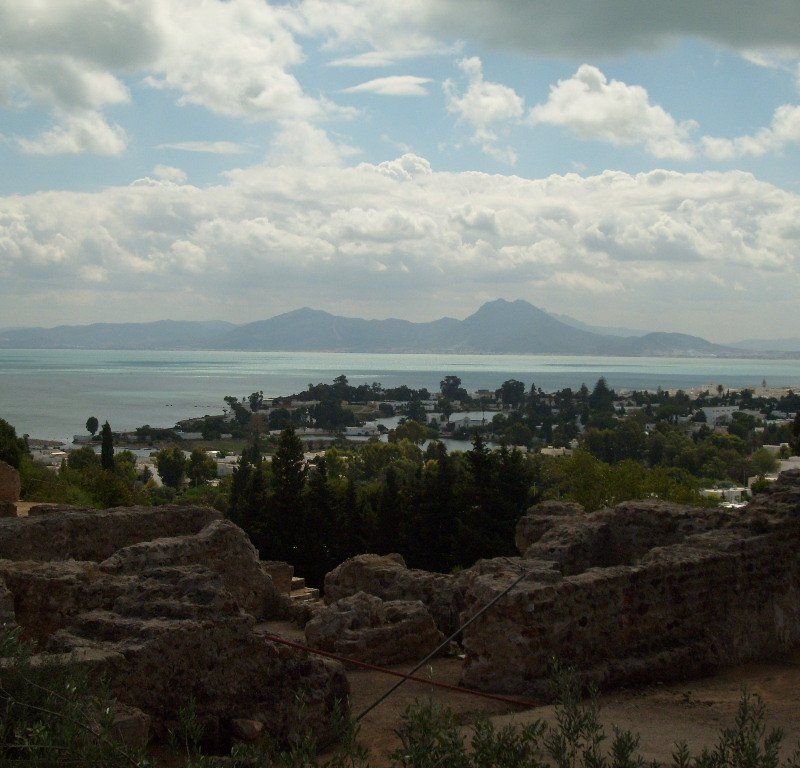
Carthage stands on a low peninsula on the Gulf of Tunis, about 15 km north-east of the centre of the capital. According to tradition it was founded by Phoenicians from Tyre in 814 BC. Legend names its founder as the princess Elyssa, the Dido of Virgil's Aeneid. Its Phoenician name means new town, in contrast to the older Phoenician city of Utica up the coast. The site was chosen with care: sheltered anchorages, a hill that was easy to defend and a position at the narrow waist of the Mediterranean between Africa and Sicily.
From the 6th century BC Carthage grew into a great trading empire. Its fleets and merchants reached much of the western Mediterranean. It was the home of the general Hannibal, the navigator Hanno and the agronomist Mago, whose treatise on farming was later translated into Latin. Three long wars with Rome, the Punic Wars, ended in 146 BC. The city was captured, plundered and burned.
Roman Carthage and after
A century later Rome founded a new city on the ruins. Julius Caesar settled colonists here. In 29 BC Augustus made Carthage the seat of the province of Africa. As Colonia Julia Carthago it grew into one of the largest cities of the Roman West, ranked with Alexandria and Antioch. It was a centre of early Christianity, the city of the writer Tertullian, the bishop Cyprian and the young Augustine.
In 439 the Vandals took Carthage and made it their capital. In 533 the Byzantine general Belisarius won it back for the empire. After the Arab conquest at the end of the 7th century the new city of Tunis took its place. For centuries the ruins served as a quarry for builders across the Mediterranean.
The site today
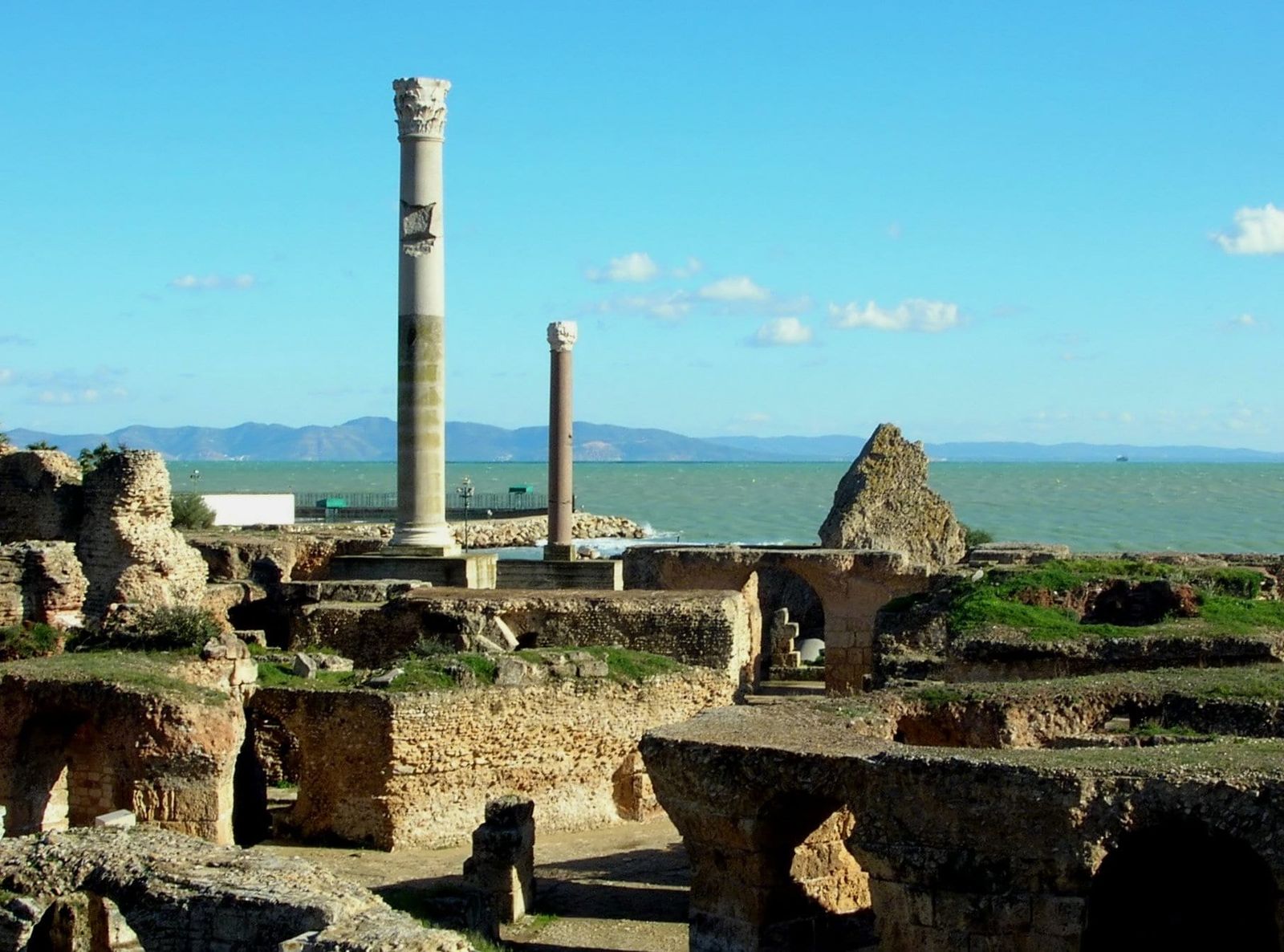
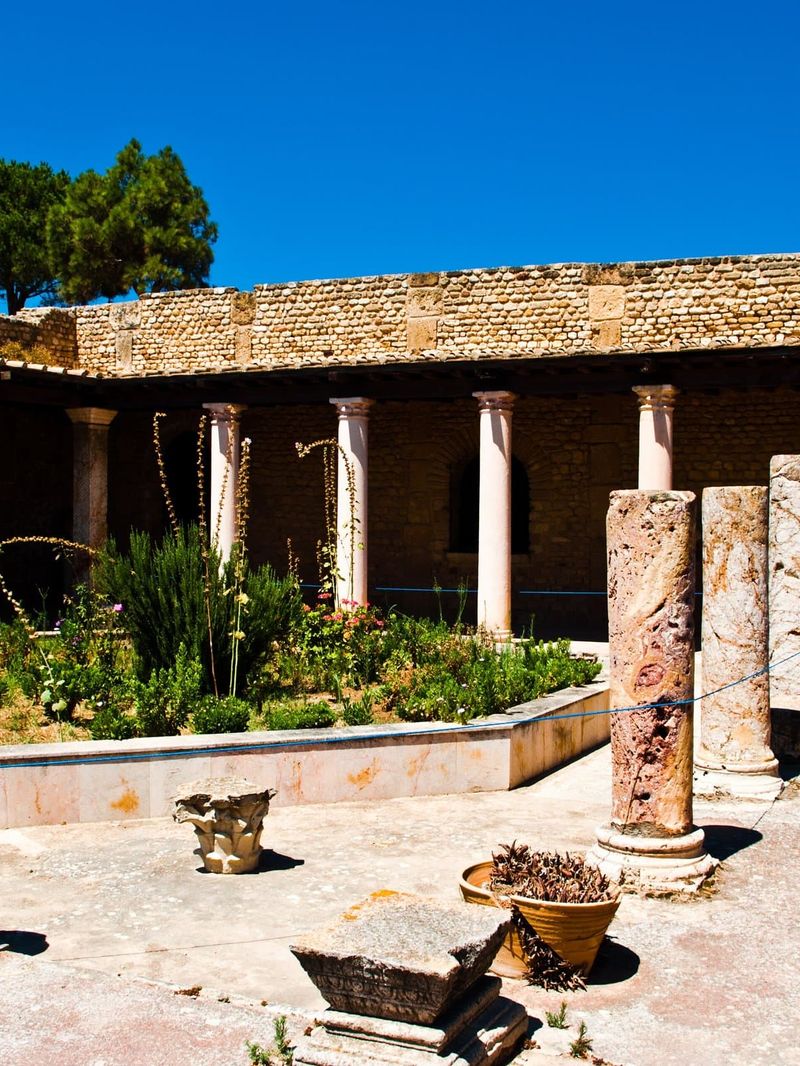
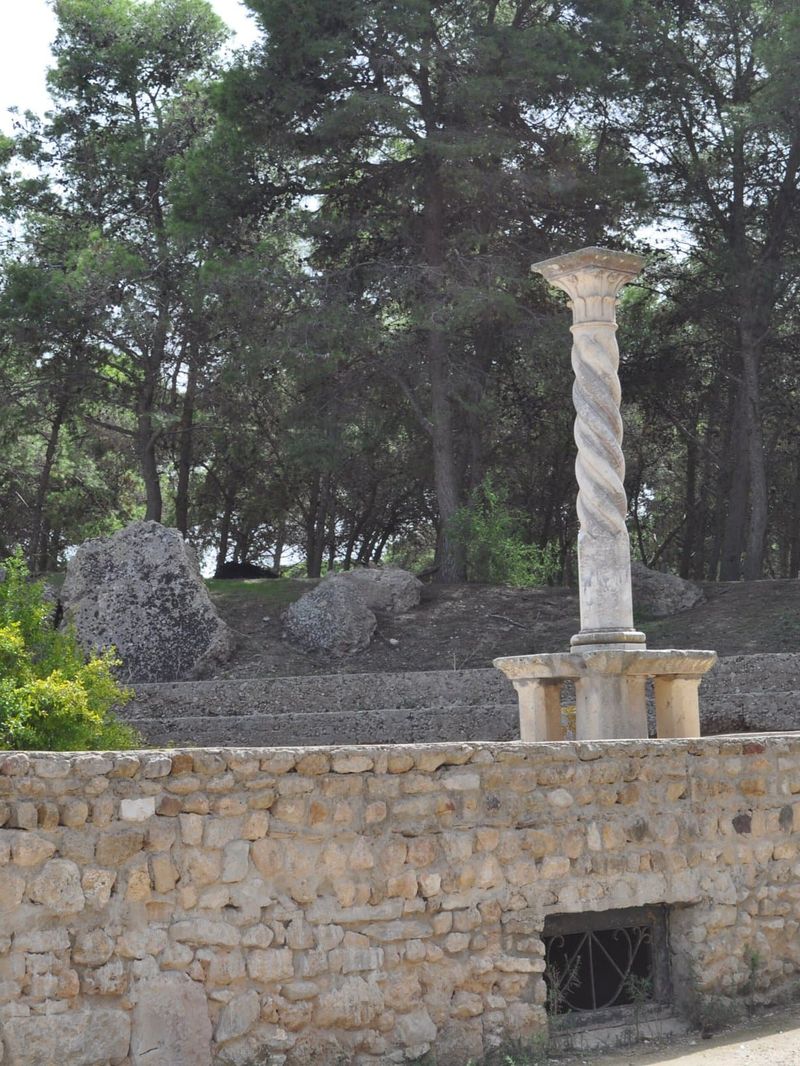
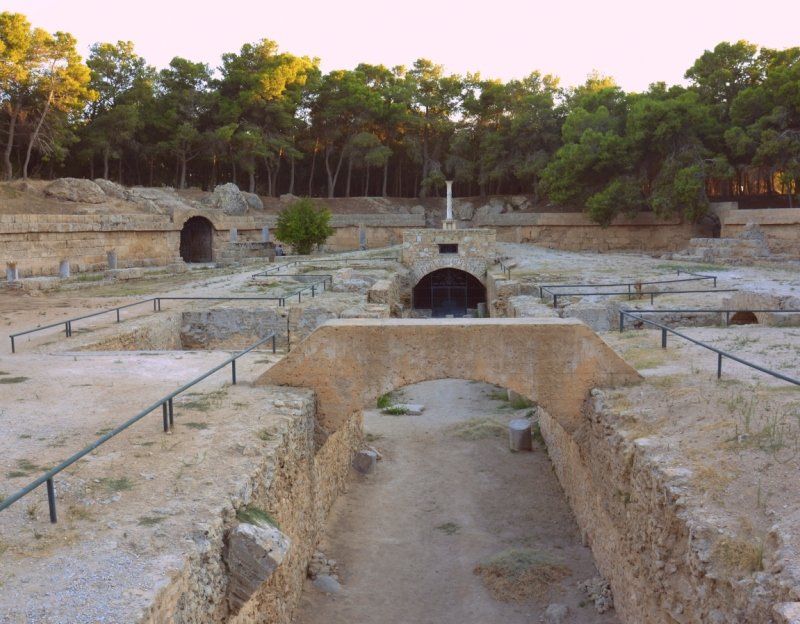
UNESCO inscribed the Archaeological Site of Carthage on the World Heritage List in 1979. It is a serial property of almost 500 hectares. Its monuments lie scattered among the villas and gardens of a modern residential suburb. They include the acropolis of Byrsa Hill, the Punic Ports, the Tophet of Salammbo, the Magon Quarter, the Antonine Baths, the Roman Villas and Odeon, the Roman Theatre, the Amphitheatre, the La Malga Cisterns and the great Christian basilica of Damous El Karita.
Many of the finest finds are in the Carthage National Museum on Byrsa Hill and in the Bardo National Museum in Tunis.
Exhibo editorial
Carthage does not look like a ruined city. It looks like a pleasant suburb with ruins in it. Villas, bougainvillea and the TGM train run between monuments that once ruled half the Mediterranean.
That is its strange charm. Rome destroyed the Punic city so thoroughly that what survives is mostly underground, fragments read by archaeologists. The Roman city that replaced it is easier to see. Plan a full day. Start on Byrsa Hill for the view over both gulfs. End at the sea, among the fallen columns of the baths, when the light turns gold.
Gallery
How to find it
Carthage is about 15 km north-east of central Tunis. The TGM light railway from Tunis Marine stops at several stations along the site: Carthage Salammbo for the Tophet and the Punic Ports, Carthage Byrsa for the hill and the museum, Carthage Dermech for the Antonine Baths, Carthage Hannibal for the theatre and the villas. The monuments are spread out, so combine the train with walking or short taxi rides. The site is part of the single Carthage ticket, sold at the main monuments such as the Antonine Baths and Byrsa Hill. It covers several sites spread across the suburb, so keep the ticket for the whole day.
Similar places
All places
News by Exhibo
Editorial coverage on Exhibo
Medieval Art, Explained
From the end of Rome to the edge of the Renaissance: Early Medieval, Romanesque and Gothic as working tools, not one style.
Medieval art spans more than a thousand years of European making. This guide separates Early Medieval, Romanesque and Gothic habits, follows patronage from monasteries to courts, and anchors the story in works you can still see — without collapsing the Middle Ages into a single cathedral silhouette.
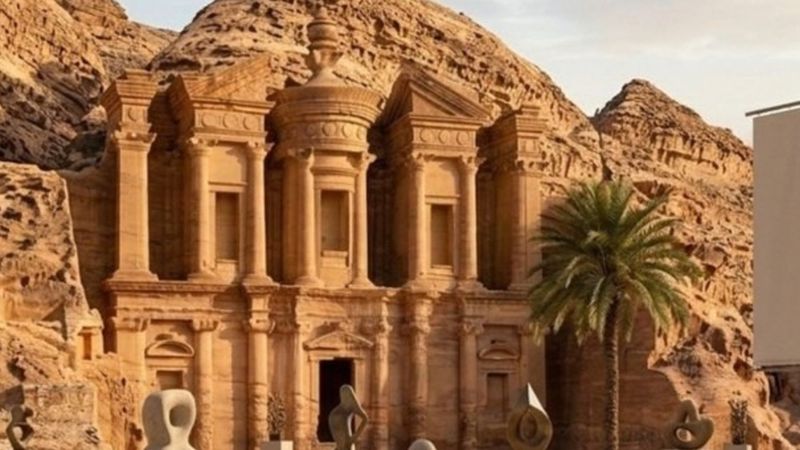
Petra Beyond Indiana Jones
The 1989 film gave Petra a façade and invented everything behind it. The real story is in the water systems, the aniconic sculpture, the painter who framed your photograph in 1839 and the families moved out so the world could come in.
Spielberg's crew filmed the Treasury's façade in Jordan, then built the Grail chamber on a soundstage in Hertfordshire — because the real interior of Al-Khazneh is a plain, undecorated room. It's a perfect miniature of how Petra is understood: one wall, photographed a million times a year, standing in for a city that is mostly still unexcavated.
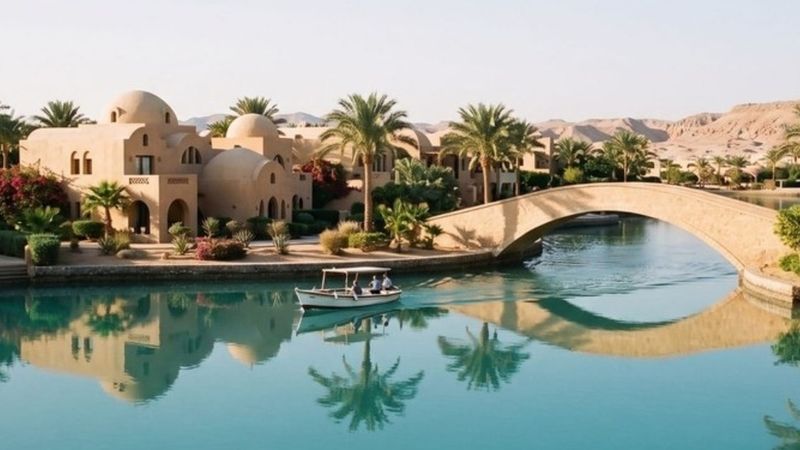
Why the Middle East Keeps Building Venice
From the Red Sea to the Gulf, canal towns keep getting called Venice. The water was usually about something else — and Venice was never quite Venice either.
The Middle East is full of “Venices”. Most began as a way to manufacture shoreline; the name usually arrived later, in English, from the people selling it.