A Punic district by the sea
The Magon Quarter is a residential district of Punic Carthage on the seafront, a short walk south of the Antonine Baths. It takes its name from the Magonids, the dynasty that ruled Carthage when the quarter was first built.
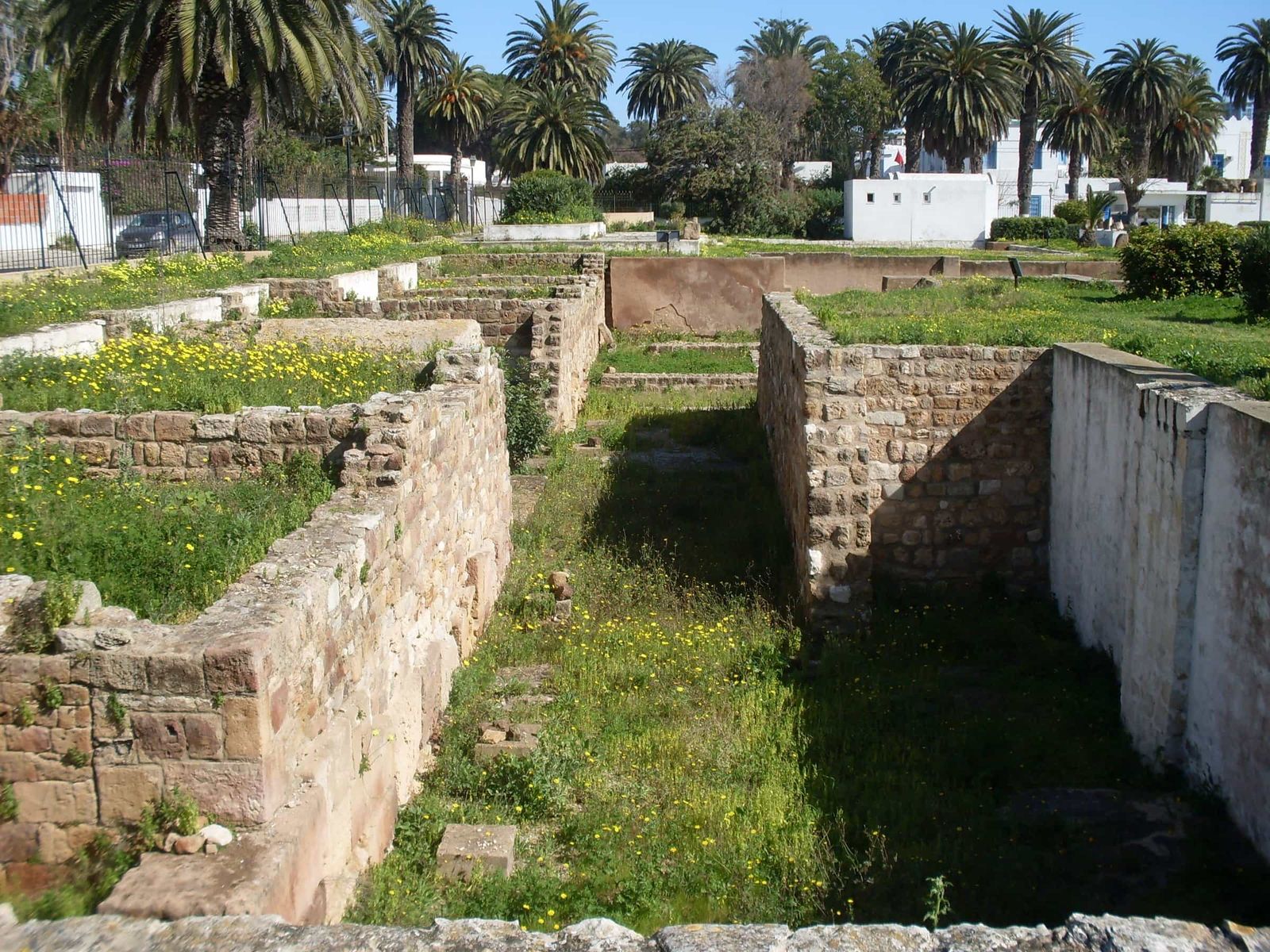
The first houses went up in the 5th century BC on ground reclaimed from the shore. They were modest homes of different plans, built about thirty metres behind the sea wall that was raised at the same time. Streets led down to a gate in the wall. The streets were not paved and had no drains. Each house had its own vaulted soakaway underground.
The great houses of the 2nd century BC
From the beginning of the 2nd century BC the district was rebuilt. Smaller houses were joined together into large mansions. Some covered more than 1,000 square metres and one reached about 1,500. The old sea gate disappeared. New land was reclaimed and laid out on a regular grid.
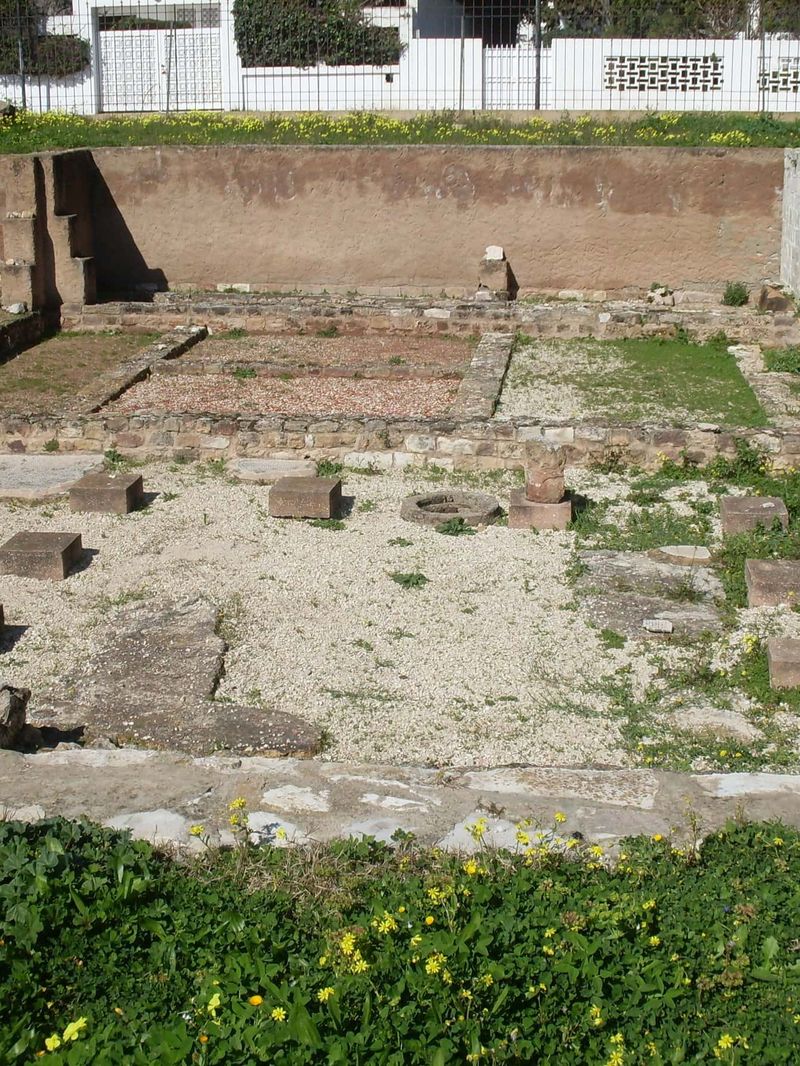
Each of these houses had several underground cisterns as well as the well that supplied drinking water. They probably sheltered large extended families. A narrow corridor led to a courtyard surrounded by porticoes, with the service rooms and bedrooms around it. The columns and pilasters were covered in stucco. The walls were plastered and painted. The finest finds are the Punic floors called pavimenta punica, made of crushed terracotta set with small pieces of white stone.
Excavation and the site today
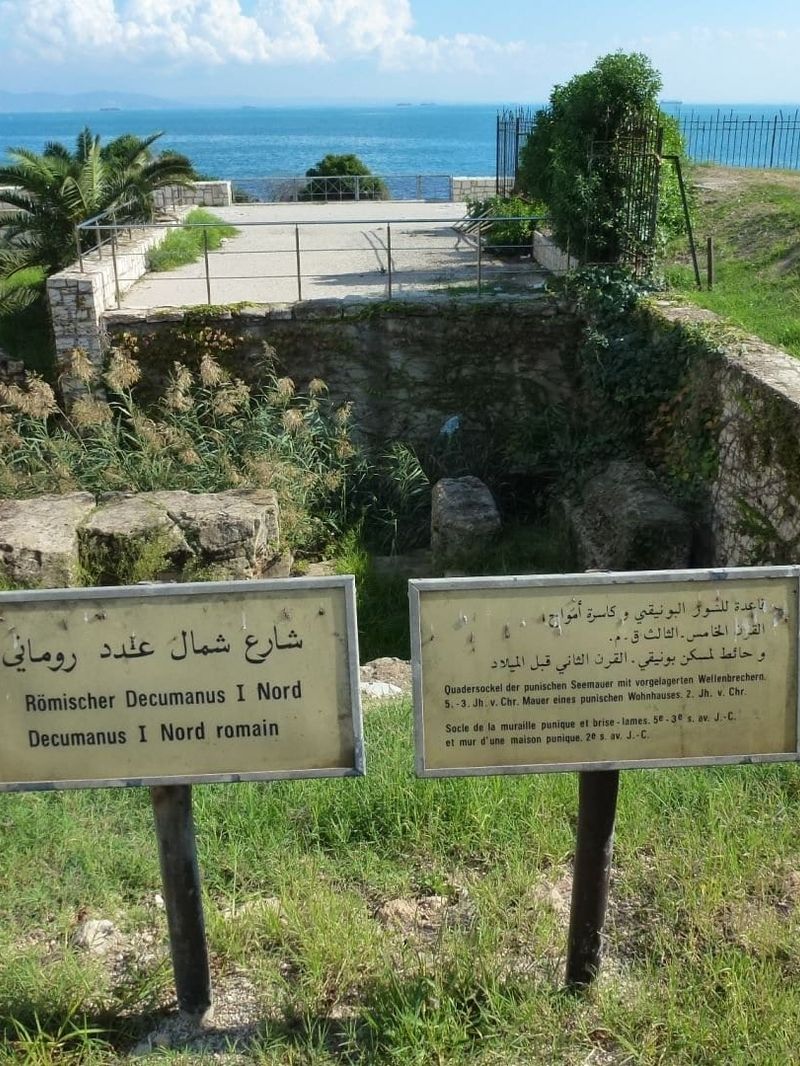
The quarter was excavated from 1974 by German archaeologists led by Friedrich Rakob, as part of the UNESCO campaign to save Carthage. They also uncovered the Punic sea wall and parts of the Roman city built above it. A Roman street has been rebuilt along the seafront next to the quarter. A small display beside the excavations shows finds and models of the houses.
Exhibo editorial
Most of Punic Carthage is gone, burned in 146 BC and buried under the Roman city. Here, for once, you can walk through what was left of ordinary life. The rooms are knee-high now. The cisterns are still there, holes in the floor that kept a household alive through the summer.
It is a quiet site, often empty, with the sea just beyond the fence. It asks for a little imagination. The reward is a sense of the city as a place where people lived, not only fought.
Gallery
How to find it
The Magon Quarter lies on the seafront in Carthage Dermech, a few minutes' walk south along the shore from the Antonine Baths. The nearest TGM station is Carthage Dermech. The site is part of the single Carthage ticket, sold at the main monuments such as the Antonine Baths and Byrsa Hill. It covers several sites spread across the suburb, so keep the ticket for the whole day.
Similar places
All places
News by Exhibo
Editorial coverage on Exhibo
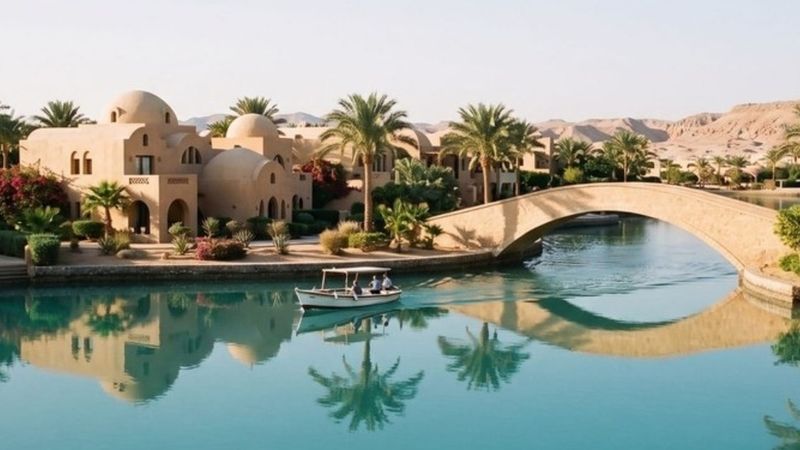
Why the Middle East Keeps Building Venice
From the Red Sea to the Gulf, canal towns keep getting called Venice. The water was usually about something else — and Venice was never quite Venice either.
The Middle East is full of “Venices”. Most began as a way to manufacture shoreline; the name usually arrived later, in English, from the people selling it.

Elie Khouri's New Foundation Takes Shape in Dubai
A private villa in Jumeirah 1 becomes the home for Ekaf
Collector Elie Khouri transforms a historic Jumeirah 1 residence into a contemporary art venue opening in 2028.

Following Damascus... Osthaus and the Islamicate Collection
Museum Folkwang revisits the founder's early travels and the formation of its historic Islamic Department
A survey of Karl Ernst Osthaus's collecting habits, featuring loans from Berlin and Dresden alongside European modernist responses.