Utica Archaeological Site
The Phoenician city older than Carthage, now stranded inland among fields where the sea once reached its walls.
Utica is the ruined Phoenician and Roman city near the village of Utique, on the plain between Tunis and Bizerte. It lies about thirty kilometres in a straight line from both Bizerte and Tunis. It is some forty kilometres north-west of ancient Carthage. It is the largest archaeological site in the Bizerte region, spread over more than a hundred hectares on a low headland above the valley of the Medjerda.
Ancient writers believed Utica was the oldest Phoenician foundation in Africa. Pliny the Elder placed its founding in 1101 BC, almost three centuries before Carthage. Its Punic name meant simply the old town, against Carthage's new city. Excavation has not yet found anything older than the eighth century BC, but the tradition of seniority stayed with the city. Utica lived for centuries in Carthage's shadow, then took Rome's side in the Third Punic War. When Carthage was destroyed in 146 BC, Utica became the capital of the new Roman province of Africa. A century later the Roman statesman Cato the Younger took his own life here rather than surrender to Julius Caesar, which is why he is remembered as Cato of Utica.
The city was a port. Its fate was written by the river. Silt carried down by the Medjerda slowly filled the gulf on which it stood. The ancient harbour now lies far inland under farmland. As the sea retreated, Utica lost its trade and its importance, while the refounded Carthage took its place as the capital of Africa.
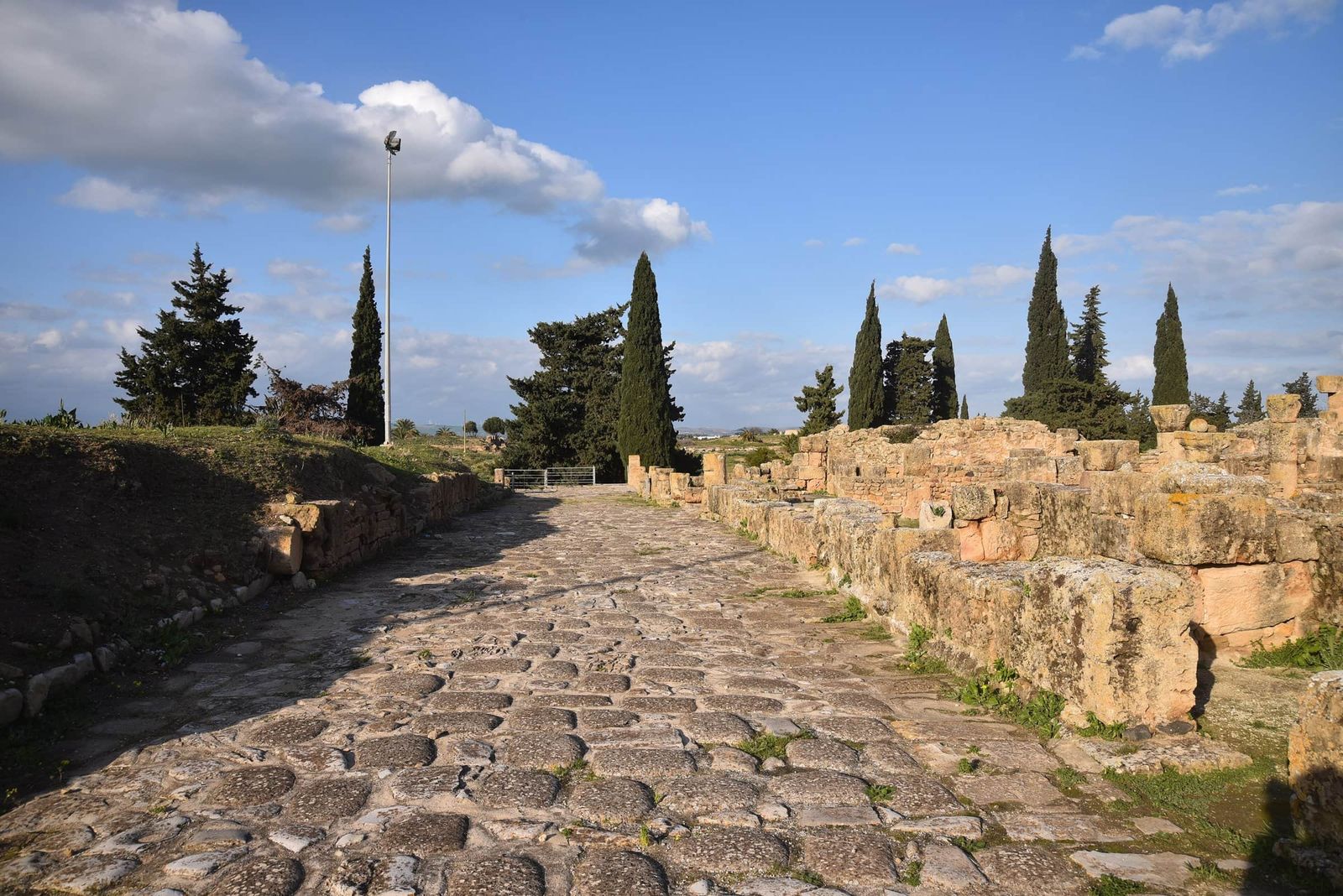
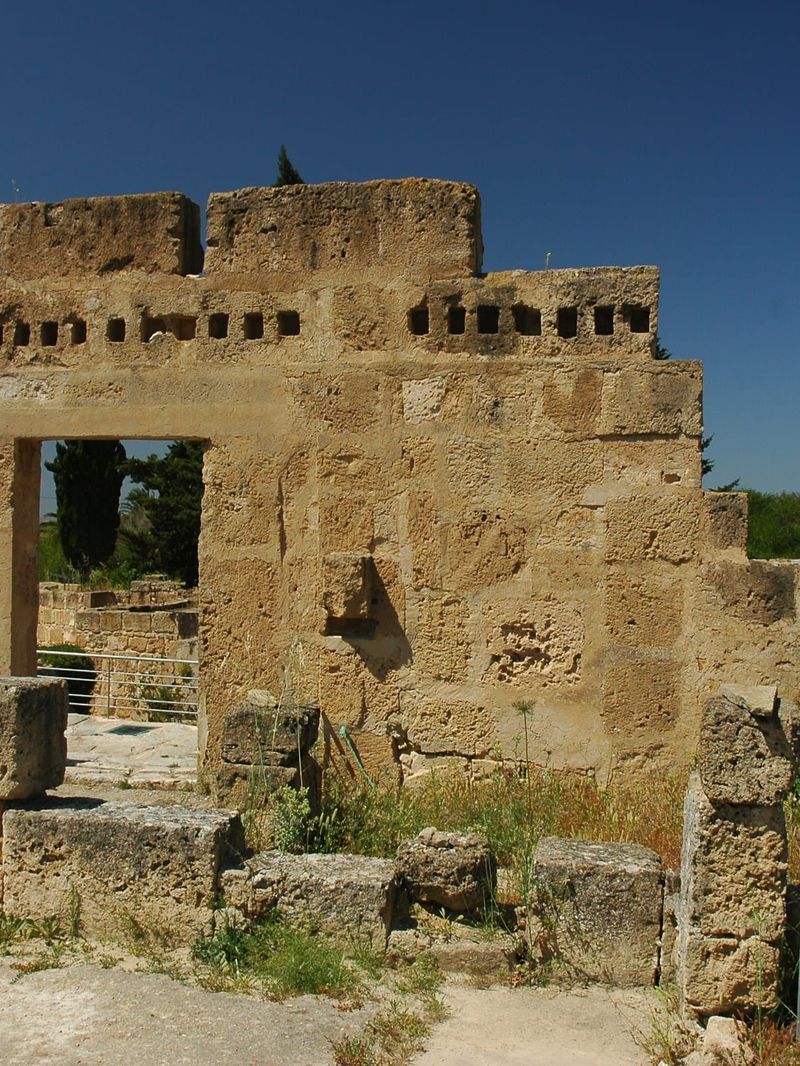
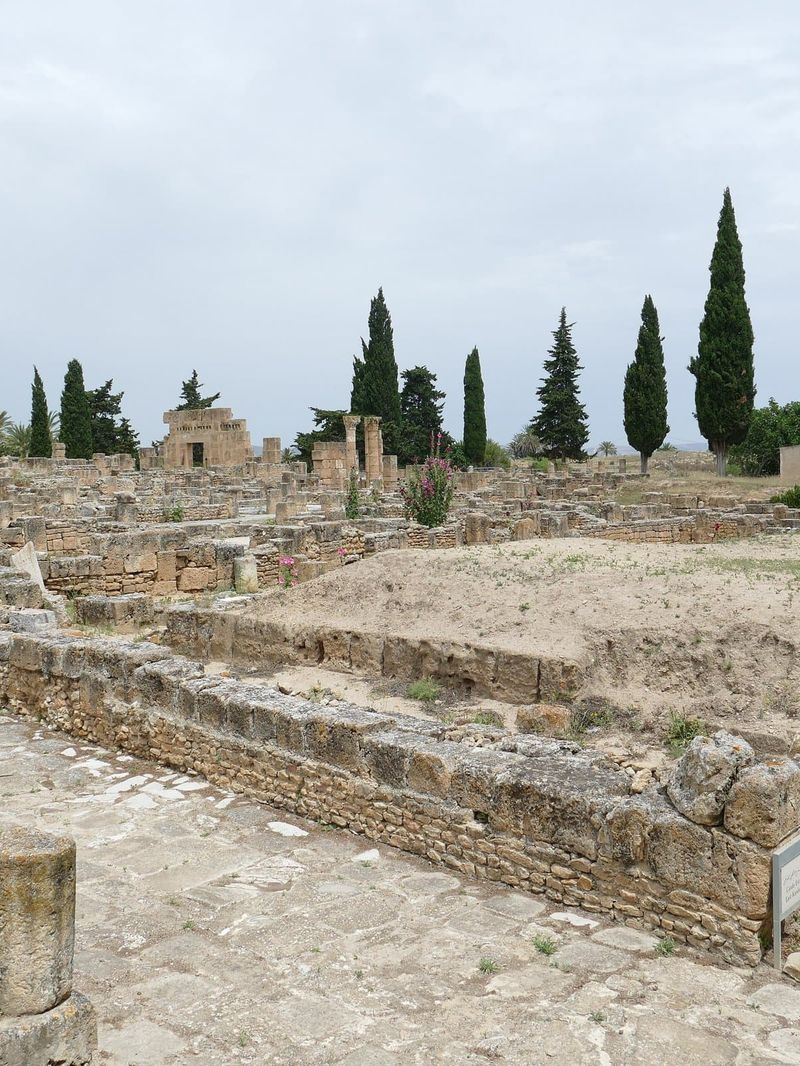
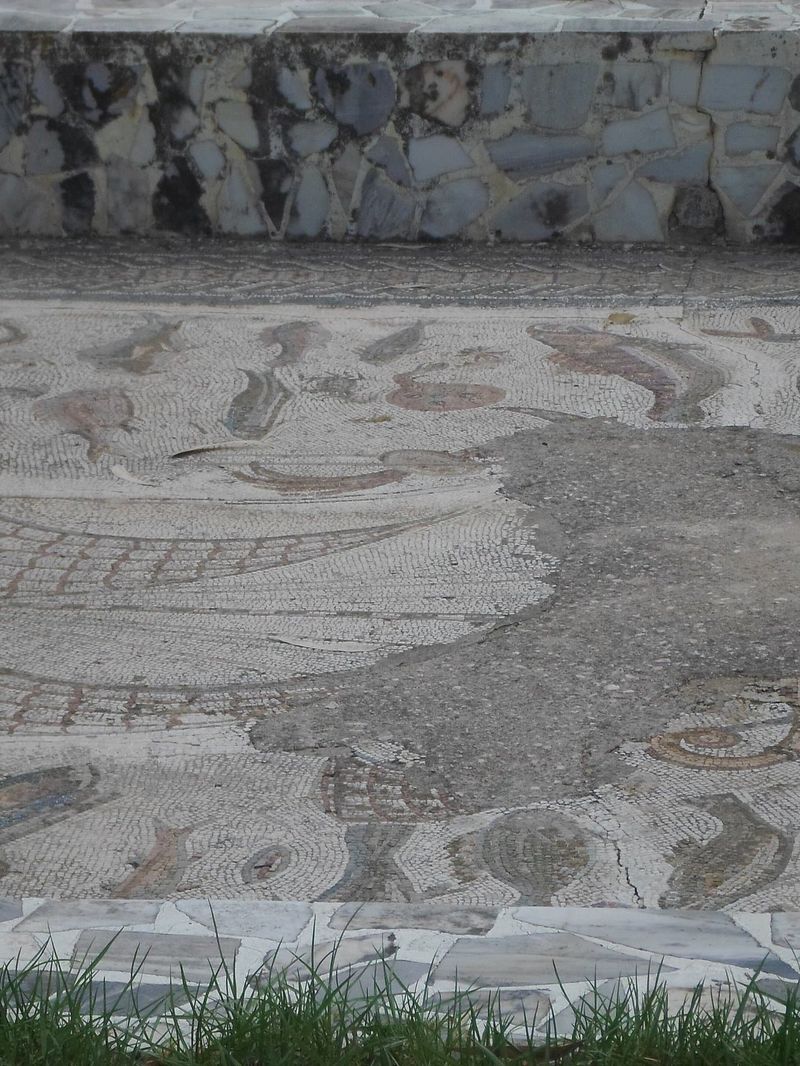
The most rewarding part of the site is the Roman residential quarter on the north-east side. Its paved streets run between houses built around peristyle courtyards. The House of the Cascade takes its name from a fountain whose basin is decorated with a mosaic of a sea full of fish. The garden pool at its centre was shaped like a small Roman theatre. Nearby are the House of the Historiated Capitals, whose courtyard has twelve columns, two with carved figurative capitals, the House of the Hunt with its hunting mosaics and the House of the Treasure with shops opening onto the street.
South of the city lies the Punic necropolis. Its graves range from simple pits cut into the soft rock to chambers built of sandstone blocks. The objects found in them, from jewellery to everyday tools, are displayed in the small site museum. The remains of an Italic-style temple from the Republican period, the forum, the great baths, cisterns, a theatre, a circus and an amphitheatre survive in varying states, some barely visible beneath the fields. Tunisian and international teams are still excavating here in search of the Phoenician city and its lost port.
Exhibo editorial
Stand on the plateau above the ruins and try to find the sea. You can't. That is the whole story of Utica. This was a harbour city with ships tied up below its walls. Now the nearest beach is a long drive away. The Medjerda did what no army managed: it buried the port in mud and left a capital stranded in wheat fields.
Come here after the Archaeological Site of Carthage and the contrast is striking. Carthage is busy, crowded and stitched into the suburbs. Utica is quiet enough to hear the wind in the cypresses along the Roman streets. Look down at the fish swimming across the floor of the House of the Cascade and remember that the people who laid them could smell the sea from their doorsteps.
Gallery
How to find it
The site is just outside the village of Utique, signposted from the main road between Tunis and Bizerte. The museum and ticket office are at the entrance; the Roman houses are a short walk away, with the Punic necropolis further south. A car is the practical way to get here.