The reservoirs of Roman Carthage
The cisterns of La Malga were the main reservoirs of Roman Carthage. They stand on high ground on the western side of the ancient city, in the district that gives them their name. Water reached them from the springs at the Temple of the Waters in Zaghouan by one of the longest aqueducts of the Roman world, running for more than 90 km across the plain.
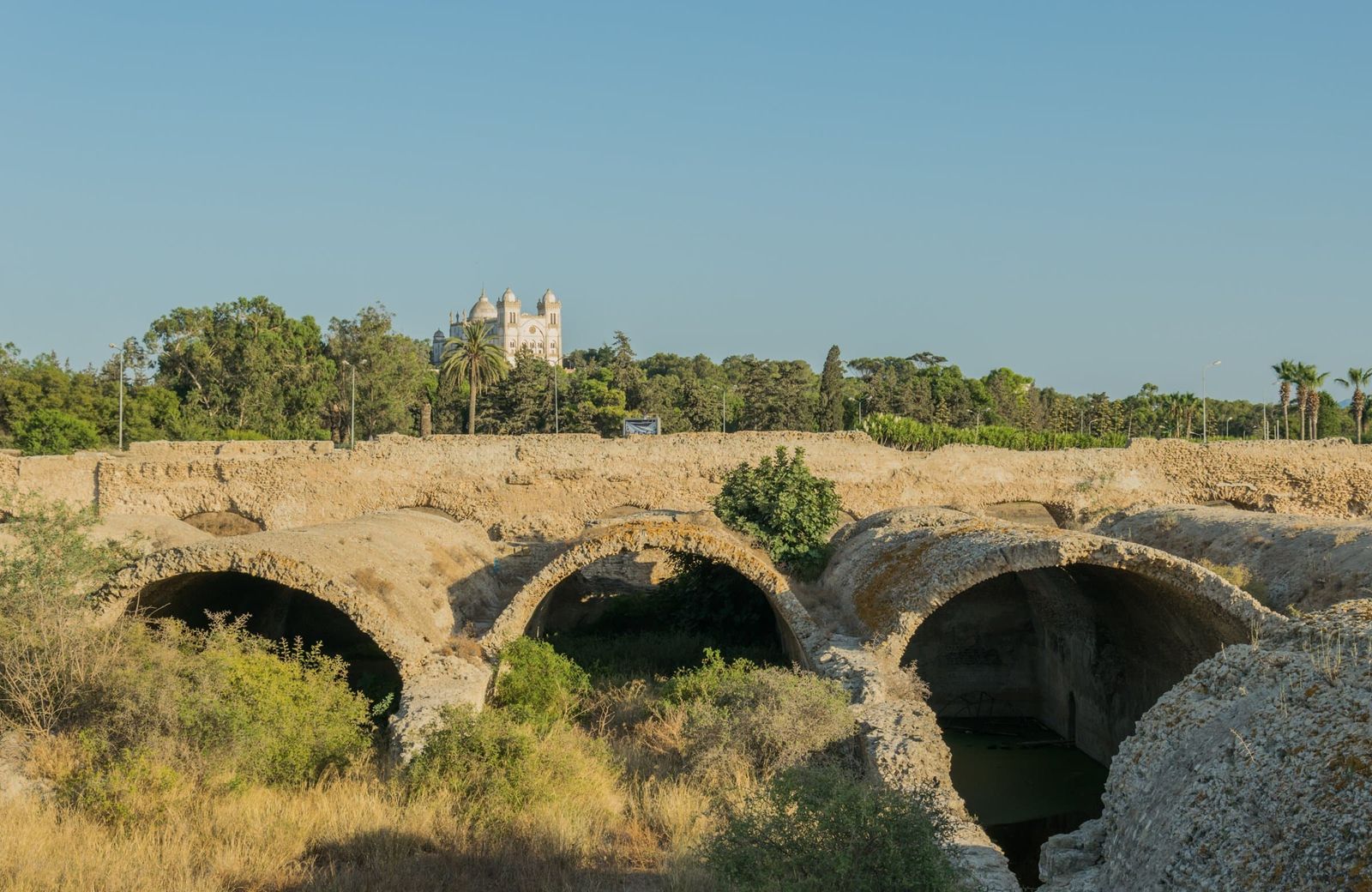
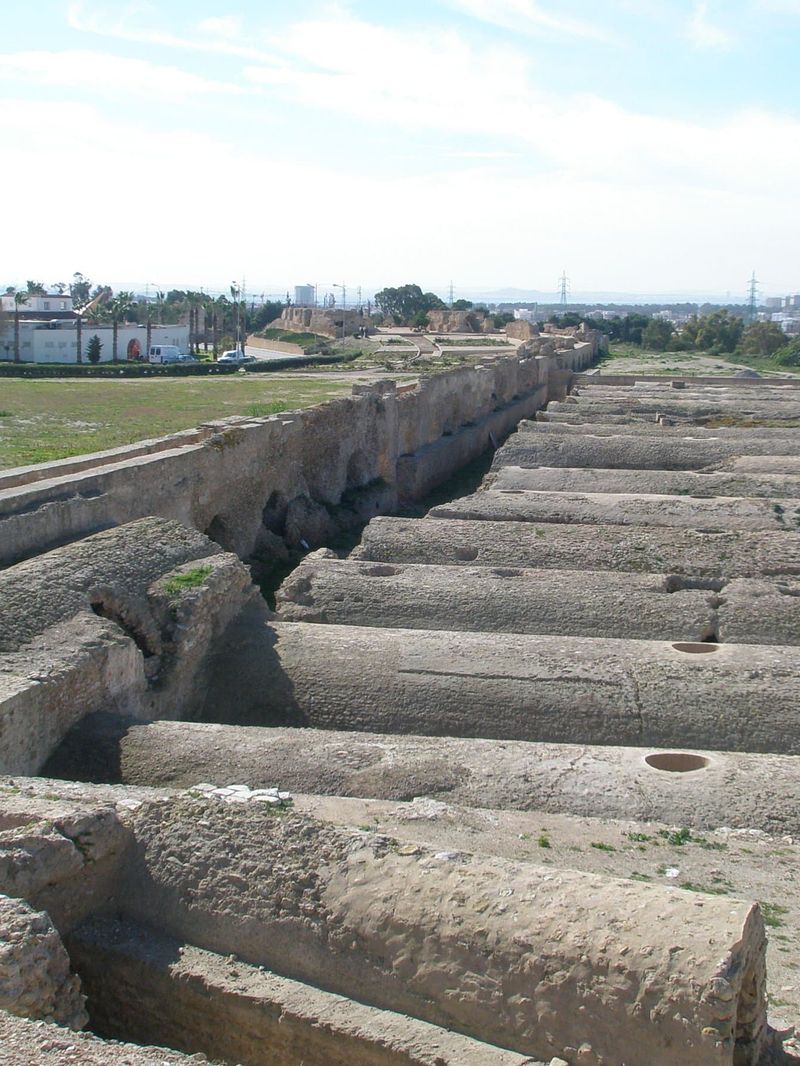
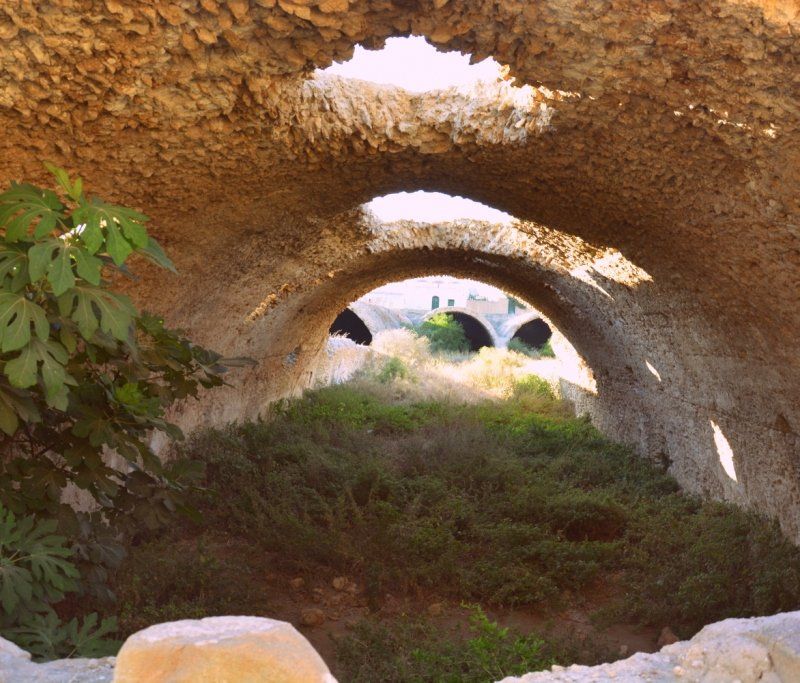
The cisterns are long parallel chambers, each roofed by a barrel vault, set side by side like the ribs of a ship. A gallery ran across their ends. Together they held tens of thousands of cubic metres of water. From here pipes carried water down to the fountains, houses and public buildings of the city below. The greatest consumer was the Antonine Baths by the sea.
A landmark of the countryside
The aqueduct and its reservoirs were built in the 2nd century, in the great age of Roman Carthage. After the fall of the city the cisterns were never fully buried. Their vaults remained visible above the ground. Old photographs and postcards show them used as stables, stores and even homes, with the cathedral on Byrsa Hill rising behind.
The site today
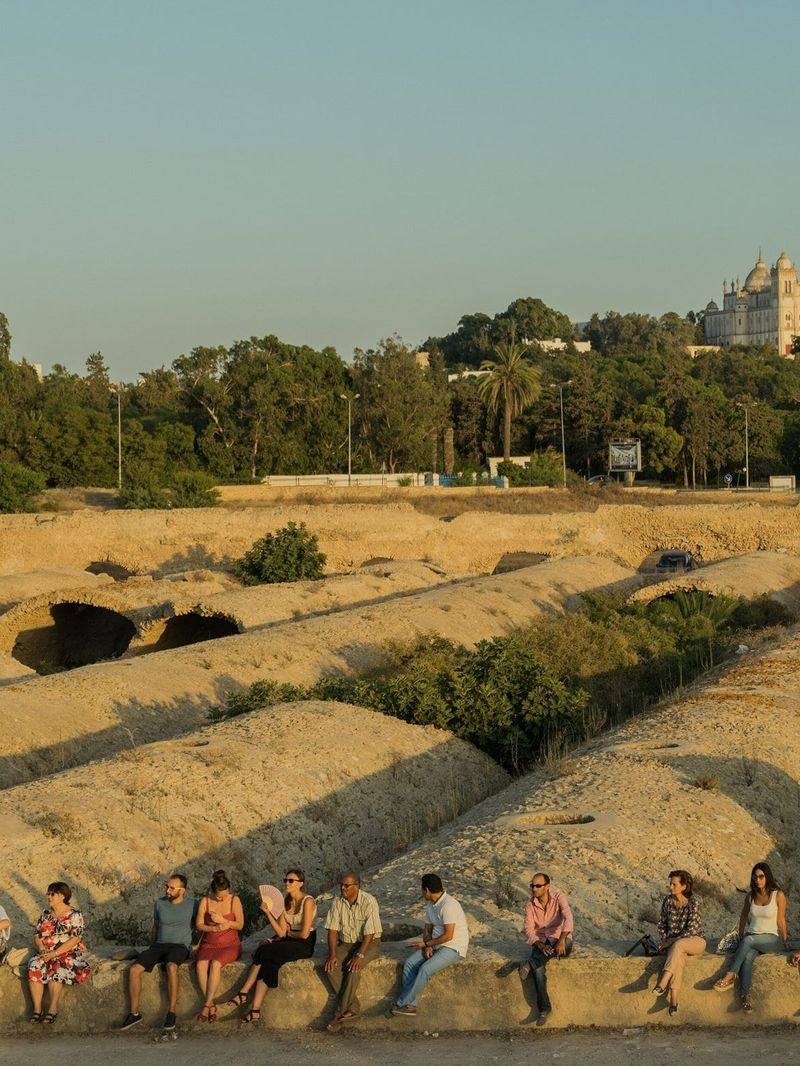
Many of the vaults have collapsed or been filled in. A long row of them still runs through an open field, half sunk in the ground. In some places you can look down through broken roofs into the chambers below. Houses of the modern neighbourhood press up to the edge of the site. The cisterns belong to the World Heritage property of Carthage.
Exhibo editorial
This is the least visited corner of Carthage and one of the most surprising. No columns, no mosaics. Only humps of masonry in a field, like the backs of whales coming up for air.
Walk along them and the scale sinks in. A whole city drank from these tanks. The water had travelled for days from the mountain of Zaghouan to get here. It is a monument to plumbing, which is to say to everything else.
Gallery
How to find it
The cisterns are in La Malga, on the western side of Carthage, about fifteen minutes' walk from Carthage Byrsa or Carthage Hannibal station on the TGM. A taxi is easier. The site is open ground; walk with care near the broken vaults.
Similar places
All places
News by Exhibo
Editorial coverage on Exhibo
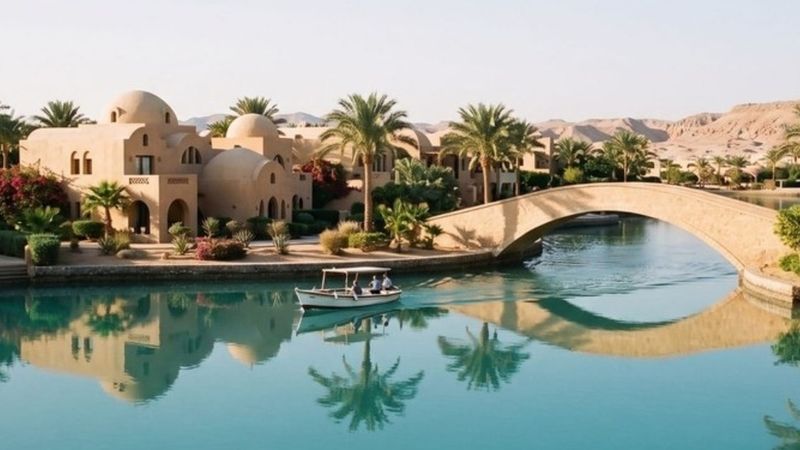
Why the Middle East Keeps Building Venice
From the Red Sea to the Gulf, canal towns keep getting called Venice. The water was usually about something else — and Venice was never quite Venice either.
The Middle East is full of “Venices”. Most began as a way to manufacture shoreline; the name usually arrived later, in English, from the people selling it.
Elie Khouri's New Foundation Takes Shape in Dubai
A private villa in Jumeirah 1 becomes the home for Ekaf
Collector Elie Khouri transforms a historic Jumeirah 1 residence into a contemporary art venue opening in 2028.

Following Damascus... Osthaus and the Islamicate Collection
Museum Folkwang revisits the founder's early travels and the formation of its historic Islamic Department
A survey of Karl Ernst Osthaus's collecting habits, featuring loans from Berlin and Dresden alongside European modernist responses.