Temple of the Waters, Zaghouan
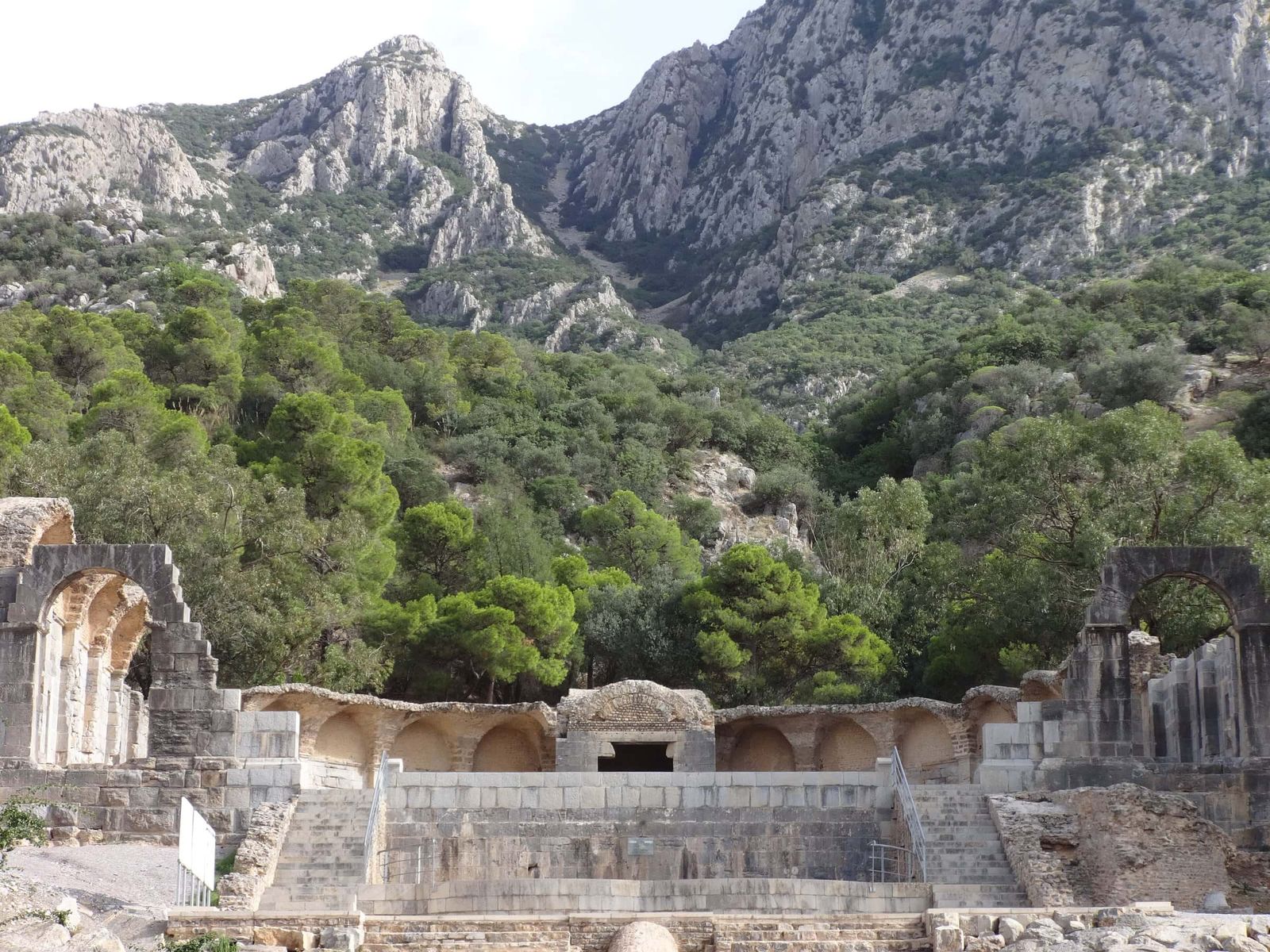
Hadrian's nymphaeum at the foot of Djebel Zaghouan, where the springs that watered Carthage began their journey.
The Temple of the Waters is a Roman nymphaeum on the wooded slopes of Djebel Zaghouan, just above the town of Zaghouan. It marks the source of the great aqueduct that carried spring water to Carthage. It was built in the second century under the emperor Hadrian. Zaghouan lies around forty-five kilometres west of Hammamet, the nearest city on Exhibo.
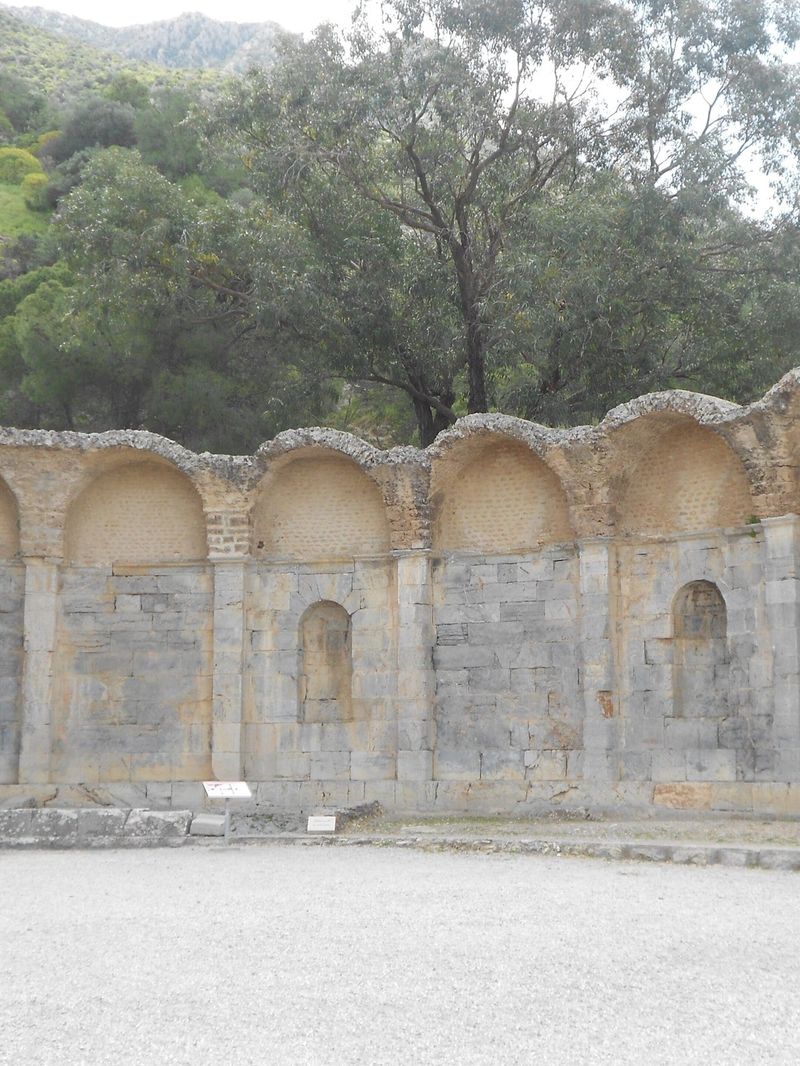
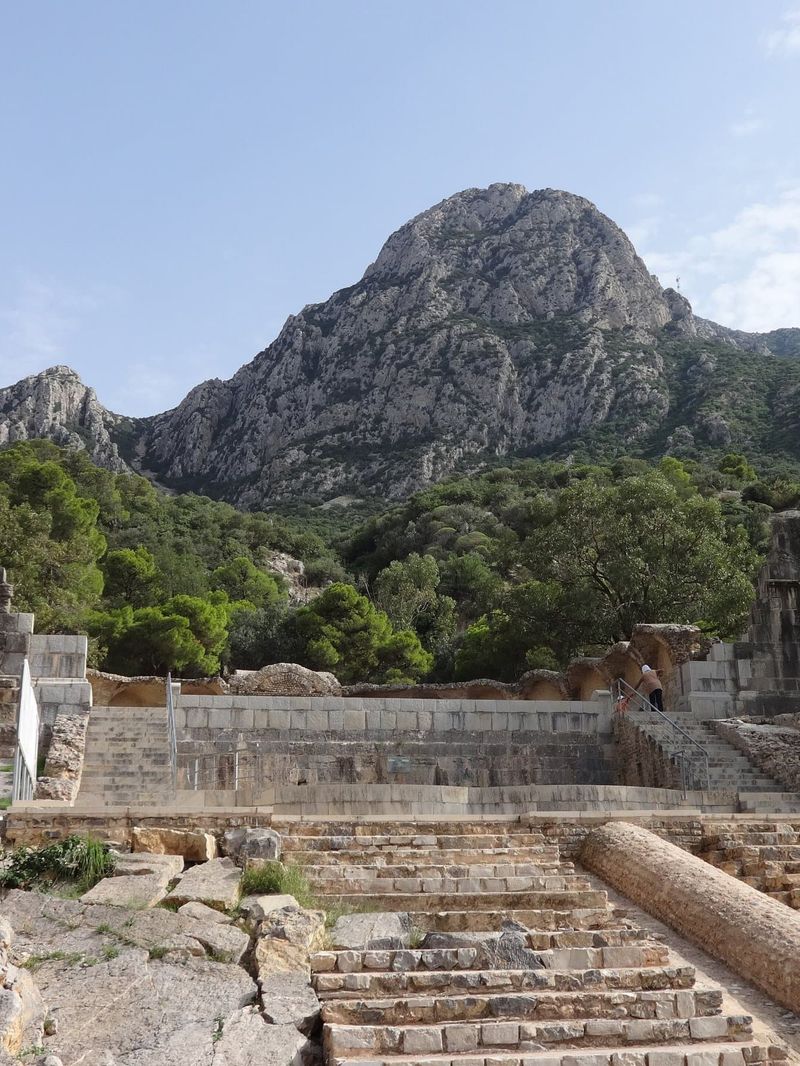
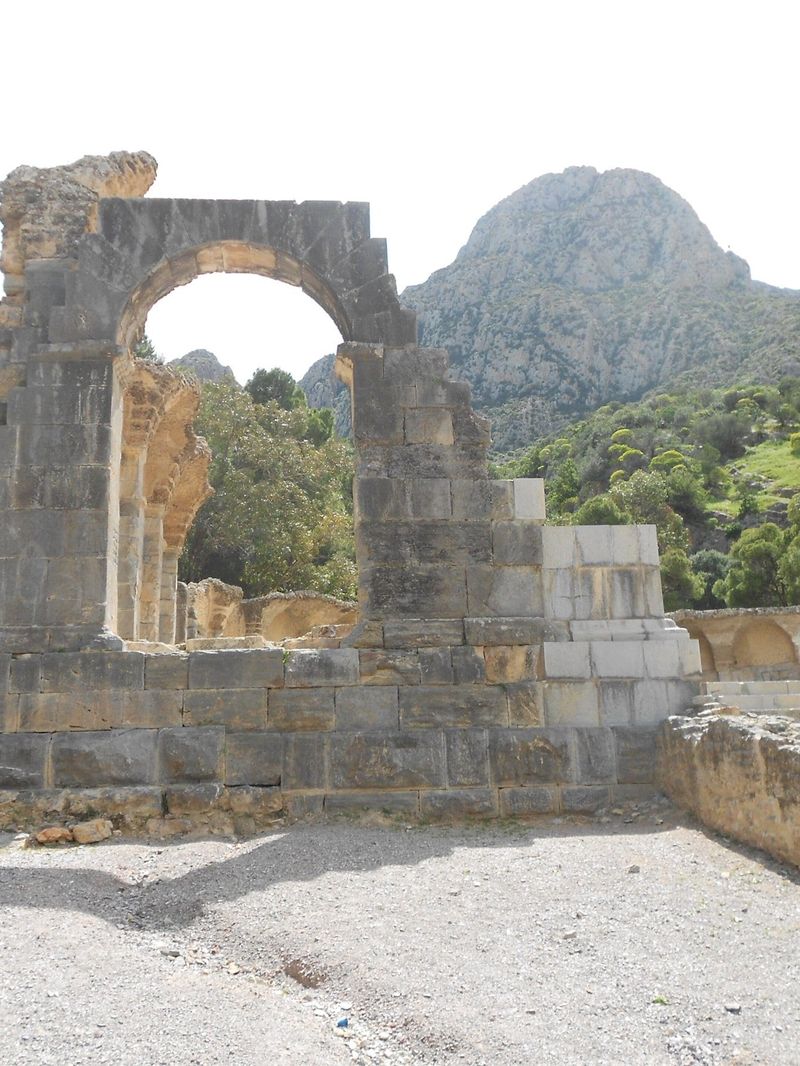
The monument is laid out like a small theatre. A semicircular wall with arched niches curves around a paved terrace, with a shrine at the centre of the curve and a basin below where the water was gathered. The niches are said to have held statues representing the months of the year. The grey limestone peaks of the mountain rise directly behind. It is less a temple to a single god than a monument to the springs themselves.
The aqueduct that started here ran for more than ninety kilometres, crossing the plain on long lines of arches near Uthina and Mohamedia before ending at the La Malga Cisterns on the hill of Carthage. It was repaired and reused many times over the following centuries. The springs, the temple and the aqueduct together have been put forward by Tunisia for inscription as a World Heritage Site.
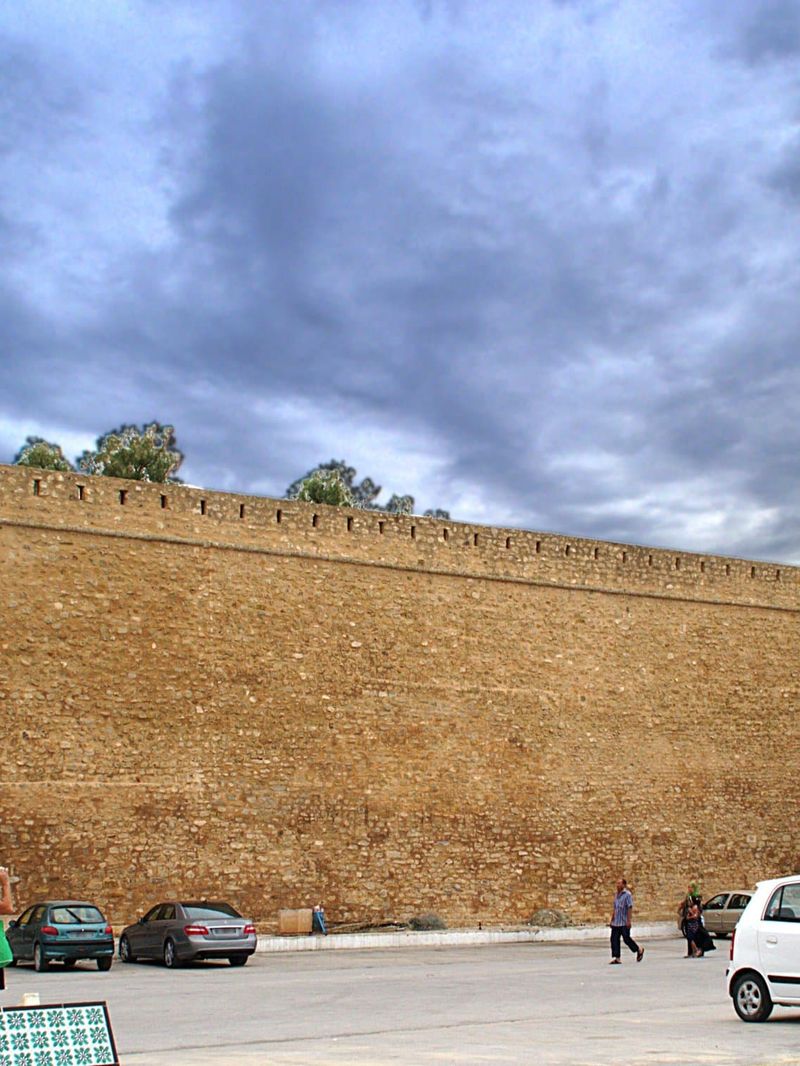
Zaghouan itself is a hill town of steep lanes and stairways at the foot of the mountain. Andalusian Muslims expelled from Spain settled here in the seventeenth century. The town is still known for distilling the water of wild roses, a tradition attributed to them. Its old centre holds the mausoleum of Sidi Ali Azouz, the town's patron saint. A Roman gate survives from ancient Ziqua. The road to the temple runs from the old town up through a public park.
Exhibo editorial
Most Roman monuments in Tunisia celebrate an emperor or a god. This one celebrates water, which in a dry country is the more honest choice. Stand in the curve of niches with the mountain above you and the whole plain spread out below. You can see the logic of it: everything Carthage drank started on this hillside.
Come on a weekday morning, when the park is quiet. Walk down afterwards through the old town and buy a bottle of rosewater or a box of kaak warka, the delicate local pastry. It is a quiet, generous kind of day out in one of the most beautiful Roman sites in the country.
Gallery
How to find it
The Temple of the Waters is about two kilometres south-west of Zaghouan's old town, at the top of the road that continues Rue Sidi Ali Azouz through the park. Zaghouan is around an hour by car from Tunis and a little less from Hammamet. Park at the gate of the park and walk up to the monument.