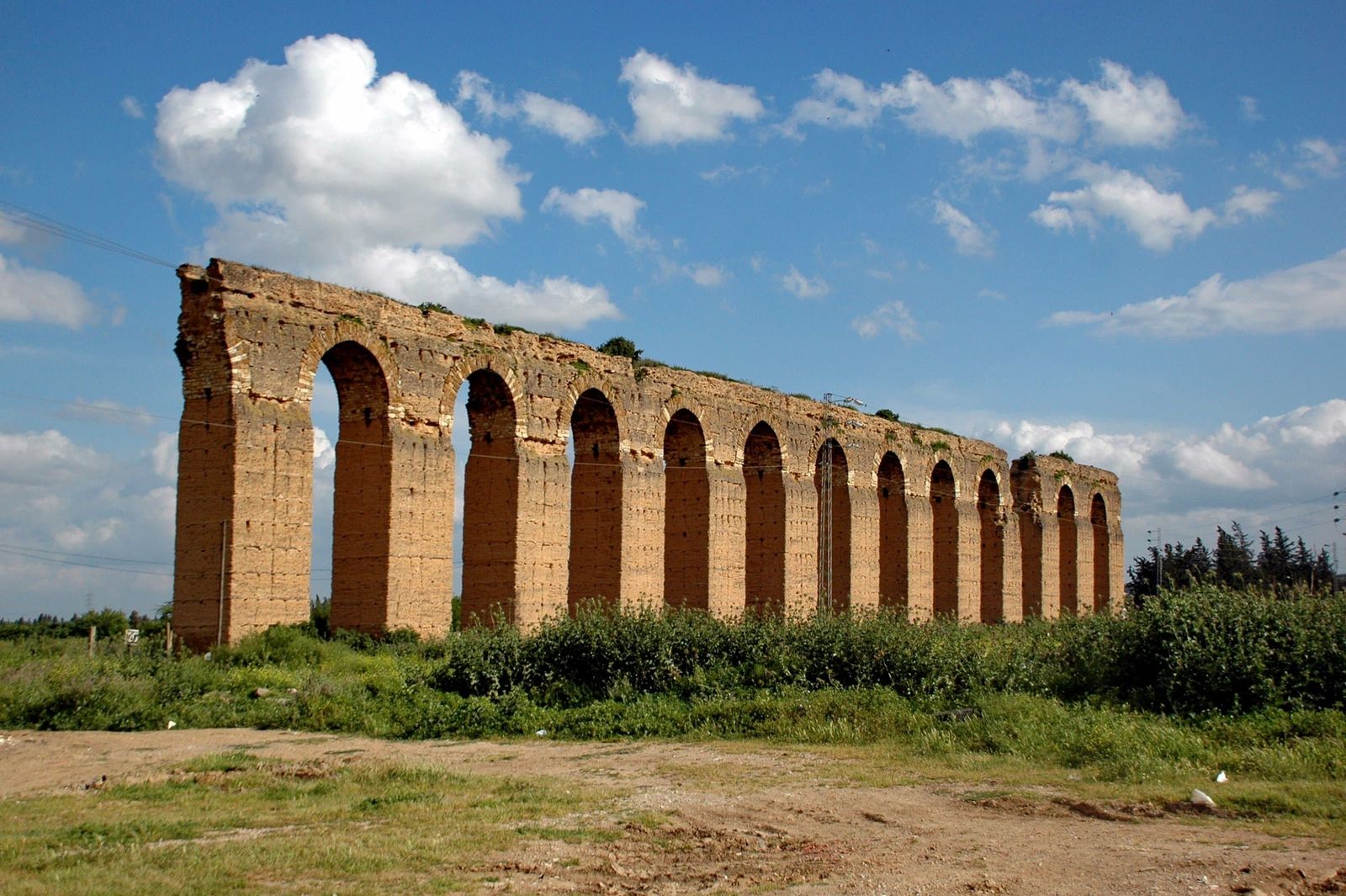
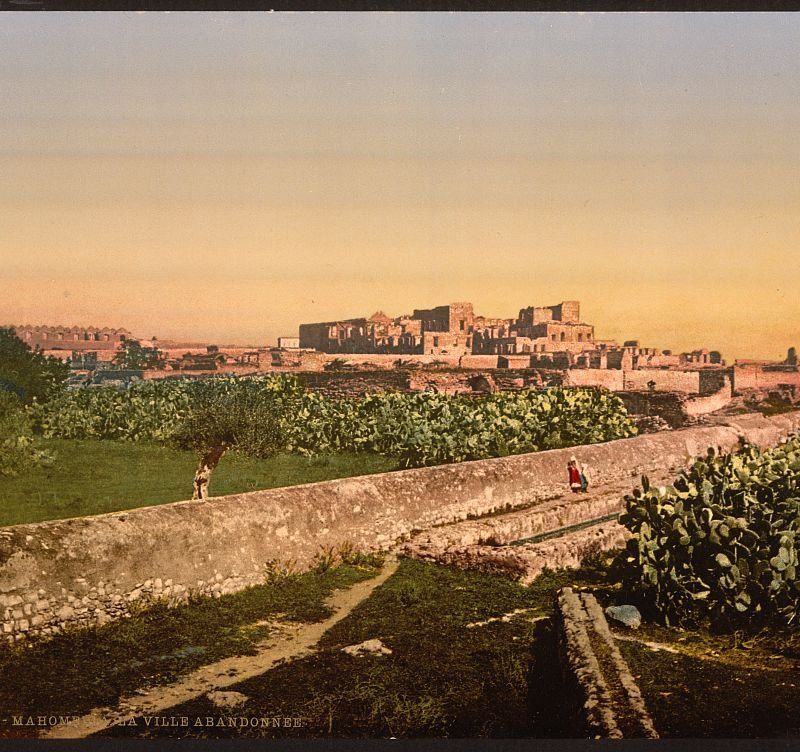
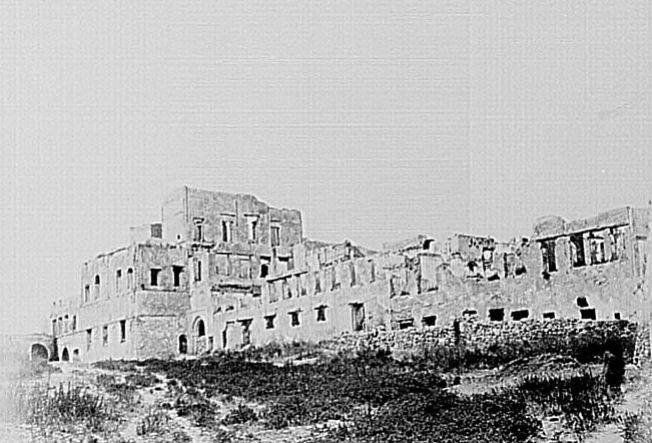
Mohamedia is a town about ten kilometres south-west of Tunis on the road to Zaghouan. It holds two monuments of very different ages. One is the ruins of a palace city built by Ahmed Bey in the 1840s. The other is the most spectacular surviving stretch of the Roman aqueduct that carried water from Zaghouan to Carthage.
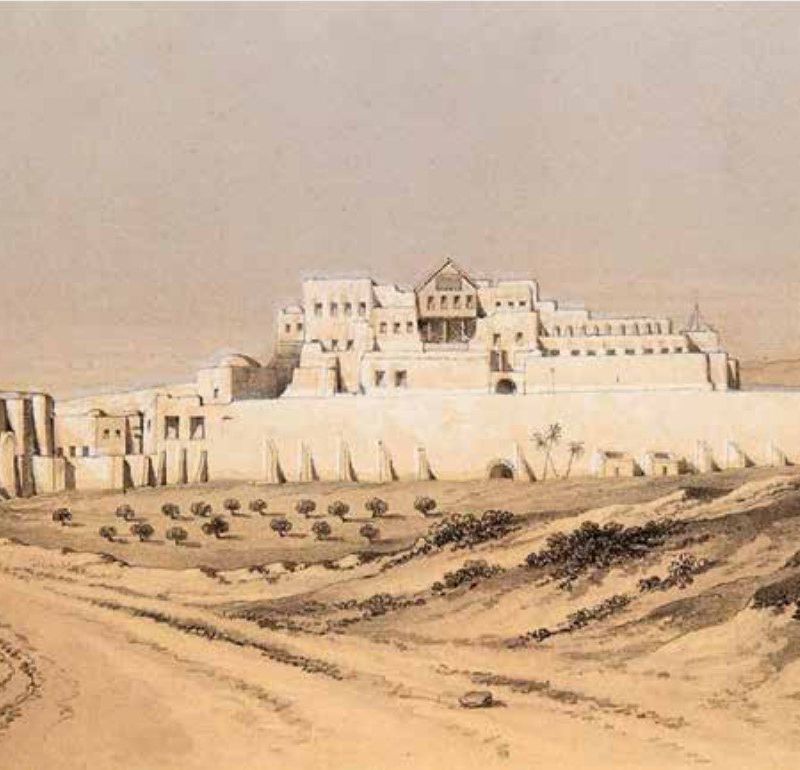
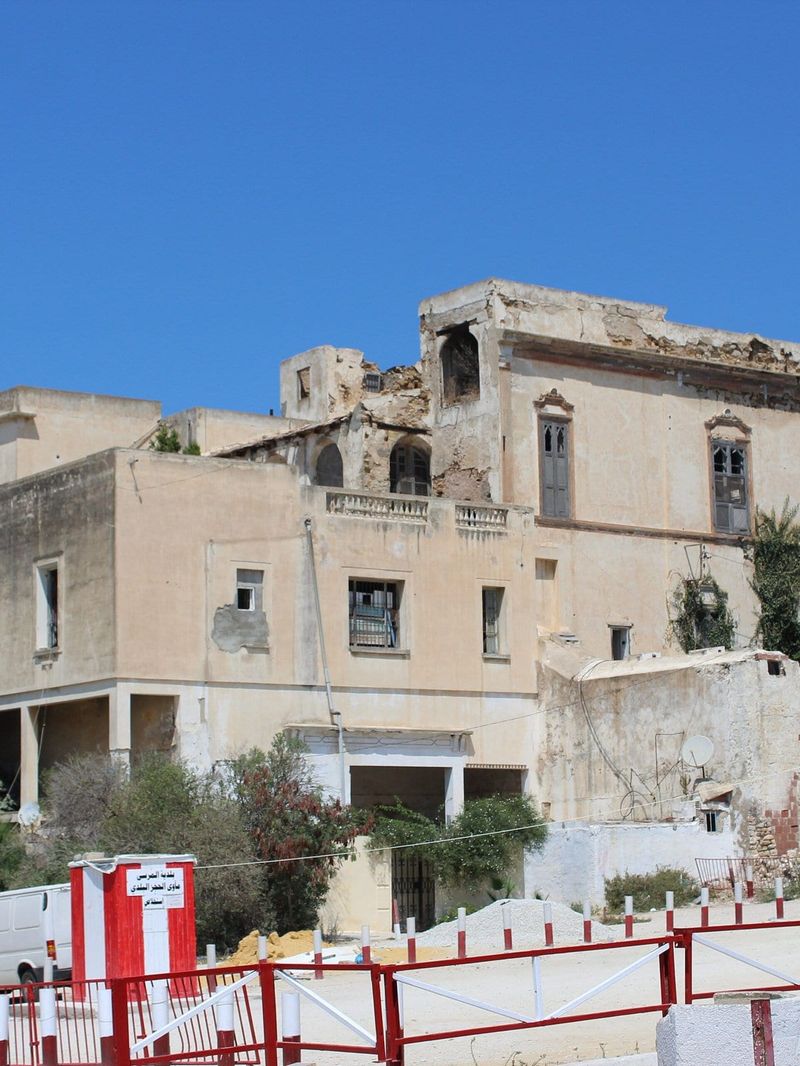
Ahmed Bey, who ruled Tunisia from 1837 to 1855, was a moderniser fascinated by Europe. At Mohamedia he set out to build a royal city around a new palace, with lodgings for the court and all the services of a small town, often described as his Versailles. He moved here with his court in 1846 while building continued around him. The cost weighed heavily on the state. Work on the extensions had to be stopped. After his death his successor stripped the palace of its marble, tiles and woodwork for a new palace at La Marsa. By the 1880s photographers were already recording Mohamedia as a ruin, sold to travellers as the lost town. Low walls and broken masonry are all that remain.
A few kilometres to the south, the aqueduct of Zaghouan crosses the plain on a long line of arches. Built in the second century under the emperor Hadrian, it ran from the springs at the Temple of the Waters in Zaghouan to the La Malga Cisterns at Carthage, a distance of more than ninety kilometres. Further along the same line, its arches also pass the Roman city of Uthina at Oudhna. It was cut and repaired many times over the centuries. The changing mix of stone, brick and rubble in its piers records those repairs. Near Mohamedia, where it crosses the valley of the Oued Miliane, the arches rise more than twenty metres.
The two sites sit side by side as a lesson in ambition. One is a palace that started to fall apart before it was finished, the other an engineering work still standing after almost nineteen centuries. Radès, the nearest Exhibo district, lies around fifteen kilometres to the east.
Exhibo editorial
There is no ticket booth at Mohamedia and no signpost worth the name. The palace is a scatter of walls among houses and fields. You need imagination to see the halls Ahmed Bey paid for.
Then drive south and the aqueduct appears, a line of honey-coloured arches marching across the plain towards the hills. It is one of those sights that makes you pull over. Come in the late afternoon, when the low sun turns the stone gold and the shadows of the arches stretch across the fields. The Romans built it to carry water. It ended up carrying the whole story of the land around it.
Gallery
How to find it
Mohamedia is about ten kilometres south-west of central Tunis on the road to Zaghouan, around twenty minutes by car. The palace ruins lie in the town. For the tallest arches of the aqueduct, continue south on the road towards Zaghouan; they stand beside the road where it crosses the Oued Miliane valley. A car or taxi is the practical way to visit both.
Similar places
All places
News by Exhibo
Editorial coverage on Exhibo
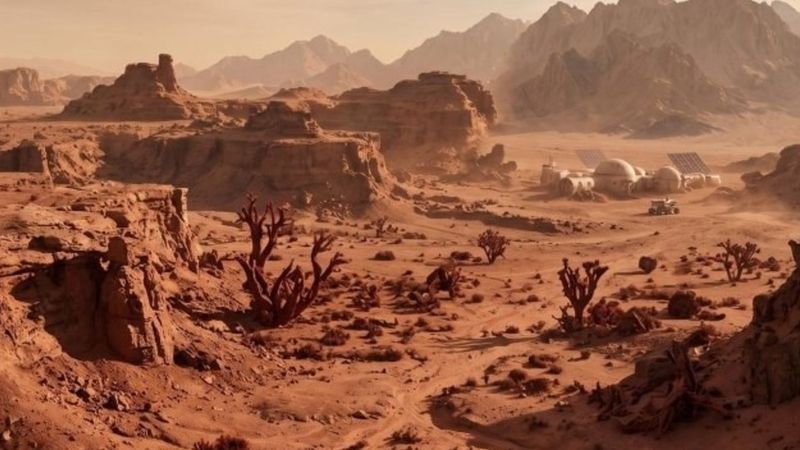
Why Every Sci-Fi Desert Looks Arab
From Arrakis to Tatooine, when a film wants a desert to feel ancient, prophetic and alien, it reaches for an Arab and Berber vocabulary — and reveals more about the West that built it than the region it borrows from.
The wrapped faces, the trilling women, the barely-displaced Arabic: cinema's alien deserts keep sounding Arab. But the vocabulary was assembled in the West — from Orientalist painting to Lawrence to Dune — and it says more about who is looking than about anyone being looked at.
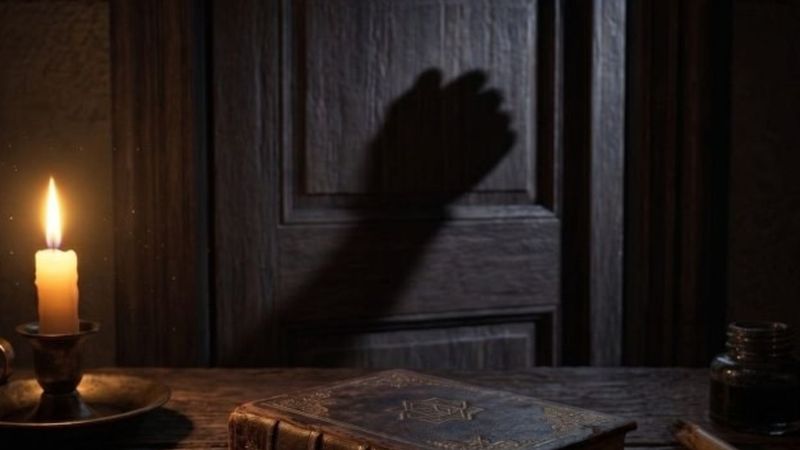
The Real Aladdin: The Story That Belonged to No Country
Aladdin has no Arabic manuscript older than its French translation. Behind the gap stands a young man from Aleppo, catalogued for a century as anonymous.
The most famous "Arabian" tale in the world is missing from the oldest Arabic manuscript of the Thousand and One Nights — because before a French translator wrote it down in Paris, there was no manuscript of it to be missing from.
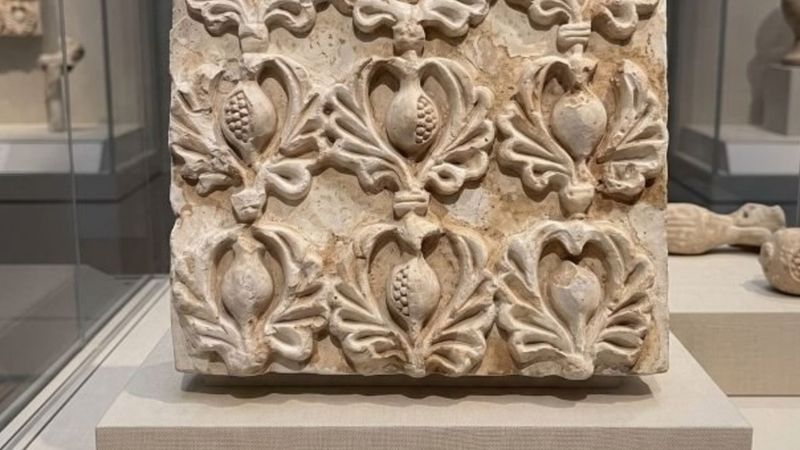
The Fruit We Are Sure We Recognize
How the pomegranate became one of the most confidently named motifs in Islamic ornament — and one of the least confidently identified — across a thousand years of tile, silk and stucco, with meanings we mostly attached later.
A slab of sixth-century plaster in the Met shows a fruit you recognise at a glance: a pomegranate, and surely it means paradise. Hold that certainty up to the light and it dissolves. Across a thousand years of tile, silk and stucco, the pomegranate is the shape we name most confidently and identify least — blurring into the artichoke and the palmette, its meanings attached by later viewers, its very name partly a nineteenth-century invention