Uthina, today Oudhna, is one of the largest archaeological sites in Tunisia. It lies about thirty kilometres south-west of central Tunis in the valley of the Oued Miliane, a plain known since antiquity for its fertile soil. Radès, the nearest Exhibo district, is around twenty kilometres to the north-east.
People lived here before the Romans, but the town itself was founded at the end of the first century BC as a colony for veterans of the Thirteenth Legion. It flourished in the second century AD, especially under the emperor Hadrian. In the Middle Ages new settlers reused the ancient buildings rather than building a town of their own. Finds of Islamic pottery from the tenth and eleventh centuries record their presence. Excavated in part in the nineteenth century, the site was taken up again by archaeologists in 1993 and opened to visitors in 1999.
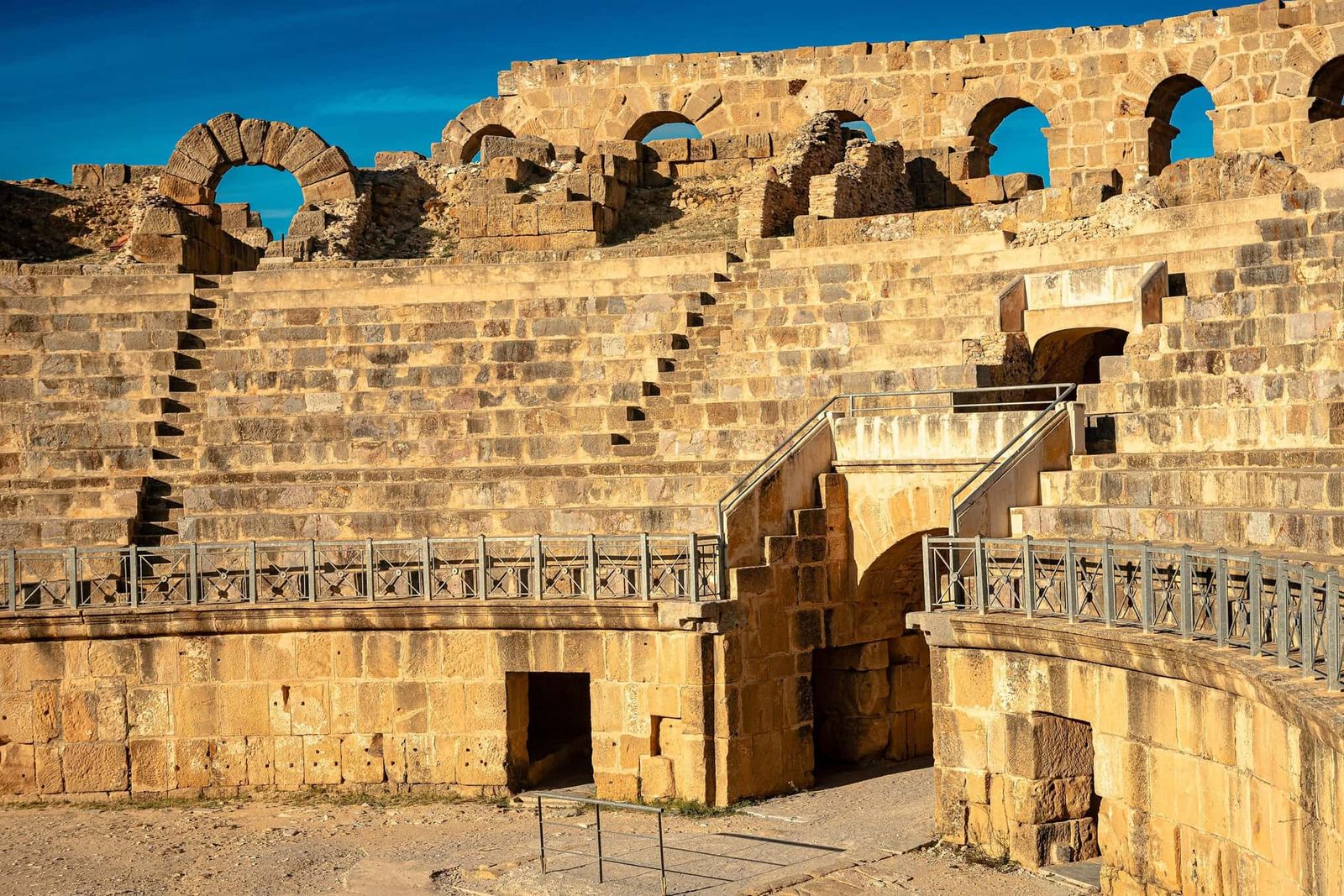
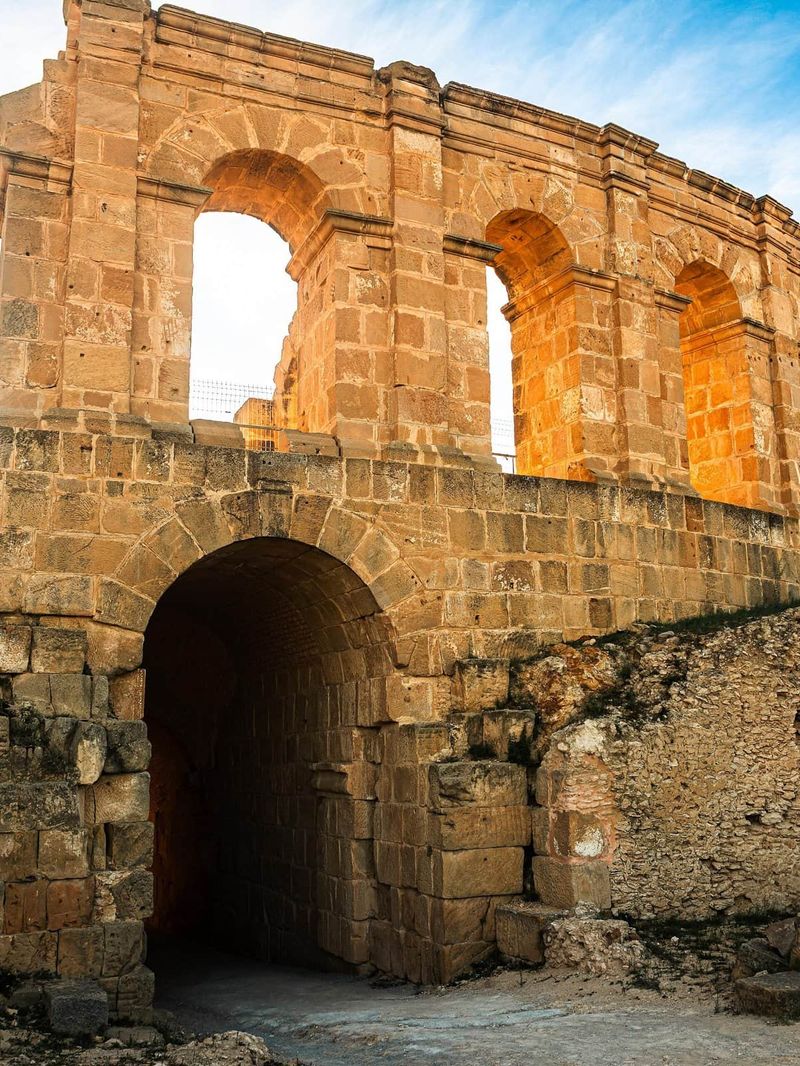
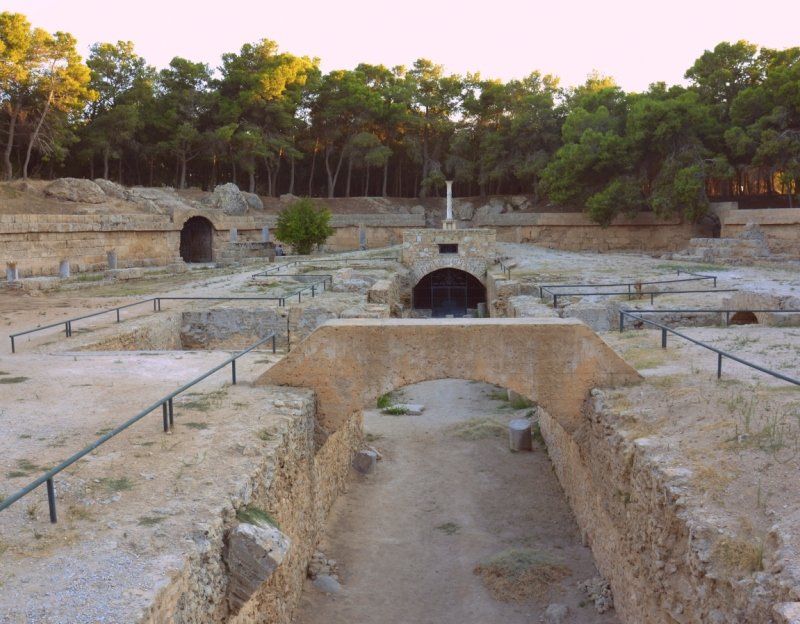
The capitol stands on the hill at the heart of the city. Dedicated to Jupiter, Juno and Minerva, it was built as three temples side by side opening onto the forum, raised on two lower storeys of vaulted rooms. It ranks among the largest temples in Roman Africa. To the north-east, the amphitheatre is cut partly into a hillside. With room for about sixteen thousand spectators it is the third largest in Tunisia after those of Carthage and El Jem. Its restored outer arcade and tiers give the clearest sense of the city's scale.
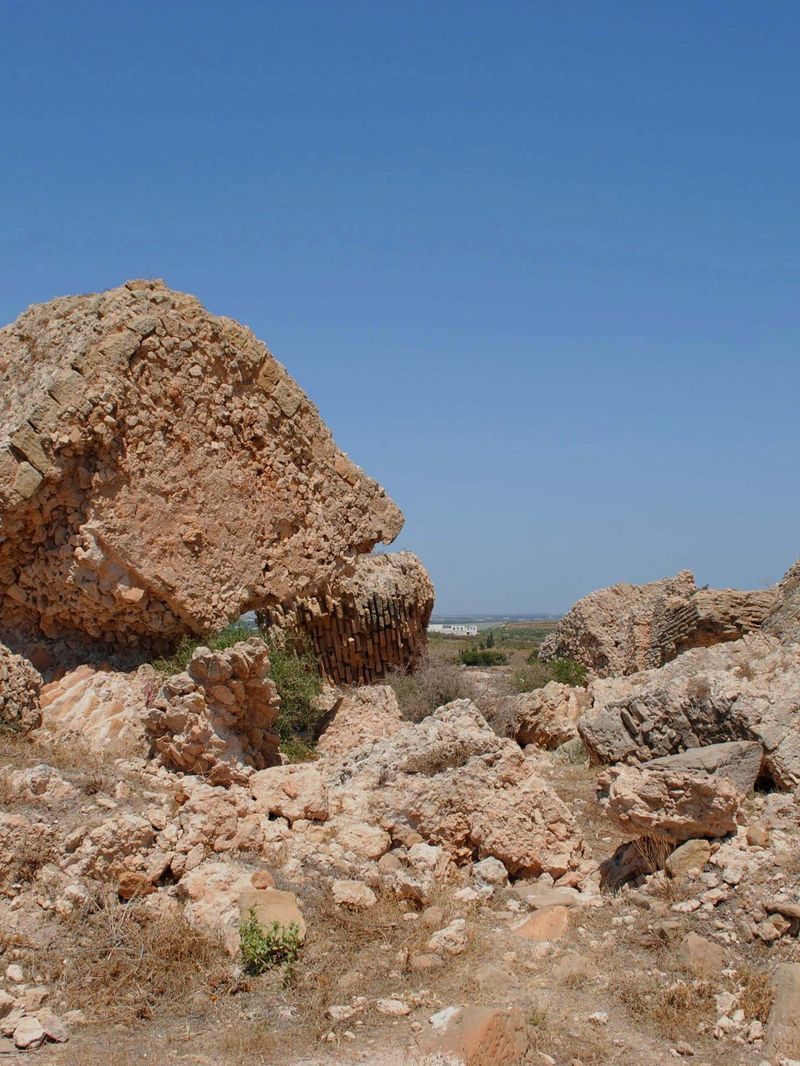
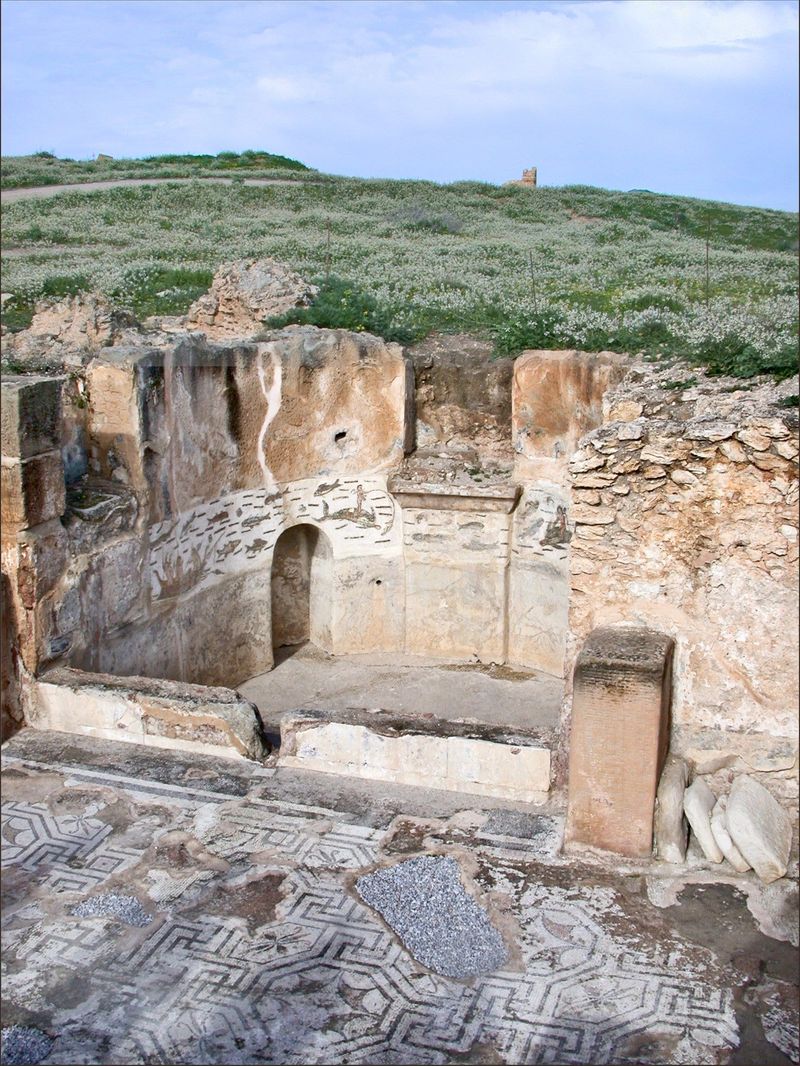
The Great Baths cover about a hectare and were built on two levels, the upper one with the hot and cold rooms open to visitors, the lower one used for storing firewood. Several houses paved with mosaics have been uncovered. The House of Ikarios has more than thirty rooms and a floor showing Dionysus giving the vine to Ikarios. The private baths of the Laberii family were paved with a mosaic of Orpheus charming the animals. Cisterns, an aqueduct branch and the arches of the great aqueduct from the Temple of the Waters at Zaghouan passing nearby on its way to La Malga Cisterns complete the picture.
Exhibo editorial
Most visitors to Tunisia see El Jem and assume they have seen the Roman amphitheatre. Uthina is the quieter answer, half an hour from Tunis and often almost empty. You walk through a dark vaulted passage and come out into a bowl of honey-coloured stone with nobody else in it.
That emptiness is the gift of the place. Climb up to the capitol and look out over the Miliane plain, still green with crops two thousand years after the veterans of the Thirteenth Legion were given land here. Then combine it with the aqueduct arches at Mohamedia on the way back. Together they make one of the best half-days of Roman history anywhere near Tunis.
Gallery
How to find it
Uthina lies about thirty kilometres south-west of central Tunis, off the road towards Zaghouan near the village of Oudhna. The site is signposted from the road; there is no regular public transport, so a car or taxi is the practical way to get there. The amphitheatre is at the north-eastern edge, the capitol on the hill in the centre. Thuburbo Majus lies about thirty-five kilometres further south-west, so the two make an easy pairing.
Similar places
All places
News by Exhibo
Editorial coverage on Exhibo
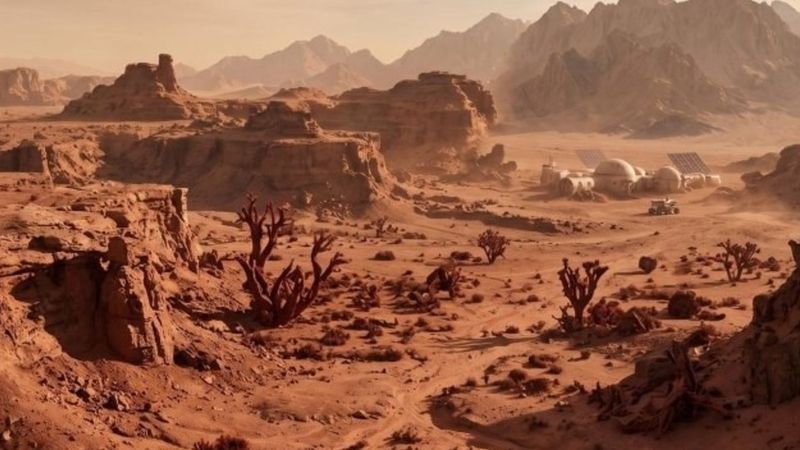
Why Every Sci-Fi Desert Looks Arab
From Arrakis to Tatooine, when a film wants a desert to feel ancient, prophetic and alien, it reaches for an Arab and Berber vocabulary — and reveals more about the West that built it than the region it borrows from.
The wrapped faces, the trilling women, the barely-displaced Arabic: cinema's alien deserts keep sounding Arab. But the vocabulary was assembled in the West — from Orientalist painting to Lawrence to Dune — and it says more about who is looking than about anyone being looked at.

The Real Aladdin: The Story That Belonged to No Country
Aladdin has no Arabic manuscript older than its French translation. Behind the gap stands a young man from Aleppo, catalogued for a century as anonymous.
The most famous "Arabian" tale in the world is missing from the oldest Arabic manuscript of the Thousand and One Nights — because before a French translator wrote it down in Paris, there was no manuscript of it to be missing from.
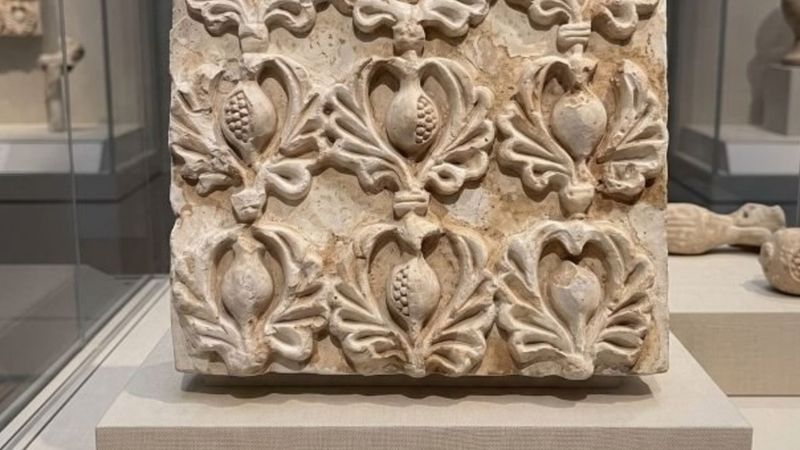
The Fruit We Are Sure We Recognize
How the pomegranate became one of the most confidently named motifs in Islamic ornament — and one of the least confidently identified — across a thousand years of tile, silk and stucco, with meanings we mostly attached later.
A slab of sixth-century plaster in the Met shows a fruit you recognise at a glance: a pomegranate, and surely it means paradise. Hold that certainty up to the light and it dissolves. Across a thousand years of tile, silk and stucco, the pomegranate is the shape we name most confidently and identify least — blurring into the artichoke and the palmette, its meanings attached by later viewers, its very name partly a nineteenth-century invention