A theatre rediscovered
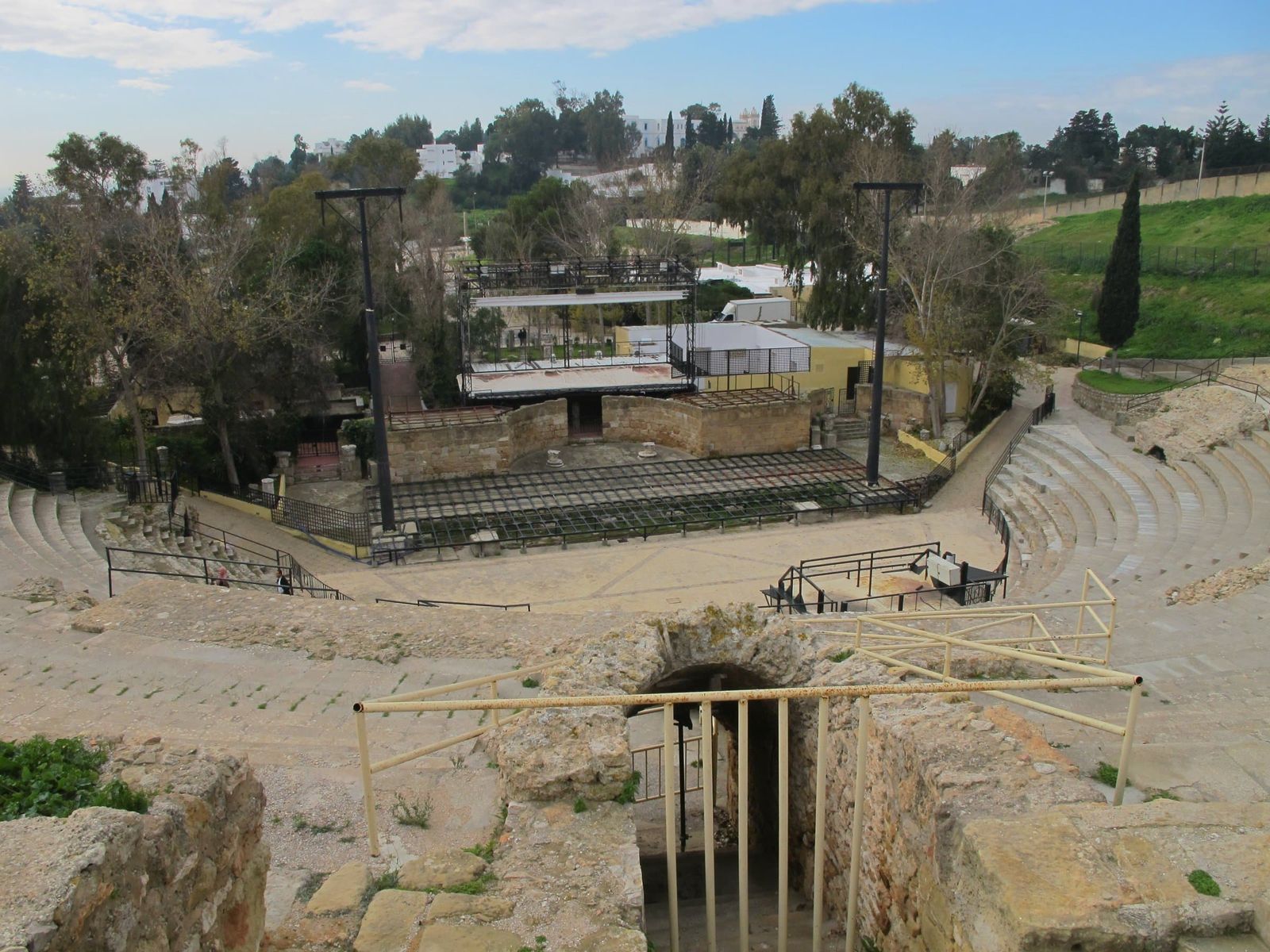
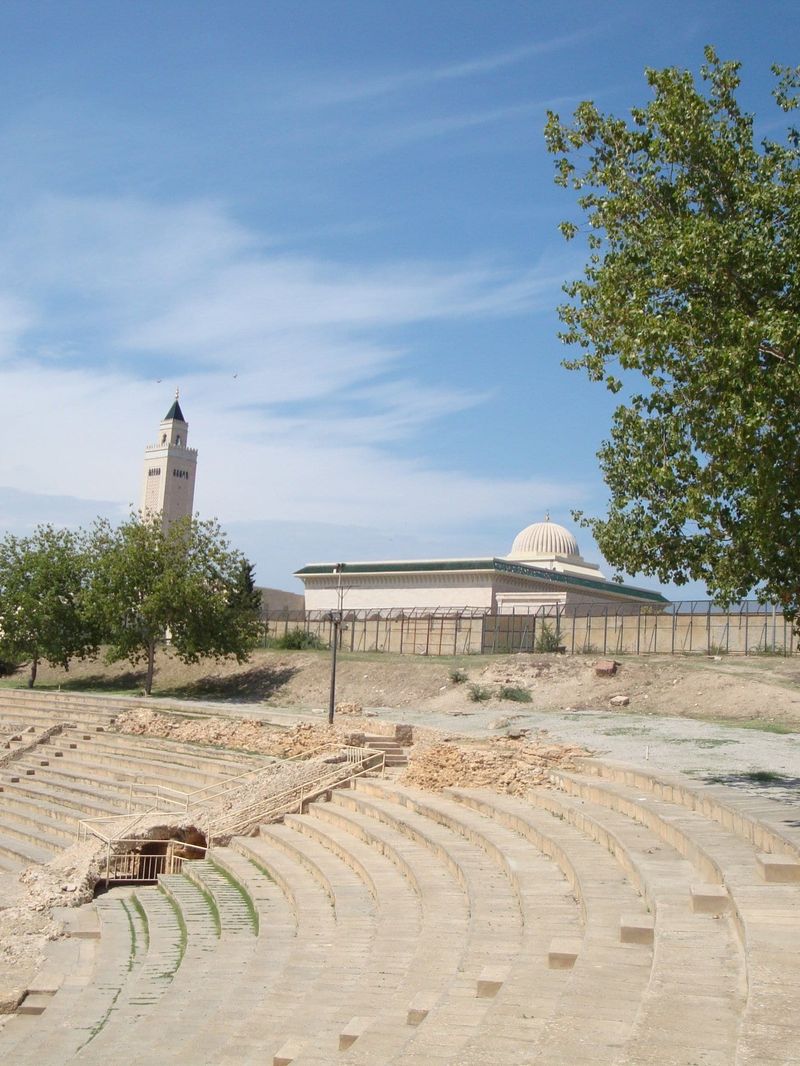
The Roman Theatre of Carthage lies on the southern slope of the Odeon Hill, next to the Roman Villas and Odeon. It was found and excavated between 1901 and 1956. Its first remains lay under about eight metres of earth.
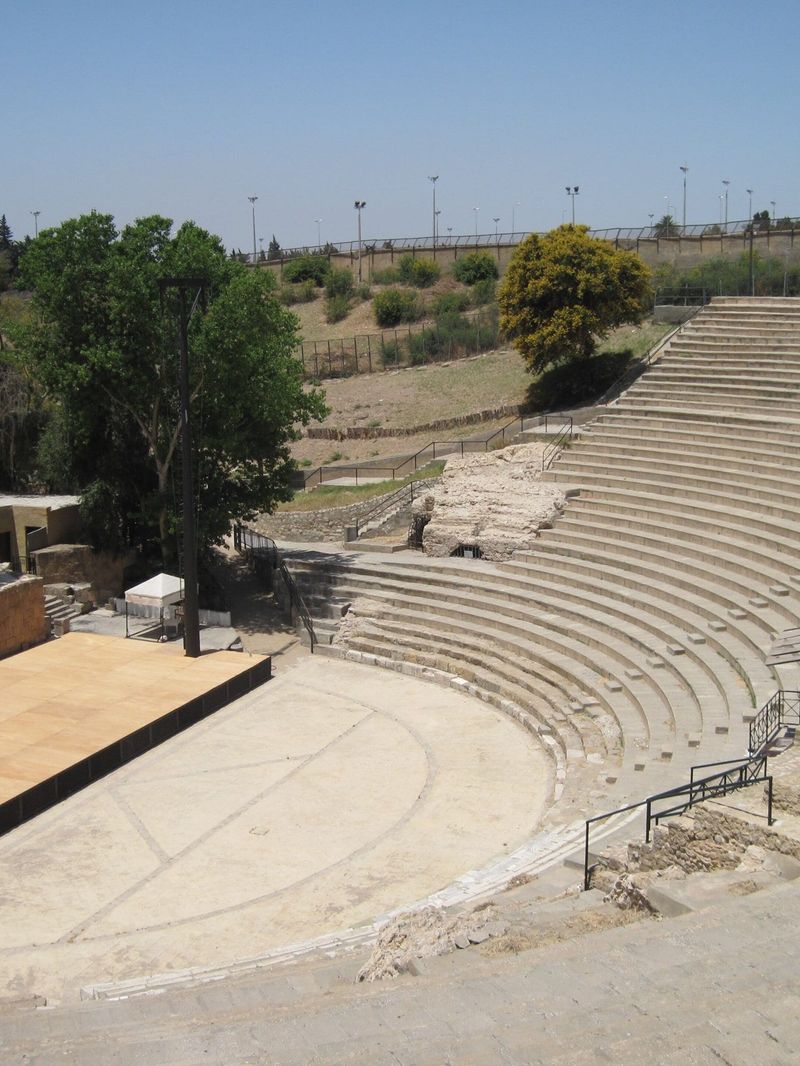
The Romans chose the place with care. The hillside carried the upper rows of seats and gave good acoustics. Two main streets, to the north and south, let crowds come and go freely. The theatre follows the classical rules set out by Vitruvius. Its curved seating, the cavea, measures 106 metres across and faces south-east. Two vaulted galleries gave access to the seats from the sides, at the twelfth and twentieth rows. It held about 10,000 spectators.
Stage and statues
The stage wall rose in three storeys and was richly decorated. The variety of architectural pieces found in the excavations shows how lavish it was. The finest sculpture found here is a colossal statue of Apollo in marble from the island of Thasos, 2.4 metres tall. It stood in the theatre as the god of the arts.
The writer Apuleius of Madauros, author of The Golden Ass, gave a lecture in this theatre in the 2nd century. He described the shows of his time: mime, dance, comedy and philosophy.
A stage again
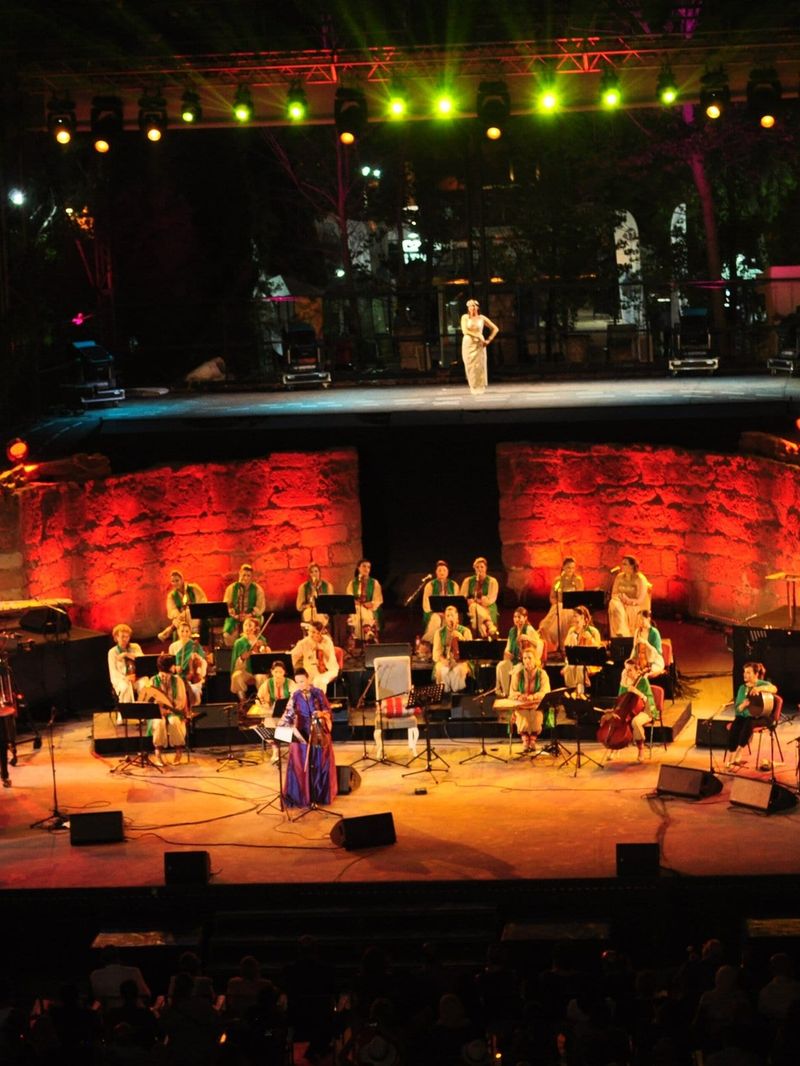
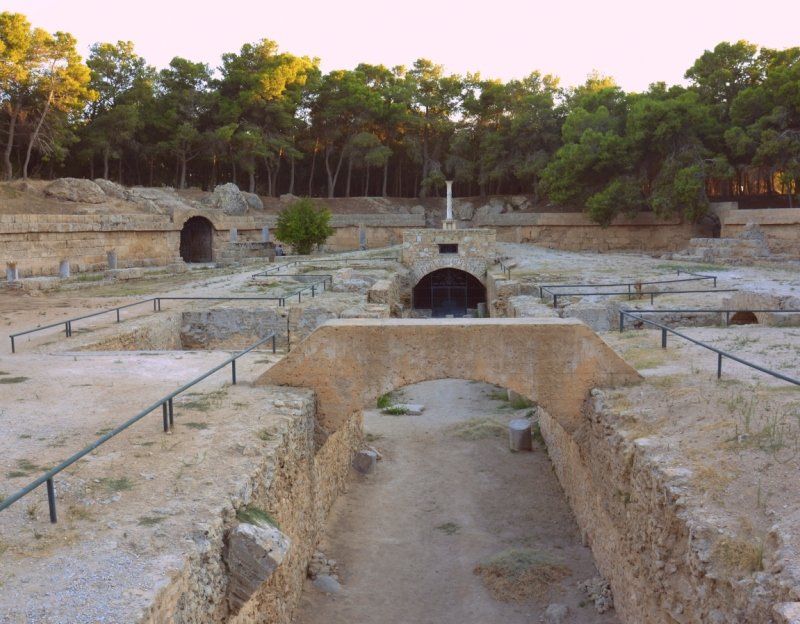
Little of the ancient building survived: parts of the stage, the podium wall, the orchestra and the lower seats. The rest has been rebuilt for use. Performances returned as early as the spring of 1906. Since the 1960s the theatre has been the main stage of the Carthage International Festival, founded in 1964 and one of the oldest summer festivals in Africa. Every July and August its rows fill again for concerts by Arab and international stars.
Exhibo editorial
By day it is a bowl of pale stone, mostly modern, a little disappointing. Come back on a summer night. The rows are full, the stage is lit, a singer holds a long note and the whole audience sings it back.
That is the real monument here. Not the masonry but the habit of gathering, unbroken across two thousand years with a long pause in the middle. Few ancient theatres are used so well.
Gallery
How to find it
The theatre is on the Odeon Hill, a short walk uphill from Carthage Hannibal station on the TGM. By day it is part of the combined Carthage ticket. In July and August, during the Carthage International Festival, it is open only for performances with separate tickets.
Similar places
All places
News by Exhibo
Editorial coverage on Exhibo
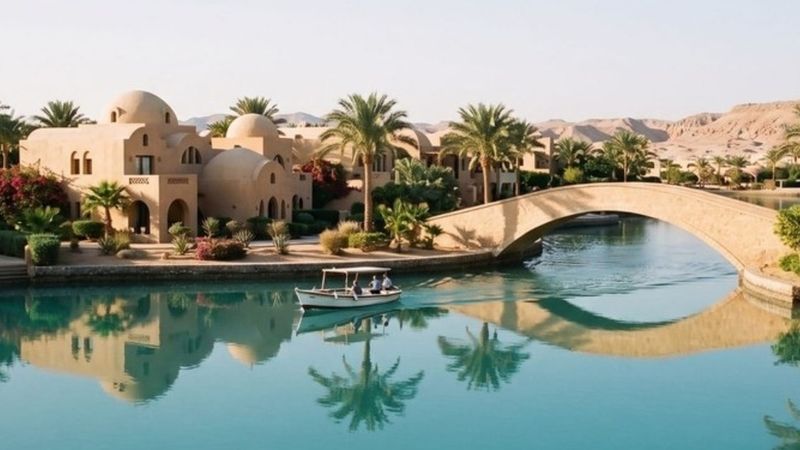
Why the Middle East Keeps Building Venice
From the Red Sea to the Gulf, canal towns keep getting called Venice. The water was usually about something else — and Venice was never quite Venice either.
The Middle East is full of “Venices”. Most began as a way to manufacture shoreline; the name usually arrived later, in English, from the people selling it.
Elie Khouri's New Foundation Takes Shape in Dubai
A private villa in Jumeirah 1 becomes the home for Ekaf
Collector Elie Khouri transforms a historic Jumeirah 1 residence into a contemporary art venue opening in 2028.

Following Damascus... Osthaus and the Islamicate Collection
Museum Folkwang revisits the founder's early travels and the formation of its historic Islamic Department
A survey of Karl Ernst Osthaus's collecting habits, featuring loans from Berlin and Dresden alongside European modernist responses.