Abu Dhabi

Grand Mosque & Al Maqta

0 galleries · 0 museums · 6 places

About this district

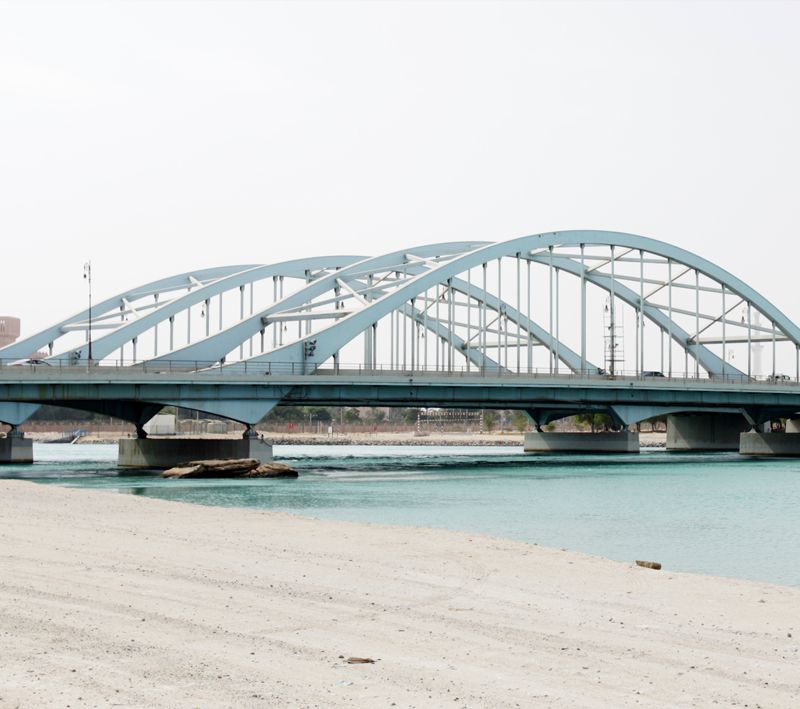
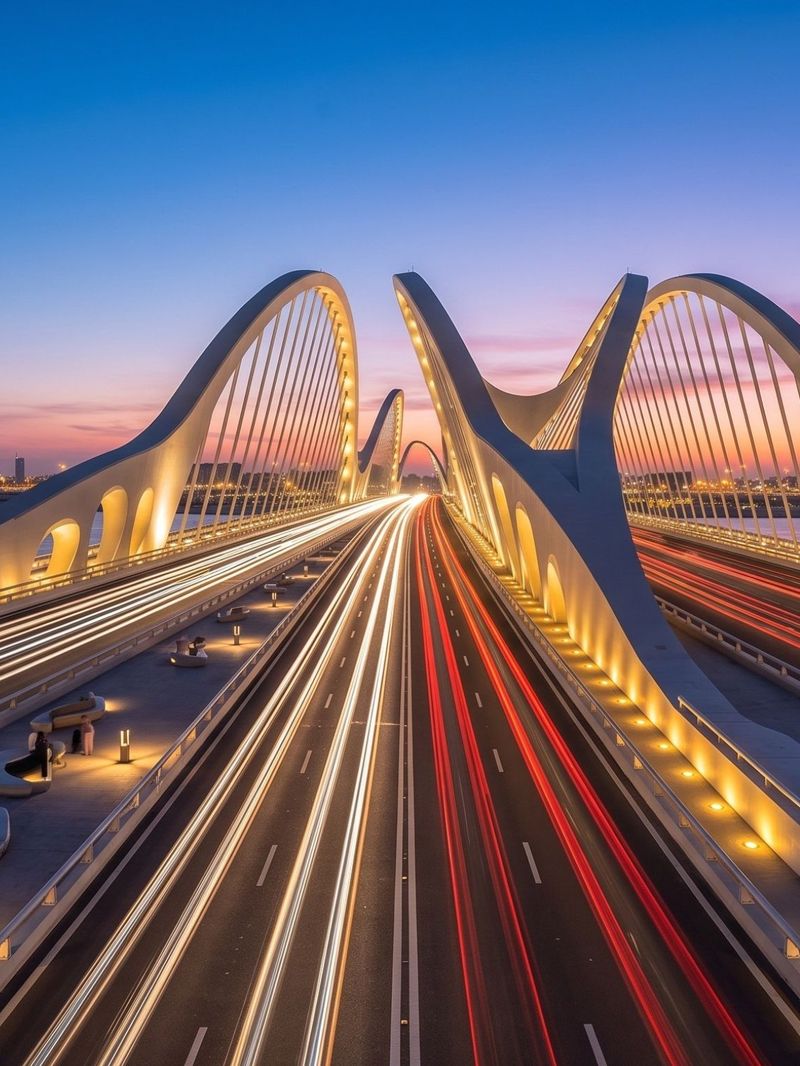
The eastern approach to Abu Dhabi island, where the Sheikh Zayed Grand Mosque stands raised above the road between the Musaffah and Maqta bridges — 82 domes, four minarets at 104 metres, a courtyard of floral marble inlay, and the largest hand-knotted carpet in the world inside. Visible from every direction on the way in, which was the intention. Free to enter, and busiest at dusk.

Galleries

No published galleries in this district yet.

Museums

No published museums in this district yet.

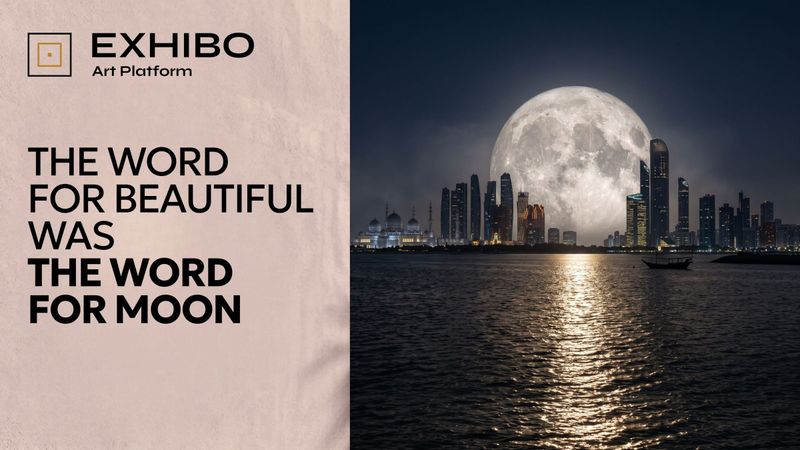
A full moon rising over dark water on the Abu Dhabi coast, a single bright disc against a black sky.
Editorial

The Word for Beautiful Was the Word for Moon

The moon has been the measure of a beautiful face in Arabic verse for fifteen centuries — but beauty was only one of the things that light was ever asked to carry. A history of one disc, from a pre-Islamic ode to a glowing sphere over an Abu Dhabi harbour.

Ya qamar — you moon — is the oldest compliment in Arabic, and almost nothing about it means what we assume. The moon it praised was not always a woman, not always even a kindness, and in the end not only about beauty at all.

A large landscaped roundabout in Doha, Qatar, with a monumental sculpture on its central island and multi-lane traffic circling it against a backdrop of West Bay towers.
Editorial

Why Doha Is Full of Roundabouts

An old circle at a crossroads, sharpened by British road engineering, became the way an Arabian city found its way and remembered itself — and it took the bulldozers to reveal it.

In a city where a landmark was more useful than an address, Doha's roundabouts became its navigation, its landscaping and its national image all at once. Now they're being torn out for signalled junctions — and the affection for them arrived, as one scholar put it, only posthumously.

Sunlight falls in scattered points through the perforated dome of the Louvre Abu Dhabi, Jean Nouvel's "rain of light," onto the pale stone of the museum's interior.
Editorial

The Universal Museum, Rebuilt on Arab Soil

How Abu Dhabi took one of the West's most contested ideas — the museum that claims to hold all of humanity — and moved the question of who gets to frame the world

A portolan chart in the floor, three ewers without a hierarchy, and a $450-million Leonardo no one has seen since it was bought. The Louvre Abu Dhabi is a French–Emirati experiment in what the universal museum becomes when it is rebuilt from a different centre — and whether that moves the centre, or merely moves the Louvre, is the question the building leaves open.

An Arabian oryx, white with long nearly straight ringed horns and dark facial markings, standing in pale desert sand.
Editorial

The Animal We Drew Everywhere Once It Was Gone

From Neolithic rock to airline tailfin — how the Arabian oryx vanished from the desert, came back from nine animals, and multiplied everywhere as a symbol in the very decades it was gone.

The last wild Arabian oryx was shot in 1972. By then it was already a picture — carved on Bronze Age tombs, mistaken by the ancients for a unicorn, praised by poets as the eyes of the beloved. This is the story of an animal that went extinct in the wild and was brought back from nine survivors, and of the strange gap between the creature and the emblem it became: fast, sharp and ascendant on a nation's tailfin, while the animal itself survives by standing still in the shade.