
Abu Dhabi · United Arab Emirates
Frieze Abu Dhabi Unveils Roster for Inaugural West Asia Fair
The publisher's first West Asian venture brings global heavyweights and regional pioneers to Saadiyat Island
A New Chapter for Western Asia's Art Calendar
Frieze has officially unveiled its roster for the maiden Abu Dhabi edition, scheduled to run from 19 to 22 November. Marking the publisher's initial venture into West Asia, the gathering features eighty-four participants. While this figure sits just below the footprint of its predecessor, Abu Dhabi Art, the selection leans heavily toward established international players rather than purely local talent. Major commercial houses such as Gagosian, Pace, Perrotin, Thaddaeus Ropac, and Victoria Miro are all confirmed, marking a notable departure from recent iterations of the former fair.
The exhibitor mix reflects a deliberate cross-continental strategy. Approximately twenty-five stands belong to European and American operations, alongside five outlets anchored across East and Southeast Asia. Notable additions include Projectos Ultravioleta from Guatemala City, Richard Saltoun operating out of London and New York, In Situ Fabienne Leclerc in Romainville, P420 in Bologna, Johyun Gallery based in Busan, and Pearl Lam Projects hailing from Shanghai. Despite this global expansion, institutions representing West Asia, North Africa, and South Asia still dominate the floor. Saudi Arabia's Athr, India's Experimenter, and Lebanon's Saleh Barakat anchor the regional contingent. Furthermore, prominent UAE-based spaces like Carbon 12, Lawrie Shabibi, Gallery Isabelle, and Green Art Gallery—all headquartered in Dubai—will maintain their presence.
Structural Continuity Meets Strategic Realignment
Behind the scenes, several familiar faces retain their positions. Dyala Nusseibeh continues as director, while the advisory panel comprises seasoned industry figures Asmaa Al-Shabibi, Yasmin Atassi, Amrita Jhaveri, and Sandhini Poddar from the Guggenheim Abu Dhabi. Financially, the Department of Culture and Tourism remains a key collaborator, though specific investment figures remain undisclosed. The fair now operates under Mari, Ari Emanuel's enterprise following Endeavor's dissolution, after which Abu Dhabi's IMI Media group acquired a direct share last October. Deutsche Bank also maintains its status as the primary sponsor across the Frieze network.
Initial apprehensions regarding potential postponements due to regional tensions have been dismissed. A representative affirmed that both Frieze and the municipal authorities remain dedicated to launching on schedule. This decision places the event firmly within a crowded autumn programme, particularly given the imminent opening of the Guggenheim Abu Dhabi on Saadiyat Island on 11 December.
Curatorial Direction and Programme Evolution
The organisational philosophy has undeniably evolved. Where previous iterations prioritised grassroots development and civic engagement through mentorship initiatives and post-fair exhibitions at Manarat Al Saadiyat, the current framework emphasises transnational dialogue. The accompanying Frieze Masters segment explores historical commerce and intellectual networks spanning the Indian Ocean. Concurrently, curator Tarini Malik has assembled a Global Futures initiative featuring practitioners typically associated with institutional biennales, such as Ala Younis and Mohammed Joha.
Traditional categories have also been restructured. The collectibles market is now integrated into the Masters programme, featuring antiquities dealers like Eqtna Rare Books and Inlibris Rare Books & Manuscripts. Meanwhile, the emerging artist tier, previously branded as Bidaya, has been renamed Focus. Participants including Management from New York and Commonwealth and Council from Los Angeles will benefit from newly introduced financial grants mirroring those offered elsewhere in the network.
Solo surveys will highlight foundational regional voices like Ibrahim El-Salahi, Farideh Lashai, Mounirah Mosly, and Samir Rafi. These will sit alongside celebrated international figures including Emily Kam Kngwarray, Francesco Clemente, and Sheila Hicks, as well as contemporary creators Chonon Bensho, Tahir Karmali, and Marigold Santos. According to executive director Kristell Chadé, the debut aims to bridge local artistic traditions with worldwide collecting circles, positioning the capital as a vital nexus for cross-cultural exchange.
Galleries mentioned


Museums mentioned
Exhibitions mentioned
Related reading
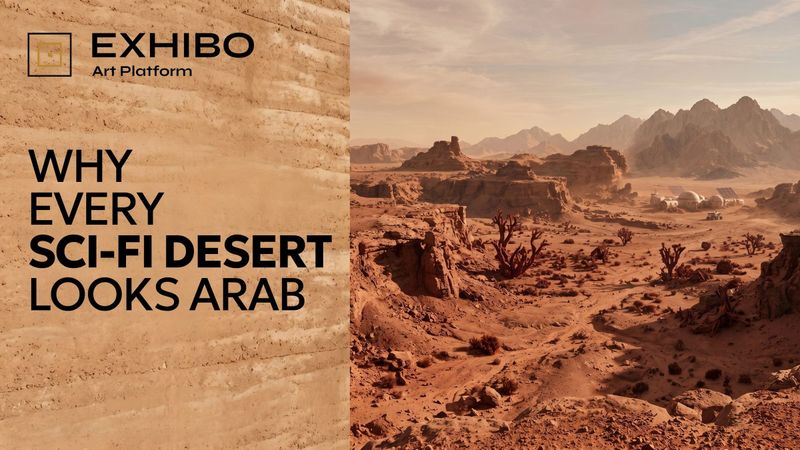
Why Every Sci-Fi Desert Looks Arab
From Arrakis to Tatooine, when a film wants a desert to feel ancient, prophetic and alien, it reaches for an Arab and Berber vocabulary — and reveals more about the West that built it than the region it borrows from.
The wrapped faces, the trilling women, the barely-displaced Arabic: cinema's alien deserts keep sounding Arab. But the vocabulary was assembled in the West — from Orientalist painting to Lawrence to Dune — and it says more about who is looking than about anyone being looked at.
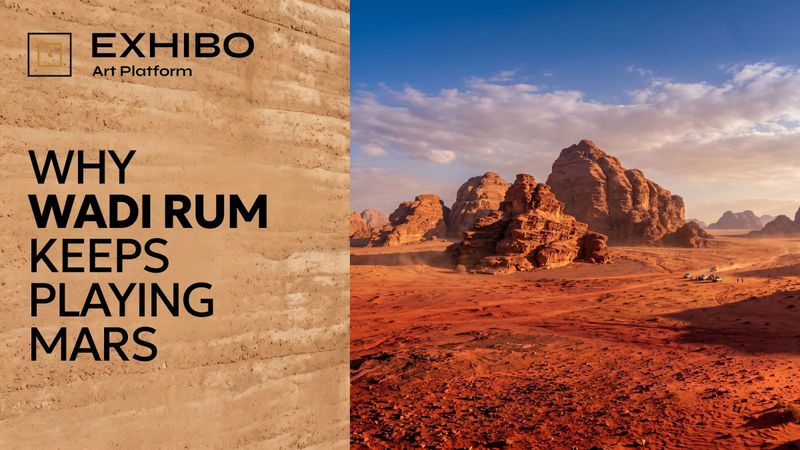
Why Wadi Rum Keeps Playing Mars: A Desert That Is Right About the Wrong Planet
A valley in southern Jordan has become cinema's favourite Mars — not because it is like the planet, but because it looks like the one we carry in our heads.
Put Wadi Rum beside a rover photograph and you can't tell which is Mars. But the desert shares almost nothing with the real planet except its colour — and lately, the illusion has grown powerful enough that real space missions have come to Jordan to rehearse.
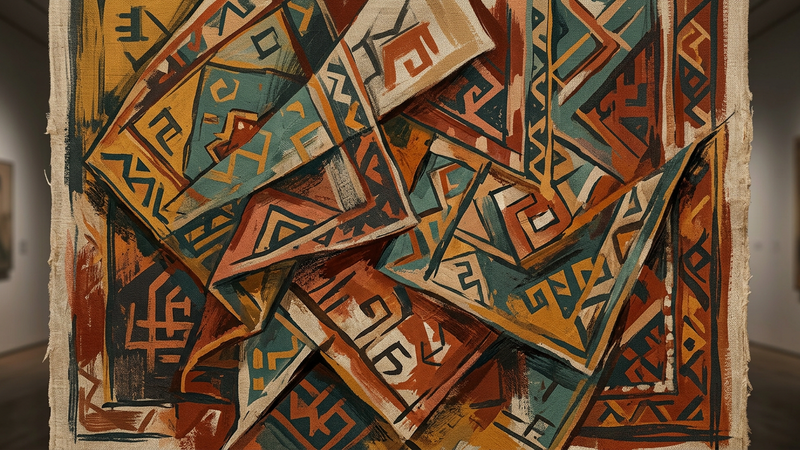
Threads of Heritage: Batima Zaurbekova's Woven Legacy
A survey of Kazakh tapestry pioneers redefines fibre art at Almaty's Kasteyev Museum
Eight decades after her birth, Batima Zaurbekova's textile innovations take centre stage in a major retrospective that bridges Central Asian craft and contemporary visual culture.