
Grand Mosque & Al MaqtaAbu Dhabi
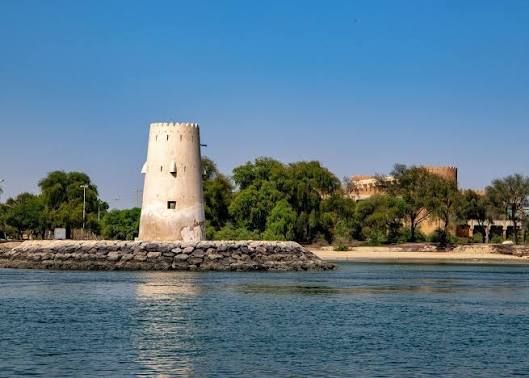
Al Maqta Watchtower
A coral-stone tower on an islet in the channel — one of Abu Dhabi's oldest buildings, and you cannot reach it.
Al Maqta Watchtower — also spelled Maqtaa or Maqta'a — stands on a small islet in the middle of the Khor Al Maqta channel, between the 1968 Maqta Bridge and Zaha Hadid's Sheikh Zayed Bridge. It is one of the oldest surviving buildings in Abu Dhabi and the emirate's clearest surviving trace of the settlement that preceded the city.
Official heritage sources date it to the late eighteenth century, making it contemporaneous with Qasr Al Hosn; some accounts place it in the early nineteenth. It is one of very few coastal defensive towers in the region built from coral stone and beach rock, and it guarded the shallow crossing that could only be forded at low tide. That natural barrier was one strategic reason the Al Bu Falah tribes, who had lived for centuries in Liwa in the Al Dhafra region, chose Abu Dhabi island as the site of their new capital.
The tower had a second function beyond defence. Until the 1950s it signalled arrival at the island to travellers, who were still a long way from the town clustered around Qasr Al Hosn and Al Bateen on the far side, and it served as a welcome rest stop on the journey. The causeway of 1952 and then the bridge of 1968 made it obsolete; photographs from the construction show the new steel span rising directly behind the small tower.
It was restored in 2022. The islet is inaccessible and the tower is not open to visitors, so it is experienced entirely from the banks and the bridges — a compact, pale form standing in open water with modern infrastructure crossing above and around it. It sits within the Maqta Conservation Area, alongside Maqta Fort (now the Al Maqta'a Museum), the Maqta Customs House and both bridges. The area is a sensitive military zone, so take care when photographing.
Exhibo editorial
It is stranded, and that is the whole point of it. Everything else in the Maqta Conservation Area can be walked into — the fort became a museum, the bridges carry traffic, the customs house is being rehabilitated. The tower sits on its islet in the middle of the channel with no way across, doing nothing, guarding a crossing that stopped needing guarding in 1968.
What gets you is the scale comparison. This small coral-stone thing is roughly contemporary with Qasr Al Hosn, which is to say it predates the country by about two hundred years, and it is now framed on one side by an Austrian steel truss and on the other by eight hundred and forty-two metres of Zaha Hadid. Three answers to the same question — how do you handle this channel — stacked up within a few hundred metres. Stand on the Maqta bank at the right angle and you can get all three in one photograph, which is as close as Abu Dhabi comes to showing you its entire history in a single frame.
How to find it
On an islet in the middle of the Khor Al Maqta channel, between the Al Maqta Bridge and the Sheikh Zayed Bridge. Take the road into the Al Maqta district, turn towards the water and follow the road that runs under Al Maqta Bridge — brown heritage signs point the way, though the site is awkwardly hemmed in by highways. The tower cannot be reached or entered; view it from the bank near the Al Maqta'a Museum, where the tower, the 1968 truss bridge and Hadid's crossing all line up. Note that this is a sensitive military zone, so be careful when taking photographs.
Similar places
All places
News by Exhibo
Editorial coverage on Exhibo
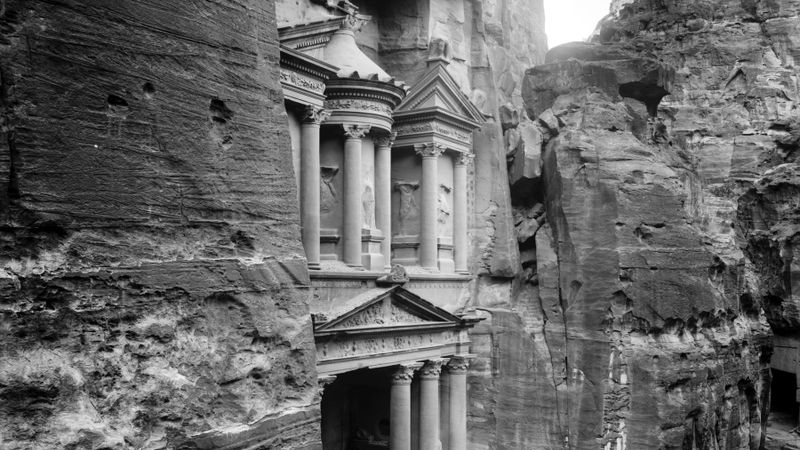
Filmed, but Not Recorded: The Arab World’s Missing Film Locations
Wikidata knows Gladiator was filmed in Morocco. It doesn’t know where.
Ouarzazate is the second most filmed place in the Middle East and North Africa, yet 25 of its 27 productions are recorded only in Wikipedia prose. We compared filming records worldwide and found that in the Arab world, Wikidata usually knows the country but not the place.
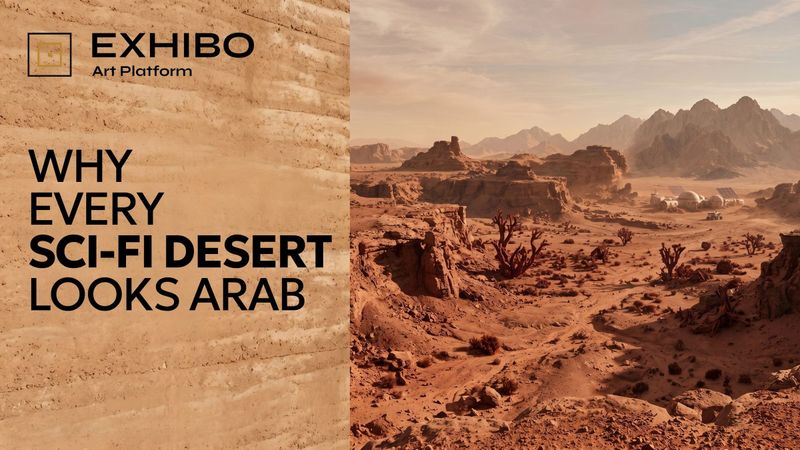
Why Every Sci-Fi Desert Looks Arab
From Arrakis to Tatooine, when a film wants a desert to feel ancient, prophetic and alien, it reaches for an Arab and Berber vocabulary — and reveals more about the West that built it than the region it borrows from.
The wrapped faces, the trilling women, the barely-displaced Arabic: cinema's alien deserts keep sounding Arab. But the vocabulary was assembled in the West — from Orientalist painting to Lawrence to Dune — and it says more about who is looking than about anyone being looked at.
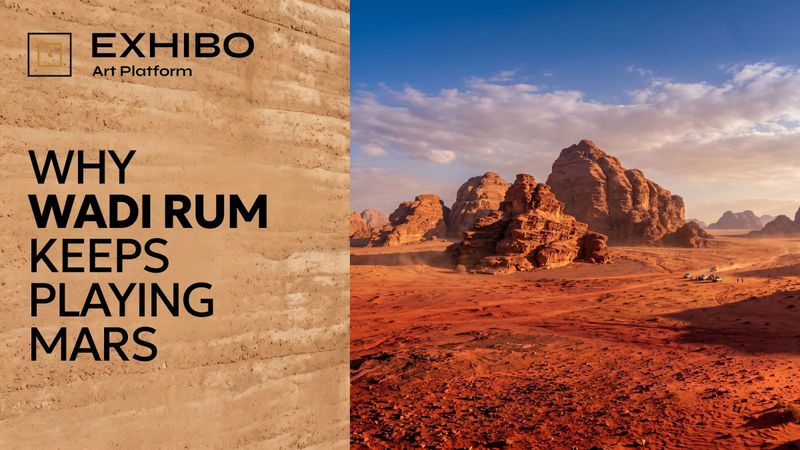
Why Wadi Rum Keeps Playing Mars: A Desert That Is Right About the Wrong Planet
A valley in southern Jordan has become cinema's favourite Mars — not because it is like the planet, but because it looks like the one we carry in our heads.
Put Wadi Rum beside a rover photograph and you can't tell which is Mars. But the desert shares almost nothing with the real planet except its colour — and lately, the illusion has grown powerful enough that real space missions have come to Jordan to rehearse.