
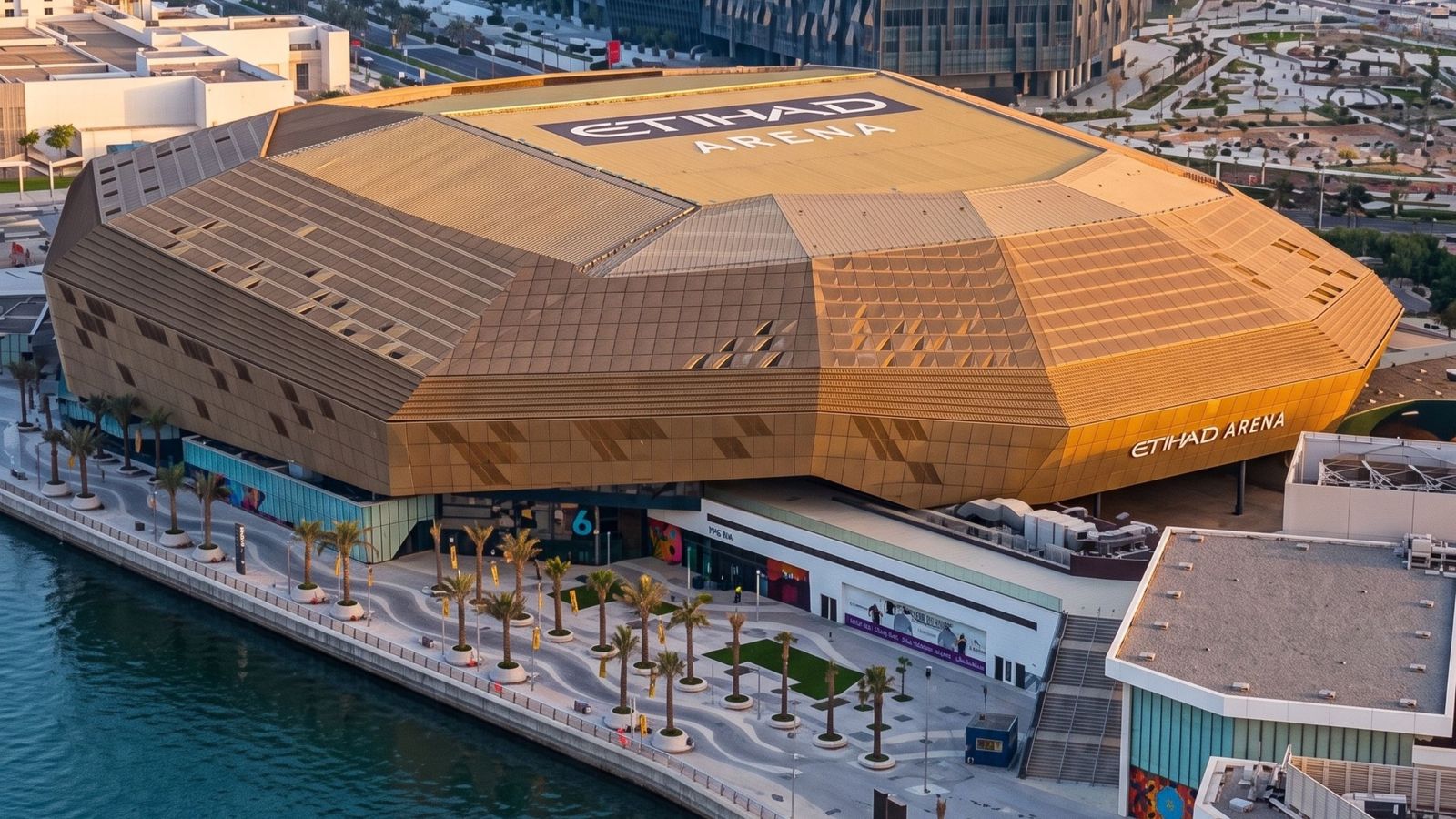
Etihad Arena
A woven gold shell on the Yas Bay waterfront — shade by day, lantern by night, 18,000 seats inside.
Etihad Arena is the largest multipurpose indoor venue in the UAE, standing on the Yas Bay Waterfront at the southern edge of Yas Island. It opened in January 2021 with a capacity of 18,000, and can be reconfigured down to an intimate theatre of a few hundred seats.
The arena was designed by HOK's London studio, working within a WSP-led team with support from Pascall+Watson, for Miral Asset Management, the developer of southern Yas Island. Construction began in 2017 as part of a broader Yas Bay development. It was originally announced as Yas Bay Arena; naming rights were sold to Etihad Airways in January 2020, and the opening — planned for March 2020 — was pushed back by the pandemic.
The building's public face is its shimmering gold exterior: a woven, basket-like envelope that HOK describes as acting simultaneously as shield and beacon. By day the layered screen shades the interior from direct sun; after dark it is lit from within and becomes a luminous form reflecting across the water and animating the boardwalk below. HOK also designed the adjacent retail and dining strip along the waterfront, so the arena anchors an active public realm rather than sitting behind car parks.
The design won the 2018 MENA Green Building Award for Sustainable Building Design of the Year from the World Green Building Council, and has since collected the Emirates Green Building Council's Sustainable Building of the Year and a Chicago Athenaeum International Architecture Award. The venue opened with a UFC card, hosted the 2021 World Swimming Championships, and has since staged NBA games and major international concert tours. The exterior and the surrounding boardwalk are freely accessible; entry to the arena itself requires an event ticket.
Exhibo editorial
Most arenas are a shed with a logo on it. The economics push that way — you are buying volume, not surface, and the money runs out before it reaches the outside. Yas Bay went the other direction and spent it on the skin, which is why the building is worth walking past on an evening when nothing is on.
Go at dusk, from the boardwalk side. The gold weave holds the last of the light long after the sky has given up, then the interior lighting comes through the gaps and the whole envelope switches from solid to lit, and the water in front of it does the rest. It is a genuinely public piece of architecture in a category that rarely bothers — you do not need a ticket, a lanyard or a reason. You need shoes and about forty minutes either side of sunset.
Gallery


How to find it
On the Yas Bay Waterfront at the southern end of Yas Island, at the east end of the promenade. Park at Yas Bay and walk the boardwalk towards the water — the arena anchors the far end, with the HOK-designed retail and dining strip running along the front of it. The best view of the gold façade is from the promenade looking back across the marina, particularly after dark. Exterior and boardwalk are free and open; going inside requires an event ticket.
Similar places
All places
News by Exhibo
Editorial coverage on Exhibo

Why Every Sci-Fi Desert Looks Arab
From Arrakis to Tatooine, when a film wants a desert to feel ancient, prophetic and alien, it reaches for an Arab and Berber vocabulary — and reveals more about the West that built it than the region it borrows from.
The wrapped faces, the trilling women, the barely-displaced Arabic: cinema's alien deserts keep sounding Arab. But the vocabulary was assembled in the West — from Orientalist painting to Lawrence to Dune — and it says more about who is looking than about anyone being looked at.
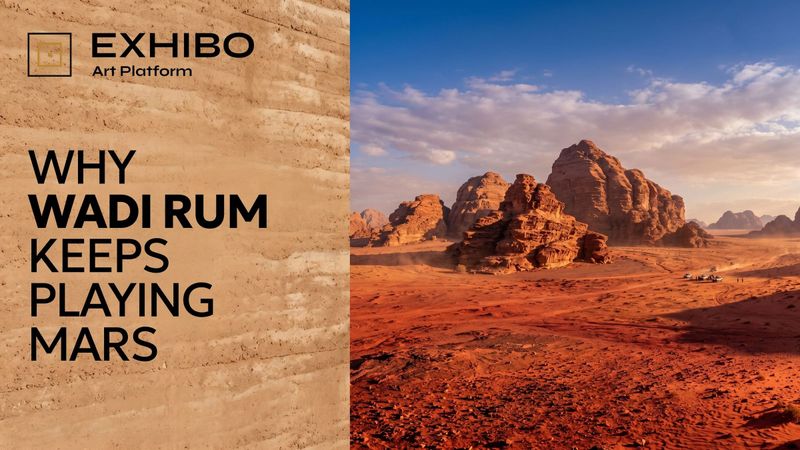
Why Wadi Rum Keeps Playing Mars: A Desert That Is Right About the Wrong Planet
A valley in southern Jordan has become cinema's favourite Mars — not because it is like the planet, but because it looks like the one we carry in our heads.
Put Wadi Rum beside a rover photograph and you can't tell which is Mars. But the desert shares almost nothing with the real planet except its colour — and lately, the illusion has grown powerful enough that real space missions have come to Jordan to rehearse.
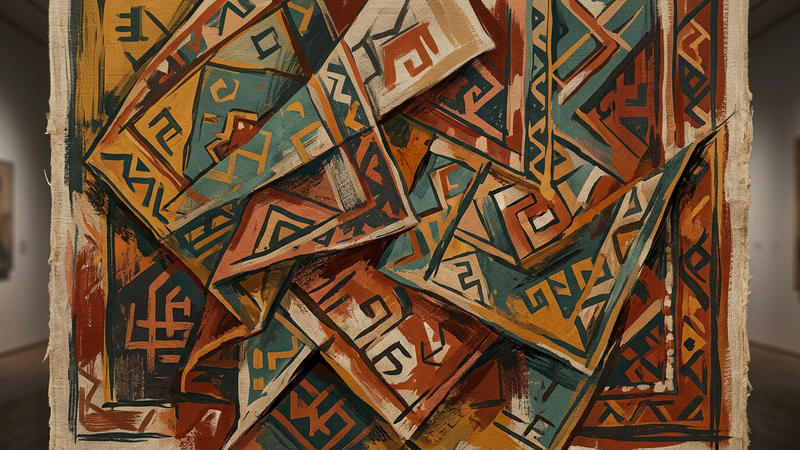
Threads of Heritage: Batima Zaurbekova's Woven Legacy
A survey of Kazakh tapestry pioneers redefines fibre art at Almaty's Kasteyev Museum
Eight decades after her birth, Batima Zaurbekova's textile innovations take centre stage in a major retrospective that bridges Central Asian craft and contemporary visual culture.