
Grand Mosque & Al MaqtaAbu Dhabi
Wahat Al Karama (Oasis of Dignity)
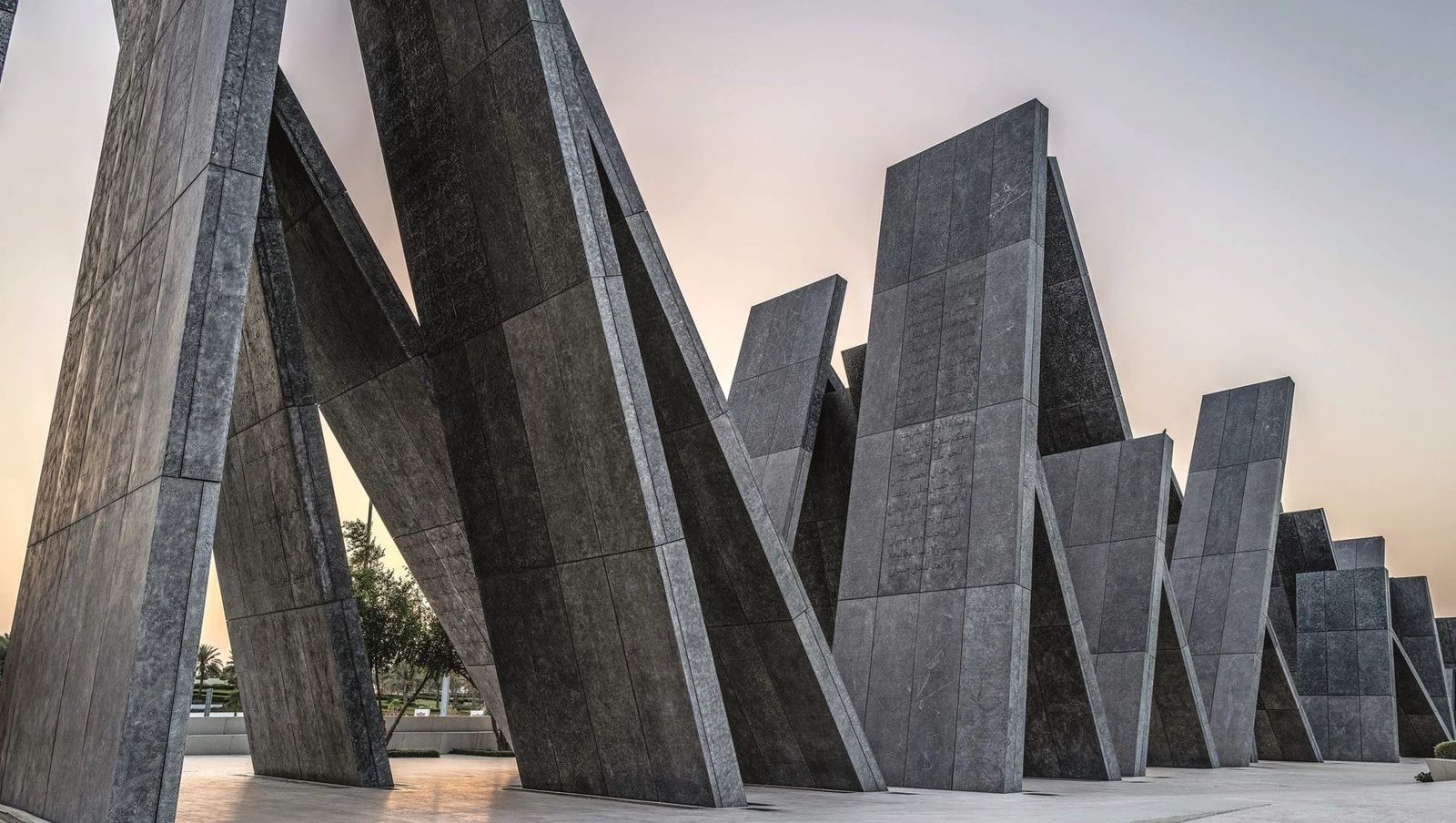
Thirty-one aluminium tablets leaning on one another — the UAE's first war memorial, facing the Grand Mosque.
Wahat Al Karama — Oasis of Dignity — is the United Arab Emirates' first war memorial, standing across the highway from the Sheikh Zayed Grand Mosque and symbolically sited between the mosque and the General Headquarters of the UAE Armed Forces. It commemorates all Emiratis killed in the line of duty since 1971, and was unveiled on 30 November 2016, the country's inaugural Commemoration Day.
The central Memorial is a work by the British artist Idris Khan, commissioned by Sheikh Mohamed bin Zayed Al Nahyan and selected from a curated field of international artists. It comprises 31 monumental tablets, the largest rising around 23 metres, arranged over a span of roughly 90 metres so that each leans against the next — a direct figure for the mutual support binding leadership, citizens and the armed forces. The tablets are clad in over 850 cast aluminium panels; the long spine at the rear is engraved with the Armed Forces' Pledge of Allegiance and structurally supports the others.
Sections of the surfaces are sandblasted and stamped with Arabic poems and quotations from Sheikh Zayed bin Sultan Al Nahyan, Sheikh Khalifa bin Zayed Al Nahyan, Sheikh Mohammed bin Rashid Al Maktoum and Sheikh Mohamed bin Zayed Al Nahyan. Khan intended the inscriptions to be read and touched. The work was fabricated and installed by UAP.
The wider 46,000-square-metre park, delivered for Miral with AECOM as lead consultant, includes a Memorial Plaza paved in travertine with amphitheatre-style seating and a shallow circular reflecting pool, and the Pavilion of Honour — a circular structure designed by Khan with bureau^proberts, centred on seven standing glass panels within a water feature, its internal walls clad with more than 2,800 aluminium plates bearing the names of the fallen. A daily Honour Guard march takes place before sunset.
The memorial has received the 2017 American Architecture Prize for Cultural Architecture, a 2018 Iconic Award from the German Design Council, and a Codaworx award. Entry is free.
Exhibo editorial
The reflecting pool does something the designers cannot fully have controlled. Stand at the right point on the plaza and the Grand Mosque appears in the water beneath the tablets — the most photographed building in the country, arriving uninvited into a memorial about the people who died protecting it. Every visitor finds this spot. Most find it while looking for a photograph and stay for a reason they had not planned on.
And then the thing you are actually meant to do here, which almost nobody does at first: touch it. Khan sandblasted the poems into the aluminium rather than printing them, so the text has depth, and the surface is warm by mid-afternoon. Run a hand across a line of Zayed's verse and the monument stops being monumental for a second and becomes something closer to a headstone — legible by hand, at human scale, on a wall the height of a seven-storey building. Come before sunset for the Honour Guard, and stay after for the light.
How to find it
Directly opposite the eastern side of the Sheikh Zayed Grand Mosque, across the highway on Al Tharwaniyyah Street — a short drive, though not a comfortable walk, from the mosque itself. Park at the memorial and enter through the visitor plaza; the Memorial's 31 tablets are the third external station on the route. For the classic reflection shot of the Grand Mosque framed beneath the tablets, walk to the far side of the shallow circular pool on the Memorial Plaza. The Pavilion of Honour, holding the names of the fallen, marks the end of the memorial walk. Free entry; the daily Honour Guard march takes place before sunset.
Similar places
All places
News by Exhibo
Editorial coverage on Exhibo
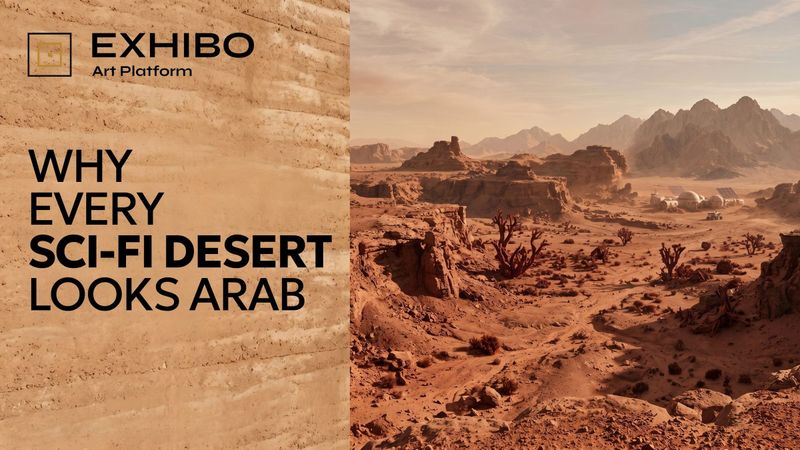
Why Every Sci-Fi Desert Looks Arab
From Arrakis to Tatooine, when a film wants a desert to feel ancient, prophetic and alien, it reaches for an Arab and Berber vocabulary — and reveals more about the West that built it than the region it borrows from.
The wrapped faces, the trilling women, the barely-displaced Arabic: cinema's alien deserts keep sounding Arab. But the vocabulary was assembled in the West — from Orientalist painting to Lawrence to Dune — and it says more about who is looking than about anyone being looked at.
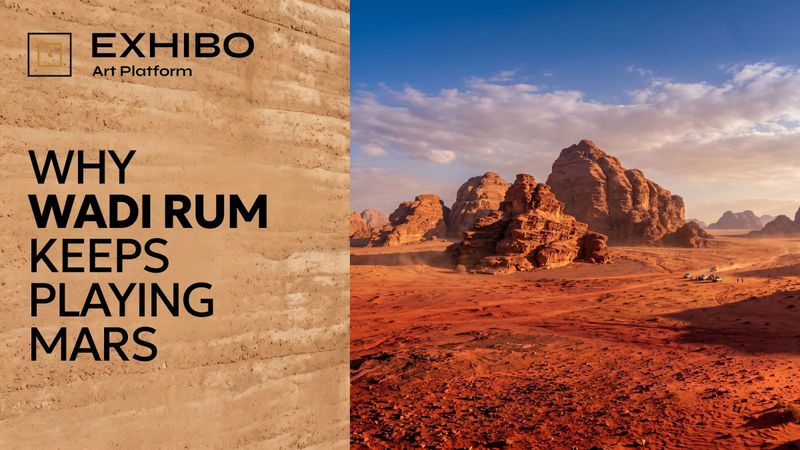
Why Wadi Rum Keeps Playing Mars: A Desert That Is Right About the Wrong Planet
A valley in southern Jordan has become cinema's favourite Mars — not because it is like the planet, but because it looks like the one we carry in our heads.
Put Wadi Rum beside a rover photograph and you can't tell which is Mars. But the desert shares almost nothing with the real planet except its colour — and lately, the illusion has grown powerful enough that real space missions have come to Jordan to rehearse.
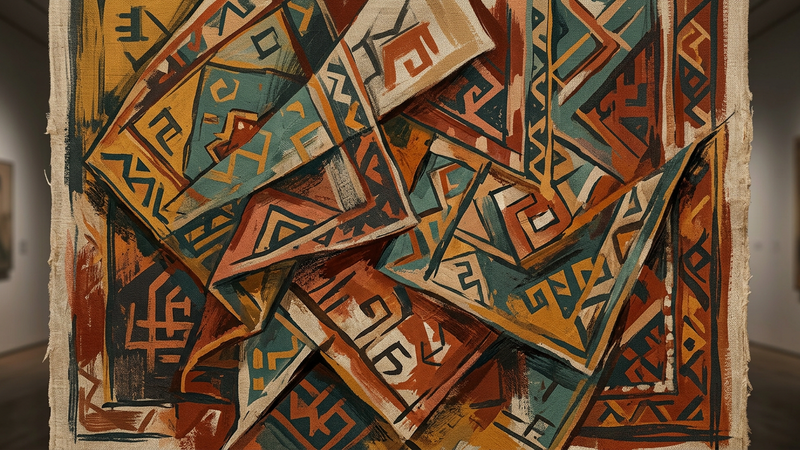
Threads of Heritage: Batima Zaurbekova's Woven Legacy
A survey of Kazakh tapestry pioneers redefines fibre art at Almaty's Kasteyev Museum
Eight decades after her birth, Batima Zaurbekova's textile innovations take centre stage in a major retrospective that bridges Central Asian craft and contemporary visual culture.