
Grand Mosque & Al MaqtaAbu Dhabi
Al Maqta Bridge
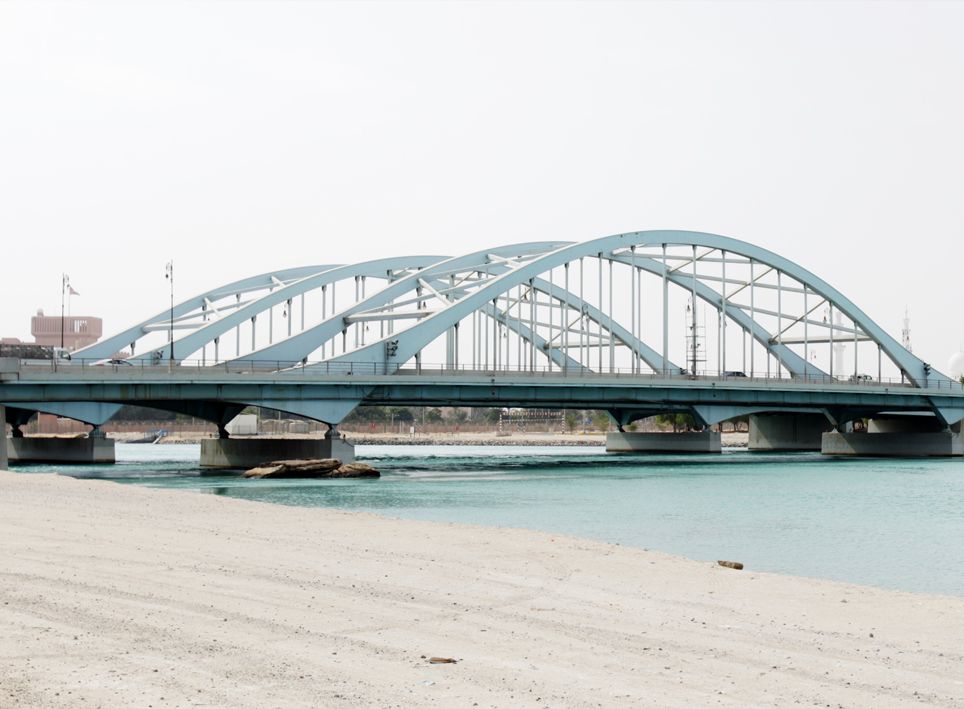
A pale blue steel truss from 1968 — the first permanent way onto the island, and still carrying traffic.
Al Maqta Bridge was the first permanent crossing onto Abu Dhabi island, opened on 6 August 1968 when Sheikh Zayed bin Sultan Al Nahyan became the first to cross it officially. Before it existed, the Maqta narrows could only be forded at low tide; a cement causeway built in 1952 by the civil engineer Hussein Abdul Rahman Khansaheb improved matters, but by the mid-1960s, with oil discovered in 1958 and the population growing, it was no longer adequate.
The bridge was built by the Austrian firm Waagner Biro — its first project in the region, and the same company behind Dubai's Al Maktoum Bridge across the Creek. It was constructed directly on top of the existing causeway, which was widened to serve as a working platform. Much of the heavy machinery had to be landed straight onto the beach because there was no deep-water port, and sections of the bridge were fabricated overseas, floated in by barge and lifted into place by cranes on both banks.
Structurally it is a truss bridge, probably the first built in the city, and unusually elegant for the type — the light blue paintwork sits quietly against the water and sky rather than competing with them. It opened as a single arch and was later expanded to a dual crossing, with a further bridge added in 2000. Removing the causeway restored the natural tidal flow through the channel and with it the surrounding habitat.
The bridge sits within the Maqta Conservation Area, alongside the late eighteenth-century Maqta Tower, the Maqta Customs House and Zaha Hadid's Sheikh Zayed Bridge of 2010 — a compressed record of Abu Dhabi's development at its original gateway. Abu Dhabi Municipality carried out a seven-month restoration from 2022, relaying asphalt, overhauling pedestrian crossings and repainting the distinctive blue structure. It remains in daily use and is free to cross.
Exhibo editorial
Until 1968 you waited for the tide. That is the fact worth holding onto here — within living memory, getting off Abu Dhabi island meant checking the water, and the alternative was a camel. Then an Austrian bridge company landed its cranes directly on the beach because there was no port to unload at, and the waiting ended.
What surprises people is how modest it looks. There is no monumentality, no gesture; just a pale blue truss doing the same job it has done for fifty-seven years, now standing in the shadow of Hadid's far more expensive answer to the same problem. But the truss is the one that changed things. The 1968 photographs show it under construction with the two-hundred-year-old watchtower behind it, and the watchtower — which existed to guard exactly this crossing — was made obsolete the day the bridge opened. Both are still there, forty metres apart. Go and look at them together.
How to find it
Crossing the Maqta Channel immediately alongside the Sheikh Zayed Bridge, at the southern gateway to Abu Dhabi island. Take the road into the Al Maqta district and turn towards the water — the road leading under the bridge brings you to the fort and the best vantage point, where the 1968 truss, the historic watchtower on its islet and Hadid's 2010 crossing all read in one view. Free to cross by car or on foot at any hour. Combine it with the Al Maqta'a Museum, which sits on the same bank.
Similar places
All places
News by Exhibo
Editorial coverage on Exhibo
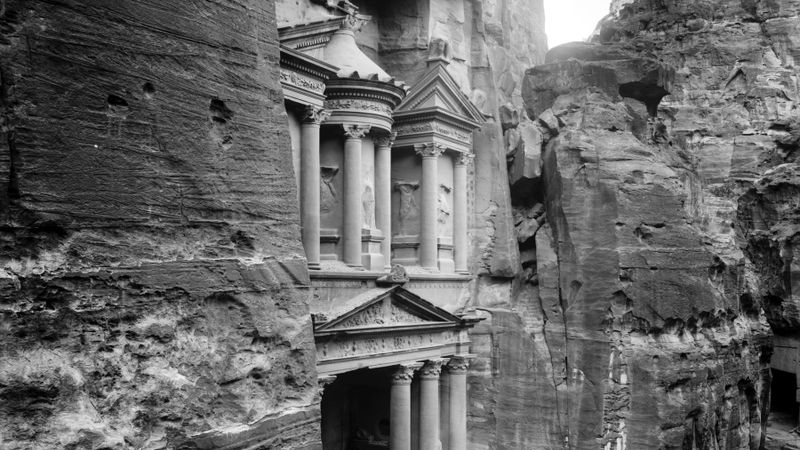
Filmed, but Not Recorded: The Arab World’s Missing Film Locations
Wikidata knows Gladiator was filmed in Morocco. It doesn’t know where.
Ouarzazate is the second most filmed place in the Middle East and North Africa, yet 25 of its 27 productions are recorded only in Wikipedia prose. We compared filming records worldwide and found that in the Arab world, Wikidata usually knows the country but not the place.
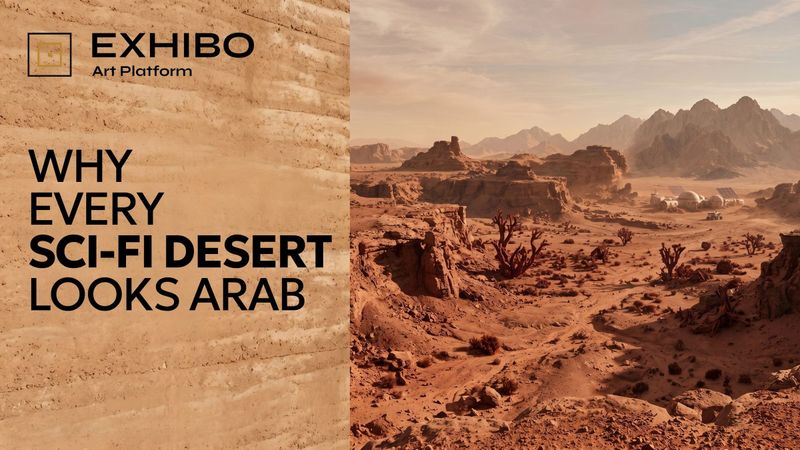
Why Every Sci-Fi Desert Looks Arab
From Arrakis to Tatooine, when a film wants a desert to feel ancient, prophetic and alien, it reaches for an Arab and Berber vocabulary — and reveals more about the West that built it than the region it borrows from.
The wrapped faces, the trilling women, the barely-displaced Arabic: cinema's alien deserts keep sounding Arab. But the vocabulary was assembled in the West — from Orientalist painting to Lawrence to Dune — and it says more about who is looking than about anyone being looked at.
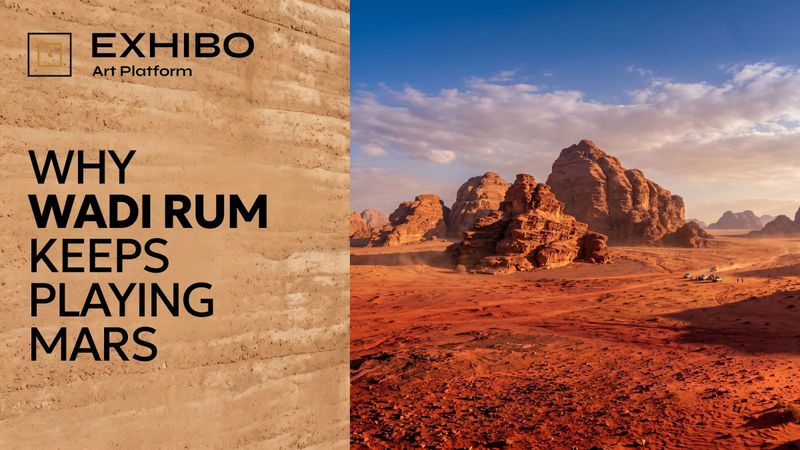
Why Wadi Rum Keeps Playing Mars: A Desert That Is Right About the Wrong Planet
A valley in southern Jordan has become cinema's favourite Mars — not because it is like the planet, but because it looks like the one we carry in our heads.
Put Wadi Rum beside a rover photograph and you can't tell which is Mars. But the desert shares almost nothing with the real planet except its colour — and lately, the illusion has grown powerful enough that real space missions have come to Jordan to rehearse.