
Grand Mosque & Al MaqtaAbu Dhabi
Souk Qaryat Al Beri Canals
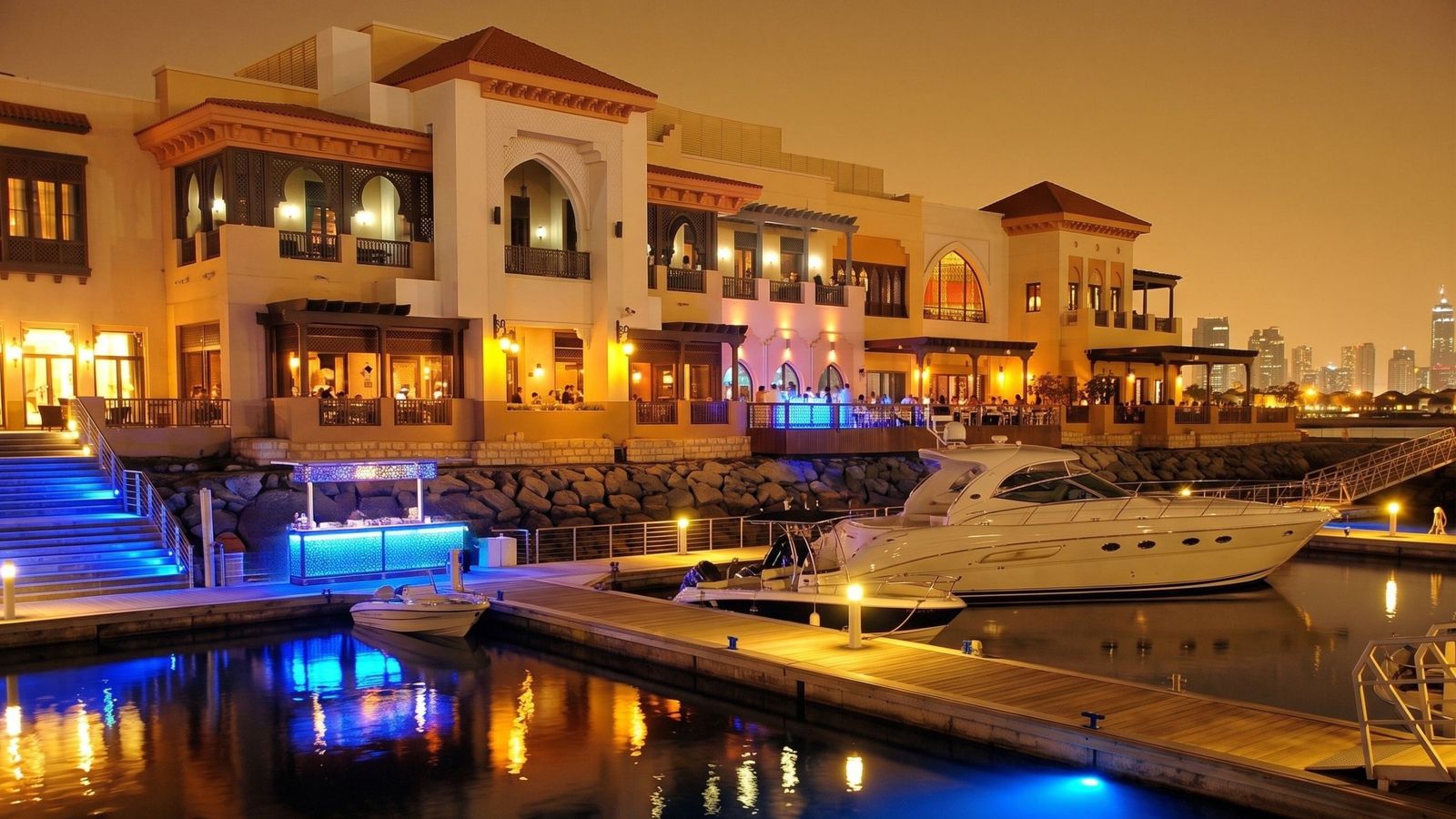
Wooden abras threading man-made canals between an Arabian souk and a Venetian one, with the Grand Mosque across the water.
The Souk at Qaryat Al Beri sits on the Khor Al Maqta creek between the Maqta and Mussafah bridges, part of the Shangri-La Qaryat Al Beri complex and one of the most distinctive waterfront developments in the capital. It was built as a contemporary reinterpretation of the traditional Arabian market, and is organised across two levels around a network of man-made canals.
The architecture is an explicit fusion: Arabian forms and detailing — winding alleyways, wooden accents, traditional lanterns, courtyards — set against a Venetian canal plan. Wooden abras, the traditional Emirati water taxis, ferry guests between the souk, the hotel and the surrounding properties along the waterways, which is the feature that gives the place its local nickname as a miniature Venice. Figures for the site vary between reports of just over 6,000 square metres of built souk and 60,000 square metres for the wider complex.
The orientation is the design's real asset. Most of the restaurants and cafés have alfresco terraces facing the Grand Canal, and the Sheikh Zayed Grand Mosque stands directly across the water — so the souk's principal outlook is one of the most photographed buildings in the country, seen across an expanse of still water. The complex includes retail, jewellery, perfume, antiques and homeware alongside boutiques and small galleries.
Entry to the souk is free and it operates on standard mall hours, later at weekends. Underground parking is available and validated by shops; valet is free with a stamped receipt. Abra operations have changed over time — rides now generally run from the adjacent hotel rather than within the souk itself, at a higher fare — so check current arrangements before planning around them.
Exhibo editorial
Nobody actually needed a Venetian canal here. The Khor Al Maqta is a real creek, the abra is a real boat, and the souk is a real building type — and then somebody decided the connective tissue should be Venice, and the result is either the most charming thing on this stretch of water or completely daft, depending on the hour you arrive.
Arrive at the right hour and it is the former. Half an hour before sunset the lanterns come on, the alleyways go warm and narrow, and then you turn a corner onto the water and the Grand Mosque is sitting there across the canal, white and enormous and entirely serious, reflected in a channel that was dug for a shopping centre. That collision is the whole experience. It should not work as well as it does.
Gallery

How to find it
On the Khor Al Maqta creek between the Maqta and Mussafah bridges, adjoining the Shangri-La Qaryat Al Beri hotel in the Al Maqta area — a short drive from the Sheikh Zayed Grand Mosque, and easiest reached by taxi. Head straight through the retail alleys to the canal-side terraces, which face the Grand Mosque across the water; that outlook is the reason to come. Underground parking is validated by shops and valet is free with a stamped receipt. Come around half an hour before sunset for the lanterns and the light on the mosque. Abra rides now generally depart from the adjacent hotel rather than the souk.
Similar places
All places
News by Exhibo
Editorial coverage on Exhibo
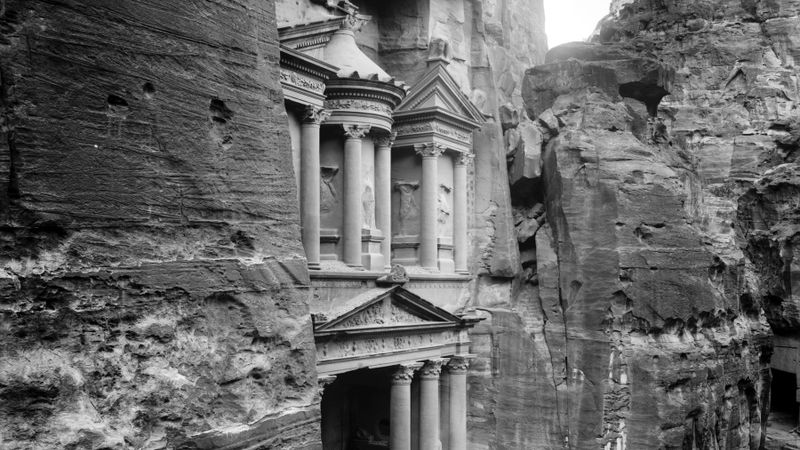
Filmed, but Not Recorded: The Arab World’s Missing Film Locations
Wikidata knows Gladiator was filmed in Morocco. It doesn’t know where.
Ouarzazate is the second most filmed place in the Middle East and North Africa, yet 25 of its 27 productions are recorded only in Wikipedia prose. We compared filming records worldwide and found that in the Arab world, Wikidata usually knows the country but not the place.
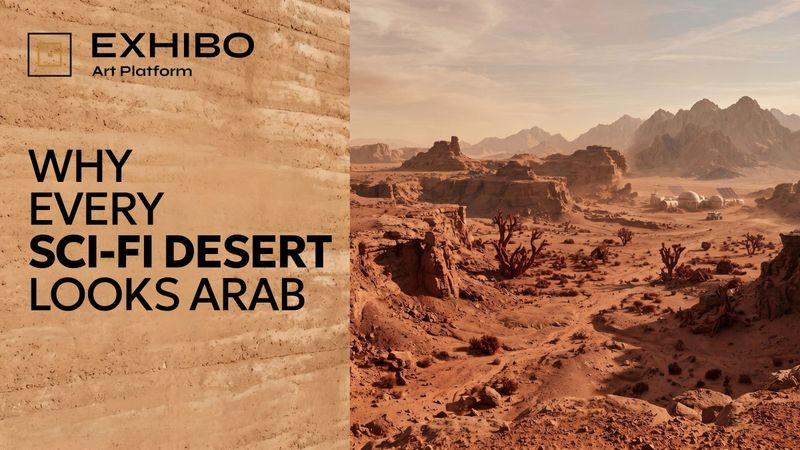
Why Every Sci-Fi Desert Looks Arab
From Arrakis to Tatooine, when a film wants a desert to feel ancient, prophetic and alien, it reaches for an Arab and Berber vocabulary — and reveals more about the West that built it than the region it borrows from.
The wrapped faces, the trilling women, the barely-displaced Arabic: cinema's alien deserts keep sounding Arab. But the vocabulary was assembled in the West — from Orientalist painting to Lawrence to Dune — and it says more about who is looking than about anyone being looked at.
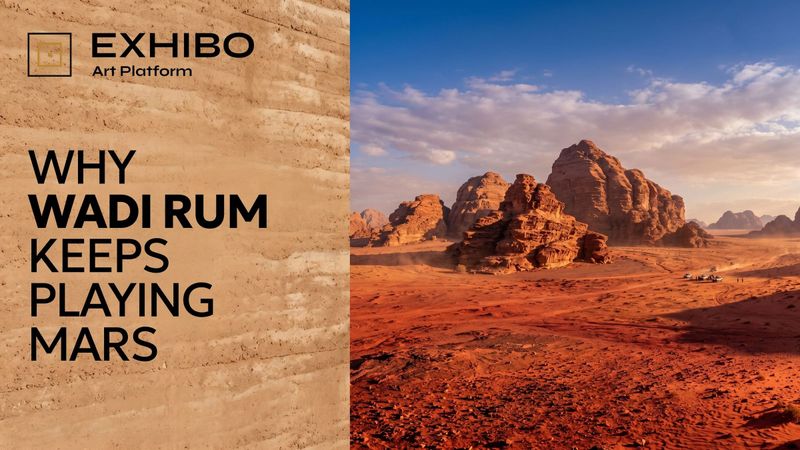
Why Wadi Rum Keeps Playing Mars: A Desert That Is Right About the Wrong Planet
A valley in southern Jordan has become cinema's favourite Mars — not because it is like the planet, but because it looks like the one we carry in our heads.
Put Wadi Rum beside a rover photograph and you can't tell which is Mars. But the desert shares almost nothing with the real planet except its colour — and lately, the illusion has grown powerful enough that real space missions have come to Jordan to rehearse.