
Grand Mosque & Al MaqtaAbu Dhabi
Sheikh Zayed Bridge
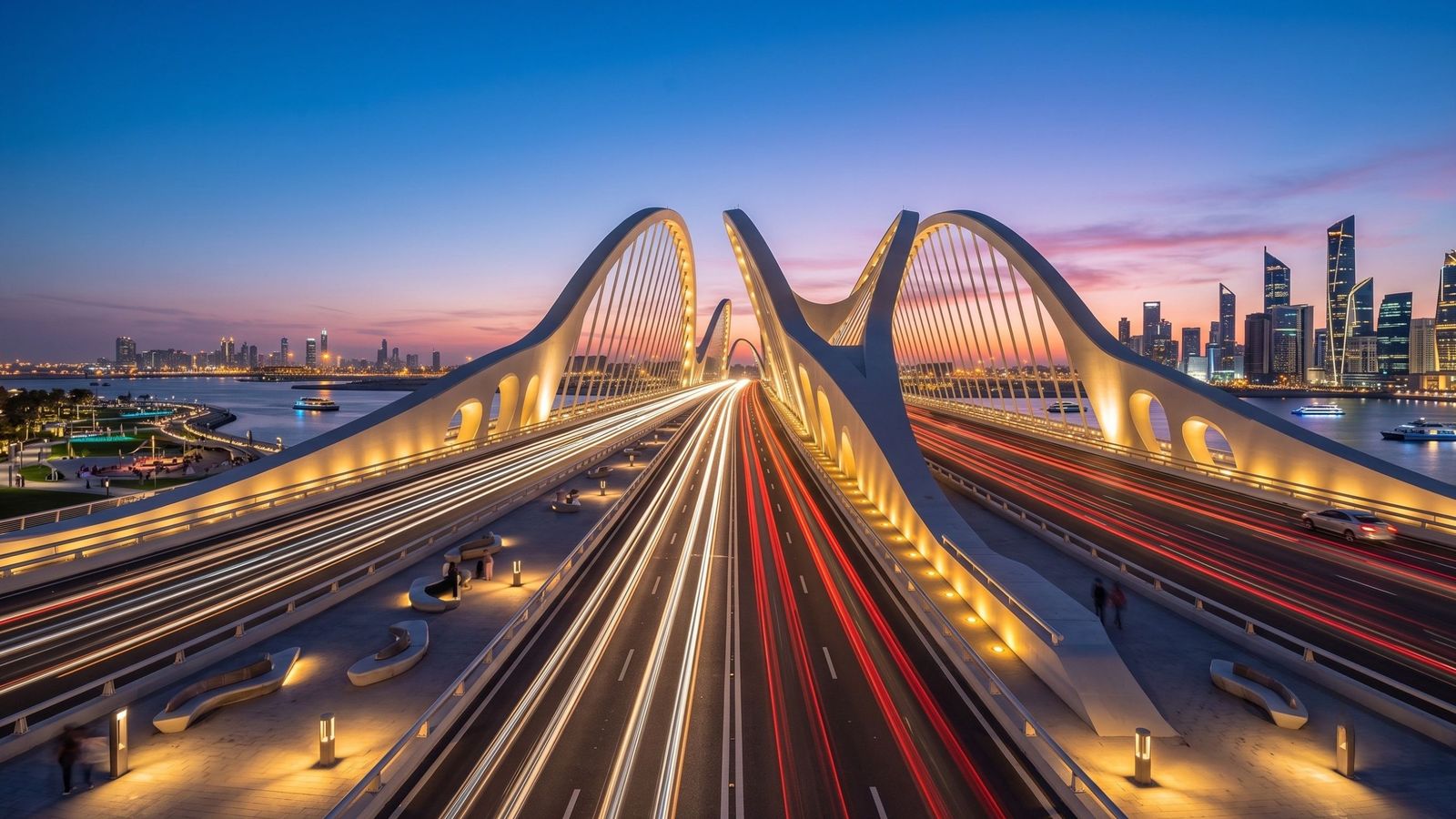
Zaha Hadid's sine wave in steel — 842 metres of dune, lit in colour that flows across the spine.
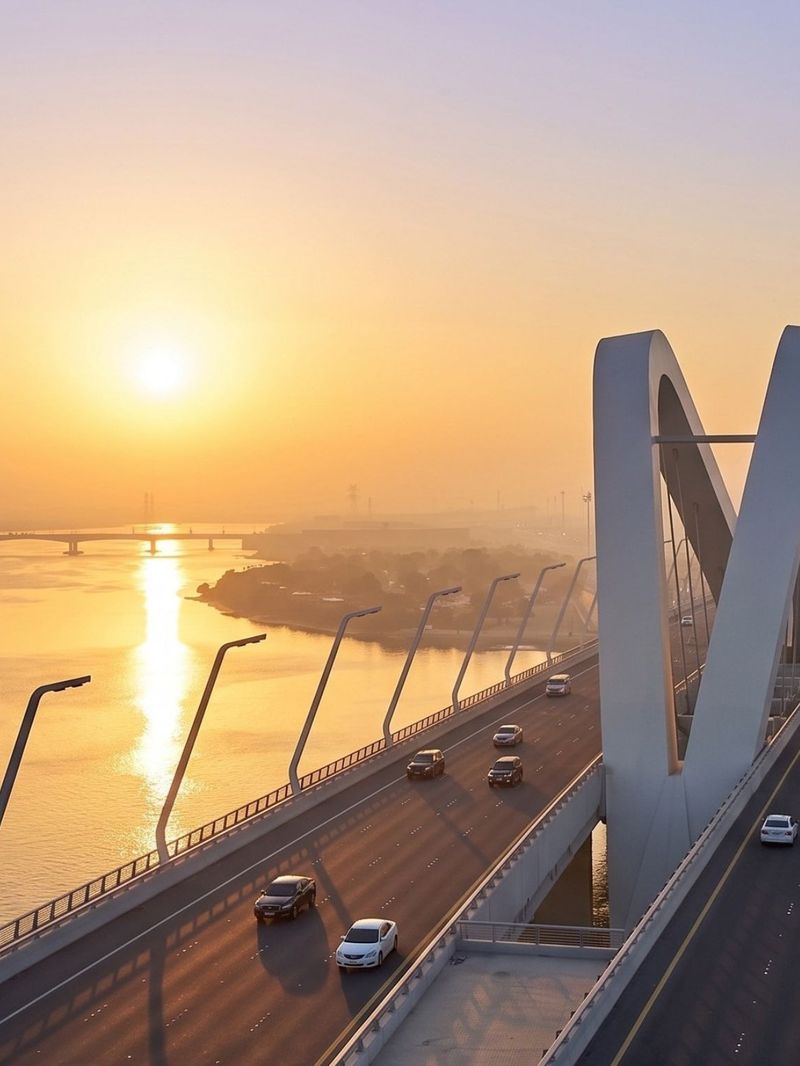
The Sheikh Zayed Bridge crosses the Maqta Channel between mainland Abu Dhabi and the island, and is among the most sculptural pieces of infrastructure anywhere in the Gulf. Designed by Zaha Hadid Architects and built by Archirodon, it is 842 metres long, rises to around 60 to 64 metres, and opened on 25 November 2010 after seven years of construction.
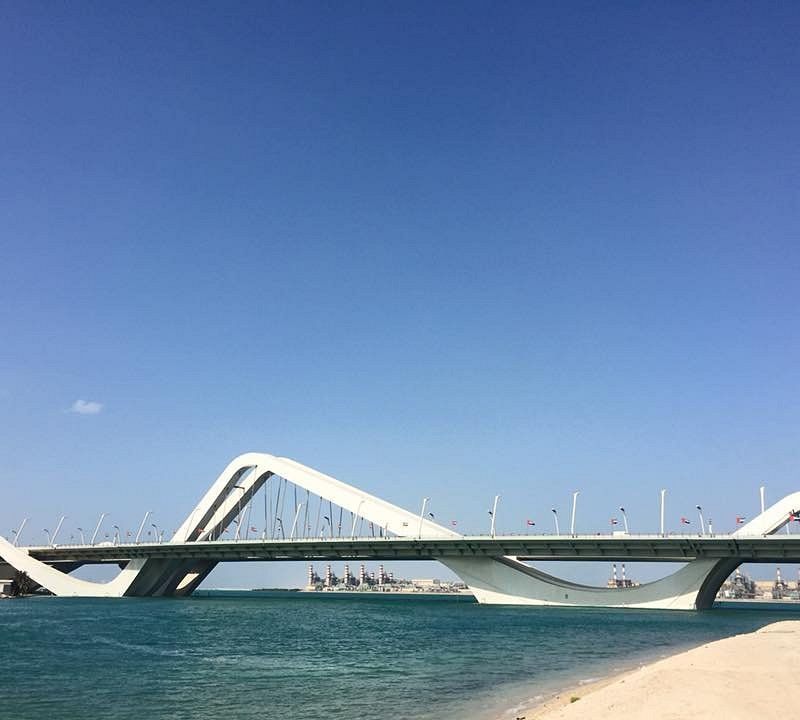
Hadid conceived the bridge as a collection of strands gathered on one shore, then lifted and propelled across the channel — a sinusoidal waveform providing the structural silhouette. Two schemes were developed early on, one called zig-zag and one sand dunes; the approved design takes the wind-shaped desert dune as its subject, with the waves beneath as a secondary reference. Three main steel arches carry road decks cantilevered either side of the bridge's central spine, giving the fluid profile that reads from a distance as a single continuous curve.
The engineering was substantial: reported figures include more than 12,000 tonnes of steel and 250,000 cubic metres of concrete, with roughly 2,500 workers on site. Hadid followed construction closely, down to the colour palette of the arches and bases. The bridge carries a two-way four-lane highway with pedestrian footpath and emergency lanes, and was widely described in the construction press as among the most complex bridges ever built.
The lighting is integral rather than applied. Originally designed by Rogier van der Heide and developed further at Arup, roughly 200 automated fittings wash dynamic coloured light along the spine so that colour flows smoothly across the channel — a scenic feature for distant viewers as much as for people crossing.
This is the third crossing to the island, following the 1968 Maqta Bridge immediately alongside and a second bridge built in the 1970s downstream. It is free to cross at any hour, on foot or by car.
Exhibo editorial
Hadid drew a sine wave and someone had to build it. That is the short version, and it explains the seven years, the twelve thousand tonnes of steel and the fact that engineers still describe this as one of the hardest bridges anyone has attempted — a shape derived from how wind moves sand, executed at a scale where the material has opinions of its own.
The better view is not from the deck. Drive it and you get a road; stand on the Maqta side at dusk with the old blue truss bridge in the foreground and the whole argument resolves — 1968 and 2010, forty metres apart, both crossing the same shallow channel that people once forded at low tide on camels. Then the lights come up and colour starts moving along the spine, and Hadid's bridge does the thing infrastructure almost never does, which is perform.
Gallery
How to find it
Crossing the Maqta Channel between the mainland and Abu Dhabi island, immediately alongside the older Al Maqta Bridge and close to the Sheikh Zayed Grand Mosque. The best views are from the ground rather than the deck: take the road into the Al Maqta district on the island side and work towards the water, where both bridges and the old watchtower line up in a single frame. A pedestrian footpath runs along the bridge itself. Go at dusk and stay past dark for the dynamic colour lighting that flows along the spine.
Similar places
All places
News by Exhibo
Editorial coverage on Exhibo
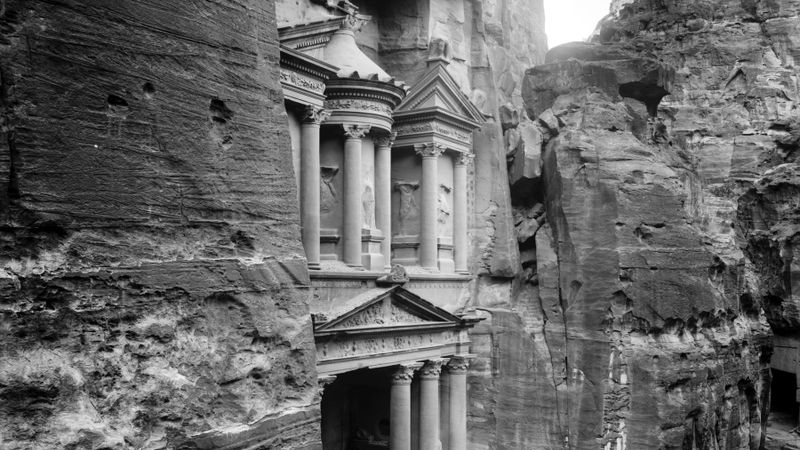
Filmed, but Not Recorded: The Arab World’s Missing Film Locations
Wikidata knows Gladiator was filmed in Morocco. It doesn’t know where.
Ouarzazate is the second most filmed place in the Middle East and North Africa, yet 25 of its 27 productions are recorded only in Wikipedia prose. We compared filming records worldwide and found that in the Arab world, Wikidata usually knows the country but not the place.
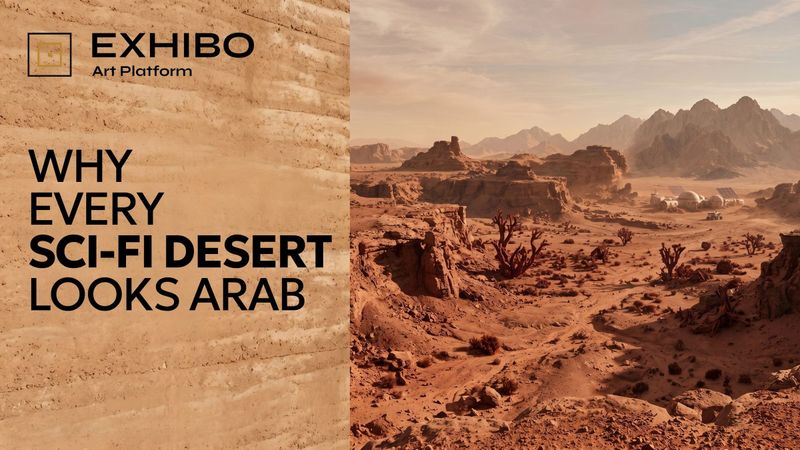
Why Every Sci-Fi Desert Looks Arab
From Arrakis to Tatooine, when a film wants a desert to feel ancient, prophetic and alien, it reaches for an Arab and Berber vocabulary — and reveals more about the West that built it than the region it borrows from.
The wrapped faces, the trilling women, the barely-displaced Arabic: cinema's alien deserts keep sounding Arab. But the vocabulary was assembled in the West — from Orientalist painting to Lawrence to Dune — and it says more about who is looking than about anyone being looked at.
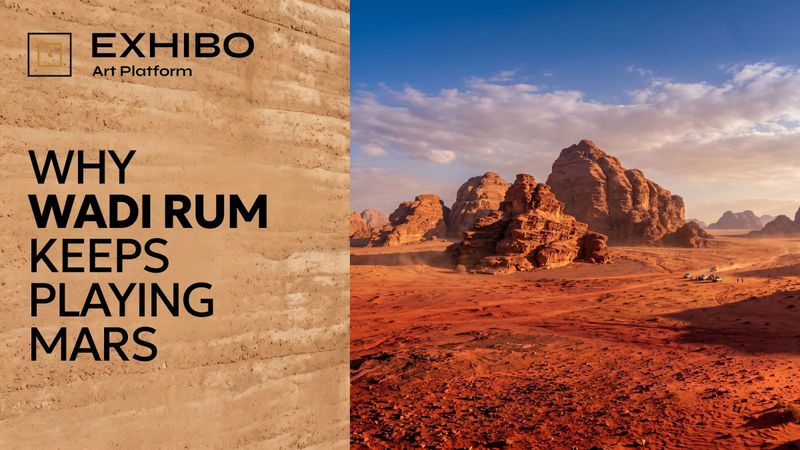
Why Wadi Rum Keeps Playing Mars: A Desert That Is Right About the Wrong Planet
A valley in southern Jordan has become cinema's favourite Mars — not because it is like the planet, but because it looks like the one we carry in our heads.
Put Wadi Rum beside a rover photograph and you can't tell which is Mars. But the desert shares almost nothing with the real planet except its colour — and lately, the illusion has grown powerful enough that real space missions have come to Jordan to rehearse.