
Grand Mosque & Al MaqtaAbu Dhabi
Al Qana Waterfront Promenade
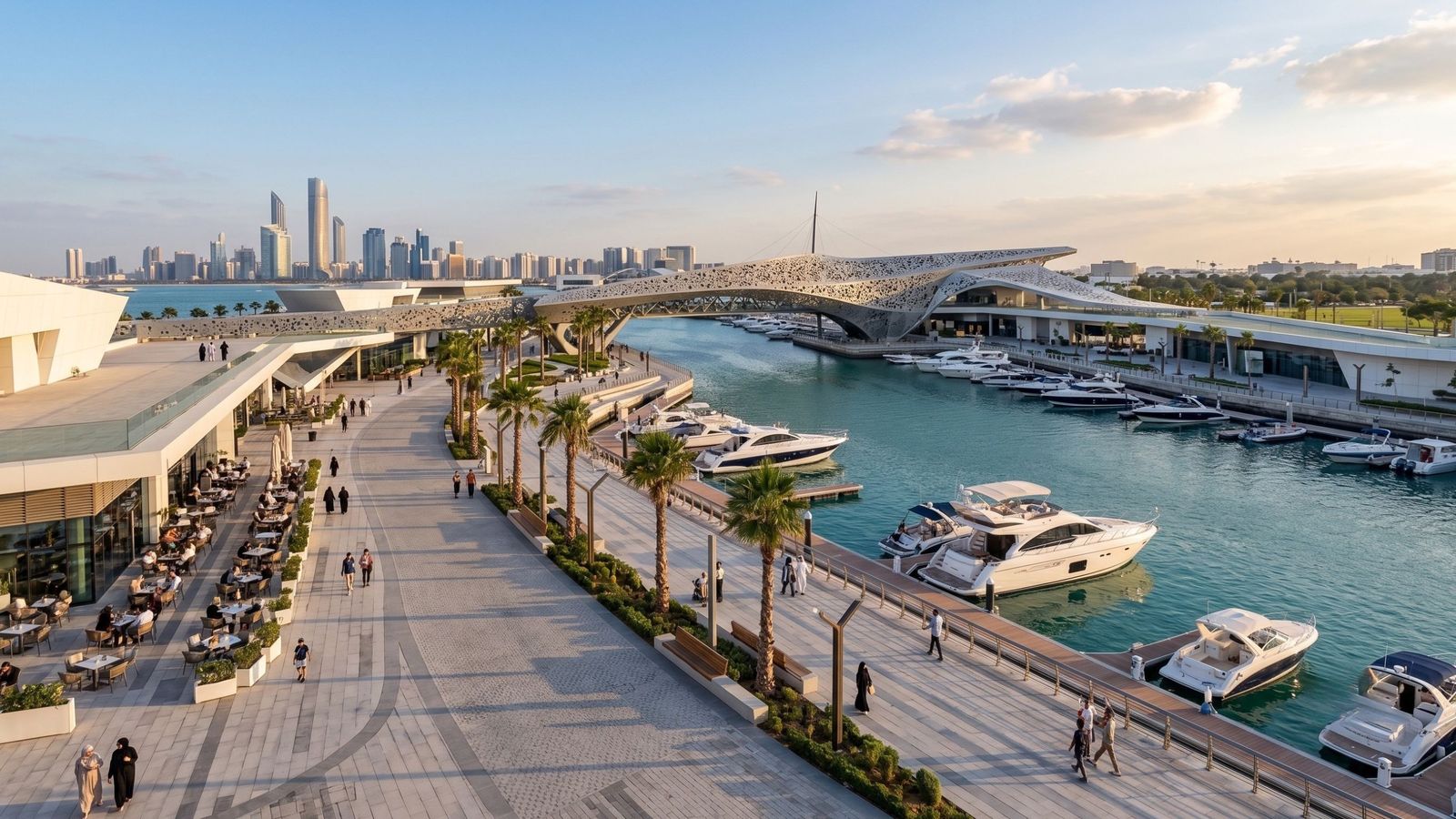
2.4 kilometres of canal-side promenade with buildings cantilevered twenty metres into the air above it.
Al Qana is a waterfront destination along the Khor Al Maqta canal in the Rabdan area, spanning roughly 146,000 square metres across seven districts and organised around a 2.4-kilometre pedestrian promenade. It opened in phases from 2021, with most attractions operational between 2022 and 2023.
The scheme was designed by MZ Architects — the practice behind the circular Aldar Headquarters — and jointly developed by Al Barakah International Investment with Abu Dhabi Municipality, under the emirate's first Build-Operate-Transfer model; International Construction Contracting Company was lead contractor and LIMAH worked on integrating art into the master plan.
The architecture is built around cantilever. The main pedestrian promenade extends six metres out over the water, and the largest structural cantilever, in the Block N building, projects close to twenty metres, with three full floors overhanging a first-level open terrace. MZ Architects have described the cantilevered geometry as serving function as well as form, throwing shade across the dining hub and landscaped public areas below. The promenade's own plan takes its jagged line from Abu Dhabi's salt flats, deliberately lengthening and animating the pedestrian route. Spaces between buildings are treated as open piazzas, connected by pedestrian bridges, ramps and terraces at different levels to produce a multilayered public realm.
The destination holds the National Aquarium — the largest in the Middle East — a cinema, an esports and VR academy, a yacht marina, a wellness hub, an outdoor skate park, and a Butterfly Gardens attraction with two biodomes opened in January 2026, alongside a long line of canal-front restaurants and cafés. Several vantage points look across to the Sheikh Zayed Grand Mosque.
The promenade is free and open air; individual attractions are ticketed separately.
Exhibo editorial
Six metres of promenade hanging over the water, twenty metres of building hanging over the promenade. Al Qana is essentially a demonstration of what you can do with a cantilever if nobody stops you, and the honest reason it works is not drama but shade — every one of those overhangs is throwing a floor's worth of shadow onto the walkway beneath it at the hour when you most need one.
The other clever move is the line. The promenade does not run straight down the canal; it takes its jagged geometry from the salt flats, which means the walk is longer than the distance and you never quite see the end of it. Walk it after dark, when the whole strip is lit and the Grand Mosque is glowing across the water at the far end, and the 2.4 kilometres go by without you noticing you have done them.
How to find it
On the Khor Al Maqta canal in the Rabdan area, off Al Maqta' Street, roughly 25 minutes from Zayed International Airport and a short drive from the Sheikh Zayed Grand Mosque. Free parking sits directly opposite the entrance. Walk the promenade in one direction rather than doubling back — the jagged salt-flat geometry means it keeps opening new views, and the largest cantilevers are best appreciated from directly beneath. Several points along the canal look across to the Grand Mosque. The promenade is free and open air; the aquarium, cinema, Butterfly Gardens and other attractions are ticketed separately.
Similar places
All places
News by Exhibo
Editorial coverage on Exhibo
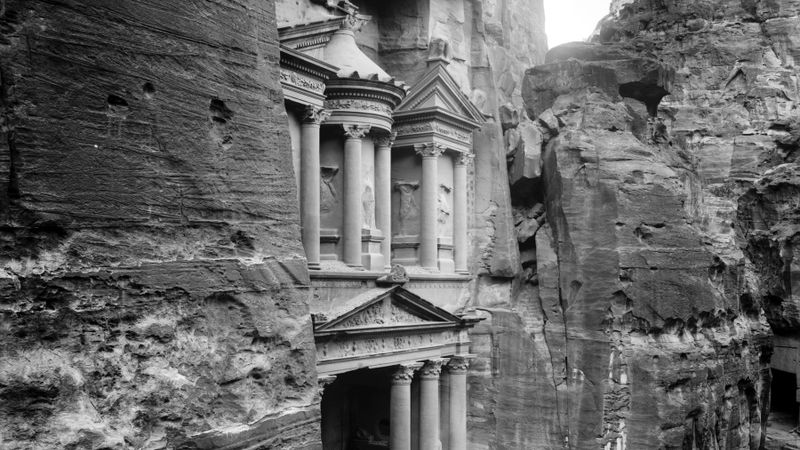
Filmed, but Not Recorded: The Arab World’s Missing Film Locations
Wikidata knows Gladiator was filmed in Morocco. It doesn’t know where.
Ouarzazate is the second most filmed place in the Middle East and North Africa, yet 25 of its 27 productions are recorded only in Wikipedia prose. We compared filming records worldwide and found that in the Arab world, Wikidata usually knows the country but not the place.
Why Every Sci-Fi Desert Looks Arab
From Arrakis to Tatooine, when a film wants a desert to feel ancient, prophetic and alien, it reaches for an Arab and Berber vocabulary — and reveals more about the West that built it than the region it borrows from.
The wrapped faces, the trilling women, the barely-displaced Arabic: cinema's alien deserts keep sounding Arab. But the vocabulary was assembled in the West — from Orientalist painting to Lawrence to Dune — and it says more about who is looking than about anyone being looked at.
Why Wadi Rum Keeps Playing Mars: A Desert That Is Right About the Wrong Planet
A valley in southern Jordan has become cinema's favourite Mars — not because it is like the planet, but because it looks like the one we carry in our heads.
Put Wadi Rum beside a rover photograph and you can't tell which is Mars. But the desert shares almost nothing with the real planet except its colour — and lately, the illusion has grown powerful enough that real space missions have come to Jordan to rehearse.