Cairo

Fustat & Old Cairo

2 galleries · 2 museums · 0 places

About this district

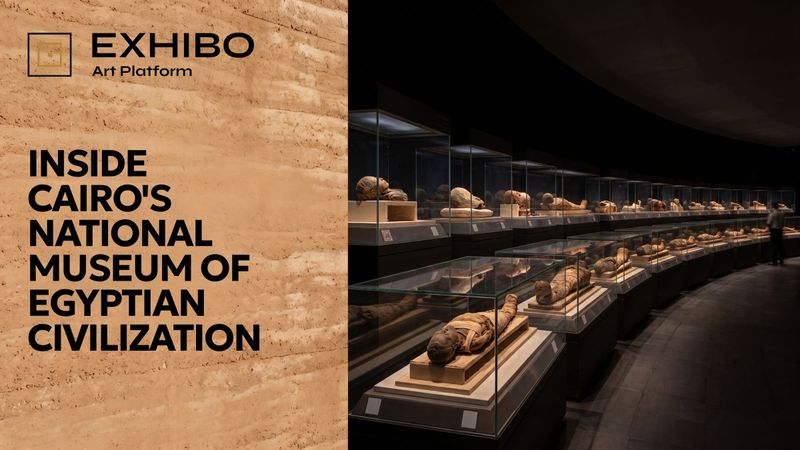
The oldest settled ground in the city — Fustat, founded in the seventh century, and the Coptic quarter beside it, holding the Mosque of Amr ibn al-As, Babylon Fortress, the Hanging Church, the Ben Ezra Synagogue and the Coptic Museum, all within a few minutes' walk. The National Museum of Egyptian Civilization is here, and so is Darb 1718, one of the country's key independent contemporary art centres.

Galleries

Museums

Places

No published places in this district yet.

The Tunisian desert that became Tatooine — its Berber architecture, its vanishing film sets, and the living street-art scene painting over the myth.
Editorial

The Real Tatooine: Star Wars, Southern Tunisia and the Living Art Beneath the Myth

The Tunisian desert that became Tatooine — its Berber architecture, its vanishing film sets and the living street-art scene painting over the myth.

George Lucas filmed Star Wars across southern Tunisia, borrowing Berber pit-houses and 15th-century granaries as an alien world. But the real story is what's underneath: a living tradition of desert architecture, two millennia of coexistence on Djerba, and one of the most ambitious street-art projects on Earth.

Abstract geometric composition of interlocking angular forms in layered planes of colour.
Editorial

Women of Arab Abstraction

The letter set loose, the line woven, the arabesque the West once threw away — and the women who built modern abstraction out of all three, then got written out of it.

Abstraction is usually told as a Western invention that arrived elsewhere late. Saloua Raouda Choucair, Etel Adnan, Madiha Umar and a room of others tell it differently — often as the only woman in the movement, building modern form from the geometry, craft and calligraphy their own culture already held.

A shallow engraved brass bowl seen from above, its inside surface covered edge to edge with inscription and geometric figures.
Editorial

The Seal of Solomon: The Object That Grew Around One Word

The Qur'an never mentions a ring. What grew in that gap instead: a demon, a seal, seven signs nobody can trace, a thousand years of amulets, and a star that ended up on a flag.

A fisherman pulls up a copper jar stopped with lead, and the mark of a signet ring is pressed into the lead. Everyone hearing this in ninth-century Baghdad knew what came next — they knew it from the lid. The strange part is that the ring they all knew about is not in the Qur'an.

A cross-section of a medieval bathhouse: bathers above, and below them two horned fire spirits tending the furnace that heats the water.
Editorial

The Real Jinn: How the Middle East Imagined Them Before Disney

Seven kings, one for each day of the week. A portrait of Fever. Two spirits keeping a bathhouse warm. What the manuscripts actually show — and what the lamp replaced.

Folio 35v of a manuscript in Oxford shows the public baths at Tiberias in cutaway. Upstairs, people washing. Downstairs, two jinn tending the furnace, mid-conversation. It is not what most of the world expects — and it is much closer to what the unseen was actually understood to be for. A long read across twelve centuries of manuscripts, fieldwork, survey data and horror cinema.