
Cairo · Egypt
The House Whose Famous Guests All Moved Out
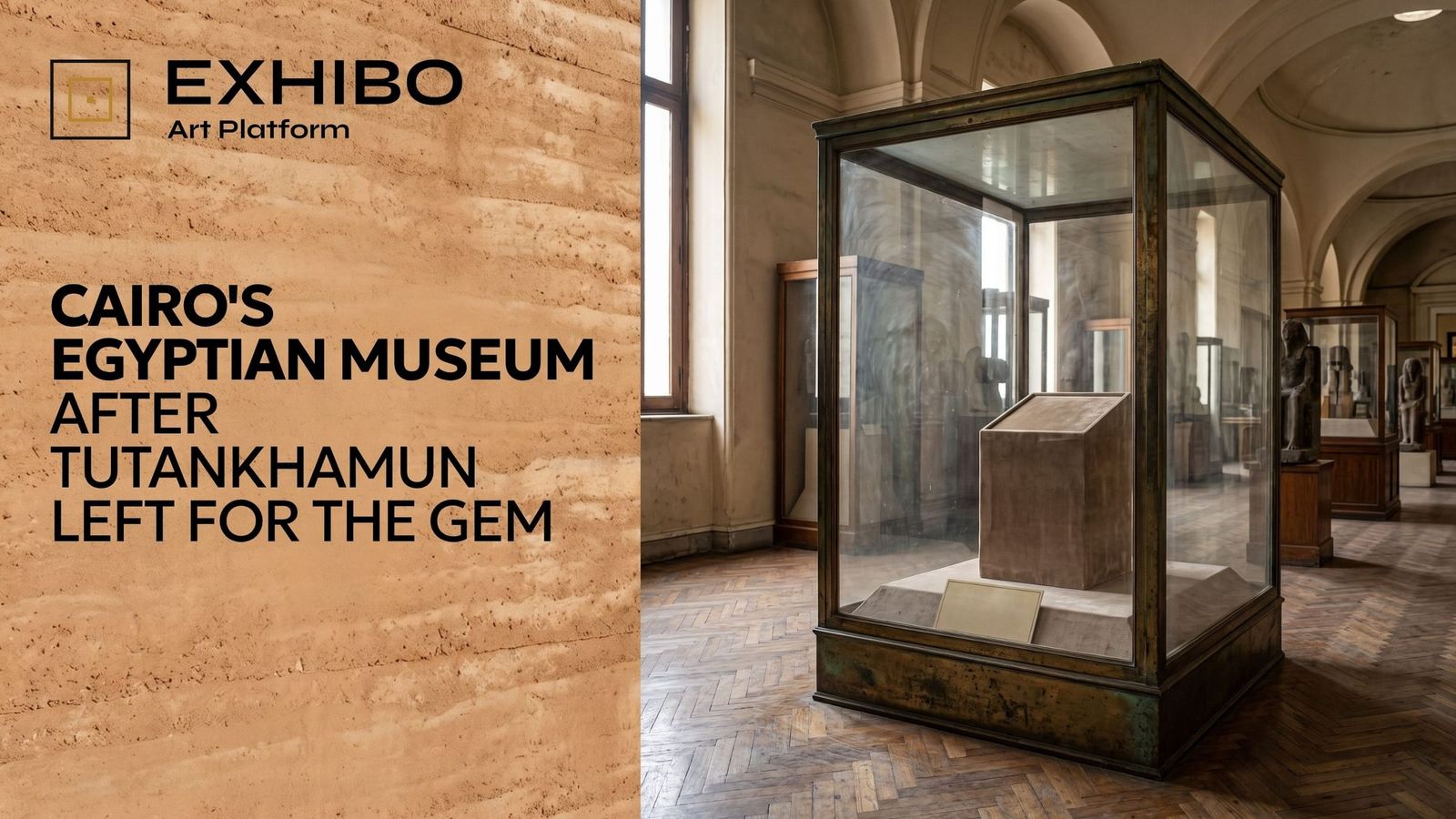
When Tutankhamun's mask left Cairo's Egyptian Museum for the Grand Egyptian Museum, it took the crowds with it — but not the collection. What remains in the old building on Tahrir Square turns out to be a stranger and more interesting museum than the one that emptied.
On the upper floor of the Egyptian Museum in Cairo, in the room that generations of visitors climbed the stairs to reach first, there is a space where the most famous object in the country used to stand.
For most of ninety years (the mask was removed from the mummy in 1925; the Tutankhamun treasures were formally registered at the Cairo museum in 1934), the golden funerary mask of Tutankhamun sat here, behind glass, in the pink neoclassical building on Tahrir Square. It was the thing people came for. It was the reason the queues formed and the coaches idled outside, the face on a million postcards and textbook covers, the object a school group from Aswan and a tour group from Osaka would walk the length of the whole museum to stand in front of, phones up, for ninety seconds, before the guard moved them along. Ten kilograms of gold, blue glass and lapis, one of the most recognisable objects to survive from the ancient world. In October 2025 it was lifted from its case, packed with extraordinary secrecy and care into a climate-controlled crate, and driven under guard out to Giza, to the vast new Grand Egyptian Museum in the shadow of the pyramids, where it now sits at the centre of a purpose-built suite of galleries many times the size of the room it left.
What it left behind, in Tahrir, is a rectangle of slightly cleaner floor, and a museum learning how to be a museum without its centre. And that second thing — an old, half-emptied institution working out what it is now that its most famous resident has moved to a better address — turns out to be a stranger and more moving thing to watch than one more gallery of perfectly lit gold.
The great emptying
The mask was not the first to go, and it was not the last. For most of the last decade, the Egyptian Museum has been quietly emptying, one masterpiece at a time, into the new institutions Egypt has built to hold them.
In April 2021, twenty-two royal mummies — eighteen kings and four queens, from the 17th through 20th Dynasties — were carried out of the museum in a televised night-time procession the government called the Pharaohs' Golden Parade. It was staged with a seriousness that is worth dwelling on. Each mummy travelled in its own custom vehicle fitted with shock absorbers, sealed inside a nitrogen-filled capsule to hold it at museum conditions for the length of the journey; the roads along the route were repaved beforehand so that nothing would jolt. The kings and queens went in the order they had reigned, three thousand years of succession translated into a motorcade: Seqenenre Tao, the warrior pharaoh who died in battle around 1550 BC, on the first carriage; Ramesses II, Hatshepsut, Seti I, Thutmose III somewhere in the long middle; Ramesses IX bringing up the rear. Each vehicle carried the occupant's name in hieroglyphs, in Arabic, in English. A twenty-one-gun salute met them at the gates of the National Museum of Egyptian Civilisation in Old Cairo. The whole thing was broadcast live, scored by an orchestra, watched around the world.
It was magnificent, and something in it was also slightly beside the point, and the sharpest version of that unease came from Egyptians themselves. One Cairo viewer, a self-described heritage enthusiast, watched the livestream at home and came away feeling the spectacle had been dazzling but that the historical detail — who these kings and queens actually were, what they had done, why they mattered — had somehow got lost in the fanfare. It is a fair worry, and it hangs over the whole project of the new museums: whether the choreography of moving the treasures can end up upstaging the treasures. In any case, when the motorcade was over, the Royal Mummies Room in Tahrir — for decades one of the most visited and most hushed spaces in the building, where you lowered your voice without being told to — had been emptied of the dead it was built around.
Then came Tutankhamun. His treasures had been the museum's crown since 1922, when Howard Carter opened the tomb and, over the following decade, the objects made their way to Cairo. There were more than five thousand of them, and for much of the last century a celebrated selection filled gallery after gallery on the upper floor: the throne, the chariots, the shrines, the jewellery, the golden coffins, and at the centre of it all the mask. Beginning in the 2020s they were moved, in stages, out to the Grand Egyptian Museum, until by late 2025 the tomb's 5,398 objects had all gone to Giza, reunited in a single purpose-built suite of galleries — assembled together, for the first time since the tomb was found, in one place. Only the king's own mummy stayed behind, out in the Valley of the Kings, in the tomb it was found in.
The mask itself was the last and most sensitive to move, and the difficulty of moving it says something about what it meant. For most of a year before it went, officials spoke about the transfer in the careful language of a state secret: only a couple of dozen Tutankhamun objects remained in Tahrir, the museum's director confirmed in mid-2025, the mask and the coffins among them, all "set to be moved soon," no date given. When the move finally came, in October 2025, it was filmed for a documentary that treated it as one of the most delicate operations in the museum world: the security, the secrecy, the climate control, the sheer terror of driving the most famous object on earth across a city. Visitors, in the final weeks, were told they had only days left to see the mask in the room it had occupied for ninety years before it disappeared west.
The numbers behind the emptying are large enough to be hard to hold in the head. By mid-2025, some thirty-two thousand objects had already been moved from Tahrir out to Giza. A museum that had been, for a century, among the densest concentrations of pharaonic treasure anywhere on earth watched its stars drive away, one guarded convoy at a time, to a newer, larger, better-lit home a half-hour's drive across the river.
It is worth pausing on how odd this is. Museums lose objects all the time, but they lose them to war, to looting, to fire, to colonial powers carting them off, to the slow attrition of damp and decay. Those are losses with villains, or at least with accidents. It is an unusual kind of museum loss — for a great museum to lose its collection to success: to another museum, built by the same government, a few miles across the same city, precisely in order to show the same things to more people in better light. Nobody wronged the Egyptian Museum. No fire, no thief, no foreign army. Its own country simply built its treasures a grander home and moved them into it, with pride and television cameras, exactly as a family that has done well moves out of the cramped house where it started.
The Egyptian Museum has not been robbed or ruined. It has been superseded. And being superseded, it turns out, leaves a very particular kind of silence — not the silence of a tragedy, but the quieter, harder-to-name silence of a place that was the centre of things and is now, suddenly, off to one side. There is no obvious story for that. Grief needs a wrong. What do you feel about a building that lost everything to a happy ending?
The rooms that lead nowhere
If you go now, the emptying is something you feel before you can name it.
You climb the stairs the way visitors always have, toward the upper floor where the Tutankhamun galleries were, and you find rooms that are still, unmistakably, built around an absence. The great cases are there. The vitrines that held the shrines and the throne are there. But the objects have gone, and what remains is the architecture of a display with nothing to display — a suite of grand rooms that used to lead, inexorably, to the mask, and now lead to a space where the mask was. Signage still points the way to treasures that are now out at Giza. The building has the quality of a grand house the week after the auction, when the furniture is gone but the picture-hooks and the brighter rectangles on the walls remember exactly what hung where.
And then, off to the side, down the less-trodden galleries, the older museum reasserts itself — because the things that stayed were mostly the things that were never the reason anyone climbed the stairs. Turn a corner away from the empty Tutankhamun rooms and there, without ceremony, will be a four-and-a-half-thousand-year-old statue that would be the single greatest object in almost any other museum on earth, and likely no queue in front of it at all. That disorientation, the crowds gone to Giza and the masterpieces left standing quietly, is the whole condition of the place right now, caught between two identities, and it is worth understanding how it got here.
The house built by many hands
To understand what is being emptied, you have to know what kind of house this is, because it is not a neutral container. It is one of the oldest purpose-built museums in the Middle East, and its story is tangled, from the very beginning, with foreign hands.
The museum that became this collection was given its decisive shape by a Frenchman, and by an obsession. Egypt had made earlier attempts to hold on to its own antiquities — a state collection had been gathered under Muhammad Ali decades before — but it was Auguste Mariette who turned the impulse into a lasting institution. He had come to Egypt in 1850 on a modest errand for the Louvre — to buy Coptic manuscripts — and had instead, almost at once, started digging, uncovering the avenue of sphinxes at Saqqara and never really going home. He was that particular nineteenth-century type, the European who arrives to study Egypt and is captured by it. But Mariette's obsession took an unusual turn for his era: he became convinced that Egypt's antiquities should stay in Egypt. At a moment when the great collections of Europe were filling up with pharaonic loot, as consuls and adventurers and museums shipped obelisks and mummies and temple reliefs north by the boatload, Mariette persuaded the ruler of Egypt to establish a national antiquities service and put him in charge of it. In 1858 he became its first director. He founded a museum at Bulaq, on the bank of the Nile, in a building that had once housed a river-navigation company, to hold what his excavations were pulling out of the ground.
The logic was pointed, and it is the same logic that runs under this whole story: a museum as a wall against dispersal, a place to keep the past in the country that made it. That a Frenchman built that wall, in a country then falling ever deeper under European financial and political control, is one of the founding ironies of Egyptian heritage, and nobody has ever quite resolved it. When an unusually high Nile flood tore through Bulaq in 1878, damaging the museum and destroying some of the objects, ruining Mariette's own notes and drawings, the survivors were moved, first to a former royal palace out at Giza, and finally, years after Mariette's death, to a building of their own.
The flood matters more than it first appears, because it establishes something about this collection that echoes through everything after: it has always been one bad day away from disaster, and it has always survived by moving. Mariette's own books and drawings were lost in the water at Bulaq. The antiquities that could be saved were carried to a former palace of the Khedive Ismail out at Giza, near the site of today's zoo: a building never meant to be a museum, too small and unsuited almost from the day the collection arrived. For a quarter of a century the greatest hoard of pharaonic antiquity in the world was housed, essentially, in borrowed rooms.
The building meant to end that improvisation, the pink one still standing on Tahrir Square, was commissioned by the Egyptian government through an international competition held in 1895, which drew more than seventy designs from architects across the world. The winner was a French architect, Marcel Dourgnon, whose neoclassical scheme was praised for its symmetry, its central hall under a great glass roof, and its practicality. The construction was carried out by an Italian firm, Garozzo and Zaffrani. The museum opened on 15 November 1902, inaugurated by Khedive Abbas Hilmi II before the royal family, the ministers, and the foreign diplomats, and it was, when it opened, the first purpose-built museum of its kind in the Middle East, a building designed from the ground up to hold antiquities rather than a palace or a mansion pressed into the role.
The move that filled it was itself an epic, and worth picturing, because a version of it would happen again in reverse a hundred and twenty years later. To carry the collection from Giza to Tahrir in 1902 took some five thousand wooden carts, and two special trains making around nineteen round trips between the sites. The first shipment alone carried roughly forty-eight stone sarcophagi, weighing over a thousand tons altogether. And the building that received all this proved, from the start, less finished than its monumental reputation suggested: the reinforced-concrete roof had to be substantially rebuilt between 1907 and 1909, only a few years after opening, to fix problems of ventilation, light and load. The house had trouble in its bones. It was also, at once, one of the wonders of the world.
A French founder, a French architect, an Italian builder, a collection assembled to keep Egypt Egyptian: the contradiction was there in the foundation stone, and it has never entirely gone away. For its first several decades the museum was run by Europeans — Mariette, then Gaston Maspero, then a succession of European Egyptologists — under an arrangement in which the science of Egyptology, a field effectively invented by Europeans studying Egypt, sat inside an Egyptian institution asserting Egyptian ownership. Only in the 1940s did the directorship begin to pass to Egyptian Egyptologists, the first of them Mahmoud Hamza in 1941; the shift became decisive after the revolution of 1952 ended the monarchy.
Keep that arc in mind, because it is going to repeat, in a new form, a hundred years later. But it is worth resisting the neat version of it — the one where Europeans build the house, hand it over, and return a century later to renovate it while keeping the treasures that belong inside. The truth is messier and more interesting than that clean circle. The Egyptian Museum was always a paradox: a national institution built through an international discipline, created partly to stop Egyptian antiquities from leaving Egypt, run for decades by the same European Egyptology whose great museums abroad hold some of the objects Egypt most wants back, and handed to Egyptian hands not in one revolutionary stroke but gradually, across the middle of the twentieth century. It has spent its entire existence being two things at once: the proudest statement of Egyptian ownership of the Egyptian past, and a standing reminder that this ownership has always been exercised inside a system Egypt did not fully control. The contradiction was never resolved because it may not be resolvable — two models of who keeps the past, coexisting in one pink building. The emptying has only made the old paradox visible again.
The beautiful story
Here is the version of events the museum and the ministry would like you to leave with, and it is not a lie. If you are deciding whether the old museum is still worth your time now that the mask has gone to Giza, the short answer is yes, emphatically — and the reason is everything the mask was quietly standing in front of.
The Egyptian Museum is not closing. It is being reimagined. With the crowd-pulling superstars moved out to Giza and Old Cairo, the argument goes, the old museum is finally free to become something it could never be while the mask was drawing the traffic: a place to see the rest of ancient Egypt: the more than a hundred and sixty thousand objects the museum counts among its holdings, most of which were always here and were always, somehow, standing in the blockbuster's shadow. The ministry has been clear that the museum stays open to the public: officials have stressed that it will remain open while its redevelopment proceeds in phases, rather than closing altogether, so that the building can be modernised without ever quite going dark. There is even an ambition, folded into the renovation plans, to have the museum inscribed at last as a UNESCO World Heritage Site in its own right — it sits, for now, on Egypt's tentative list of candidates — the container itself certified as a treasure, not just the things inside it.
And the collection that remains is, by any measure other than celebrity, staggering. The Narmer Palette is here: a carved slate shield-shape from around 3000 BC, no taller than a forearm, traditionally read as an image of a king binding Upper and Lower Egypt together at the very dawn of the pharaonic state. It is one of the founding documents of early Egypt, closer to a birth certificate for the whole three-thousand-year story than to a work of decoration — an object whose significance, for historians of the period, has little to do with fame. It did not move. It is still in Tahrir.
So are the treasures of Yuya and Thuya, the maternal great-grandparents of Tutankhamun, whose almost-intact tomb was one of the richest non-royal burials found in the Valley of the Kings before Carter stumbled on their descendant's: gilded coffins, a chariot, furniture, the couple themselves among the best-preserved mummies of the ancient world. So is the gold — and the silver — of Tanis. In the delta city in the late 1930s, the French archaeologist Pierre Montet found something extraordinary: intact royal tombs, their seals unbroken, the ancient robbers having missed them by a few feet. The greatest of them belonged to Psusennes I, the "Silver Pharaoh," buried in a coffin of solid silver — a metal Egypt had to import, and so rarer than the gold it mined — beneath a gold funerary mask, alongside the burial of his successor Amenemope. It was one of the very few substantially intact royal burials ever found in Egypt. Almost nobody has heard of it. Montet made his find in 1939 and 1940, as the world tipped into war, and the treasure that would have been a sensation in any other decade was carried quietly to Cairo while the headlines went elsewhere and never quite came back. The Silver Pharaoh has been sitting in Tahrir, upstaged, for eighty years. So are the great Old Kingdom masterpieces: the painted limestone couple Rahotep and Nofret, dug up by Mariette's team at Meidum in 1871, their eyes inlaid with quartz and rock crystal so unnervingly alive that, by the excavation account that has followed them ever since, the workman sent into the dark tomb with a candle fled in terror, convinced he had come face to face with two living heads whose eyes were watching him; the seated scribe with his alert, patient gaze; the wooden statue so vividly a particular man that the nineteenth-century excavators nicknamed him the Sheikh el-Balad, the village headman, after their own foreman; the diorite Khafre, the falcon god Horus folded protectively around the back of his head.
This is the pitch, and it is a good one: come for the things you have heard of, and you will walk straight past the things that matter. The old museum, freed of its blockbuster, can finally tell the deeper and older story — the one that runs back past Tutankhamun, who was a minor king of a late dynasty, to the very beginning. There is real truth in it. And, like most clean stories, it is worth turning over to read what is written underneath.
Who reimagines the house
Because the reimagining, like the founding, is not being done by Egypt alone.
The most consequential recent attempt to imagine the Egyptian Museum's next century had a name — Transforming the Egyptian Museum of Cairo — a budget of 3.1 million euros from the European Union, and an end date. It ran from 2019 and closed in early 2023, and what it delivered was not a finished building but a masterplan: a set of recommendations for the museum's refurbishment, a detailed study of the structure, new displays in five galleries, updated labels, handed to the Egyptian authorities to carry out as they saw fit. And the plan was drawn up by a consortium of five major European collections of Egyptian antiquities: the Museo Egizio in Turin, which led the project, together with the Louvre in Paris, the British Museum in London, the Egyptian Museum of Berlin, and the National Museum of Antiquities in Leiden. Each was assigned a gallery to help redesign. The plan even aimed to help the museum win recognition as a UNESCO World Heritage Site. The timing was the point: Europe's great Egyptological museums were helping to design the future of the old Egyptian Museum at exactly the moment its collection was being redistributed into Egypt's new ones.
There is no scandal in this, exactly, and it would be lazy to manufacture one. This is how the museum world works now; expertise is shared, and the great encyclopaedic institutions help each other. But it is impossible to lay the list of partners next to the list of Egypt's grievances and not feel the irony sharpen. Because three of these five partners are institutions at the centre of Egypt's long-running repatriation disputes.
The British Museum holds the Rosetta Stone, the trilingual slab that unlocked hieroglyphs, taken by British forces after the French capitulation in Egypt in 1801 and in London ever since, which Egypt has repeatedly asked it to return. The Louvre holds the Dendera Zodiac, a carved ceiling of the night sky prised out of an Egyptian temple in 1821 and shipped to Paris. The Berlin museum holds the painted bust of Nefertiti, carried out of Egypt in 1913: Germany maintains that the bust was lawfully awarded through the colonial-era division-of-finds system, while Egyptian and other scholars have challenged both the circumstances of the division and the description of the object that let it leave the country. These are not minor exhibits. They are among the handful of objects at the very heart of Egypt's repatriation campaign — the great faces and stones it has argued, formally and publicly, that it is owed.
And these three institutions were among those that funded, planned and designed the blueprint for the house those objects would come home to. Turin led. The Louvre, the British Museum and Berlin each took a gallery. When The Art Newspaper covered the partnership, it made the point almost drily:
the British Museum would help transform the Egyptian Museum, but the Rosetta Stone would not be part of the deal.
You can read that two ways, and both are true at once. You can see it as a graceful collaboration, heritage professionals rising above the politics to help a great museum modernise, sharing expertise the way a profession is supposed to. Or, seen from inside Egypt's repatriation debate, you can feel the irony sharpen to a point: three of the museums that will not part with the objects Egypt wants helped design a nicer room in which those objects are still not displayed. Help with the building is easy to give. It is the one form of assistance that costs a lending museum nothing it is unwilling to lose — no Rosetta Stone, no Nefertiti, no zodiac, only expertise and goodwill and a masterplan, all of which are real and none of which is the thing Egypt has actually asked for. This is not hypocrisy, exactly, and it is not meant as an accusation. It is simply what heritage looks like now: a dense weave of loans, expertise and quiet diplomacy in which the institution helping you today is also the one holding what you have asked to have returned.
There is a further turn of the screw, quieter than the Rosetta Stone joke and harder to shake. Recognition as a World Heritage Site, one of the stated aims of the European-funded plan, would certify the Tahrir building itself as a treasure of humanity, held in trust for the world. It is a generous idea and a genuine honour. It is also, if you are in an unforgiving mood, the logic of the encyclopaedic museum turned on the building that was supposed to be the answer to it: the same universalist language, heritage of all mankind, held on behalf of the world, that London and Berlin and Paris have used for two centuries to explain why the great Egyptian objects should stay exactly where they are. The Egyptian Museum, once again, is being reimagined with a great deal of foreign help — exactly as it was founded, exactly as it was built. A century apart, almost the same sentence, the same institutions of European Egyptology bending over the same Egyptian house. Only this time the house is being refurbished for the objects that stayed, by the keepers of the objects that left.
The house repairs itself
Here is the part of the story the emptying obscures, and it complicates the whole picture in a way worth sitting with. While the great objects have been leaving for Giza, the old museum has quietly been doing the opposite thing to what remains: not scattering it, but pulling it back together.
Consider the painted walls of Malqata. When Amenhotep III built himself a pleasure-palace on the west bank at Luxor in the fourteenth century BC, its walls and ceilings and floors were covered in painting — pools of fish, flights of birds, spirals and rosettes, some of the most delicate decorative art to survive from the ancient world. Fragments of it were excavated in the late nineteenth century and carried to Cairo, where, for more than a hundred years, they were scattered across different halls of the museum, a piece here, a piece there, the palace dispersed through the building like a torn photograph shuffled into a deck. In 2025, a restoration project led by the University of Munich, with the American Research Center in Egypt, brought the fragments together for the first time into a single gallery, behind the statues of Amenhotep III and his queen Tiye.
Stand in front of it now and the effect is quiet and strange. Here is a ceiling of ducks lifting off a marsh, painted three and a half thousand years ago for a king to look up at, its blues and ochres still soft, the brushwork loose and quick and alive; and it is whole, or nearly, for the first time since it was pulled off a wall in the desert and split among the museum's rooms. There are no crowds here. The mask is a whole museum and a city away, out in Giza. But the palace ceiling is here, reassembled in the half-empty building — the scattered thing made whole again, in the very museum that is otherwise coming apart.
There is a subtler version of the same problem hiding in the catalogue, and it is worth a moment because it is so easy to get wrong. The old museum holds the famous granite Victory Stela of Merenptah, also known as the Israel Stela — a single monument that carries two names, because a hymn to the king's military victories carved on its back happens to contain, near the end, the earliest known mention of the word "Israel" in any Egyptian text. Meanwhile, across the river, the Grand Egyptian Museum displays a different Merenptah victory stela, from a different site. Line the two museums up and it is possible to convince yourself that a single monument has been split in two, one half in each building — the "Victory" in Giza, the "Israel" in Tahrir. It has not. There are simply two stelae and three names, and the names make a relationship that the stones do not have. The split, when it looks like a split, is often in the paperwork rather than the granite. But the paperwork is how a collection knows itself, and once you have seen how easily its threads can be crossed or cut, you start to understand what is really at stake in dividing one.
It is a small thing next to the departure of Tutankhamun, and it is easy to miss, and it says something the grand narrative of the move does not. A collection is not a heap of things; it is a set of adjacencies, an argument made by putting this next to that. Break one up and ship the stars to a new building, and you sever relationships nobody ever thought to write down, because they had never needed to. But the reverse is also possible, and it is happening in the same rooms: a hundred years of accidental dispersal, patiently undone, one gallery at a time, by exactly the kind of slow scholarly labour that a blockbuster museum has no time for and a half-emptied one suddenly does. The old house is not only being emptied. Freed of the crowds that came for the mask, it is quietly repairing the tears in its own fabric. And that — not the departures — may turn out to be what the museum is actually for now.
The soul of the old museum
So what is left, when the mask and the mummies and the boy king have gone to their newer, brighter homes?
What is left is the building, and the atmosphere, and all those tens of thousands of things. The most useful word for the old museum, once you have seen both, is attic — and it is not, on its face, a flattering one, and it comes out sounding like praise. The galleries are crowded and warm. The old wooden-and-glass cases stand in long ranks under the high glass roof, densely packed, some of their labels typed on cards a generation or more ago, a few still handwritten. Statues stand shoulder to shoulder like a crowd waiting for something. Sarcophagi line the walls three deep. There is dust turning in the shafts of light from the clerestory. Nothing is arranged to dazzle you; everything is simply, overwhelmingly there: the exact abundance that the new museums, with their careful spacing and their reverent pools of light around each single object, have been built specifically to cure.
And here is the thing the guides all seem to feel and struggle to put into words: that overwhelming, old-fashioned, slightly exhausting density is itself worth something, something the perfected museums give up in exchange for their clarity. The Grand Egyptian Museum shows you objects, beautifully, one at a time. The old museum shows you a collection — the accumulated, century-deep hoard of a whole civilisation, gathered under one roof in the order that history and excavation happened to deliver it, before anyone stood back and decided which pieces were the stars and which were the supporting cast. To climb the stairs of the Tahrir museum, even now, even half-emptied, is to feel the sheer crushing quantity of the Egyptian past — not the twelve masterpieces you were told to look for, but the thousand things behind them, the sheer relentless productivity of three thousand years, in a way no curated highlight reel can reproduce or wants to.
There is a paradox in this that the new museums cannot resolve. They are better in many of the ways museums are now judged: better lit, better labelled, better spaced, better cooled, easier on the objects and easier on your feet. And in becoming better they lose the one thing the old building still has by accident: the feeling of a real encounter with too much history, unmediated, unsorted, more than a person can take in, which is, after all, the honest truth of what Egypt left behind. The old museum falls short of many of the standards by which museums are judged today. It is also something rarer, and harder to build on purpose. It is a place that still feels like the nineteenth-century dream of a museum: the cabinet of a civilisation, everything kept, nothing thrown away, the whole of the past piled into one pink building because throwing any of it away was unthinkable.
The old museum has, in a strange way, been returned to what it was before Tutankhamun made it a place of pilgrimage: a scholar's museum, a dense and demanding treasure-house, a place you come to study rather than to gasp. Some fear it will fade — that without its blockbuster it will slide into neglect, underfunded and half-forgotten, a second-choice museum for the overflow crowds who could not get a slot at Giza. Others think this is the making of it: the moment it is finally free to be read as what it has quietly been all along, one of the largest collections of Egyptian antiquity anywhere on earth, which, even now, even after the mask and the mummies and the boy king have gone, it still is.
Both futures are real, and it is genuinely too early to know which one the building will get. But there is something in the emptied museum that the full one, for all its brilliance, was never going to be able to offer. Both are constructions — that is the thing to hold onto, against the easy temptation to call one authentic and the other artificial. The Grand Egyptian Museum is a magnificent act of curation, Egypt telling the story of its own past with total command: arranged, lit, spaced, sequenced, explained. The old museum on Tahrir Square is something else — not the past itself, but the record of how the past was gathered: crowded, uneven, over-full, mislabelled here and there, assembled by a hundred and sixty years of hands, European and Egyptian, with their own priorities and their own blind spots, housed in a building that was already a monument before it was ever half-emptied. One shows you ancient Egypt. The other shows you the long, tangled history of collecting ancient Egypt, which is its own kind of subject. The mask has gone to Giza, where far more people will see it, in far better conditions, and that is a straightforwardly good thing; nobody should wish it back into its cramped old case for the sake of anyone's nostalgia. What stays behind is harder to put on a postcard. It is the room the mask used to stand in, and the vast quiet collection it used to crown, and the strange dignity of a house that has outlived the single thing that made it famous — and remains, still, quietly, and against every expectation, full.
Museums mentioned
Related reading
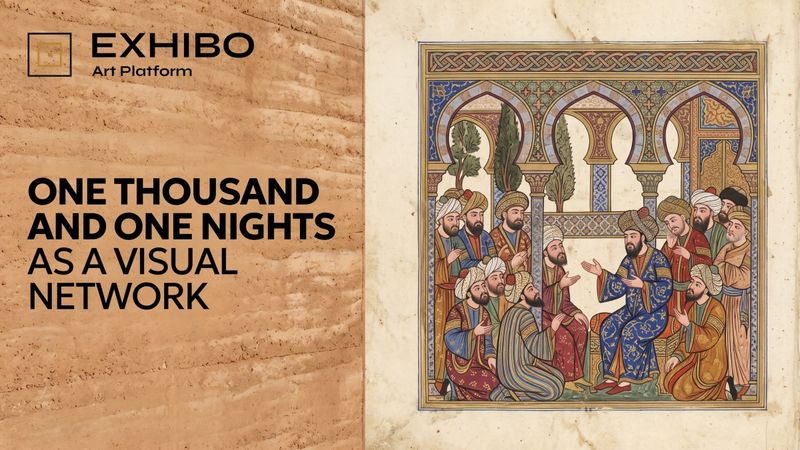
One Thousand and One Nights as a Visual Network
The book that taught Europe to picture the East arrived with no pictures at all. Three centuries of illustrators — Dutch, Egyptian, Persian, French, German, Iraqi — each gave it a face, and every face was a self-portrait.
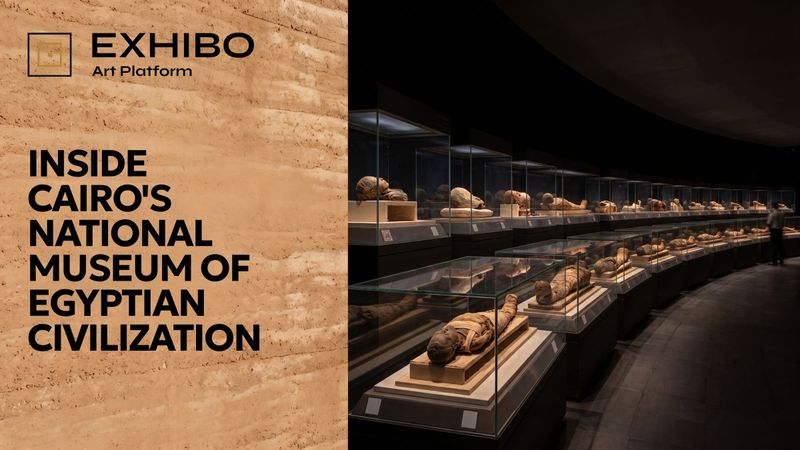
The Museum of Everything That Became a Tomb
Egypt built a museum to tell the story of an entire civilisation — seven thousand years of it, from flint tools to the present. The public knows it for one thing: the room where twenty dead kings lie in the dark.
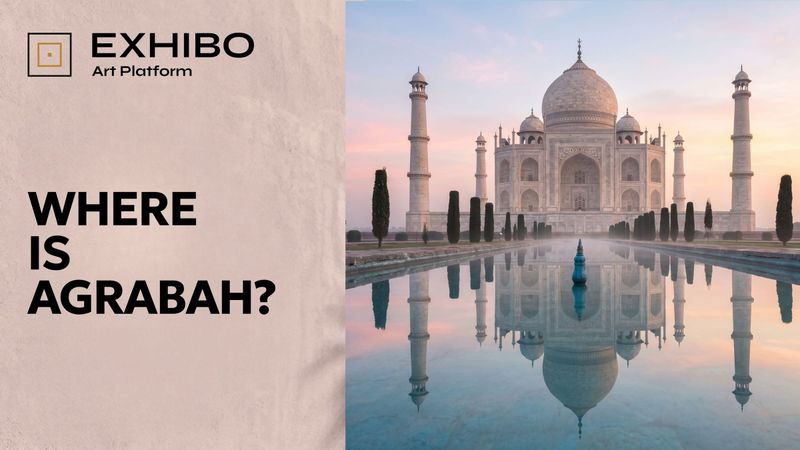
Where Is Agrabah? The City Disney Assembled From Real Places
Agrabah was going to be Baghdad. A war made it fictional — and then Disney built it back out of real places, from a tomb in Agra to a valley in Jordan that usually plays Mars.