Church of Abu Serga (Saints Sergius and Bacchus)
A seventh-century basilica in the heart of Coptic Cairo, built over a crypt where the Holy Family is said to have sheltered.
One of Cairo's oldest churches
The Church of Saints Sergius and Bacchus, known in Arabic as Abu Serga, stands at the centre of the walled Coptic enclave inside the Roman Babylon Fortress. It is one of the oldest churches in Cairo: it was founded in the late seventh century by Athanasius, a Christian scribe in the service of the Umayyad governor of Egypt, Abd al-Aziz ibn Marwan (685–705), and has been rebuilt and restored many times since. It is dedicated to Sergius and Bacchus, two Roman soldier-saints martyred in Syria in the early fourth century for refusing to renounce their faith.
The crypt of the Holy Family
The church is built above a crypt that tradition identifies as one of the places where the Holy Family — Mary, Joseph and the infant Jesus — sheltered during their flight into Egypt. The crypt, a small vaulted chamber with columns, lies below the sanctuary and is regularly affected by the rising groundwater of the Nile valley, so it is often closed to visitors. The site remains one of the most important stations on the Holy Family route in Egypt, and the feast of the Holy Family's arrival in Egypt is celebrated here each year in June.
Architecture and patriarchs
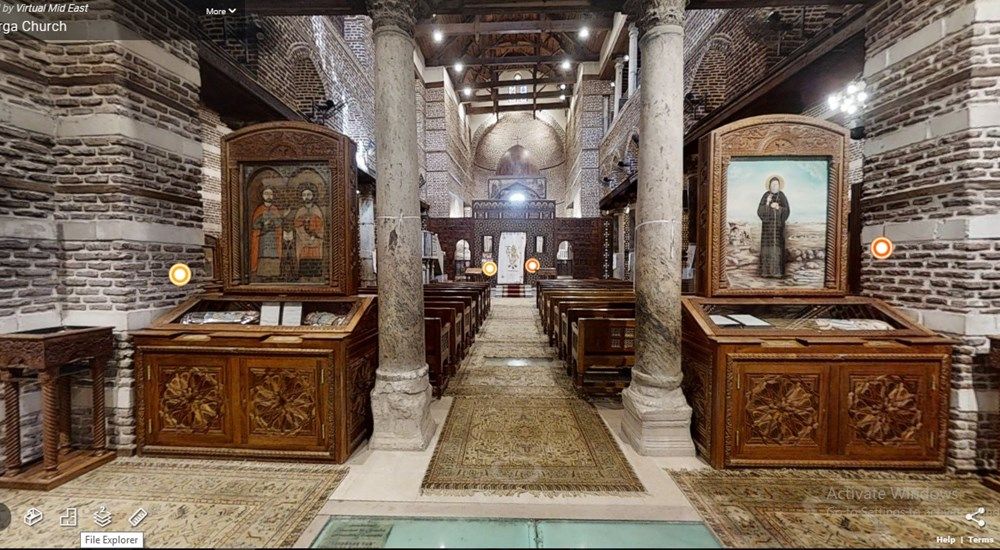
Abu Serga is a classic early Coptic basilica: a nave and two side aisles divided by marble columns, some reused from older buildings, with a wooden roof and a gallery above the aisles. At the east end, three sanctuaries stand behind wooden screens inlaid with ivory and ebony and hung with icons depicting the apostles and saints, including Sergius and Bacchus. Historically the church held a special place in the life of the Coptic Church: many patriarchs and bishops were elected here, a practice that began in the medieval period. It stands a short walk from the Hanging Church, the Church of St Barbara, the Ben Ezra Synagogue and the Coptic Museum, and Old Cairo is part of the UNESCO World Heritage Site of Historic Cairo.
Exhibo editorial
Coptic Cairo is mostly lanes — narrow, sunken, walled, a few metres below the level of the modern city — and Abu Serga sits right in the middle of them, so you almost stumble into it. Inside it is dim and warm, the columns mismatched, the screens dark with age and inlaid with tiny stars of ivory.
The crypt is usually closed, its floor under groundwater, and somehow that is right: the most famous part of the church is the one you cannot see. People still come and stand at the top of the steps looking down. Come early on a weekday, before the groups, and let the place be what it has been for thirteen centuries — a family church that happens to hold a story the whole Christian world knows.
How to find it
From Mar Girgis metro station, pass the Hanging Church and take the sunken stairway down into the walled Coptic Cairo enclave. Follow the main lane for about a minute to Abu Serga, whose entrance lies a few steps below lane level. The Church of St Barbara and the Ben Ezra Synagogue are a little further along the same lane.
Similar places
All places
News by Exhibo
Editorial coverage on Exhibo
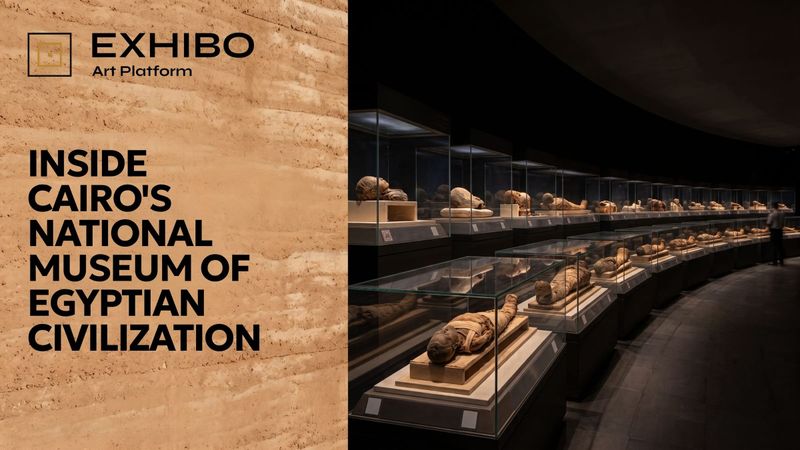
The Museum of Everything That Became a Tomb
Egypt built a museum to tell the story of an entire civilisation — seven thousand years of it, from flint tools to the present. The public knows it for one thing: the room where twenty dead kings lie in the dark.
In a black, hushed hall beneath the National Museum of Egyptian Civilization in Old Cairo lie the mummified bodies of Ramesses II, Hatshepsut, and eighteen other rulers of the New Kingdom — carried here in 2021 in a televised parade watched around the world.
Baroque Art, Explained
Rome, Antwerp, Madrid and Amsterdam: the seventeenth-century visual language built to move bodies, faith and courts.
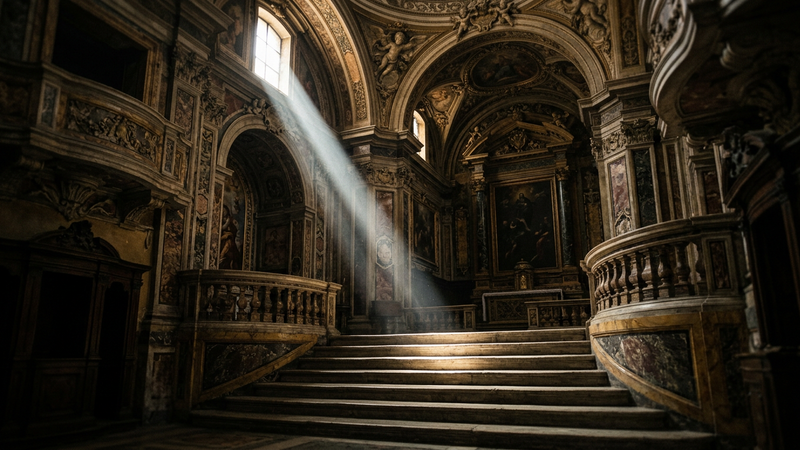
Baroque art pushed figures into your space and stacked diagonals for drama. This guide covers Counter-Reformation roots, key painters and sculptors from Rome to the Dutch Republic, four close readings of major works, and how the style spread, drew criticism, and still shapes museum rooms today.
Filmed, but Not Recorded: The Arab World’s Missing Film Locations
Wikidata knows Gladiator was filmed in Morocco. It doesn’t know where.
Ouarzazate is the second most filmed place in the Middle East and North Africa, yet 25 of its 27 productions are recorded only in Wikipedia prose. We compared filming records worldwide and found that in the Arab world, Wikidata usually knows the country but not the place.