Church of St George (Greek Orthodox), Old Cairo
A round church built on a Roman tower of the Babylon Fortress — seat of Cairo's Greek Orthodox patriarchate.
A church on a Roman tower
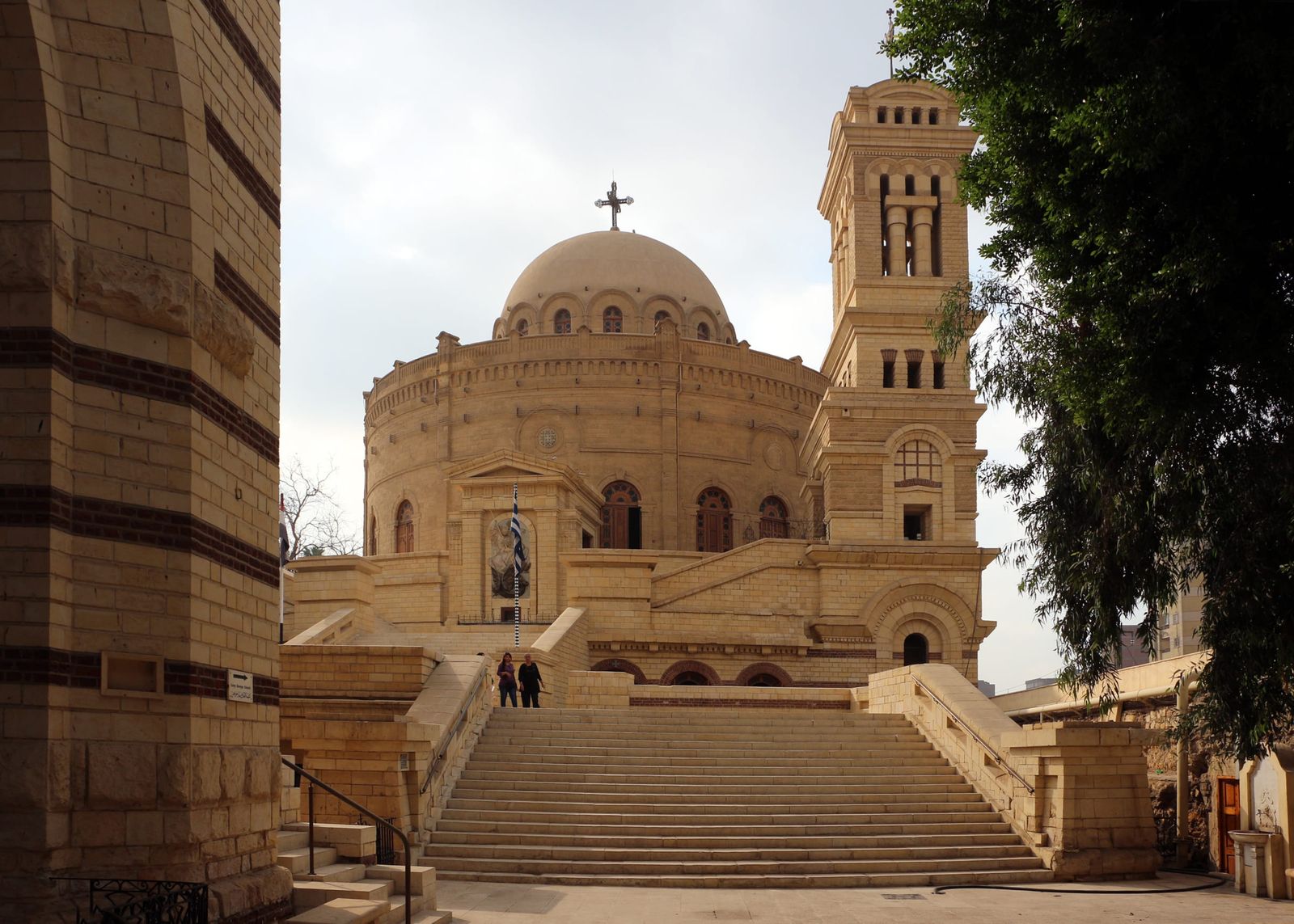
The Church of St George — Agios Georgios to Greeks, Mar Girgis in Arabic — is the most visible landmark of Coptic Cairo from the street. It rises directly on top of one of the great circular towers of the Roman Babylon Fortress, beside the entrance to the Coptic Museum and the Mar Girgis metro station, which takes its name from the church. Unlike the other churches of the quarter, it is not Coptic but Greek Orthodox, belonging to the Greek Orthodox Patriarchate of Alexandria, whose offices occupy the adjoining Monastery of St George.
History
A church dedicated to St George has stood on this site since at least the tenth century, and Christian worship around the fortress is older still. The medieval building was destroyed by fire in 1904; the present church was rebuilt soon afterwards and completed by about 1909, keeping its distinctive circular plan, which follows the curve of the Roman tower below. Inside, the domed rotunda is lit by stained glass, its walls hung with icons and paintings in the Greek Orthodox tradition. The remains of earlier Greek Orthodox patriarchs lie in the crypt, and the cemetery behind contains another Greek church, that of the Dormition of the Virgin.
St George
St George, the soldier-martyr venerated throughout the Christian East and West, is one of the most popular saints in Egypt among both Copts and Greeks. His feast is celebrated here each year on 23 April, when the church fills with pilgrims. The church is part of the Old Cairo area of the UNESCO World Heritage Site of Historic Cairo.
Exhibo editorial
Come out of Mar Girgis station and this is the first thing you see: a domed drum rising out of Roman masonry, the tower and the church fused into one cylinder of stone. It is the image that tells you you've arrived in Coptic Cairo — although, as a sign at the door points out rather firmly, it isn't Coptic at all.
Inside, the round plan works on you quietly. Light comes through coloured glass, the icons circle the room, and the Roman tower is somewhere underneath your feet, still doing its job after seventeen centuries. Visit on 23 April if you can; the rest of the year, five calm minutes here are a good way to begin the walk through the quarter.
How to find it
The church stands immediately beside the exit of Mar Girgis metro station, on top of the round Roman tower at the northern end of the Coptic Cairo complex, next to the entrance of the Coptic Museum. Climb the steps beside the tower to the church entrance.
Similar places
All places
News by Exhibo
Editorial coverage on Exhibo
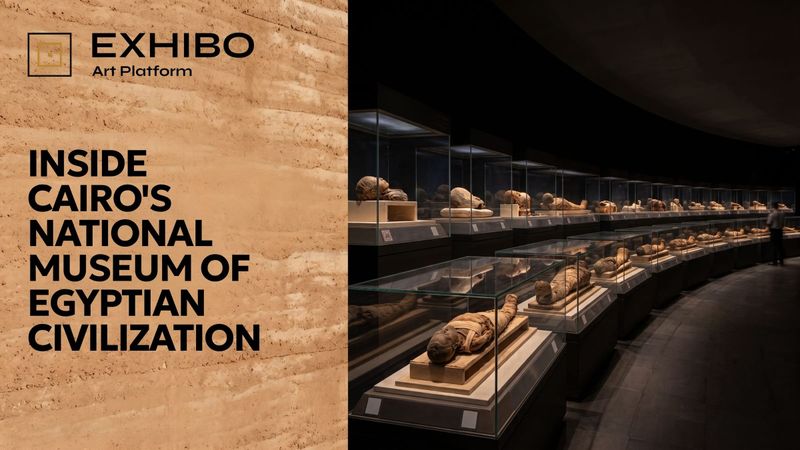
The Museum of Everything That Became a Tomb
Egypt built a museum to tell the story of an entire civilisation — seven thousand years of it, from flint tools to the present. The public knows it for one thing: the room where twenty dead kings lie in the dark.
In a black, hushed hall beneath the National Museum of Egyptian Civilization in Old Cairo lie the mummified bodies of Ramesses II, Hatshepsut, and eighteen other rulers of the New Kingdom — carried here in 2021 in a televised parade watched around the world.
Filmed, but Not Recorded: The Arab World’s Missing Film Locations
Wikidata knows Gladiator was filmed in Morocco. It doesn’t know where.
Ouarzazate is the second most filmed place in the Middle East and North Africa, yet 25 of its 27 productions are recorded only in Wikipedia prose. We compared filming records worldwide and found that in the Arab world, Wikidata usually knows the country but not the place.
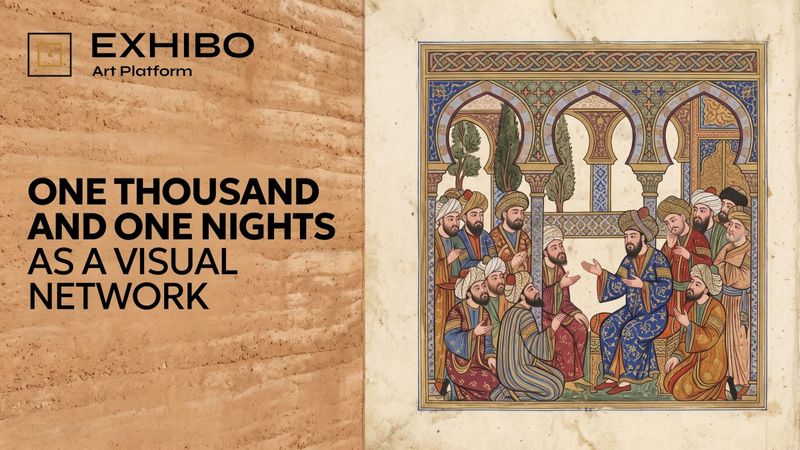
One Thousand and One Nights as a Visual Network
The book that taught Europe to picture the East arrived with no pictures at all. Three centuries of illustrators — Dutch, Egyptian, Persian, French, German, Iraqi — each gave it a face, and every face was a self-portrait.
Open Galland's Thousand and One Nights, the edition that conquered Europe, and there is nothing to look at: no genie, no lamp, not one illustration. The most visually imagined book in the world began blind — and because its text was never fixed either, no picture of it could ever be a copy.