Ben Ezra Synagogue
Egypt's most famous synagogue, where the Cairo Geniza — a thousand years of medieval Mediterranean life on paper — was found.
A synagogue in the Babylon Fortress
The Ben Ezra Synagogue stands within the walls of the Roman Babylon Fortress in Old Cairo, a few steps from the area's churches. It is the best known of Egypt's synagogues and one of the oldest Jewish places of worship still standing on its historic site. Tradition holds that the building was once a church, acquired by the Jewish community in the early medieval period; in its medieval form it served the congregation of Jews who followed the Palestinian (Levantine) rite. It was destroyed under the Fatimid caliph al-Hakim and rebuilt in the first half of the eleventh century, and over the centuries it was repaired and rebuilt several times. Local tradition links the site with the prophet Jeremiah and with the place where the infant Moses was found in the bulrushes, and an inscription in the synagogue records that Moses prayed here.
The Cairo Geniza
Like other synagogues, Ben Ezra had a geniza — a storeroom where worn-out writings bearing the name of God were deposited rather than destroyed. Because the community extended the practice to almost every kind of document, and because Egypt's dry climate preserved them, its geniza accumulated an extraordinary archive: letters, contracts, marriage and divorce deeds, court records, accounts, poetry, prayers and religious texts, in Hebrew, Judaeo-Arabic, Arabic and other languages, spanning roughly the ninth to the nineteenth centuries. In 1896–1897, after fragments reached Cambridge, the scholar Solomon Schechter came to Cairo and, with the community's permission, removed the bulk of the material; the Taylor-Schechter collection at Cambridge University Library holds about 193,000 fragments, and the Cairo Geniza as a whole — some 400,000 fragments now dispersed among libraries worldwide — is the richest source for the everyday life of the medieval Mediterranean, Jewish and Muslim alike.
The building today
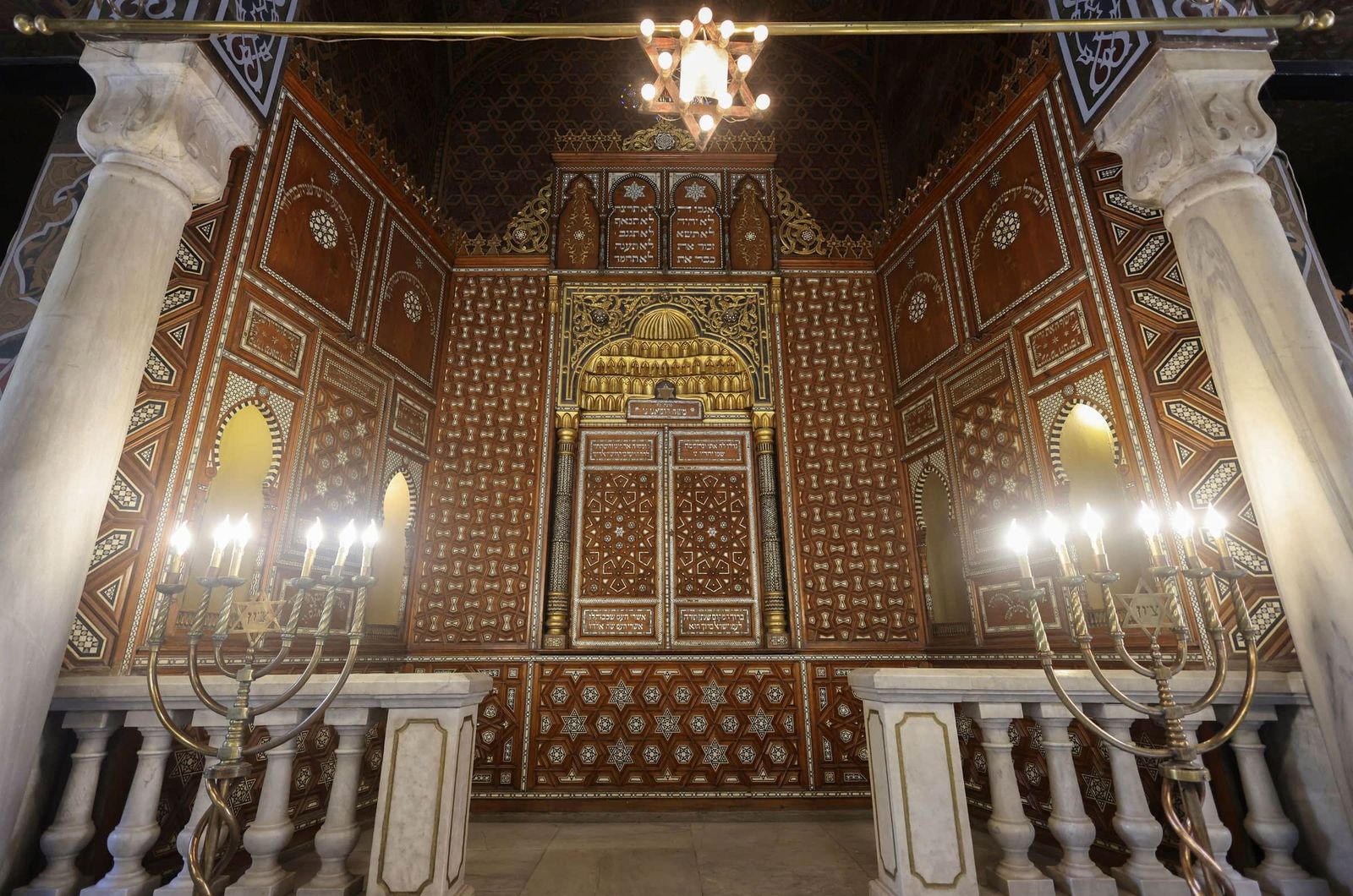
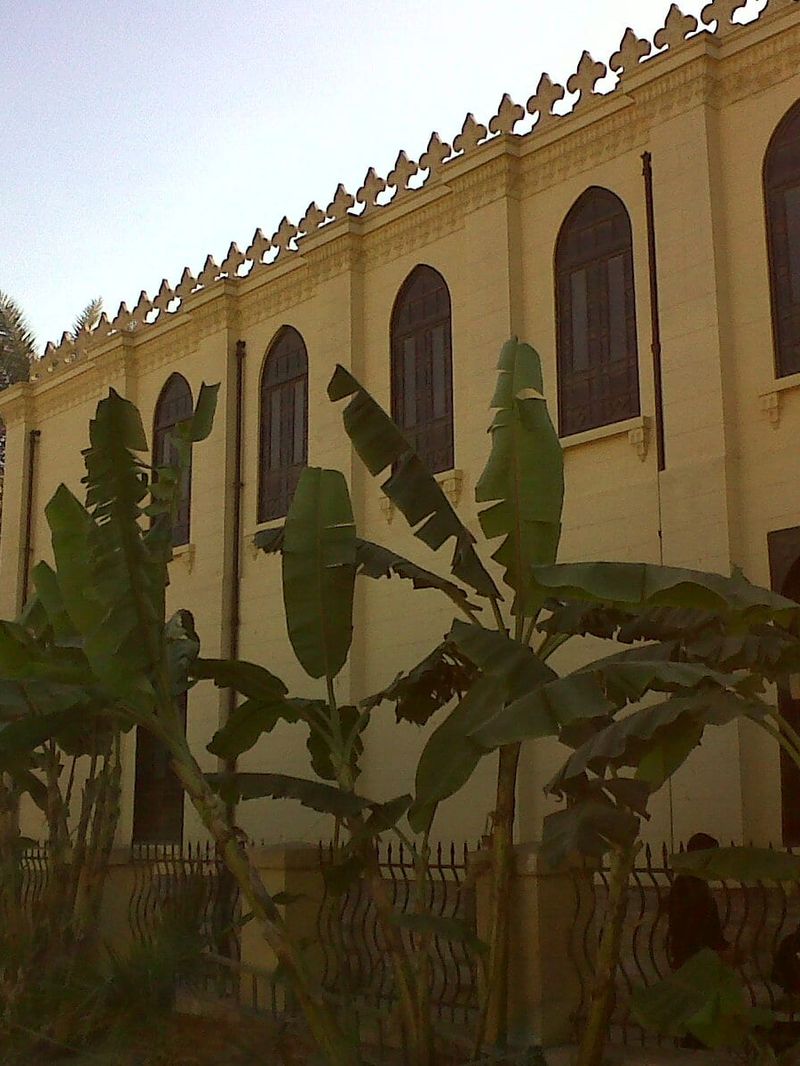
The present synagogue was rebuilt in the early 1890s, largely faithful to the medieval plan, reusing some of its older wooden fittings and marble columns. It is a basilica with a nave and aisles, a raised marble bimah at the centre, an ark on the eastern wall and a women's gallery on the upper level, richly decorated with painted and inlaid woodwork and Hebrew inscriptions. Between 1982 and 1991 it was restored by the Supreme Council of Antiquities with the Canadian Centre for Architecture, and further conservation work has followed. It no longer serves a regular congregation and is open to visitors as a heritage site.
Exhibo editorial
It is a small room for such a large story. The synagogue is cool and quiet, the light filters through coloured glass onto inlaid wood and a marble bimah, and almost nothing in it hints that, somewhere up under this roof, a thousand years of ordinary life were quietly piled into a storeroom and left there.
That is what makes it moving: the Geniza is not a treasury of kings but of shopping lists, love letters, business quarrels and children's exercises — people from Cairo, Sicily, Aden and Kerala talking to each other across the medieval world. Stand in the women's gallery and imagine the paper drifting up there, generation after generation. Few places anywhere hold so much of so many people you will never know.
Gallery
How to find it
From Mar Girgis metro station, cross to the Hanging Church and walk north to the sunken stairway that leads down into the walled Coptic Cairo enclave. Follow the narrow lane past the Church of Abu Serga; Ben Ezra is at the far end of the lane, set in its own small garden beside the remains of the fortress wall.
Similar places
All places
News by Exhibo
Editorial coverage on Exhibo
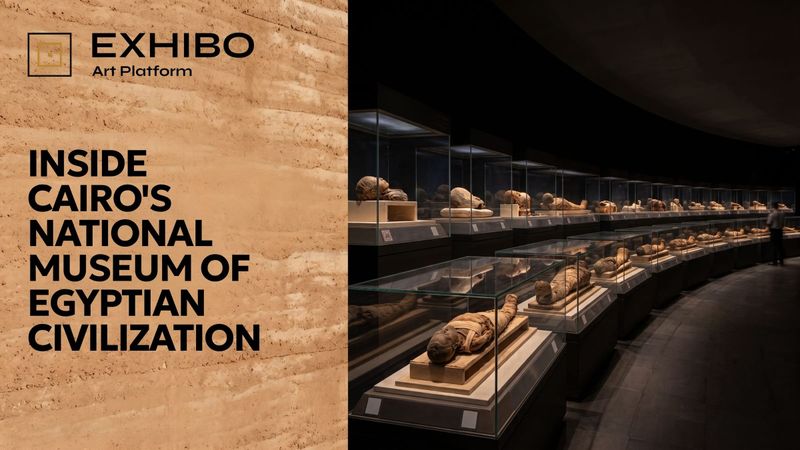
The Museum of Everything That Became a Tomb
Egypt built a museum to tell the story of an entire civilisation — seven thousand years of it, from flint tools to the present. The public knows it for one thing: the room where twenty dead kings lie in the dark.
In a black, hushed hall beneath the National Museum of Egyptian Civilization in Old Cairo lie the mummified bodies of Ramesses II, Hatshepsut, and eighteen other rulers of the New Kingdom — carried here in 2021 in a televised parade watched around the world.
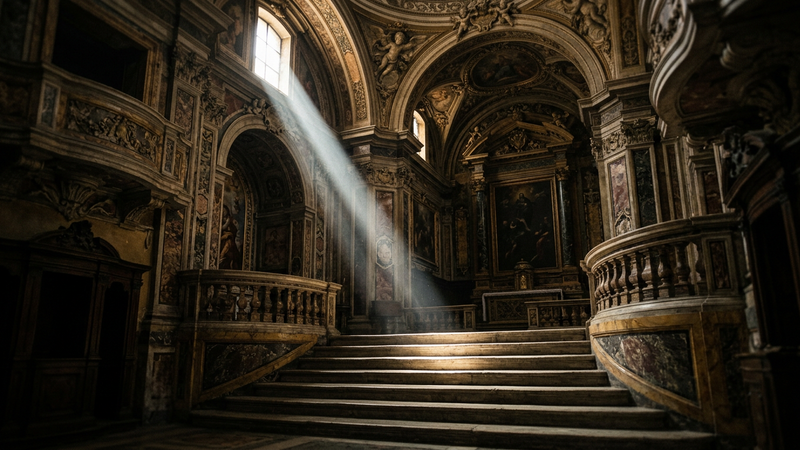
Baroque Art, Explained
Rome, Antwerp, Madrid and Amsterdam: the seventeenth-century visual language built to move bodies, faith and courts.
Baroque art pushed figures into your space and stacked diagonals for drama. This guide covers Counter-Reformation roots, key painters and sculptors from Rome to the Dutch Republic, four close readings of major works, and how the style spread, drew criticism, and still shapes museum rooms today.
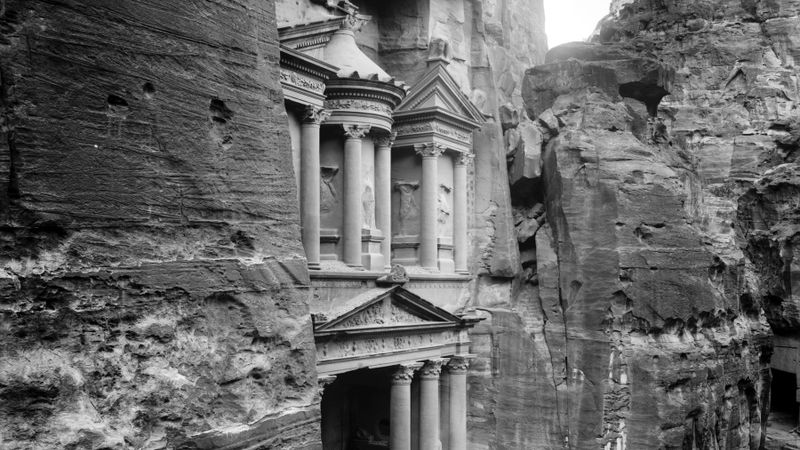
Filmed, but Not Recorded: The Arab World’s Missing Film Locations
Wikidata knows Gladiator was filmed in Morocco. It doesn’t know where.
Ouarzazate is the second most filmed place in the Middle East and North Africa, yet 25 of its 27 productions are recorded only in Wikipedia prose. We compared filming records worldwide and found that in the Arab world, Wikidata usually knows the country but not the place.