Periods of Art History
Twelve centuries of Western art, from the tomb painters of Thebes to the last of the Post-Impressionists. Gothic, Renaissance, Baroque, Rococo, Neoclassical, Romantic: the labels everyone half-knows, taken apart and put back together with the works that earned them. The canon, explained without the reverence.
Why period labels exist
Art historians group centuries of making into named periods because the labels help you find patterns in patronage, belief, materials and ambition. Gothic is not a single style stamped across Europe; Renaissance is not a clean break from the Middle Ages; Baroque is not only Catholic spectacle. Each name is a working tool. This series uses those tools carefully, then shows where they smear.
You will meet tomb painters in Thebes, mosaicists in Constantinople, cathedral workshops, Medici and papal courts, Dutch merchant houses, and the late nineteenth-century painters who walked away from the Salon. The point is not reverence. The point is to see how a period looks when you stand in front of specific works.
What this series covers
Ancient Egyptian, Greek and Roman art; Byzantine and medieval Europe; Gothic, Renaissance and the High Renaissance; Mannerism, Baroque, Rococo; Dutch Golden Age painting; Neoclassicism and Romanticism; Academic art, Realism, Symbolism, Pre-Raphaelites and Victorian painting; Post-Impressionism; the Salon des Refusés; Romanesque; manuscript illumination (Western only); prehistoric and cave art as the deep preface.
Technique manuals live elsewhere. Iconography theory lives elsewhere. Islamic manuscripts and Arab modernism live elsewhere. Here the job is the period survey: conditions, characteristics, figures, close readings, afterlives.
How to read a period essay
Start with the conditions that made the work possible: money, faith, cities, trade, academies. Then the visual habits that stuck. Then a handful of works read closely enough that the label stops being a textbook chapter title and becomes something you can recognise in a gallery.
Where Exhibo fits
Each essay ends where looking begins: in rooms, streets and collections you can still visit. Exhibo maps galleries, museums and places so the history does not stay on the page alone.
Articles in this series
- GuidePeriods
Gothic Art, Explained
From twelfth-century France to late medieval courts: light, height and craft that remade Europe’s sacred and civic image world.
Gothic art is more than pointed arches. This guide traces how painting, sculpture, stained glass and goldsmiths’ work grew from mid-twelfth-century northern France, spread through cathedral workshops and courts, and stayed influential into the fifteenth century — with the phases, figures and works that make the label usable in a gallery.
- GuidePeriods
Renaissance Art, Explained
Classical models, Florentine workshops and papal courts: how Renaissance art redefined painting and sculpture in Europe.
Renaissance art treated antiquity as a living brief, not a lost golden age. This survey explains why Florence led, how Rome and Venice answered, who set the terms of skill and patronage, and how four landmark works still teach what the period looked like when you stand before the painting or statue itself.
- GuidePeriods
Baroque Art, Explained
Rome, Antwerp, Madrid and Amsterdam: the seventeenth-century visual language built to move bodies, faith and courts.
Baroque art pushed figures into your space and stacked diagonals for drama. This guide covers Counter-Reformation roots, key painters and sculptors from Rome to the Dutch Republic, four close readings of major works, and how the style spread, drew criticism, and still shapes museum rooms today.
- GuidePeriods
Medieval Art, Explained
From the end of Rome to the edge of the Renaissance: Early Medieval, Romanesque and Gothic as working tools, not one style.
Medieval art spans more than a thousand years of European making. This guide separates Early Medieval, Romanesque and Gothic habits, follows patronage from monasteries to courts, and anchors the story in works you can still see — without collapsing the Middle Ages into a single cathedral silhouette.
- GuidePeriods
Neoclassicism, Explained
Greek and Roman virtue revived: hard contours, civic drama and marble calm from the 1760s into the early nineteenth century.
Neoclassicism returned Western art to antique form and moral language. This survey maps dates and academies, the painters and sculptors who set the look, defining works from David to Canova, and how the style dressed Europe’s public face before Romanticism and later classicism answered back in force.
- GuidePeriods
Romanticism in Art
Feeling before classical calm: revolution, the sublime and personal vision in European painting, about 1780 to 1850.
Romanticism put emotion, imagination and the artist’s stance ahead of academic restraint. This guide explains the sublime and contemporary history as subjects, follows Géricault, Delacroix, Goya, Friedrich and Turner, and shows how the movement left Realism and later modern painting its restless inheritance.
- GuidePeriods
Post-Impressionism, Explained
After Impressionism’s light: structure, symbol and personal colour in Cézanne, Seurat, Gauguin, Van Gogh and their peers.
Post-Impressionism is a cluster, not a single school. This guide shows how painters kept modern subjects and a bright palette while pushing toward structure, symbol and expression — how the term arose, where it differs from Impressionism, and what those experiments fed into twentieth-century painting.
- GuidePeriods
Rococo, Explained
Paris salons to European courts: the light, ornamental language of furniture, porcelain, painting and church interiors.
Rococo began as private luxury in early eighteenth-century Paris and then travelled widely. This survey covers interiors and craft as much as painting, introduces Watteau, Boucher and Fragonard, tracks the style’s European afterlives, and names the museum rooms where its pastel wit still reads clearly.
- GuidePeriods
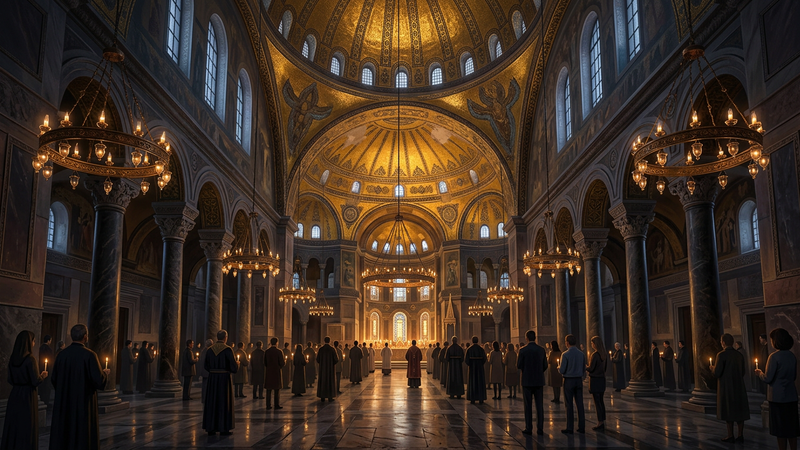
Byzantine Art, Explained
Constantinople to Ravenna: gold mosaics, icons and court craft that shaped Christian imagery for nearly a millennium.
Byzantine art was the Christian visual culture of the Eastern Roman Empire. This guide explains how mosaics and icons worked in liturgy and empire, follows the tradition from Constantinople across the Mediterranean, and points to works that still define the style after empire, conquest and modern museum display.
- GuidePeriods
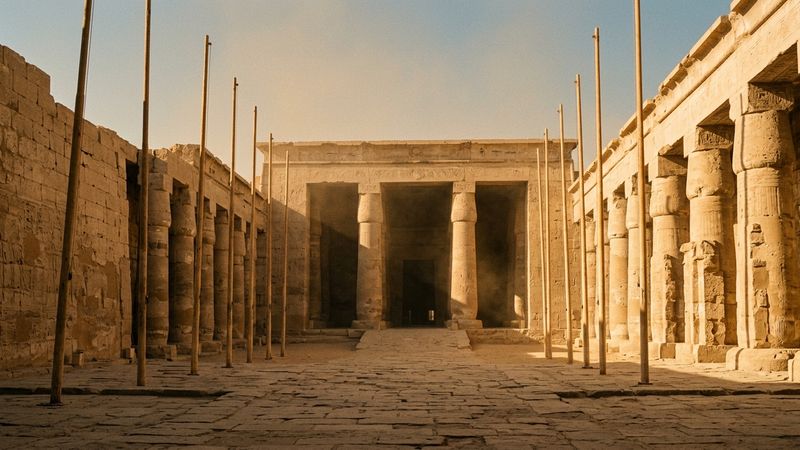
Ancient Egyptian Art
Images built to work for gods, kings and the dead: canon, craft and change along the Nile across nearly three millennia.
Ancient Egyptian art was rarely made for the museum wall alone. This period survey explains why statues and reliefs functioned as cult tools, how a stable visual canon held for centuries, where Old, Middle and New Kingdom styles diverge, and which collections still make those differences visible today.
- GuidePeriods
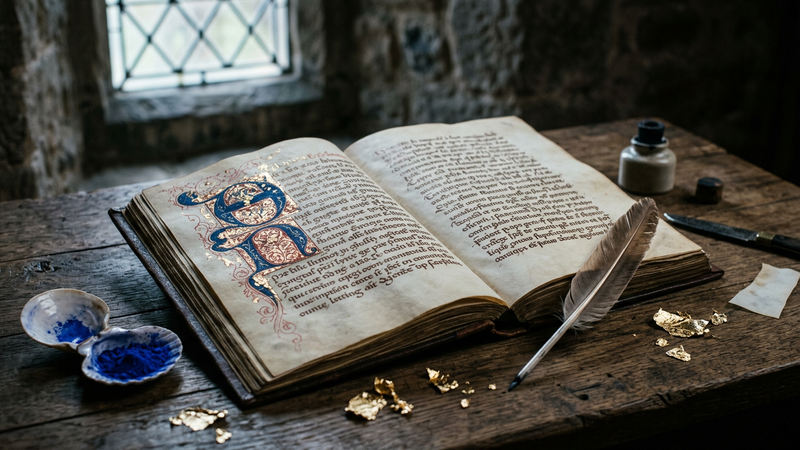
Manuscript Illumination
Western Christian book painting from Insular gospel books to Gothic Hours: patrons, workshops, and pages that still shape museum displays.
Lindisfarne carpet pages, Carolingian psalm drawings and Parisian Books of Hours show how Western Christian workshops turned parchment into portable splendour. The essay maps scriptoria, city book trades, four landmark manuscripts, scholarship debates, and the print-era afterlife inside a European Christian fence.
- GuidePeriods
Icons and Icon Painting
How Byzantine sacred panels were made, used in liturgy, and argued over from Sinai workshops to the later Orthodox world.
A museum-led guide to Byzantine icons as practice and image theology: how panels and gold grounds work, what Iconoclasm changed after 843, four works to study at close range, and how the type travelled into Rus, the Balkans and Western painting without turning the piece into confessional debate.
- GuidePeriods
Ancient Greek Art
From Geometric grave markers to Hellenistic drama: how Greek workshops taught the Mediterranean world to see the human body
A period survey of ancient Greek art from Geometric pots to Hellenistic victory monuments. City-states, sanctuaries and trade set the brief; pottery, marble and bronze carried it. Named makers, four close readings, critics of the white-marble myth, and the afterlife that still shapes Western museum rooms.
- GuidePeriods
Roman Art, Explained
From Republic verism to imperial marble: how Romans used portraits, reliefs, mosaics and painted walls as political tools.
Roman art is less a single look than a toolkit: veristic faces for ancestry, Greek bodies for prestige, spiral relief for conquest, painted walls for rooms that had to impress. This period survey tracks patronage and empire from the late Republic to Constantine, with close readings of monuments still standing in Rome and museums.
- GuidePeriods
The Northern Renaissance
From Burgundian courts to German prints: what Northern Renaissance art looked like, who made it, and which works still define the period.
Museum visitors meet Northern Renaissance art beside Italian labels: Bruges oil panels, German engravings, Tudor court portraits. This card points to the cities and patrons that funded it, the visual habits that mark a northern panel or print, four works still on public view, and why scholars still argue over the name.
- GuidePeriods
Mannerism, Explained
Elongated bodies, acid colour and court polish: how mannerism art followed High Renaissance balance into stylish artifice
From Pontormo’s Capponi Chapel to Parmigianino’s unfinished Madonna and Bronzino’s ice-cool Medici portraits, Mannerism turned Italian Renaissance skill into deliberate artifice. This guide covers dates, characteristics, key works, European spread, and why later critics first damned then revived the style.
- GuidePeriods
Realism as a Movement
Courbet, Millet and Daumier put labour and ordinary life on Salon-scale canvases after 1848: French Realism as a movement.
After 1848, French painters put stone-breakers, gleaners, village funerals and third-class rail passengers on walls sized for history painting. This survey stays with mid-century Realism as a movement: conditions, characteristics, close readings, critics and afterlife, without treating “realism” as timeless style.
- GuidePeriods
The Pre-Raphaelites
How a secret London society of 1848 remade British painting through sharp nature study, moral subjects and blazing colour on white grounds.
Seven young artists formed the Pre-Raphaelite Brotherhood in 1848 against Academy polish. This survey covers their aims, Hunt, Millais and Rossetti, close readings of key Tate and Liverpool pictures, later mutation under Burne-Jones, and how critics from Dickens to Tate’s Victorian Avant-Garde shows have judged them.
- GuidePeriods
Symbolism in Art
Late-nineteenth-century painters who favoured dream, myth and suggestion over optical Realism and Impressionist light.
A period survey of the Symbolist art movement: why painters turned from nature toward idea and mood, who led the French and Belgian circles, how the style spread across Europe after 1886, and how four key works still teach the difference between Symbolism as a movement and a general “symbols in art” glossary.
- GuidePeriods
The Salon and the Salon des Refusés
How Paris’s official exhibition ruled careers, and why Napoleon III’s 1863 annex of rejected pictures changed the stakes
In 1863 the Paris Salon jury turned away more than half the works submitted. Napoleon III ordered a public annex for the refused. Crowds laughed; Manet and Whistler became infamous overnight. This guide maps the Salon system, the Refusés stakes, key canvases, and the path toward independent exhibitions.
- GuidePeriods
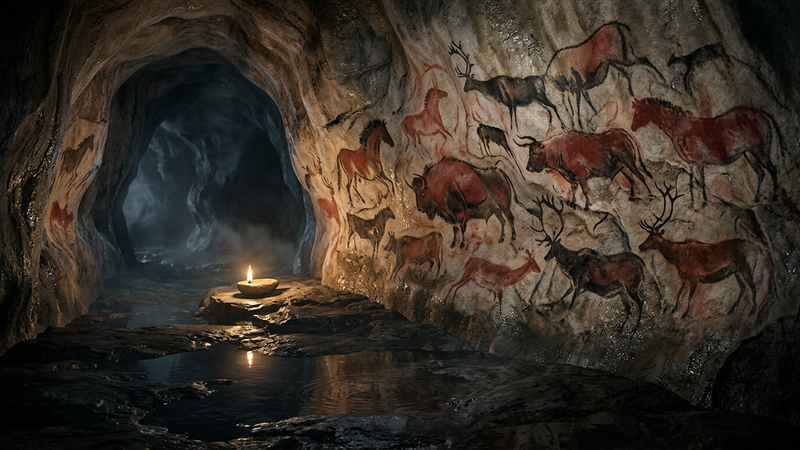
Prehistoric and Cave Art
A period survey of prehistoric art: Ice Age conditions, parietal and portable media, major sites, and debates over meaning.
From South African ochre workshops to Chauvet’s sealed chambers and Altamira’s painted ceiling, prehistoric art shows how Ice Age and early farming communities marked stone, bone and ivory. This survey covers media, key sites via museums and replicas, and debates over magic, shamanism and authorship.
- GuidePeriods
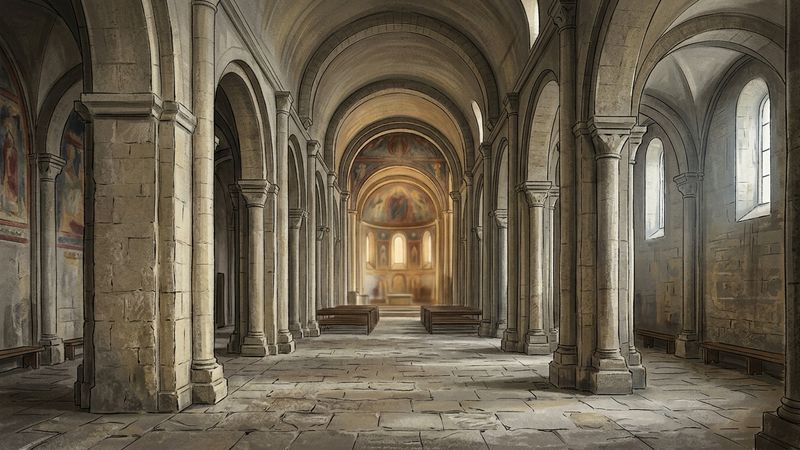
Romanesque Art and Architecture
Round arches, thick walls and carved portals: Europe’s eleventh- and twelfth-century visual language for pilgrimage churches.
From Conques to Durham, Romanesque makers vaulted stone naves, carved Last Judgments over doors and cast bronze for liturgy. This guide maps dates, traits, named workshops and key buildings, then follows critics from Bernard of Clairvaux to modern museums, while leaving the Gothic sequel to its sibling essay.
- GuidePeriods
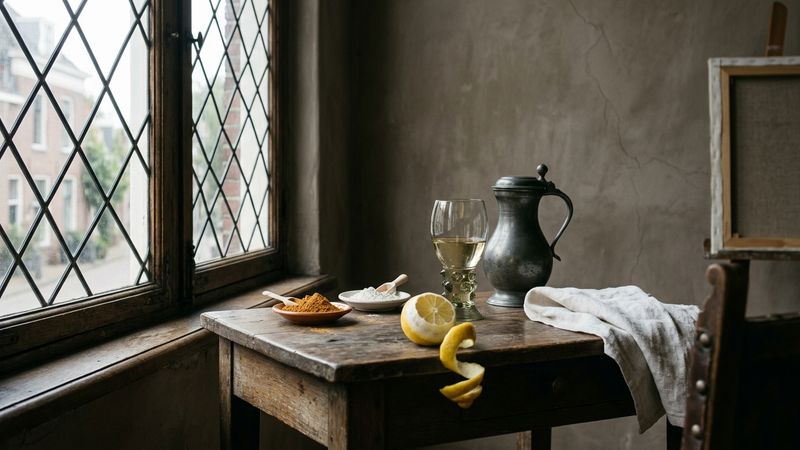
The Dutch Golden Age
Seventeenth-century Dutch painting from republican trade and Calvinist homes to specialised genres, four close readings, and afterlife.
Haarlem banquets, Delft harbours, and Amsterdam militia halls show how Dutch Golden Age painting sold specialised genres to a merchant republic. Trace the market conditions, hallmarks, key painters, four landmark works read closely, later criticism, and why the “golden” label now draws museum debate.
- GuidePeriods
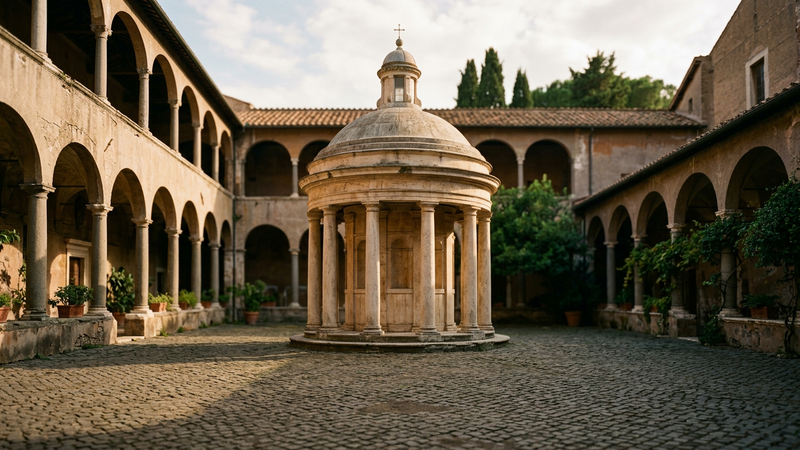
The High Renaissance
Rome and Florence at the peak: Leonardo, Michelangelo, Raphael and Bramante, c.1490–1530, between Early Renaissance and Mannerism
Papal Rome and republican Florence funded a brief peak of Italian art around 1500. This guide defines the High Renaissance, names the patrons and workshops behind it, reads four landmark works in marble, oil, fresco and stone, and tracks how critics invented the “peak” label after the Sack of Rome in 1527.
- GuidePeriods
Academic Art and the Academies
How European art academies set training ladders, genre ranks and the polished Salon style that dominated the nineteenth century.
From plaster-cast rooms to Prix de Rome scholarships, academic art was a career system as much as a look. This guide maps French and British academies, the hierarchy of genres, painters from Ingres’s line to Cabanel and Bouguereau, and how modernists turned “academic” into a slur before ateliers revived the craft.
- GuidePeriods
Victorian Art
British painting from Victoria’s accession to 1901: modern-life panoramas, Pre-Raphaelite intensity, Aesthetic beauty and Empire-era publics
From Derby Day crowds to Ophelia’s riverbank, Victorian art maps a Britain remade by industry, print and exhibition culture. This period survey covers Royal Academy spectacle, reform pictures, Aesthetic “art for art’s sake,” and the twentieth-century fall and partial recovery of the Victorian reputation.