Doha

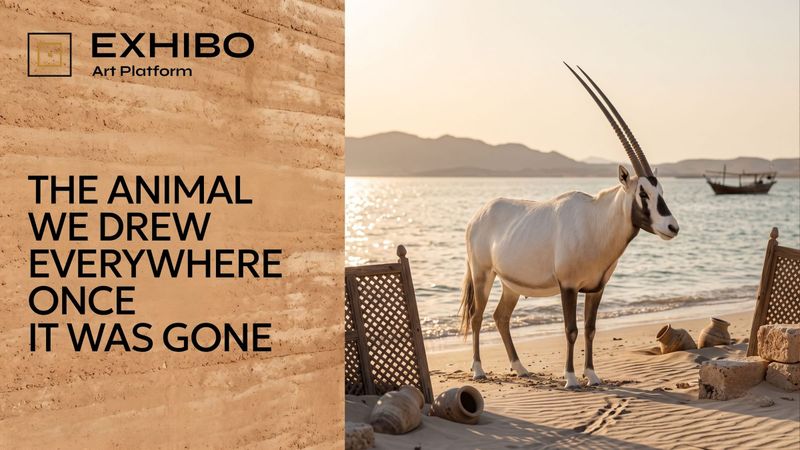
An Arabian oryx, white with long nearly straight ringed horns and dark facial markings, standing in pale desert sand.
Editorial

The Animal We Drew Everywhere Once It Was Gone

From Neolithic rock to airline tailfin — how the Arabian oryx vanished from the desert, came back from nine animals, and multiplied everywhere as a symbol in the very decades it was gone.

The last wild Arabian oryx was shot in 1972. By then it was already a picture — carved on Bronze Age tombs, mistaken by the ancients for a unicorn, praised by poets as the eyes of the beloved. This is the story of an animal that went extinct in the wild and was brought back from nine survivors, and of the strange gap between the creature and the emblem it became: fast, sharp and ascendant on a nation's tailfin, while the animal itself survives by standing still in the shade.

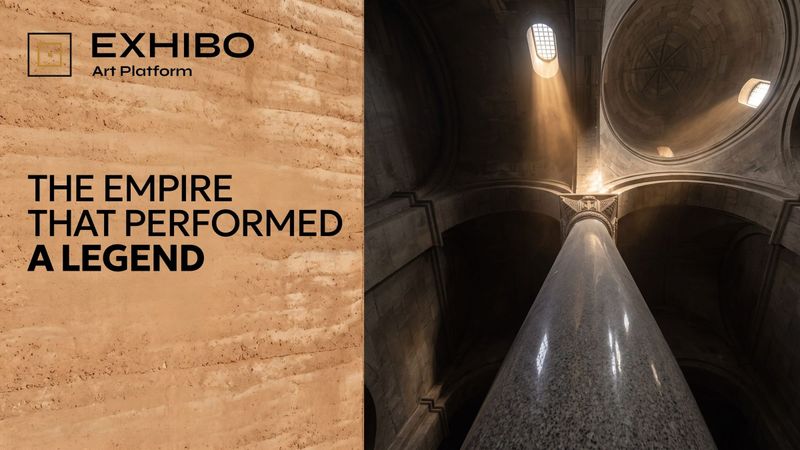
A massive granite column shaft under a stone arch, seen from below, with the dome springing above it.
Editorial

Seventy Thousand Solomons: The Empire That Performed a Legend

A demon catalogue in the conqueror's library, a sixteenth-century text where kingship is an office held seventy thousand times, and the columns a sultan dragged across three provinces to prove he held it.

Mehmed II kept a Greek catalogue of demons in his library at Topkapı. Seventy years later a sultan named for a prophet was rebuilding the walls of Jerusalem and hauling Roman columns out of Egypt and the Lebanon into a mosque above the Golden Horn. In between, Ottoman writers turned Solomon from a warning into a job — and the empire applied for it in stone.

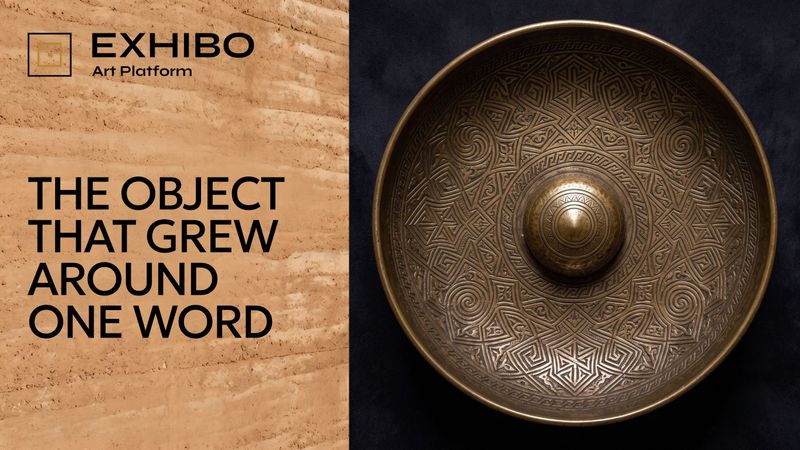
A shallow engraved brass bowl seen from above, its inside surface covered edge to edge with inscription and geometric figures.
Editorial

The Seal of Solomon: The Object That Grew Around One Word

The Qur'an never mentions a ring. What grew in that gap instead: a demon, a seal, seven signs nobody can trace, a thousand years of amulets, and a star that ended up on a flag.

A fisherman pulls up a copper jar stopped with lead, and the mark of a signet ring is pressed into the lead. Everyone hearing this in ninth-century Baghdad knew what came next — they knew it from the lid. The strange part is that the ring they all knew about is not in the Qur'an.

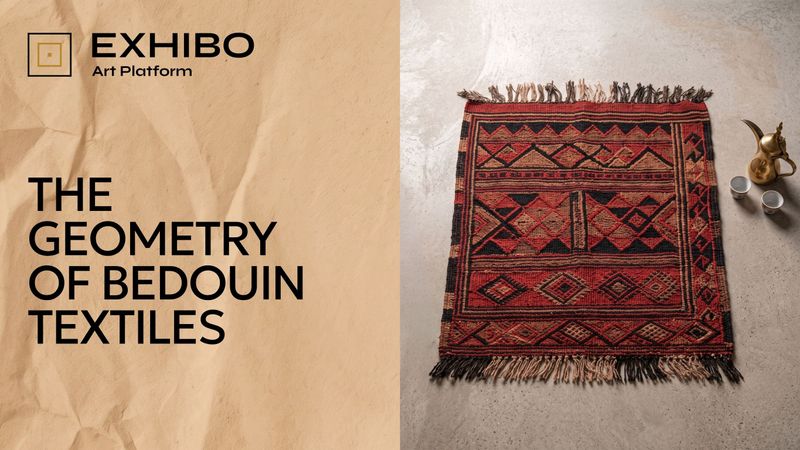
Handwoven Sadu textile with traditional Bedouin geometric patterns in red, black and brown
Editorial

Sadu Weaving: The Geometry of Bedouin Textiles

The geometry the Bedouin wove, and the women who carried it in memory because nothing was written down.

On a loom you stake into the sand, Bedouin women wove the interior world of the Gulf — tents, dividers, camel trappings — and threaded through the wool a geometry that carried tribe, family and meaning. A story of Sadu: the patterns and their names, the women who transmitted them without a single written word, and the quiet work of keeping the craft alive.

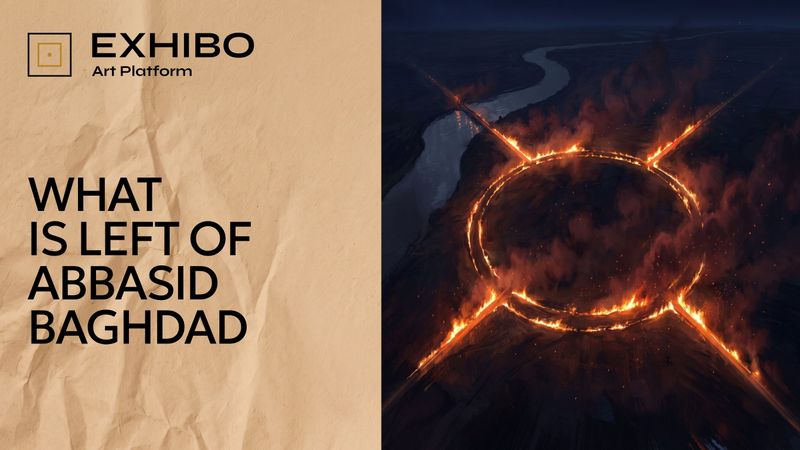
A vast circle of fire burning on a dark plain at night — the outline of a city with four radial roads, drawn in flame.
Editorial

The City With No Ruins: What Is Left of Abbasid Baghdad

A caliph drew his capital in fire, the Mongols erased it, and a video game rebuilt it out of Isfahan and Samarkand. What actually survives of Abbasid Baghdad, where it is, and who else has tried to put it back.

Climb a viewpoint in Assassin's Creed Mirage and you see the Round City whole — double walls, four gates, the green dome at the centre. Nobody has ever seen that view. No excavated remains have been securely identified as any of it. This is what is actually left of ninth-century Baghdad, where you would have to go to stand in it, and why Ubisoft was the second team to rebuild a city that no longer exists.

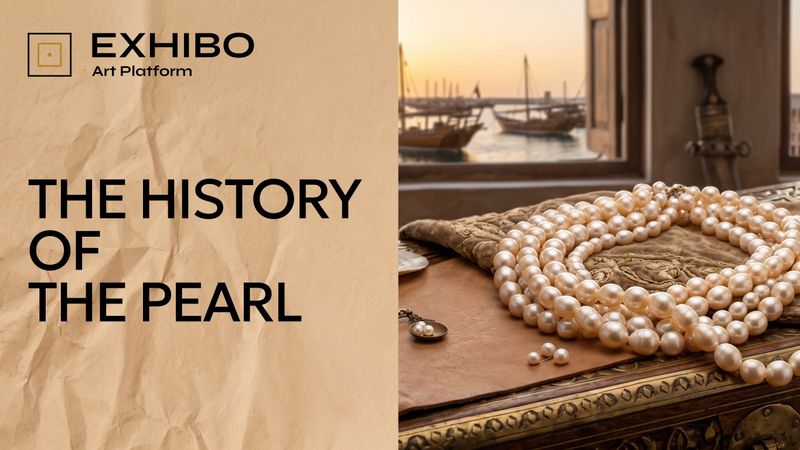
A strand of natural Gulf pearls, the luxury export that built the Arabian Gulf before oil
Editorial

The Sea That Came Before the Oil: The History of the Pearl

Eight thousand years before the first barrel, the Gulf had already built a global economy — out of an oyster, a held breath, and a rope.

Before oil, the Arabian Gulf ran on the pearl: a global luxury trade that raised its cities from the sand, drew fortunes and real suffering in equal measure, and then vanished almost overnight. The story of the industry that made the modern Gulf — and the quiet way it is coming back.

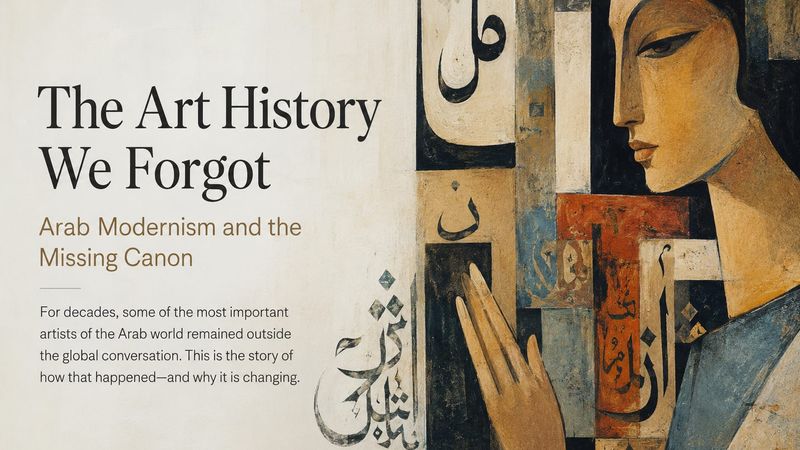
Editorial artwork inspired by Arab Modernism, featuring a stylised figure, Arabic calligraphy and abstract geometric elements symbolising the rediscovery of overlooked artists and cultural histories.
Editorial

Arab Modernism 101: The Movement That Western Art History Forgot

An entire century of extraordinary painting, sculpture and radical thinking got written out of the global canon. Someone made that decision. And now the market — and the collectors who pay attention — are making a different one.

Great art does not become invisible by accident. Arab Modernism reveals how museums, markets and cultural institutions shape what the world sees — and what it overlooks. A story about artists, recognition and the blind spots that define art history.