
Cairo · Egypt
The Seal of Solomon: The Object That Grew Around One Word
The Qur'an never mentions a ring. What grew in that gap instead: a demon, a seal, seven signs nobody can trace, a thousand years of amulets, and a star that ended up on a flag.
A poor fisherman who casts his net only four times a day pulls up, on the fourth cast, a jar of yellow copper. The mouth is stopped with a lead cap, and pressed into the lead is the mark of a signet ring.
He is pleased. He is thinking about the brass market and what the jar might fetch there.
The story works because its audience already knew what was going to happen, and they knew it from the lid. Lead on copper, with a seal impressed: that combination meant one thing. Inside was one of the beings that Solomon had put away. The fisherman was about to open a prison.
This is the second of the thousand and one nights, and it works because of a piece of shared knowledge so ordinary that the storyteller does not have to explain it. Not a plot point. Not exposition. Just the way the world was understood to be furnished.
Here is what is strange about that knowledge.
The Qur'an itself never mentions a ring.
If you grew up hearing about Sayyidna Sulayman, you will know most of what follows as something between scripture and bedtime, and you may find the sorting of it into sources a little cold. If you did not, you are about to meet a story that has been repeatedly re-made for nearly two thousand years across three religious traditions and, eventually, four continents — and whose central object, one of the most widely reproduced talismanic symbols in Islamic material culture, grew to fill a gap of one word.
What the text actually says
The Qur'an gives Sulayman a great deal.
He is given the wind, and devils who dive for him (21:81–82). He is taught the speech of birds, and overhears an ant warning its colony to get out of the way of his armies (27:16–19). When he wants the throne of the Queen of Sheba brought to him, an ifrit volunteers to fetch it before he can rise from his seat — and is beaten to it by someone with knowledge of the Book, who has it there in the blink of an eye (27:38–40). A spring of molten brass is made to flow for him, and jinn build to his order (34:12–13).
And then the death, which is the strangest and best image in the whole cycle. He dies leaning on his staff, and the jinn go on working, because nothing about him has changed enough to notice — until a creature of the earth eats through the wood and he falls (34:14).
None of this involves a ring.
The ring enters through the door of a single verse, and the verse is a puzzle.
Sura 38, verse 34. God tested Solomon, in A. J. Arberry's rendering, "cast upon his throne a mere body". Then Solomon turned in repentance.
A body. Jasad. That is all it says. No explanation of whose, or how, or what the test was. Around this single word an entire literature grew, and the ring stands at the centre of it.
The classical answer, given in Tafsīr al-Jalālayn and in a dozen other places, runs like this. Solomon's dominion resided in his signet ring. He took it off when he withdrew to wash and left it with a woman of his household. A jinn came in his shape and took it from her. The body cast upon the throne was that jinn, sitting where the king should have been, and the birds and the beasts served him as they had served Solomon, and when the real Solomon came out and told people who he was, nobody knew him.
The demon's name is Sakhr, the Rock — and he is not a bit part. Later commentators give him a biography. Al-Tabari's History records his true name as Habaqiq; the fourteenth-century Turkic Stories of the Prophets of al-Rabghuzi has it as Hanqiq. He is styled lord of the sea. He has often been identified with Ashmedai, and behind Ashmedai, on one widely held reading, stands the Zoroastrian Aeshma-daeva — a demon of wrath who has been changing languages since before any of the three religions involved existed.
He also turns up inside the Nights in his own right. In the tale of Buluqiya, a young Israelite prince searching the world for news of the prophet who is still to come, it is Sakhr who is consulted, and Sakhr who describes the levels of hell to him.
Which is to say: the being who steals the ring is older than the ring, and has a career outside this story.
The ring is not a Qur'anic object. It belongs to the exegetical tradition, developed to account for a verse the text leaves unexplained — and it proved so durable that it eventually swallowed the king.
The verse that makes the whole thing paradoxical
A second verse complicates all of this, and it is rarely quoted.
Sura 2, verse 102 takes up an accusation: that Solomon practised sorcery. And it rejects it. Solomon did not disbelieve, the passage says; it was the devils who disbelieved, teaching magic to people, along with what was sent down at Babylon to Harut and Marut — who, the text specifies, warned every student that they were a trial and should not be used.
So the Qur'an does not present Solomon as a magician. It presents the charge of magic against him as slander, and identifies the slanderers.
And then the exegetical tradition does something remarkable: it explains where the slander came from, and its explanation is an origin story for the entire genre of Solomonic magic books.
As al-Tabari relates it, a devil in human shape offered to lead people to an inexhaustible treasure. He brought them to Solomon's throne and told them to dig underneath. They dug and found buried books. This, he said, is what Solomon ruled men and jinn and birds with. Word spread that the king had been a sorcerer, and the books passed into circulation.
The tradition has a story about why grimoires carry Solomon's name, and the story is that demons wrote them and buried them under his throne in order to destroy his reputation.
And then, for the next thousand years, authors working in the occult sciences went on producing books attributed to Solomon — in disciplines they generally called by their own names, the science of letters and the science of magic squares, rather than by ours.
A text that clears a man of sorcery gave later Arabic magical literature one of its defining names.
That contradiction is not a scandal and it is not hypocrisy. It is what happens when a name becomes too useful to leave alone.
Three genealogies and a Greek grandfather
The ring story does not come from nowhere. It arrives in Arabic with a long history already attached, and tracing it is the most satisfying part of this whole subject.
The Greek line. The Testament of Solomon is a pseudepigraphon written in koine, whose dating is genuinely disputed — most scholars place the core somewhere between the first and third centuries CE, with the surviving form possibly much later. Its plot: a demon named Ornias is stealing half the wages of a boy working on the Temple and drawing the life out of him through the thumb of his right hand. Solomon prays. The archangel Michael brings him a ring with the seal of God on it. The rest of the book is a catalogue — around thirty demons interviewed one by one, the number varying between manuscripts, each giving its name, the affliction it causes, its astrological attachment, and the angel whose name will bind it. It has been in print in English since 1922.
It is, structurally, a medical reference book with a demon per entry.
The rabbinic line. In the Babylonian Talmud, Gittin 68a–68b, Solomon needs the shamir, the creature that cuts stone without iron, because the Torah forbids iron on the stones of the altar. The shamir is held by Ashmedai, prince of demons. Solomon sends his general Benaiah with a chain and a ring, both engraved with the Name, plus fleeces of wool and skins of wine. Benaiah drains Ashmedai's cistern and refills it with wine. Ashmedai suspects the trap, quotes scripture on the dangers of drink — and drinks. He wakes up in chains.
The detail people remember is what happens on the road to Jerusalem. Ashmedai passes a wedding party and weeps, because he can see that the bridegroom has thirty days to live.
Later in the same passage, Ashmedai gets hold of the ring, throws Solomon a very long way from the capital, and reigns in his place.
The Islamic line is the one we started with: Sakhr takes the ring, rules forty days, Solomon wanders, and the ring is recovered from the belly of a fish.
The parallels are close enough that scholars have worked directly on the relationship, tracing the exegetical material on this verse through tafsīr, taʾrīkh and qiṣaṣ al-anbiyāʾ and setting it beside the rabbinic haggadah.
And underneath all three sits a Greek. The motif of the ring thrown into the sea and returned in a fish is not Jewish, Christian or Islamic in origin. It is Herodotus, Book III: Polycrates of Samos, advised to rid himself of his most precious possession to appease the gods, throws his signet ring into the water. Days later a fisherman brings him a fish, and the ring is inside it.
Fifth century BCE. The motif has often been understood as part of a wider Mediterranean narrative tradition on which all three later versions draw.
Something to hold
Before going further into the commentaries, it is worth putting a real object on the table, because there are a great many of them and they are the reason any of this matters.
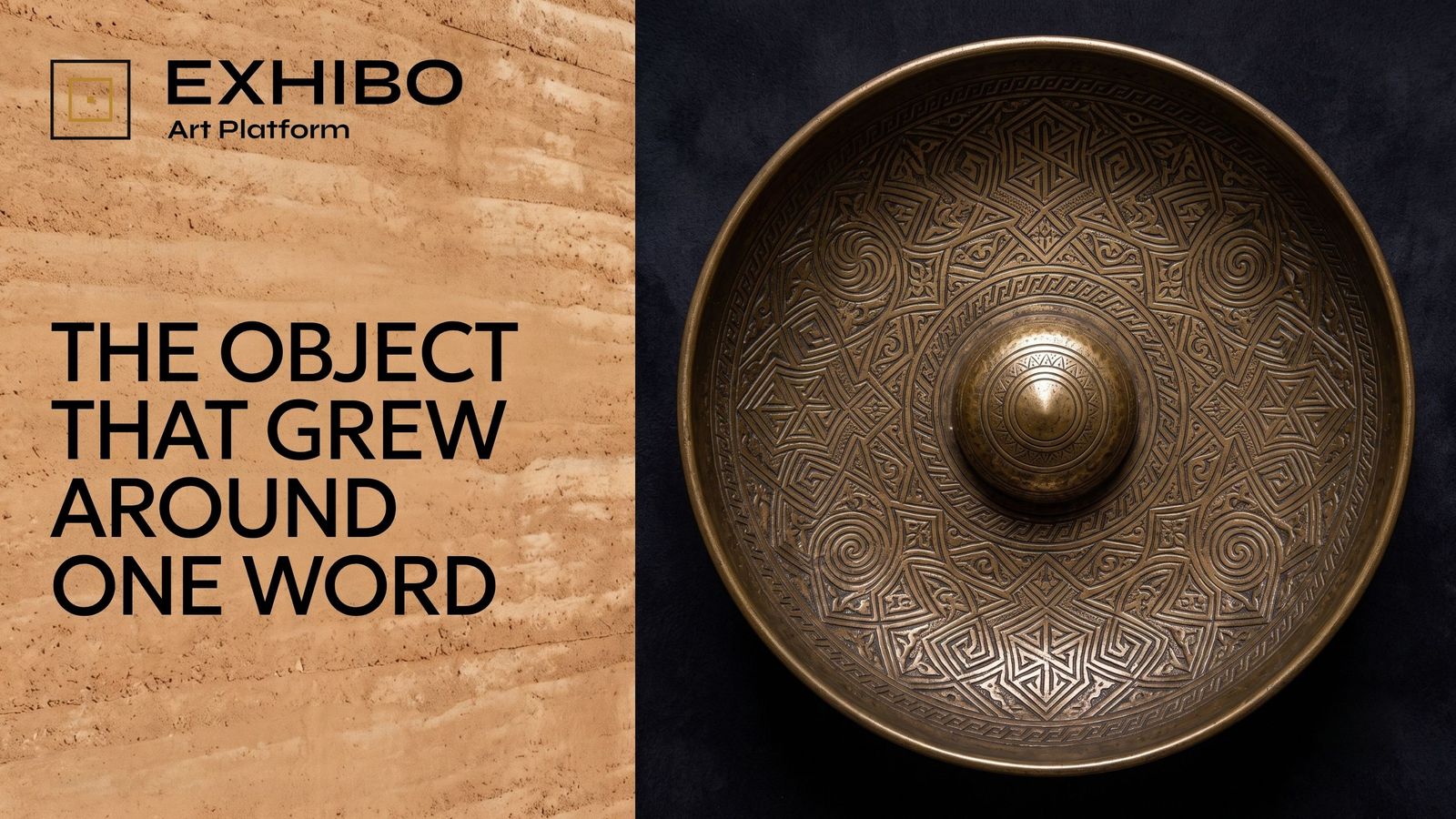
Pick up an Islamic magic-medicinal bowl. Brass or bronze, wide and shallow, often with a raised boss in the centre, and covered — inside, outside, around the rim, over every available millimetre — with inscription. Qur'anic verses. The divine names. Magic squares of numbers. Scorpions, snakes, the signs of the zodiac. And the seal of Solomon, in among them, doing its work.
The method was simple. You filled it with water, or with oil, or with milk. You let it stand, sometimes overnight, sometimes for a stated number of hours. Then the patient drank.
They were prescribed for specific things, and the specificity is what gets you: scorpion sting, snakebite, colic, fever, difficult labour, the bite of a mad dog. A woman in prolonged labour in twelfth-century Syria was given a drink out of a bowl like this, and somebody had spent weeks engraving it so that she could.
The classic studies are H. Henry Spoer's on Arabic magic medicinal bowls in the Journal of the American Oriental Society (1935) and Tewfik Canaan's in the Journal of the Palestine Oriental Society the following year — both still the standard references, both written by physicians who were interested in what their patients were actually doing.
Hold that in mind through the next section. Every argument about a verse eventually turned into a thing somebody drank from.
The woman who was holding it
Solomon does not lose the ring. He hands it to someone — and she has a name. Jarada, in other tellings Kuna or al-Amina, a daughter of a defeated king.
In the plainest version she does nothing wrong. She holds the ring while her husband washes, as she has done many times, and a jinn wearing his face takes it from her. A custodian, deceived.
By the time the story reaches the great collections of prophet-tales she has a much heavier role. In al-Thaʿlabi and al-Kisāʾi, as Carlos Grenier summarises them, Solomon has married a princess from a conquered land who is secretly keeping her father's cult — she has had an image of him made in gold and set up in her private apartments. Asaf the vizier finds out. Solomon loses his divine guidance, and then Sakhr takes the throne.
Notice what has moved. In the first version the trial is unexplained and the woman is a bystander. In the second, the trial has a cause, and the cause is her.
The tradition answered twice. Once with an object, and once with a woman to blame for losing it.
The tradition arguing with itself
Popular retellings tend to stop here. The tradition did not.
Ibn Kathir refused to tell it. In his Qiṣaṣ al-Anbiyāʾ, he does not recount the ring story at all. He refers to it, distances himself from it, classes it among isrāʾīliyyāt — material absorbed from earlier Jewish and Christian lore — and says that much of it is legend, some of it harmful. He points readers to his own commentary, where he lays out versions and declines them.
He is not alone. Fakhr al-Din al-Razi and others objected on theological grounds: a prophet cannot be impersonated, and a prophet's judgements cannot be issued by a demon without the community noticing.
And here the later transmitters had an answer ready, which is my favourite thing in the corpus. The community did notice. The impostor started handing down rulings that did not sound like Solomon. People went to the king's wives and asked whether anything seemed different, and the women wept, and explained that the man was approaching them at times when the law forbids it. Al-Tabari and al-Thaʿlabi add a further detail: the impostor did not perform ritual ablution.
Which is quietly perfect, because the ring was only off Solomon's hand in the first place because he had taken it off in order to wash.
The tradition closed the gaps in its own account, from the inside, and did it well.
The seal outlived the ring
Now the object itself, which is where this stops being a story and starts being an industry.
Before the symbols, a word about the hardware, because the medieval Arabic writers were specific about it in a way that is easy to miss.
The ring, they say, was made in two parts — one of brass, one of iron — and the two were used to seal different correspondence. Brass for orders sent to the benign spirits; iron for orders sent to the malign ones.
That is not a magic wand. It is closer to a chancery: two seals, two classes of recipient, one instrument, and a distinction between them that is administrative rather than mystical. The object at the centre of one of the best-known supernatural narratives in the Islamic world is, on inspection, a piece of office equipment for an administration that happens to include the invisible.
Which fits everything else about the Qur'anic Solomon, who does not fight the jinn so much as employ them: they dive, they build, they bring things. The ring is how the paperwork gets authenticated.
The ring carried a seal, and in the magical literature the seal carries the Greatest Name of God — which is not written out, because it cannot be, but represented instead by a set of seven symbols. They are known as the Seven Seals of Solomon. They appear in Arabic magical manuscripts, on amulets, on bowls, on paper folded into metal cases and worn under the clothes. They read right to left. They come in both seven- and eight-symbol forms.
And there is no scholarly consensus on where they came from.
For most of the last century the only systematic study was Hans Winkler's, published in Berlin in 1930. The modern survey, by Lloyd D. Graham, is self-published rather than peer-reviewed — worth saying — but careful, and used by people working in the field.
Graham's candidate origins run from an undeciphered sequence of seven signs, repeated seven times, on a Late Babylonian black-stone amulet, through Egyptian hieroglyphs, palaeo-Hebrew, the letters of ancient South Arabian scripts, Libyco-Berber, and the seven Greek vowels of late-antique magic — half a dozen more besides, and no verdict.
Which is the honest summary: one of the most widely reproduced magical alphabets in the Islamic world is of unknown authorship and uncertain descent, and has been for at least a thousand years.
The book that did most to put the seven seals into general circulation was the Shams al-maʿārif, attributed to Ahmad al-Buni, who died around 1225 — the single most consequential work of Islamic occult science, and one that has spent most of its life being simultaneously reprinted and denounced. Al-Buni's compendium of magic squares, divine names, letter values and seals is where a great many later practitioners got their apparatus, and where the seven seals sit alongside the material that turns up, centuries later, painted into the margins of astrological manuscripts as the attributes of named jinn kings.
One of the seven is a star. Five-pointed or six-pointed; occasionally eight. And the star on its own, detached from the series, is also called khātam Sulaymān — the seal of Solomon.
The star, carefully
This next part has to be handled with some care, because the material is regularly dragged somewhere ugly, and it is worth naming that before going any further. There is a genre of internet writing that uses the history below to argue that the Star of David is "really" Islamic and therefore illegitimate. That argument is made in bad faith and the history does not support it. What follows is not that.
The best guide here is also the least expected one.
In September 1949, four years after the camps, Gershom Scholem — the founder of the modern academic study of Kabbalah — published The Curious History of the Six-Pointed Star, a demolition conducted from inside of almost everything commonly believed about the symbol that had just been put on the flag of a new state. His biographer Amir Engel reads it as also being about the yellow star: the same shape, used a few years earlier to mark people for death.
Scholem's account runs like this. For a long time the five- and six-pointed stars were called by the same name and not distinguished. That name — Seal of Solomon — attaches to the Jewish legend of Solomon's power over spirits and his ring engraved with the Ineffable Name, and those legends grew enormously in the Middle Ages among Jews and Arabs alike. But the term itself, he argued, apparently originated in Arabic usage, where it covered not one design but the whole series of seven seals; when Jewish practitioners took up the seven-seal amulet, they renamed it. That is his position from the sources, not a settled fact, and not everyone follows him.
He also dates the hexagram's Jewish career, and it is early modern rather than ancient: Prague in 1354, a Prague prayer book in 1512, the community's emblem by the seventeenth century, Eastern Europe in the nineteenth — for a reason he states without softening, the want of a sign that could stand where the cross stood. Then 1897, and 1948.
A symbol is not made less anyone's by being older and wider than they thought. If anything, Scholem's account makes the adoption more interesting: a community chose a mark, deliberately, within recorded history, and then made it mean something.
What people actually made
Set the theology aside for a moment and look at the objects, because there are a very large number of them.
The Khalili Collection holds some three and a half thousand Islamic seals and talismans — the largest such group anywhere, ahead of the Hermitage and the British Museum. Among them: a ninth-century lapis lazuli talisman in a gold mount with undotted Kufic; the seals of Qara Muhammad of the Qara Qoyunlu; and the seals of the Safavid shahs Tahmasp and Sulayman. Tahmasp's is rock crystal, and its inscription can be read the right way round from the back — a small feat of engraving that required the cutter to think in mirror image inside a transparent stone.
The Metropolitan Museum holds a block-printed talismanic scroll with a six-pointed star and an angular Kufic text. Printing was being used in the Islamic world for miniature amulet texts centuries before block printing reached Europe; the strips were folded into cases and worn. The Met's own survey of Islamic amulets puts it plainly: of all the prophets whose image or invocation was thought to work, Solomon's was held to be the most powerful. His seal turns up on wooden panels, on sword blades, on scrolls.
In Ottoman lands there was a guild for this. A study of fifteen metal talisman seals from Anatolian museums identifies the engravers as a distinct craft group, and catalogues what they cut: Qur'anic verses, magic squares, the four angels, Khidr and Ilyas, the names of the Seven Sleepers, the seal of Süleyman, the seven seals. These were carried hidden on the body and inked onto paper as needed. A portable press for the invisible.
It reached the dinner table too. There was an Arab tradition of cutting the hexagram into the base of drinking cups, where it was called Solomon's seal — and in the Nights, Sindbad presents Harun al-Rashid with a cup engraved with the Table of Solomon. A protective device at the bottom of a glass, so that whatever you were drinking, you drank it through the sign.
And the making never stopped. The Kelsey Museum has a bronze pentagram amulet from twentieth-century Cairo. You can buy the same thing this afternoon.
Marrakesh to Mindanao
It did not stay in one hemisphere either.
In Southeast Asia the sign becomes an eight-looped knot, called cincin Sulaiman in Malay — Solomon's ring — and among the Maranao of Mindanao sising Raja Solaiman. It does specific work there: driving off spirits, palimonan charms for becoming invisible, kebel charms for invulnerability. The British Library's Annabel Teh Gallop has found it drawn in the margin of a Qur'an manuscript from Taraka, and on a slip of paper tucked inside another.
Moroccan silver and a Philippine invisibility charm, carrying the same sign, arrived by completely different routes and neither knows about the other.
And in painting, a throne
Alongside all this, the seal has a second visual life that has nothing to do with magic and everything to do with government.
Look at Solomon Enthroned as the King of the Three Worlds at LACMA — Lucknow, around 1775–1800 — and the museum's own note explains the composition better than any paraphrase. Solomon is sovereign of three realms at once: the earthly, shown by the pacified animals below him; the lower, shown by the subjugated demons; and the heavenly, shown by angels bringing offerings. Mughal and other Islamic dynasties commissioned pictures like this as an argument about the righteousness of their own rule.
The Harvard Art Museums hold half of a Safavid double frontispiece from Shiraz, around 1575–90 — Solomon with his vizier Asaf among beasts, birds, angels and divs, with Bilqis, the Queen of Sheba, on the facing page. The catalogue makes the key observation: the scene does not illustrate the text it precedes. It is an emblem of ideal kingship, and versions of it open manuscript after manuscript.
So in the same centuries when the seal is being cut into carnelian to keep a fever away, the king who wore it is being painted at the front of books as a picture of what a just state looks like. Demons included, and demons at peace.
Back to the lid
Which brings us to the object that carried this story furthest.
Solomon's method of dealing with the beings who would not submit, in the version that circulated most widely, was to seal them into vessels — brass or copper, stopped with lead, stamped with the ring, and dropped into water. In the frame of the City of Brass, the caliph ʿAbd al-Malik hears the tradition recited at court: that God gave Solomon what he gave to no one else, and that he shut jinn and marids and devils into brass bottles closed with lead and his seal.
That is the piece of knowledge the fisherman's audience had, and it is why the story opens the way it does.
And look at what the jinn in the jar actually says when he gets out, because it is one of the most quietly devastating speeches in the Nights. For the first hundred years, he vowed to make whoever freed him rich forever. Nobody came. For the second hundred, he vowed to open all the treasures of the earth to his rescuer. Nobody came. For the third hundred, three wishes. Nobody came.
After four hundred years, he swore that whoever released him could choose the manner of his own death.
Three wishes, in the source, are not a prize. They are the third stage of a promise decaying under water, and by the time anybody arrives the offer has expired.
From there the object travels west. The Lesser Key of Solomon — the European grimoire tradition — has its own Vessel of Brass, with the same lead seal and the same problem of people opening things. And the line runs on into modern fiction: A. S. Byatt's novella The Djinn in the Nightingale's Eye (1994) has a scholar of narrative buy a glass bottle in an Istanbul bazaar and release what is inside it, and George Miller filmed it in 2022. The narratologist gets the wishes. She has read enough of these stories to be extremely careful about how she words them.
The gap that filled itself
The seal turns up one final time, at the end of everything.
In Islamic eschatological material, the Beast of the Earth comes forth before the Hour carrying two objects: the staff of Moses and the seal of Solomon. It uses the staff to mark the faces of believers, and the seal to stamp the noses of those who are not.
An object absent from scripture, elaborated by commentators to account for a body found sitting on a throne, ends its career in the hands of the creature that closes the world.
None of which makes the ring marginal. Absence from scripture is not absence from a civilisation, and it is precisely because scholars, storytellers, calligraphers, physicians, engravers and mystics worked on it for a thousand years that it became one of the most frequently reproduced symbols in Islamic material culture. Nothing in the chain is a forgery. Nothing in it is quite what people assume.
The fisherman, meanwhile, wins.
He gets the jinn back into the jar by asking, with elaborate innocence, how something that size could possibly have fitted inside — and the jinn, unable to resist the question, demonstrates.
Then he picks up the lead, and he presses the seal back down, and he throws the whole thing into the sea.
Related reading
The Museum of Everything That Became a Tomb
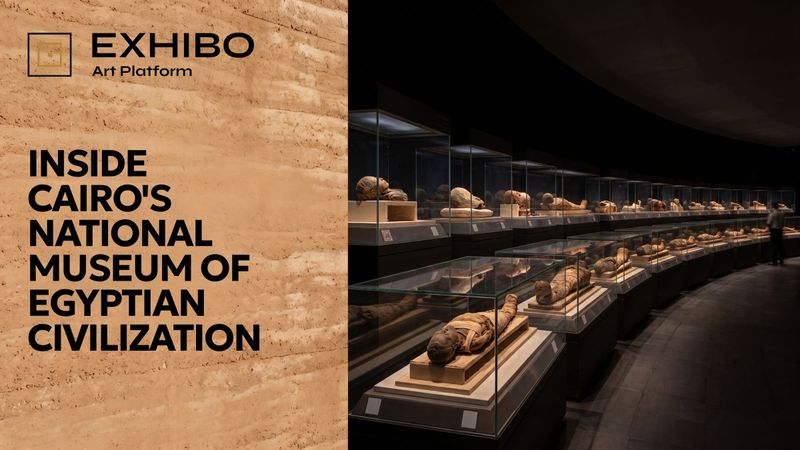
Egypt built a museum to tell the story of an entire civilisation — seven thousand years of it, from flint tools to the present. The public knows it for one thing: the room where twenty dead kings lie in the dark.
In a black, hushed hall beneath the National Museum of Egyptian Civilization in Old Cairo lie the mummified bodies of Ramesses II, Hatshepsut, and eighteen other rulers of the New Kingdom — carried here in 2021 in a televised parade watched around the world.
Where Is Agrabah? The City Disney Assembled From Real Places
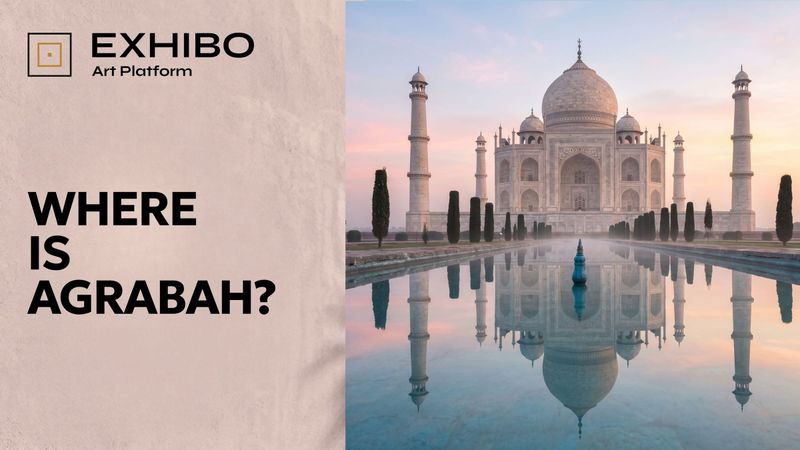
Agrabah was going to be Baghdad. A war made it fictional — and then Disney built it back out of real places, from a tomb in Agra to a valley in Jordan that usually plays Mars.
The Sultan's palace where Princess Jasmine feels trapped has the silhouette of the Taj Mahal — which is not a palace at all, but a tomb. That is how Agrabah works. Disney's fairy-tale city was going to be Baghdad, until the Gulf War made the name impossible; the studio invented a place that could not be found on a map, then quietly rebuilt it out of real ones — Isfahan and Agra, Marrakesh and Mandalay, a Jordanian desert that has played both Arabia and Mars.
The House Whose Famous Guests All Moved Out
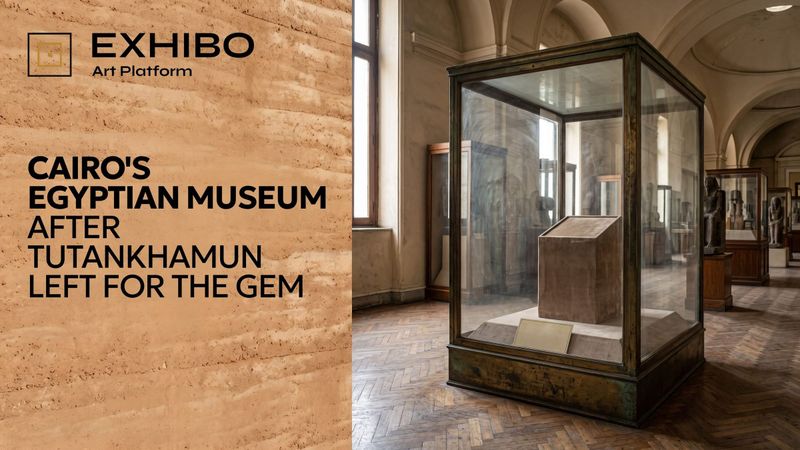
When Tutankhamun's mask left Cairo's Egyptian Museum for the Grand Egyptian Museum, it took the crowds with it — but not the collection. What remains in the old building on Tahrir Square turns out to be a stranger and more interesting museum than the one that emptied.
For most of a century, the golden mask of Tutankhamun stood behind glass on the upper floor of the Egyptian Museum in Cairo. In October 2025 it was driven out to Giza, and it was not the only thing to go: the royal mummies, the whole Tutankhamun collection, tens of thousands of objects have left the old museum for Egypt's gleaming new institutions.