
Exhibo Editorial
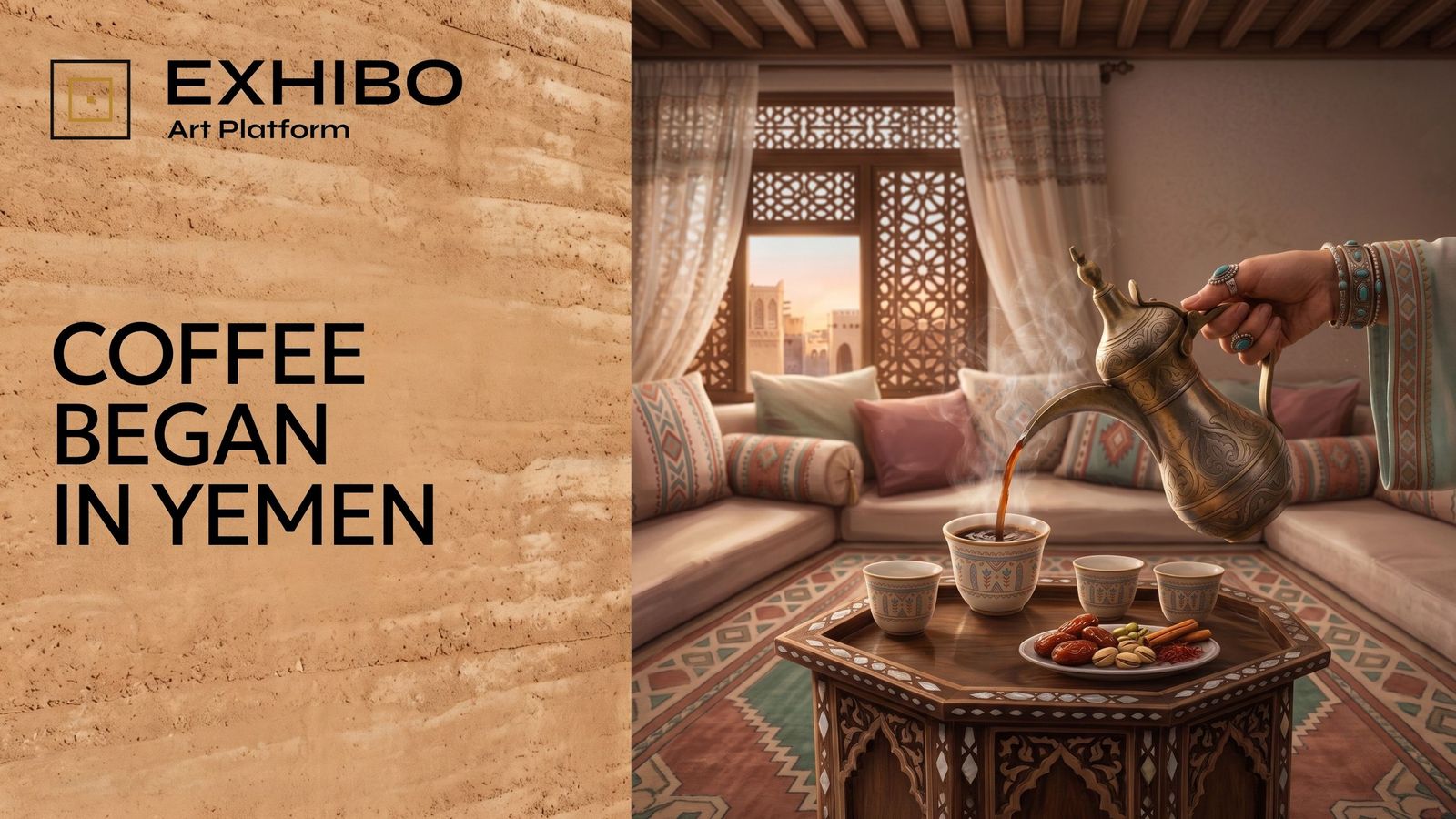
Coffee Began in Yemen
The coffee plant is Ethiopian. But the drink — roasted, brewed, and made the center of a culture — is Yemeni.
Pick up a one-dirham coin in the United Arab Emirates and turn it over. On the back, stamped into the metal, is a coffee pot. Not a falcon, not a mosque, not a founding father — a pot with a long curved spout, the kind you might walk past in any Gulf kitchen. A country chose, for the face of its money, the object it uses to pour coffee for a guest.
That tells you something the rest of the world mostly forgot: that coffee, before it belonged to Milan or Vienna or the corner of your street, belonged here. The word you use for it — coffee, café, kahve, caffè — traces back, through Turkish, to the Arabic qahwa. Nearly every language on earth except the one spoken where the plant actually grew wild says the name in a borrowed Arabic. You have been speaking a little Arabic every morning without knowing it.
This is a story about how that happened. It runs from a mystic's prayer mat to a Red Sea port that named a drink, and it ends in the shape of that pot on the coin — which turns out to be a more recent invention than anyone lets on.
The bean that kept the vigil
Start where the drink starts, which is not with trade or empire but with the problem of staying awake.
The coffee plant, Coffea arabica, is Ethiopian — it arose as a natural hybrid of two other coffee species in the highland forests of southwest Ethiopia, hundreds of thousands of years before anyone brewed it. It crossed the narrow water to Yemen, probably carried by traders, and for a while Yemenis did what people had long done with it: chewed the berries, steeped the leaves, made a thin drink from the dried husks they called qishr. The decisive move — the one that made coffee coffee — was to roast the bean, grind it, and brew it dark and hot. And the people who made that move were not merchants. They were mystics.
In fifteenth-century Yemen, members of the Shadhili Sufi order had a practical difficulty. Their devotions ran through the night — dhikr, the rhythmic remembrance of God, chanted in the candle-lit lodges they called zawiyas, and tahajjud, the late vigil — and the body, inconveniently, wants to sleep. Coffee solved it. It held the eyes open and, as the Ottoman historian Cemal Kafadar put it, gave them a certain nimbleness of mind they were keen to cultivate through those long nights. A few names surface again and again in the chronicles — medieval tradition associates Ali ibn Umar al-Shadhili with Mocha itself, and Abu Bakr al-Aydarus, who died in 1508, with the drink's early spread — but the figure most often credited is Jamal al-Din al-Dhabhani, a Yemeni scholar who died around 1470, traditionally said to have turned his followers toward the roasted bean when the mild leaf they had been chewing ran short in Aden. The primary sources are not tidy about who did what first. But the shape of the story is consistent: a shortage, a substitution, and the world's drink is born almost by accident.
Sit with that for a second, because it reframes the whole thing. The world's great engine of productivity — the drink that powers the deadline, the double shift, the second meeting — entered history as a spiritual technology. Not a stimulant for work but an aid to worship. The historians argue over exactly how sacred it was, and the disagreement is worth hearing: the economic historian Steven Topik reads the Shadhilis as having made coffee-drinking itself a ritual of devotion, while Ralph Hattox, whose 1985 book remains the standard account, reads it more modestly as a blessing that let them better perform their devotions rather than a devotion in itself. The gap between those two readings is small and the point survives either way: the first cup was poured toward God.
And there is a small, sharp irony folded into the very word. Qahwa was, in classical Arabic, a term for wine — or, by some readings, for an intoxicating drink that dulls the appetite. To call coffee qahwa was to name it after the forbidden thing while offering its mirror image: something that altered your state, sharpened rather than clouded you, and broke no law. The wine of Islam, permitted. That pun would later become a weapon.
And that single word is the ancestor of the one you use. Qahwa became the Turkish kahve, which became the Italian caffè and the French café, which became coffee — the whole family tree of the name climbing out of one Arabic word for a Yemeni drink. The husk-brew the Yemenis started with, qishr, is still made in Yemen today. The word that outran it went around the world.
The drink goes to the city, and the city gets nervous
The Sufis who drank coffee were, very often, also traders. That detail did the work. A spiritual practice tied to a merchant network does not stay in the lodge; it travels the routes the merchants travel. Coffee moved with pilgrims and caravans up the Red Sea and into the holy cities, into Mecca and Medina, and from there — carried home by everyone who came for the Hajj and left with a habit — into Cairo, Damascus, and eventually Istanbul.
But something happened on the way from the prayer mat to the street. Coffee acquired a place. The coffeehouse — the qahveh khaneh — was genuinely new: a room where men gathered not to pray but to talk, play chess, trade news, recite poetry, and argue. And a room where people gather to argue is, to the people in charge, never only a room.
In 1511, in Mecca, a market inspector named Kha'ir Beg — a muhtasib, a mid-level official of the Cairo-based Mamluk administration, not the grand "governor" of the popular retellings — grew alarmed at how coffee and its houses were spreading, and convened a council of jurists to decide what to do. Two questions were on the table, and they are worth separating because the romantic version blurs them. First: was the drink itself permitted? Second: were the gatherings — the tavern-like rooms, the loose talk, the satirical verses that had started circulating about men in power — permitted? On the drink, opinion was genuinely divided; a couple of years earlier a senior Meccan judge had already issued a ruling in coffee's favor, praising its power to sharpen a worshipper's attention. On the gatherings, the anxiety was frankly political.
The ban came, and it did not hold. Higher authorities in Cairo overturned it within a couple of years, and coffee kept spreading. It is worth being careful here, because this episode has been dressed up for centuries into a tidy morality tale — the vengeful sultan, the executed inspector, the empire declaring war on a bean. The reliable core is smaller and more interesting than the legend: coffee's deepest problem was never really the caffeine. The religious debate over the drink was genuine — jurists argued in good faith about whether it intoxicated — but one of the central anxieties underneath was social. Free assembly makes rulers nervous, and coffee is what you drink while you assemble. Most jurists, in the end, ruled the drink permissible. The chief early defense was written down around 1587 by the scholar Abd al-Qadir al-Jaziri, and it is through his manuscript that much of this history — the Sufi names, the debates, the whole origin — reaches us at all.
The port that named the drink
For a century and more, almost every coffee bean that left Arabia for the wider world passed through a single door — and the door had a name that is still on the menu.
Al-Makha — Mocha — sits on Yemen's Red Sea coast, and from roughly the fifteenth century to the end of the seventeenth it was the port through which Yemeni coffee reached everyone else. Ships came from India trading finished metalwork for coffee and myrrh; Egyptian merchants rode the summer northwesterlies up the Red Sea; and in time the Europeans arrived and set up what they called factories — trading posts run by agents called factors. The Dutch held one from 1614 to 1738; the English, the Danes, and briefly the French all kept a presence. A sleepy town became, for a century, one of the busiest cosmopolitan ports on the Indian Ocean — so central that even Zeila, across the Gulf of Aden on the African coast, became tributary to it.
The politics underneath ran hot. Mocha sat under Ottoman suzerainty for much of this period, until in 1636 the port was surrendered to the Yemeni imam Muhammad al-Mu'ayyad, and it prospered under local rule through the seventeenth and early eighteenth centuries. Coffee was never just a drink here. It was revenue, and where there is revenue there is a struggle over who controls it.
The name traveled better than almost any brand in history. The coffee shipped from Al-Makha became known simply as Mocha coffee — and because the Yemeni bean carried a natural chocolatey note, "mocha" drifted over the centuries into meaning chocolate-and-coffee altogether. The syrupy drink in the paper cup with your name misspelled on it is named, distantly and unknowingly, after a Yemeni port most of its drinkers could not place on a map. Pair it with Java — the Indonesian island — and you get Mocha Java, one of the oldest blends in the world: two ports, one in Arabia and one in Southeast Asia, fused into a word.
What held the whole thing up was a monopoly, and the Yemenis guarded it with real ingenuity. They forbade the export of living plants and fertile seed, and — the detail I love — they boiled or part-roasted every bean that left the port, killing its ability to germinate. You could buy all the coffee you wanted. You could not buy the means to grow your own. For about a century and a half, it worked.
How the secret got out
It got out the way secrets always get out: through devotion, and through theft.
The devotional version is a legend, and I will flag it as one, but it is too good to leave out. A Sufi named Baba Budan, returning from the pilgrimage to Mecca, is said to have smuggled seven live coffee beans out of Mocha strapped against his body, and to have planted them in the hills of southern India. Seven, the story specifies — a sacred number, a small act of holy contraband. Whether or not it happened, notice the symmetry: coffee entered history in the hands of mystics, and by this telling it escaped Arabia in the hands of one too. The bean came in on a prayer and left on a pilgrimage.
The theft version is duller and more consequential. Dutch traders, some of them based in Mocha itself, eventually got hold of viable seedlings — through patient buying, imperfect enforcement of the export ban, and probably straightforward smuggling — and carried them to their colony on Java, where the plant took to the climate. After that the monopoly was arithmetic waiting to happen. In 1721, by one estimate, ninety percent of the coffee drunk in Amsterdam was still Yemeni. Five years later, ninety percent came from Java. The plant spread on to Ceylon, then across the Americas, then — decisively — to Brazil, and the center of gravity of the entire coffee world slid west and never came back. Mocha silted up, in trade and eventually in fact.
But the two great varieties that seeded those far-flung plantations — Typica and Bourbon — trace back to that original Yemeni and Ethiopian stock. The coffee in Bogotá and Bali is, genealogically, Yemeni coffee that got out. The monopoly broke. The lineage didn't.
What stayed in Yemen
Losing a monopoly is not the same as losing a culture, and this is where the two histories part ways.
The export empire went to Java and Brazil. But the drinking stayed. In Yemen, people still make qishr — that older brew from the dried husk of the coffee cherry, spiced with ginger and cardamom, the part of the fruit the rest of the world's producers throw away. It is one of the oldest surviving forms of coffee consumption anywhere on earth, still poured in the country where the whole thing started, six centuries on.
These have been hard years for that country, and for the farmers who keep the old highland terraces — around Haraz, in the mountains behind Sana'a — growing the trees their families have tended for generations. War has strained everything: the water, the roads, the routes to market. And yet the specialty-coffee world, the third-wave roasters who obsess over origin, have in the last decade circled back to Yemen and rediscovered what the Dutch already knew three hundred years ago — that some of the most singular coffee on the planet comes from these slopes. Ventures built on direct trade with Yemeni growers, like Al Mokha, have carried the beans back out to a world that mostly forgot they were the source. The birthplace is being rediscovered as a premium, which is a strange fate for a place that once was the market — but it means the trees are still worth tending, and the knowledge is still being handed down.
The shape of hospitality
When you strip away the trade and the empires and the botany, what stayed in the Gulf — what the region kept for itself — was not the export business but the ritual. And there is a reason coffee, of all things, became the language of welcome.
Think about what hospitality costs in a desert. Food was precious and slow; you could not feed every traveler who crossed your camp. But a small cup of something hot, bitter, and quick — that you could offer to anyone, rich or poor, expected or not. Coffee became the minimum viable gesture of acceptance: the thing you gave a stranger to say you are received here, before you knew whether they warranted a meal. It was hospitality scaled to a nomadic economy — cheap enough to be universal, formal enough to mean something. And a gesture that universal needs a vessel worthy of it. The dallah, the long-spouted pot on that dirham coin, is one of the most recognizable silhouettes in all of Arabian material culture, and almost every line of it is doing a job.
The long curved spout, shaped like a crescent or a beak, lets you pour with precision and keeps the grounds settled at the bottom of the pot — pouring from a height also lets a little air into the coffee. The narrow neck slows the coffee's cooling in a climate that is otherwise merciless to a hot drink. The bulbous base holds heat and sits steady on the coals. Even the beak has a second, quieter function: it lets the guest see the stream of coffee as it's poured, a small piece of theater built into the engineering. The beauty is not decoration laid on top of function. It is the function, made graceful.
Look closer and the pots turn out to have surnames. A serious collector will tell you that a dallah is named for where it was made or the family that made it — the Baghdadiya from Iraq, reckoned the oldest and finest; the Qurashiya from Mecca; the pots of the renowned Raslan family of Syria. They were hammered from brass and copper, and for the wealthy from silver and even gold, because the metal in your pot announced the depth of your welcome. The dallah was never only a kettle. It was a statement of what you could afford to give away.
And the giving has its own exact grammar. In many Gulf households the coffee is poured, by tradition, by the youngest man of the family — the gahwaji — who stays standing throughout, attentive. The cup, the handle-less finjan, is filled only a third full: this is the sabbat al-hashma, the pour of modesty, and it is a courtesy, not a stinginess — a small cup stays hot, and a small cup invites a refill, which is the point. Fill a guest's cup to the brim and you have said, without a word, that it is time for them to leave. You are served first if you are the eldest or the most honored, then the pouring moves round. And when you have had enough, you do not say so. You tilt and shake the empty cup — a small wrist-flick, hazz al-finjan — and the pourer understands. Without that gesture, out of sheer hospitality, he will keep filling it, and filling it, all night. One rule survives every regional variation: you take the cup with the right hand. Always.
None of this is folklore in the past tense. In 2015, UNESCO inscribed the tradition on its list of the intangible cultural heritage of humanity under the title Arabic coffee, a symbol of generosity — a joint inscription by Saudi Arabia, the UAE, Oman, and Qatar, later extended in 2024 to include Jordan. Five states have now put their names to a cup of coffee. That is how much the gesture still carries.
The pot that became a country
There is a last turn in this story, and it complicates the romance in a way worth being honest about.
The dallah is everywhere now — not just in kitchens but on that coin, and cast several feet high as a monument on the Doha Corniche, at the entrance to a park, abstracted and lit at night. There are giant dallahs on roundabouts in the Saudi towns of Jubbah and Sakaka, a dallah-shaped water tower in Riyadh, a monumental one in Fujairah. The pot has left the hand and climbed onto the pedestal.
That climb was not ancient and it was not accidental. The anthropologist Amal Sachedina has traced how, around 1970, the dallah in Oman shifted from an everyday appliance into a heritage symbol — part of how the modern Gulf state reached back and selected certain objects to carry the weight of a national past, as oil rewrote everything in the present. The dallah on the plinth is genuinely old as a pot and genuinely recent as an emblem. Both things are true. The ritual it stands for is centuries deep; the decision to make it stand for something is roughly as old as the state that made it. This is not a debunking — it is just the difference between a tradition and a flag, and the honest version of the story holds both.
And then the shape does something the coin never planned for. It travels. Follow the old Indian Ocean trade routes down the East African coast to Mombasa, to the Old Town beside the sixteenth-century Portuguese fort, and you will find, on a roundabout, a bronze coffee pot and three cups. A local merchant put it there in 1988. In coastal Swahili the pot is called dalla, the same word worn smooth by the same sea, and the monument means, among other things, that this was a quarter where coffee — not wine — was what a host offered a guest. The Arabian pot became a Kenyan landmark. The emblem of welcome sailed, and took root on a shore a thousand miles from the port that started it.
Six centuries in a cup
Go back, at the very end, to the coin in your hand, and to everything folded into that little stamped pot.
A drink that a Yemeni mystic brewed to stay awake for God. A word that used to mean wine. A port that gave its name to a chocolate drink most of its drinkers can't place. A monopoly guarded by boiling the seeds, and broken by a Sufi with seven beans against his skin, or by Dutchmen with fewer scruples. A ritual so precise that the tilt of an empty cup is a full sentence. And a shape that a modern country lifted onto its money and its roundabouts, and that then kept traveling, all the way to a roundabout in Kenya.
The world drinks more coffee than almost anything else, and mostly forgets where the cup comes from. It comes from here — from a bean brewed toward heaven on the edge of the Red Sea, and poured, ever since, as the first and last word of welcome.
You have been speaking a little Arabic every morning. Now you know whose.
Galleries mentioned
Museums mentioned

Places mentioned
Exhibitions mentioned
Related reading

Contemporary Istanbul Expands Its Global Footprint Amid Shifting Markets
The twenty-first edition welcomes seventeen new exhibitors while navigating regional economic headwinds
A look at how the Istanbul fair balances local momentum with international growth against a backdrop of macroeconomic volatility.
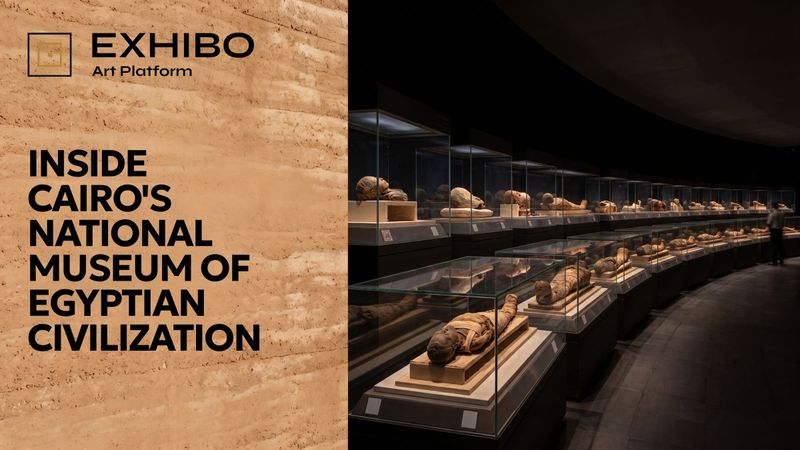
The Museum of Everything That Became a Tomb
Egypt built a museum to tell the story of an entire civilisation — seven thousand years of it, from flint tools to the present. The public knows it for one thing: the room where twenty dead kings lie in the dark.
In a black, hushed hall beneath the National Museum of Egyptian Civilization in Old Cairo lie the mummified bodies of Ramesses II, Hatshepsut, and eighteen other rulers of the New Kingdom — carried here in 2021 in a televised parade watched around the world.
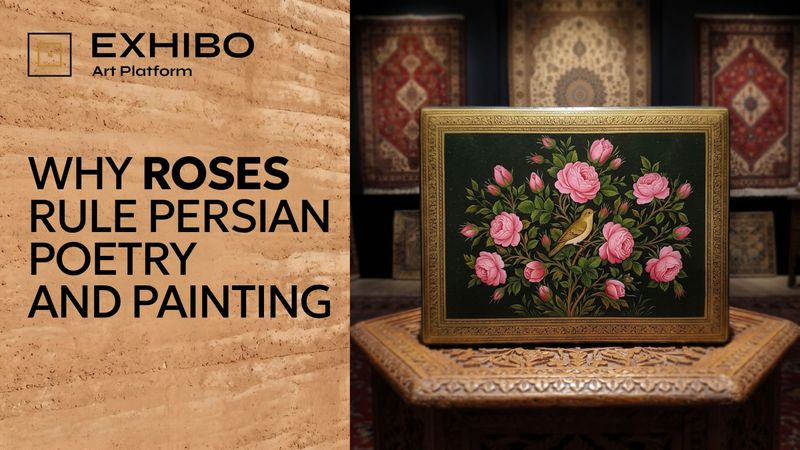
The Flower That Was Never Only Beautiful
The rose rules Persian poetry and painting — but under the sweetness sits a thorn, a bleeding bird, and a national emblem quietly assembled out of Chinese, European and Persian parts. A history of gol o bolbol, from a medieval still to a Dubai gallery.
Gol o bolbol — the rose and the nightingale — is among the most beautiful images in a thousand years of Persian art, and in modern Persian it also means sweet, empty talk. Under the tile, the picture is darker: a bird singing in blood for a flower that will not answer and will not last.