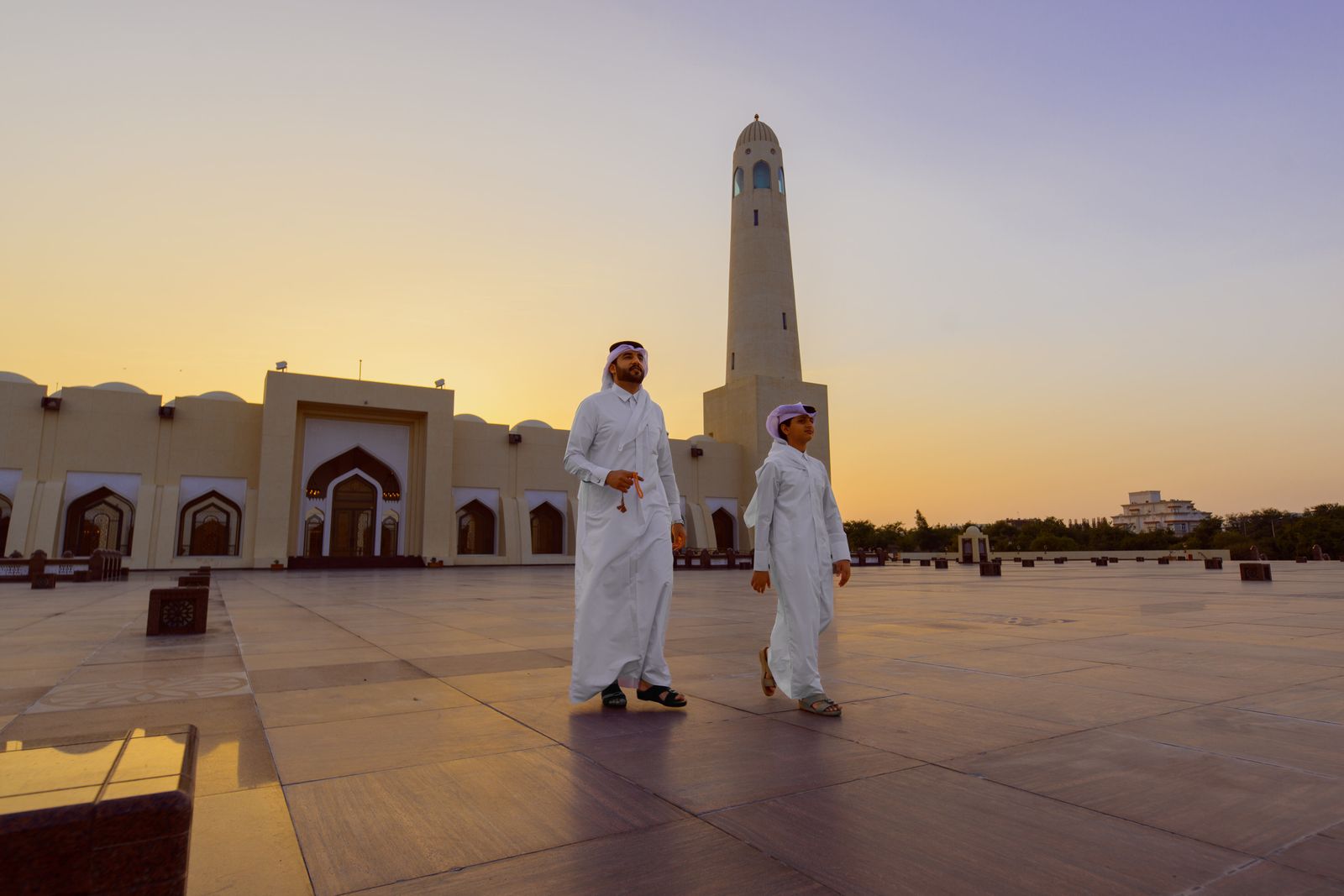
Inaugurated in 2011 on a hill overlooking West Bay, the Imam Muhammad ibn Abd al-Wahhab Mosque is the largest in Qatar. Ninety-three domes, graceful arches and earth-toned marble floors keep the interior cool in summer; separate halls serve men and women, and three libraries support year-round religious instruction.
Named after the eighteenth-century reformist scholar whose teachings shaped much of the Arabian Peninsula, the mosque welcomes visitors outside prayer times. Organised tours are recommended; shoes must be removed, dress must be conservative, and photography is restricted in the women's prayer area.
Exhibo editorial
Scale is the first impression — the prayer hall swallows noise, and the view back towards the Corniche reminds you how quickly Doha grew around this hill.
Visit between prayers, join a tour if offered, and combine with the Museum of Islamic Art across the water for a day of architecture old and new.
How to find it
Al Muhandiseen St, north-west of the Corniche. Accessible by car or taxi. Avoid prayer times; children under seven are not admitted. Scarves and abayas available for women visitors.
Similar places
All places
News by Exhibo
Editorial coverage on Exhibo
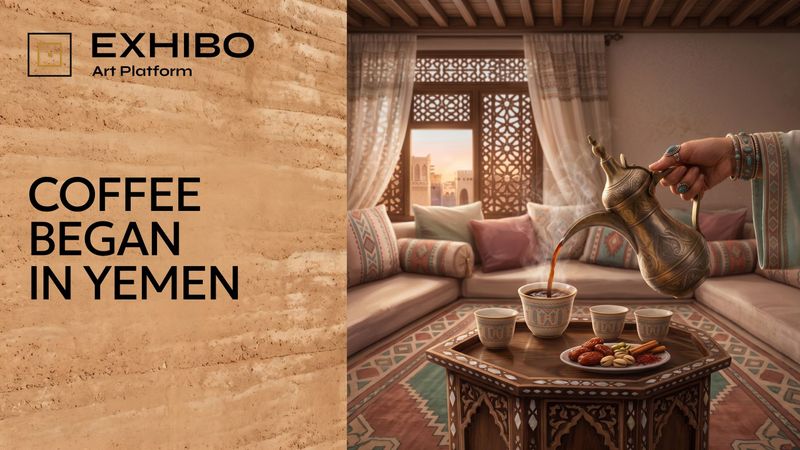
Coffee Began in Yemen
The coffee plant is Ethiopian. But the drink — roasted, brewed, and made the center of a culture — is Yemeni.
Before the espresso machine, before the café, a Sufi in Yemen brewed a bean to stay awake for God. This is the story of how coffee became coffee — from the prayer lodges of the Shadhili order to the Red Sea port of Mocha that named a drink, and finally to the shape the Gulf poured all of it into: the dallah on the one-dirham coin.
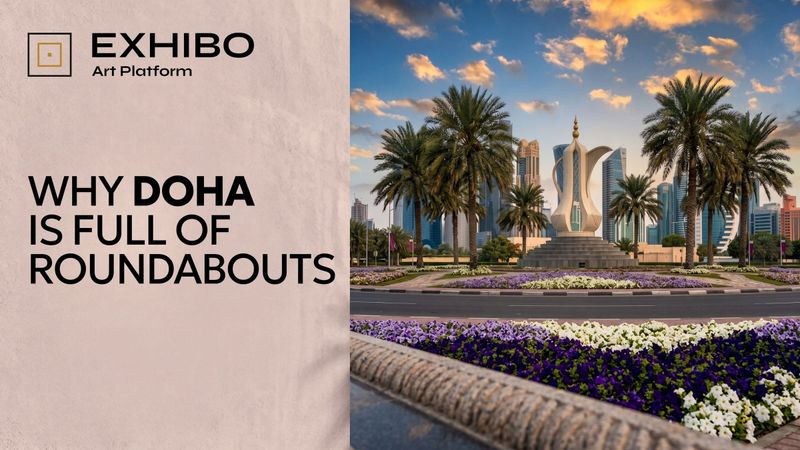
Why Doha Is Full of Roundabouts
An old circle at a crossroads, sharpened by British road engineering, became the way an Arabian city found its way and remembered itself — and it took the bulldozers to reveal it.
In a city where a landmark was more useful than an address, Doha's roundabouts became its navigation, its landscaping and its national image all at once. Now they're being torn out for signalled junctions — and the affection for them arrived, as one scholar put it, only posthumously.
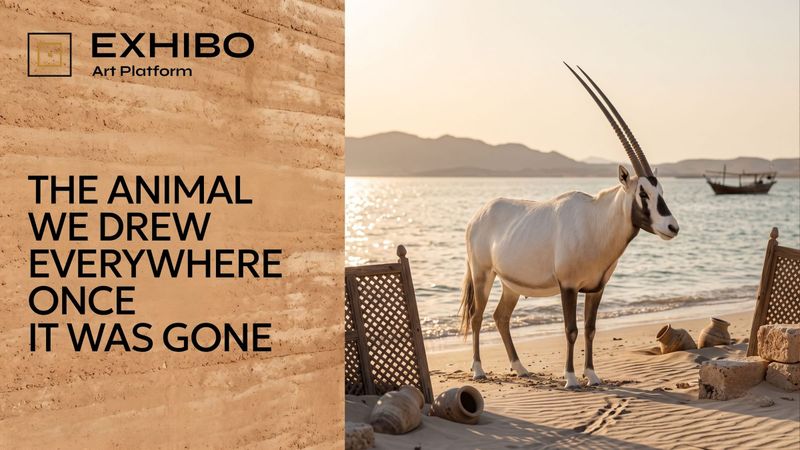
The Animal We Drew Everywhere Once It Was Gone
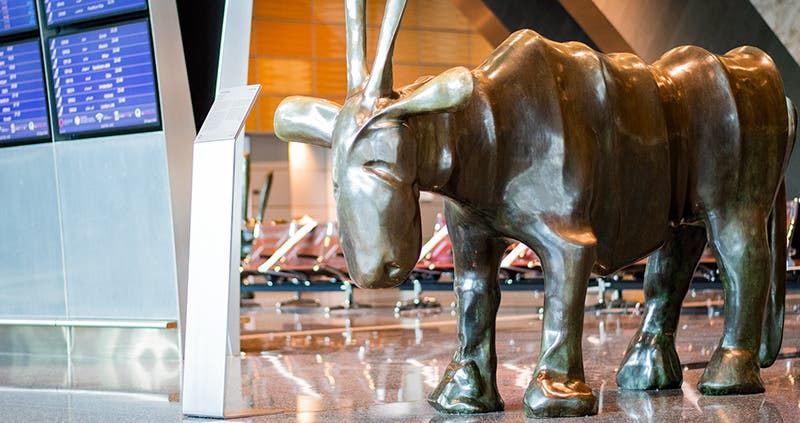
From Neolithic rock to airline tailfin — how the Arabian oryx vanished from the desert, came back from nine animals, and multiplied everywhere as a symbol in the very decades it was gone.
The last wild Arabian oryx was shot in 1972. By then it was already a picture — carved on Bronze Age tombs, mistaken by the ancients for a unicorn, praised by poets as the eyes of the beloved. This is the story of an animal that went extinct in the wild and was brought back from nine survivors, and of the strange gap between the creature and the emblem it became: fast, sharp and ascendant on a nation's tailfin, while the animal itself survives by standing still in the shade.