Exhibo Editorial

Editorial

Long-form editorial from Exhibo and guest writers: curatorial essays, market analysis, fair reports, and deep dives into contemporary art worldwide.

A vast circle of fire burning on a dark plain at night — the outline of a city with four radial roads, drawn in flame.
Editorial

The City With No Ruins: What Is Left of Abbasid Baghdad

A caliph drew his capital in fire, the Mongols erased it, and a video game rebuilt it out of Isfahan and Samarkand. What actually survives of Abbasid Baghdad, where it is, and who else has tried to put it back.

Climb a viewpoint in Assassin's Creed Mirage and you see the Round City whole — double walls, four gates, the green dome at the centre. Nobody has ever seen that view. No excavated remains have been securely identified as any of it. This is what is actually left of ninth-century Baghdad, where you would have to go to stand in it, and why Ubisoft was the second team to rebuild a city that no longer exists.

A cross-section of a medieval bathhouse: bathers above, and below them two horned fire spirits tending the furnace that heats the water.
Editorial

The Real Jinn: How the Middle East Imagined Them Before Disney

Seven kings, one for each day of the week. A portrait of Fever. Two spirits keeping a bathhouse warm. What the manuscripts actually show — and what the lamp replaced.

Folio 35v of a manuscript in Oxford shows the public baths at Tiberias in cutaway. Upstairs, people washing. Downstairs, two jinn tending the furnace, mid-conversation. It is not what most of the world expects — and it is much closer to what the unseen was actually understood to be for. A long read across twelve centuries of manuscripts, fieldwork, survey data and horror cinema.

A strand of natural Gulf pearls, the luxury export that built the Arabian Gulf before oil
Editorial

The Sea That Came Before the Oil: The History of the Pearl

Eight thousand years before the first barrel, the Gulf had already built a global economy — out of an oyster, a held breath, and a rope.

Before oil, the Arabian Gulf ran on the pearl: a global luxury trade that raised its cities from the sand, drew fortunes and real suffering in equal measure, and then vanished almost overnight. The story of the industry that made the modern Gulf — and the quiet way it is coming back.

Rammed-earth wall in warm ochre and terracotta tones, its colour running through the full thickness of the material rather than painted on the surface
Editorial

Why Desert Architecture Loves Earth Tones

In the deserts of North Africa and Arabia, ochre and terracotta were never a palette choice — they were what the wall was made of.

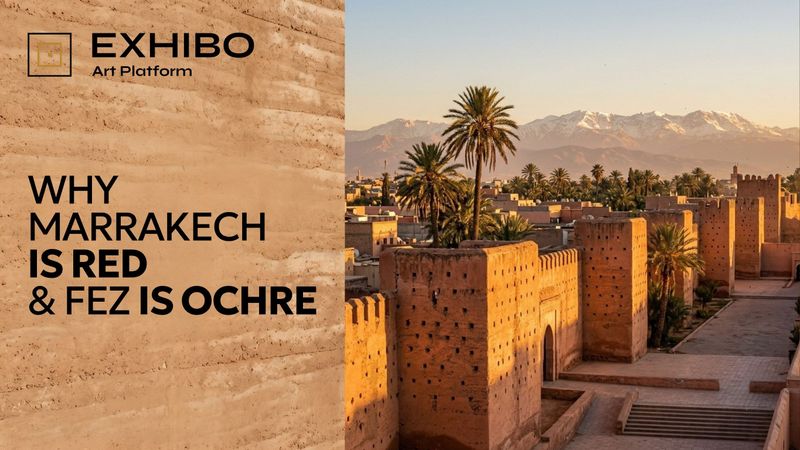
In most cities, colour is something you apply. In the old desert towns it was something you excavated — the red of Marrakech, the brown of Shibam and the gold of Diriyah all pulled straight from the ground underfoot. From iron-oxide chemistry to Hassan Fathy to the rammed-earth revival in Saudi Arabia, this is the story of a colour that outlived the place it came from.

Why Gulf Cities Are So White: Beyond the Physics - Gulf cities look white
Editorial

Why Gulf Cities Are So White

The dazzling white of Gulf cities looks like simple physics — sunlight, reflected. The real story runs through coral, lime, faith, oil and the way traditions acquire their reasons after the fact.

Everyone knows why Gulf cities are white: white reflects the sun. It isn't wrong — it's just one strand of a much thicker rope. Follow it back through coral walls and lime skins, a sustainability code that never mentions colour, and a desert that was never really dark and the tidy explanation starts to look like something we tell ourselves afterward.

Hatta: The Valley That Changed Hands — blog article
Editorial

Hatta: The Valley That Changed Hands

Ninety minutes from Dubai, a mountain town where the same water has shaped human settlement for four thousand years.

Most guides to Hatta list its fort, its dam and its trails. This is the valley told differently — through the single physical problem that has shaped every era of its life. From Bronze Age tombs sited by the water to a mosque timed by shadow to a hydro plant that answers Dubai in ninety seconds, one question runs through four thousand years: where does the water go, and whose turn is it?

The Tunisian desert that became Tatooine — its Berber architecture, its vanishing film sets, and the living street-art scene painting over the myth.
Editorial

The Real Tatooine: Star Wars, Southern Tunisia and the Living Art Beneath the Myth

The Tunisian desert that became Tatooine — its Berber architecture, its vanishing film sets and the living street-art scene painting over the myth.

George Lucas filmed Star Wars across southern Tunisia, borrowing Berber pit-houses and 15th-century granaries as an alien world. But the real story is what's underneath: a living tradition of desert architecture, two millennia of coexistence on Djerba, and one of the most ambitious street-art projects on Earth.

Petra Beyond Indiana Jones — blog article
Editorial

Petra Beyond Indiana Jones

The 1989 film gave Petra a façade and invented everything behind it. The real story is in the water systems, the aniconic sculpture, the painter who framed your photograph in 1839 and the families moved out so the world could come in.

Spielberg's crew filmed the Treasury's façade in Jordan, then built the Grail chamber on a soundstage in Hertfordshire — because the real interior of Al-Khazneh is a plain, undecorated room. It's a perfect miniature of how Petra is understood: one wall, photographed a million times a year, standing in for a city that is mostly still unexcavated.