
Cairo · Egypt
The Museum That Reflects Everything, Including You
How the world's largest single-civilisation museum gathers a nation's heritage, national story, tourism economy and repatriation claims under one reflective roof — and what those mirrored surfaces quietly ask of everyone who walks in.
In the Grand Egyptian Museum's first weeks, a curious complaint began to circulate: people kept walking into the water.
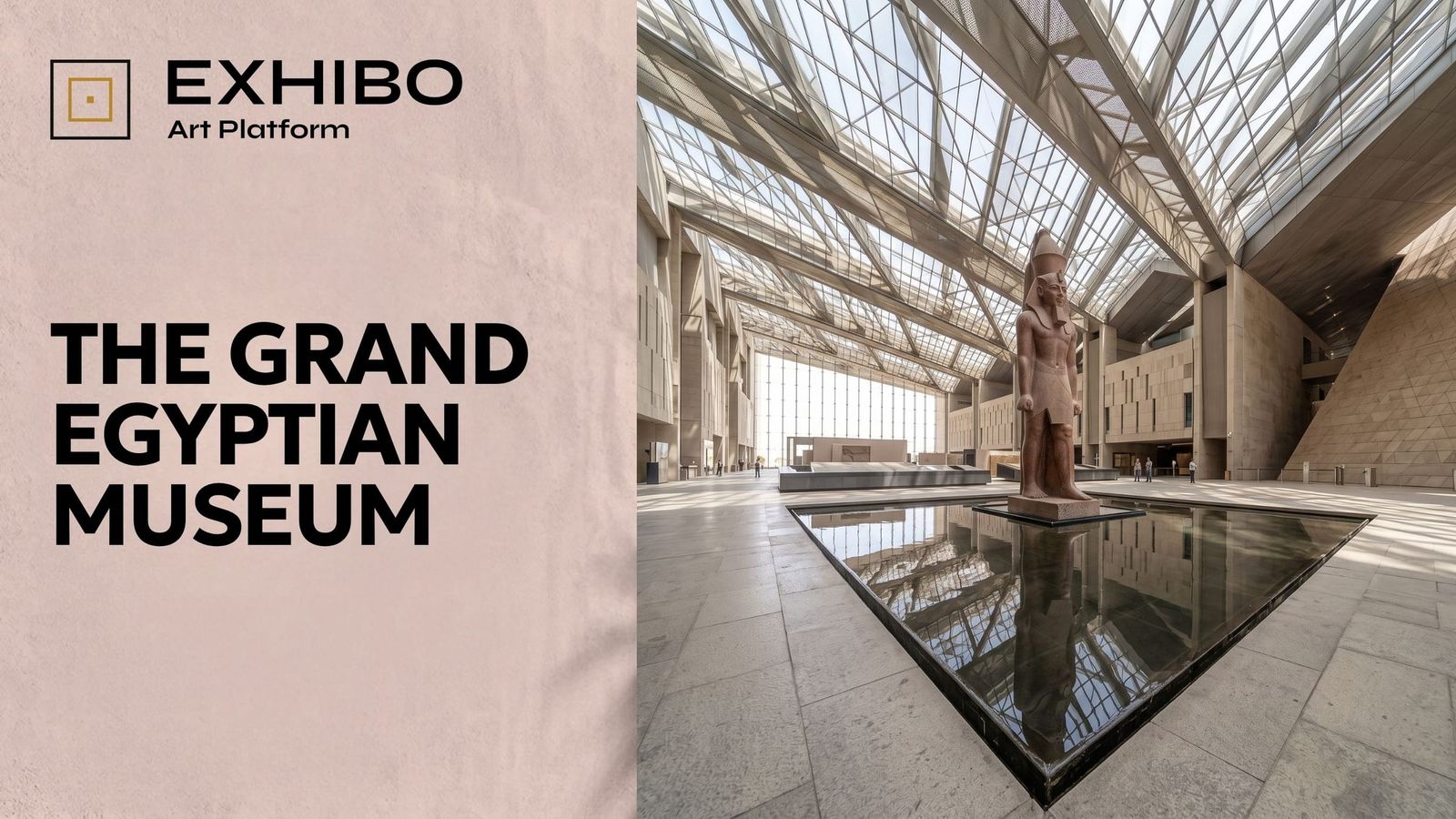
Here is what happens. You come in from the Giza glare, out of the heat and the coach-park noise, and the building swallows the sound. Ahead of you the atrium opens up — steel and glass and pale stone rising the full height of the building, daylight pouring down through folds in the roof — and at the centre of it, eighty-three tonnes of pink granite and eleven metres tall, stands Ramses II, fists clenched at his sides, three thousand two hundred years old and lit, at the right hour, by a shaft of sun that crosses his face like a spotlight cue. People stop. Phones come up. And some of them, walking backwards for the photograph or simply staring upward at the king, put a foot straight into the shallow pool of water at his feet and go in to the ankle.
The pool is part of why the light works. Ramses stands in water on purpose, a still dark mirror in which the sunbeam catches and doubles, so that the god-king seems to glow from below as well as above. It is a genuinely beautiful piece of staging. It is also, if you are looking at your phone, invisible: a few centimetres deep, dead level with the polished floor, lit so exactly that stone and water become one surface. You look down and see ground. You step forward and find the ground is wet. A clip of precisely this went round Instagram in the museum's first weeks, and reports soon circulated of visitors stepping into the shallow pools while backing up for photographs, prompting staff to warn people to keep to the edges, as travel coverage relayed.
It became, at once, an argument. Some called it a design flaw. The Ministry of Tourism and Antiquities called the pools an intentional feature, part of the building's "sustainability vision", tied to the same roof openings that bring in the light and air. Some people online said the obvious thing: watch where you are going. They are all, in their way, correct, which is what makes the little scene worth pausing on. A museum this obsessed with reflection — glass that mirrors the pyramids, water that mirrors the roof, stone polished until it mirrors the crowd — is quietly asking everyone who walks in the same question. Not what do you see. What are you standing on.
And the water is not even the only way to fall. Up on the Grand Staircase, where more than eighty kings and gods and sphinxes climb six storeys toward a wall of glass, at least one seasoned visitor has warned of the same hazard by other means: the statues stand close to the steps, and people edging backwards to fit a colossus into the frame have a tendency to forget the drop behind them. The building keeps offering you the sublime and, in the same gesture, a chance to fall over while reaching for it. Hold that thought. It turns out to be the whole story in miniature.
This essay is an attempt to take that question — what are you standing on — seriously, which means it can be neither a brochure nor a takedown. The Grand Egyptian Museum is a genuine wonder and a genuinely complicated thing, and the surprise is that these are not opposites. The complications are the wonder, seen from the side. So come in, mind the water, and let us walk up slowly.
The colossus that would not sit still
The figure the pools surround has been moved more times than most people move house.
Ramses II — eleven metres of pink granite, around eighty-three tonnes, some three thousand two hundred years old — was found in pieces at ancient Memphis, the old capital south of modern Cairo. In the 1950s, under Nasser, the reassembled colossus was hauled to a square in front of Cairo's main railway station, where it stood in traffic for half a century and slowly absorbed the city's exhaust. In 2006 it was moved again, out to the Giza plateau, to get it away from the fumes. In January 2018 it was lifted into the atrium of the museum that did not yet officially exist: the first artefact to take its place inside the building. Four addresses in seventy years, each one chosen to make the statue mean something slightly different: national pride, then preservation, then arrival.
The choreography is not accidental. When a state moves a three-thousand-year-old king to a traffic roundabout, it is saying one thing; when it moves him out again to save him from the exhaust, another; when it installs him as the first tenant of a billion-dollar museum, a third. The object does not change. The sentence around it does. Ramses has spent his modern afterlife being made to speak, in a language he never knew, on behalf of governments he would not have recognised.
He is not the only object here with a travel history. Khufu's solar boat — a four-and-a-half-thousand-year-old vessel of Lebanese cedar, forty-two metres long, lashed together with grass rope and not a single nail — was lifted from beside the Great Pyramid in 2021 and carried the few kilometres to the museum inside a shock-absorbing cage on a remote-controlled vehicle imported from Belgium. The project supervisor was candid about one reason for the move: the old boat museum disrupted the view of the pyramid's southern face, and taking the boat away cleaned up the sightline. A second Khufu boat, found in pieces in its own pit, is being reassembled plank by plank in front of visitors: restoration itself turned into an exhibit.
Keep that last detail in your pocket — the boat moved partly to tidy a view — because it will rhyme with something later. For now, hold the simple observation. Nothing in this museum has ever just sat still. Every object here has been carried, re-housed, re-lit and re-explained, and each move was also an argument about where the thing belonged and what it was for. The museum is the current answer to that argument. It is worth asking whether it is the final one.
The beautiful story
Here is the version you will hear at the opening, and it is a good one, largely true.
Climb the staircase — you can walk, or ride the travelator beside it, but do not rush, because the ascent is arranged as a story. More than eighty kings and gods and sphinxes rise beside you in rough chronological order, and the higher you go the closer the dead pharaohs come to their gods, until, at the top, the last escalator delivers you to a wall of glass and the whole thing pays off at once. Straight ahead, framed dead-centre and two kilometres off across the sand, stand the pyramids themselves. "It's magnetic," the NPR reporter Aya Batrawy said of that moment at the top of the stairs. "Everyone's got their phones out." A young Polish visitor beside her, Matilda, could only manage that it was very crowded and very great and that she could not wait to see the pyramids for real. The building has spent six storeys teaching you to want exactly that view, and then it gives it to you.
Deeper in, past the staircase, the light drops away. The Tutankhamun galleries are kept dim on purpose, so that for the first time since Howard Carter cracked the tomb in 1922, the complete burial — more than five thousand objects — sits together in something like the darkness it was made for, the gold catching what little light there is, visitors murmuring that it feels like standing inside the tomb. Father Jacob Lindell, a Catholic priest from Ohio visiting on a break from his studies in Rome, stood in front of the famous golden mask and reached, as people do here, for something larger than tourism. He had seen it on magazines and in pictures all his life, he told the reporter; here it was in the flesh, and the care a culture gives its dead, he found himself thinking, is one of the few things constant across all of them. That is the museum working exactly as intended: a stranger from Ohio, standing in the Egyptian dark, feeling briefly enlarged.
This is the achievement, and it is real. The entire treasure of Tutankhamun, whole, in one place, told as a single life rather than scattered as highlights across a crowded old hall. A building, by the Dublin firm Heneghan Peng, cut as a great wedge whose lines run straight at the three pyramids, so the ancient and the new keep landing in the same frame. It is, by the measure Egypt uses, the largest museum in the world for a single civilisation. Nobody walks out unmoved. One visitor's verdict, left online in the shorthand of the genuinely stunned, ran to a single repeated word: chills.
The design earns the praise, and it is worth being specific about why, because the building makes choices most museums flinch from. Heneghan Peng broke the windowless orthodoxy and let daylight flood the atrium and the stairs — a luxury this collection allows, because stone, unlike paper or paint, can take the sun. Róisín Heneghan wanted natural light for "a better ambience, rather than always being in an artificially lit space." The façade stone is quarried in Egypt. Behind the galleries, down a tunnel, sits a conservation complex of nineteen specialised laboratories, among the most comprehensive in the region, equipped for everything from papyrus to human remains. This is not a warehouse with good lighting. It is a serious machine for keeping fragile things alive.
And the central claim — largest for a single civilisation — is worth reading slowly, because the qualifier is doing the work. Not the largest museum. The largest dedicated to one civilisation. It is a precise boast, and a revealing one, because the whole institution is organised around the idea of wholeness: a single people, a single continuous story, gathered at last under one roof after a century scattered across the old Tahrir museum, storerooms and site sheds. The Egyptian word for the feeling is easy to reach for. Homecoming.
When a story is this clean, it is usually worth turning over to read what is written on the underside.
What "largest" means
Before we turn the story over, it is worth staying with that boast a moment longer, because the numbers around this museum are slippery in a way that tells you something.
How many objects does it hold? The answer depends on what exactly you are counting. Official figures around the opening put more than fifty-seven thousand artefacts in the museum, while the institution and its partners describe the wider collection as exceeding one hundred thousand, of which only a fraction — some twenty thousand — stands in the galleries at any one time. The numbers are not necessarily contradictory; they describe different layers of the same holdings, catalogued, stored and displayed. But a bigger number makes a better headline, and nobody minding the microphone has been especially careful to keep the layers apart. For comparison, the Louvre displays around thirty-five thousand of its holdings at a time. Whichever figure you take, the Grand Egyptian Museum is vast. But "largest" is a claim that rewards being said quickly and questioned slowly.
The more interesting number is the one measuring people, not things. In its trial period from October 2024, the museum drew around 1.5 million visitors. Opening-period demand then ran far beyond the planned capacity: in the first week, the tourism minister said, daily attendance reached around twenty-five thousand before the museum imposed a lower operating limit closer to fifteen thousand. By the middle of 2026, Forbes reported, roughly seven million people had visited. Egypt hopes for eight million a year, which would put it within sight of the Louvre's nine. Those are the figures that actually matter to the people who built it, because this is a museum with a business plan, and we will come to that.
But scale is not only a boast; it is also a curatorial problem, and to the museum's credit it seems to know this. The director, Ahmed Ghoneim, has been careful to describe the achievement not as more but as clearer. What sets the place apart, he told one interviewer, is how the collection is presented — "as a narrative of the king's life and reign, not as standalone objects, and without visual clutter." Anyone who has trudged through the old Tahrir museum, with its wonderful, exhausting, glass-cased density, will feel the force of that ambition. The old museum often showed you everything and left much of the explanation to you; you were placed, more or less alone, before the sheer accumulation. The new one wants to take you by the hand and tell you a story.
Which is a gift, and also worth watching. A museum that arranges objects into a clean narrative has, by definition, decided which story to tell and which threads to leave out. The colossal density of Tahrir was overwhelming, but it was also honest about how much there is, how little we know, how the past arrives as a heap before anyone shapes it into meaning. The Grand Egyptian Museum has shaped it. Mostly that is generosity to the visitor. Occasionally it is worth asking who did the shaping, and what the smooth version leaves in the stores.
The museum that talks to you
Nowhere is that shaping more visible than in the technology, which is either the museum's boldest stroke or its most quietly consequential gamble, depending on how you feel about being told a story by a screen.
The Grand Egyptian Museum has made mixed reality and digital storytelling part of the visitor experience from the outset. Digital projections and immersive installations reconstruct temples, journeys and ancient environments around the objects; an app lets you scan an artefact and read its story in your own language, with digital tools increasingly used to let visitors interrogate what they are looking at. The audio guide is voiced by a beloved Egyptian actor, which is a small, telling choice: the past narrated in a familiar living voice rather than a scholar's. Ghoneim is explicit about the target. The technology, he says, lets the museum speak "the language that Gen Z uses right now."
It is easy to be cynical about this, and easy to be wrong in doing so. Reconstructing a vanished temple in augmented reality is not a gimmick; it is, arguably, the most honest way to show a ruin, because it admits that what survives is a fragment and offers to complete it visibly rather than leaving the visitor to imagine. For a general audience, especially a young one, the difference between a glass case of grave goods and a hologram that puts those goods back around a body can be the difference between glazed politeness and genuine understanding.
And yet the specialists who study exactly this have a caution worth printing. Immersive tools, they note, can deepen understanding — but they can also oversimplify complex cultural narratives, smoothing three thousand contested, uncertain, scholarly-argued years into a clean cinematic ride. The risk is not that the technology lies. It is that it is so persuasive that the visitor forgets they are being shown one interpretation among several, rendered with the authority of a film. A hologram does not say "we think." It simply shows you, in gorgeous certainty, a past that historians are still arguing about. The reflecting pools again, in a different medium: a surface so convincing you forget to check what is under it.
Not everyone is sold on the trade. One writer, walking the finished galleries, admired the dazzling façade and the colossus and the sheer marshalled scale of it, and then reached for a harder verdict: a colossus still waiting for a soul. It is one visitor's impression, not a fact about the building, and it can be read as the usual grumble of an early guest in a place still finding its feet. But it names a real risk that money and technology cannot spend their way out of. You can assemble the largest single-civilisation collection on earth, light it flawlessly, wire it for Gen Z, and still leave a person wondering whether they have visited a temple or a very good airport. Whether GEM has a soul is not a question the conservation labs can answer. It is the kind of thing that accretes slowly, over years, out of what people come to feel there — and it is far too early to say.
The faces that are somewhere else
The museum that gathers a civilisation whole is missing its three most famous faces, and everyone involved knows exactly where they are.
The Rosetta Stone is in the British Museum, where it has sat since 1802. The painted bust of Nefertiti is in Berlin, excavated by a German team in 1912. The Dendera Zodiac, a ceiling map of the ancient sky, is in the Louvre. The opening of the museum reignited a campaign — led for decades by the former antiquities minister Zahi Hawass, and echoed by a younger generation of Egyptian scholars — to bring those three objects home.
What makes the argument sharper than the usual repatriation quarrel is the way the museum itself functions as evidence. For years, one of the quieter justifications for keeping such objects abroad was custodial: that Egypt lacked museums of the standard required to hold and protect them. That argument is much harder to make while standing in a climate-controlled, Japanese-financed conservation complex with nineteen specialised laboratories. Hawass put it plainly: in the past they said your museums were not qualified; now Egypt has built more than twenty museums to modern standards, some newer than anything in Europe or America. The building is, among other things, an answer to an objection.
This is where an honest account has to slow down, because repatriation is not one argument with one answer. The three cases are not identical. The Rosetta Stone entered British hands after the French defeat in Egypt in 1801, under the terms of surrender that transferred French-held antiquities to the British; the Zodiac was cut from a temple ceiling and shipped to France in the 1820s. Nefertiti is genuinely more tangled: she was transferred to Germany through the colonial-era division-of-finds system, which German authorities regard as a lawful partage, while Egyptian and other researchers have long challenged the circumstances under which the bust was presented and exported. It is part of why, as one careful account notes, her case differs from objects that were plainly looted — not because the question is settled, but because it is genuinely contested. The British Museum's response has been to say it has received no formal request for the Stone's return. It is a sentence that manages to be both technically true and a way of not answering.
Notice, too, what Hawass is actually asking for. Not a lawsuit, not a UNESCO tribunal — a gift. He wants the three objects returned as a gesture of goodwill, "as Egypt gave the world many gifts." That is a shrewd framing and a revealing one. It sidesteps the legal question, on which Egypt's position is strongest for the Stone and weakest for the bust, and moves the whole matter onto the ground of grace, where a museum can give something back without conceding it was ever wrong to hold it. Whether that makes return more likely or simply more comfortable to refuse is an open question.
The wider weather may be shifting. In the same week the museum opened, the outgoing Dutch prime minister announced the return of a 3,500-year-old stone head to Egypt, seized at an art fair in Maastricht; the sculpture was formally handed back in February 2026. Germany has begun returning Benin bronzes to Nigeria. The tide of restitution is, arguably, coming in. But it would be dishonest to write this as a victory narrative with the last chapter already printed. The three faces are still abroad. The homecoming is real, it is incomplete, and the museum has opened anyway — choosing to let the empty spaces make an argument that full cases cannot.
The home that is nearer for some
There is a second question folded inside the first, and it points inward rather than outward. A museum built to bring a nation's heritage home is only a homecoming if the nation can get through the door.
In its first weeks the museum ran into a problem it had partly designed for itself. Tickets are allocated under a quota that divides daily capacity between Egyptians and foreign visitors, and on one Friday early in November the system oversold badly: more than twenty-seven thousand tickets against a stated safe limit of twenty thousand, leaving crowds of turned-away visitors spilling onto the Giza plateau. In the days after, Egyptians online said they could not get tickets at all, and a rumour spread that four-fifths of the daily allocation was being held for foreigners.
The museum's chief executive, Ahmed Ghoneim, pushed back on the specifics: the split was not eighty-twenty, he said, but a ratio that would never tip past sixty-forty in either direction, adjusting with the seasons. That is a real answer to the rumour. It is not, quite, an answer to the objection underneath it. A member of parliament, Freddy Elbaiady, made the objection the loud part: any quota at all, whatever the percentages, places Egyptians in a "secondary category" when reaching their own heritage.
The heritage of our homeland is not a commodity. Egyptians must not be placed in a secondary category when accessing their own heritage.
You can see both sides clearly, which is what makes it worth sitting with. At the time, a ticket priced at 200 Egyptian pounds for a local and around 1,450 for a foreigner was, read one way, exactly the tiered pricing that keeps a national museum affordable to its own citizens: the differential protects Egyptians rather than demoting them. Read another way, a quota that can leave a Cairo family unable to book while a tour group flows through a separate channel turns access to the national story into a question of which line you were sorted into on arrival. The museum has since moved toward advance online booking to smooth the crowds, which controls the queue and, at the same time, raises a different wall for anyone without the right card or connection. Documented problem, institutional response, residual gap. The gap is not a scandal. It is the ordinary friction of a real thing that has to be rationed, and it will most likely be smoothed with time. What is worth noticing is the shape of it, because the shape repeats.
Look at the two questions side by side. Abroad: who owns the object, and by what right do they hold it. At home: who owns the story, and by what right do they reach it. The museum is the place where both are asked at once, out loud, in front of the pyramids. It is, in a sense, the most honest building in Egypt — not because it answers the questions, but because it cannot help posing them.
What happens to the old house
To feel the full weight of the word homecoming, you have to look at the home the objects left.
For more than a century, the address for ancient Egypt was a salmon-pink neoclassical building on the north side of Tahrir Square, in the centre of Cairo. The Egyptian Museum opened there in 1902, designed by a French architect, and it has been, in the words of the Egyptologist Monica Hanna, "the beating heart of Egyptology for over a century." It sits on a square that is itself a national symbol — the ground of the 2011 uprising — and it holds the memory of an earlier moment of Egyptian self-assertion, when housing the country's own antiquities in a purpose-built museum was itself a statement that Egypt, not its foreign excavators, would keep its past.
Now roughly half its collection has gone to Giza, and the question of what remains is genuinely unsettled. Some scholars fear the old museum will be quietly left behind in the glow of the new one. Salima Ikram, professor of Egyptology at the American University in Cairo, expects it to be refurbished and to keep many of the more than one hundred thousand objects it once held. Others are blunter about the risk. Ahmad Saleh, a heritage official, put the tourist's logic starkly: if a visitor finds nothing different and captivating there, why would they choose Tahrir when they could go to GEM? The danger is not that the old museum closes. It is that it becomes a place only specialists bother with, its salmon walls fading a little more each year while the crowds ride the new metro line out to Giza.
There is a small, sharp irony worth naming here, in the neutral way these things deserve. The Tahrir museum's recent renovation was financed by the European Union and assisted by five major European institutions — among them the Louvre and the British Museum. The same European institutions Egypt is pressing to give up its three great faces have also been helping to rethink the house those faces would come home to. This is not hypocrisy on anyone's part; it is just the actual texture of how heritage works now, a web of loans and expertise and soft power in which the borrower and the lender are the same institutions, seen from different angles. The mirror again. You cannot photograph the repatriation debate without catching the reflection of a European conservator in the glass.
Twenty years, five rulers
The building took so long to arrive that it outlasted the political order that commissioned it.
The idea was first floated under Hosni Mubarak, who announced a new museum in 1992; an international design competition was held in 2003, won by two then-unknown architects; the foundation stone was laid in 2002 and construction began around 2005. Then came history. The 2011 uprising and its long aftermath brought the work to a halt; the project passed through the hands of a succession of rulers — Mubarak, then the transitional military leadership, then Mohamed Morsi, then another interim presidency, then Abdel Fattah el-Sisi, who has held power since 2014. A museum conceived in one Egypt was completed in a visibly different one.
The delays have an almost liturgical quality when you list them, because each is a chapter of the region's last two decades. The BESIX project leader Joris de Kinder, whose Belgian firm built the structure, named the causes without drama: a genuinely difficult design, some of it not fully resolved when building started; the political upheaval after the Arab Spring; the COVID-19 pandemic; the war in Ukraine; and, by 2025, renewed regional instability. The final postponement, from July to November 2025, came after a brief regional conflict in June. Two decades of a single building absorbing every shock that passed through its part of the world, and still going up.
There is something almost moving in that, and also something worth being clear-eyed about. The Architectural Record, reviewing the finished museum, made the point that the more interesting story is not the design but the patronage: how a vast cultural commission survives being handed from government to government, through a period when power in Egypt changed hands repeatedly and not always by the ballot. A project like this is a bet that the state placing the last stone will want to be photographed doing it. On the night of 1 November 2025, a swarm of illuminated drones lifted over the plateau and assembled themselves, in the dark above the real pyramids, into the golden face of Tutankhamun — the boy king rebuilt in light over the tombs of his ancestors, for an audience of dozens of heads of state. It was President Sisi who declared the museum open. The pharaohs had been reburied under a modern flag. That is what museums have always partly been for; the old Tahrir museum did the same work for an earlier Egypt, and the parade did it for the cameras. It is not an accusation to notice it. It is the reason these buildings get built at all.
The parade, and the art of what you show
To understand what kind of object the Grand Egyptian Museum is, it helps to look at the dress rehearsal that preceded it — a separate event, for a separate museum, that told you exactly how modern Egypt stages its past.
In April 2021, twenty-two royal mummies — eighteen kings and four queens — were moved across Cairo from the old Tahrir museum to the National Museum of Egyptian Civilisation in Fustat, a few miles south. This is a different institution from GEM, and the distinction matters: the mummies did not go to Giza. But the event, the Pharaohs' Golden Parade, is the clearest window we have into the sensibility behind all of it. The mummies travelled in order, oldest first, each on its own gilded float, sealed in a nitrogen capsule, down streets specially repaved for a smooth ride, past newly installed obelisks and sphinxes, escorted by costumed performers and a live orchestra, broadcast to the world. It was, by any measure, magnificent — a genuinely spectacular piece of national theatre.
It was also, precisely, theatre, and some of the people watching most closely said so. Along parts of the televised route, banners and flags were raised that had the effect of screening poorer neighbourhoods from the cameras. The urban planner Ahmed Zaazaa, speaking to the New York Times, named the pattern directly: "There is a tendency to try to show a better picture instead of fixing the existing reality," he said, adding that many Cairenes in working-class districts feel excluded from the reforms the state advertises. The residents along the route were largely told to watch the broadcast from home. The show was for the screen, and the screen was carefully framed.
You are free to weigh that as you like — a country presents its best face to the world on a big night, as countries do; or a state edits the visible city the way it edits the visible past, keeping some things in the frame and some things out. Both readings are available, and an honest visitor holds them together rather than choosing the flattering one. But notice how it connects back to the boat that was moved to tidy a sightline, and forward to the museum itself. The Grand Egyptian Museum is the permanent, architectural version of that instinct: a frame built to hold the pyramids and the pharaohs in a single clean composition, with the tangle of the living country kept, mostly, just outside the glass. The reflecting pools do not lie about this. They only show you the ceiling and the colossus, never the plumbing.
One more voice from the parade is worth keeping, because it complicates the cynicism as much as the spectacle complicated the pride. An Egyptian woman in Alexandria, watching the mummies pass on television, told a reporter that people go to the Louvre and the British Museum to see Egyptian things, and they ought instead to come to Egypt, "the land in which they were created." That is the repatriation argument, made from a sofa, with no institutional stake at all. The staging and the sincerity are not opposites. The same event can be a managed image and a felt homecoming at once, and usually is.
What actually built it
To understand the museum as a building — as opposed to a collection — you have to stop thinking of it as a museum and start thinking of it as infrastructure. That is not a metaphor. It is the category the Egyptian state itself uses.
The Grand Egyptian Museum is one of the megaprojects championed by President Sisi since 2014, a period of vast state investment in roads, a new administrative capital, and the reworking of the Giza plateau into a single tourism engine under a plan called Giza 2030, complete with a new metro line and a nearby airport aimed at flying visitors straight to the pyramids. The government's own language is unusually frank. In an official framing, the museum is described not merely as a home for heritage but as an instrument of "soft power" and "tourism diplomacy" — heritage put to work, the economy turned by the wheel of the past. Egypt is banking on the museum drawing millions of visitors a year and the foreign currency they bring, in a country that badly needs it.
The cost of all this is disputed, which is itself part of the story. The official figure, repeated at the opening, is a little over a billion dollars. Some reporting puts the true, all-in figure — land, infrastructure, the two decades of overruns — considerably higher. When first proposed, the museum was estimated at around half a billion; by completion it had at least doubled. None of this is unusual for a megaproject; large museums routinely run long and run over. But the size and vagueness of the number matter, because a billion-plus dollars of cultural infrastructure in a country where foreign-currency earnings from tourism matter enormously is a very large bet on the past paying for the future.
And here is the fact that makes the whole thing more honest and more human than any brochure. This monument to Egyptian selfhood was built, in large part, with other people's hands and other people's money. Roughly seventy to seventy-five per cent of the cost came from Japanese soft loans, two development-assistance packages worth around eight hundred million dollars, repayable over decades at low interest. The architects were Irish. The engineers were British. The exhibition galleries were shaped by a German design firm; the gardens by a Dutch one; the main works were built by a Belgian contractor in partnership with an Egyptian one, with up to six thousand workers on site at the peak. When the museum opened, its wall texts appeared in three languages: Arabic, English and Japanese.
There is no contradiction to catch anyone out in here, and I want to be careful not to manufacture one. Every large museum on earth is a collaboration across borders; that is simply what building at this scale looks like now. But it does complicate the word home in a way worth sitting with. The museum that presses Europe to return what was taken from Egypt is itself a structure Egypt could not have raised alone — a national symbol assembled through deep international dependency, on credit, with the whole planet's help. The point is not that this weakens the repatriation claim. It is that sovereignty over your own past, in the modern world, turns out to be something you build in partnership rather than in isolation. That is not a lesser kind of pride. It may be the only kind actually on offer.
It also places the museum inside a contest it did not invent. Across the region, governments have reached the same conclusion at roughly the same moment: that heritage and culture are infrastructure, as much a part of a modern economy as ports and fibre. Several states are building museums and cultural districts at extraordinary speed; Egypt is reaching for the same tool from a different treasury and a far deeper well of antiquity. Nobody here is competing to own the past — the past is not scarce that way. They are competing to become the place where the world comes to stand inside it. That race is one of the more genuinely interesting things happening in the region right now, and it is only starting.
The plateau, rearranged
The museum does not stand alone, and it was never meant to. It is the anchor of a deliberate reshaping of the entire Giza plateau into a single, monetised visitor economy, and to see the museum clearly you have to see the machine it sits inside.
Around it, a whole apparatus has been assembled. Sphinx International Airport, opened in 2019 west of Cairo and since expanded, now offers a western gateway to the pyramids and the museum without routing arrivals through the capital's main hub. A new metro line is being driven out to a station at the museum's gates. A 1.27-kilometre landscaped walkway now links the museum to the pyramids, so a visitor can move from the galleries to the monuments on foot or by electric shuttle. The plateau itself has been re-engineered: the entrance moved to a new gate, street vendors and camel and horse owners confined to designated zones, electric buses ferrying tourists back to their coaches. The stated goal is dignity and order; the effect is a smoother, cleaner, more controllable experience, with the informal economy of the pyramids — the touts, the camel men, the chaos that generations of visitors met at the foot of the Sphinx — tidied to the margins of the frame.
Here, too, the change was contested by the people it touched, and it is only fair to record it. Tourism professionals and plateau workers voiced strong objections to the reorganisation, which rerouted the flows of tourists their livelihoods depended on. You can read the tidying as overdue reform of a site long notorious for hassle, or as the same instinct that raised banners along the parade route — the management of what the visitor is allowed to see — applied now to the living plateau. Both are true. The effect, either way, is to move the informal economy of the plateau to the margins of the frame; the camel man rerouted away from the main visitor path is a smaller story than the poor neighbourhood screened from a broadcast, but it can be read as the same grammar.
And the economics behind it are frank about what the whole exercise is for. The plateau is run in partnership with a private operator, Orascom Pyramids Entertainment, which draws revenue from rentals, sponsorships, events and an evening sound-and-light show; the museum's visitor services and facilities are operated under a twelve-year concession by Legacy Development and Management, a Hassan Allam subsidiary, which projected fifteen to twenty thousand visitors a day. The strategy is explicitly aimed at turning Giza from a half-day stop into a longer-stay destination — museum, monuments, dining, private events, evening shows — so that each visitor spends more and stays longer. The wager is enormous, and so is the backdrop: tourism revenues across Egypt were forecast to reach roughly ninety-seven billion dollars cumulatively between 2025 and 2029, with the museum and the wider Giza redevelopment presented as part of the infrastructure meant to support that growth. The past, here, is not only being honoured. It is being made to work a shift.
There is nothing inherently scandalous about a museum generating revenue, and a country under real economic pressure turning its most valuable inheritance into an engine of foreign currency is doing something rational, even admirable. But it clarifies what kind of thing the museum is. It is a cultural institution and a piece of national economic infrastructure at the same time, and the second identity shapes the first — the quotas, the tiered tickets, the narrative galleries built for a broad international audience, the technology tuned to Gen Z, the plateau smoothed for the coach tour. None of these choices is cynical on its own. Together they describe a museum built not only to hold the past but to sell it, gracefully, at scale.
Which returns us, in the end, to the water on the floor.
The reflecting pools are the museum's most honest material, more than the granite or the glass. Gather the evidence and it arranges itself into a series of true sentences that each contain a second clause. A civilisation is gathered here and made whole, and its three most famous faces are elsewhere. A home for a nation's heritage opens, and the nation queues outside it, sorted by category. The objects come home to Giza, and the old house they left may be allowed to fade. A story is told with beautiful clarity, and the clarity is itself a choice about what to leave in the stores. A vanished temple is restored before your eyes in light, and the light is so persuasive you forget it is an argument. The plateau is made orderly and dignified, and the camel man is moved out of the frame. A monument to Egyptian sovereignty rises, financed from Tokyo, drawn in Dublin, built from Woluwe. A country shows the world its most luminous past, and raises a banner, here and there, over the parts of the present it would rather not film. None of these is a failure. Each is just the more complicated sentence hiding inside a simple one. Bringing it all home turns out to have a great many clauses.
I do not think the complications diminish the place. I think they are the reason it is worth taking seriously, rather than merely admiring. A museum that only flattered its makers would be a brochure; this one, almost despite itself, keeps telling the truth about how a nation assembles an image of itself — out of real treasure and real debt, real pride and real editing, real homecoming and real distance. The greatness and the difficulty are the same building seen from two sides of the glass.
The pools reflect the roof, the colossus, the visitors, the pyramids beyond the wall — everything, including the person who forgets they are there and steps in. That, more than the world's-largest-anything, is what the building actually does. It offers you a surface so polished it looks like solid ground, and invites you to look down and find yourself standing in it. Whether the reflection is the achievement or the warning depends, as these things do, on where you happen to be standing when you notice the water. Perhaps it is both. We will see what settles once the crowds thin, the last artefact stops moving, and the water by the colossus is left, at last, to reflect an empty hall.
Museums mentioned
Related reading
The Museum of Everything That Became a Tomb
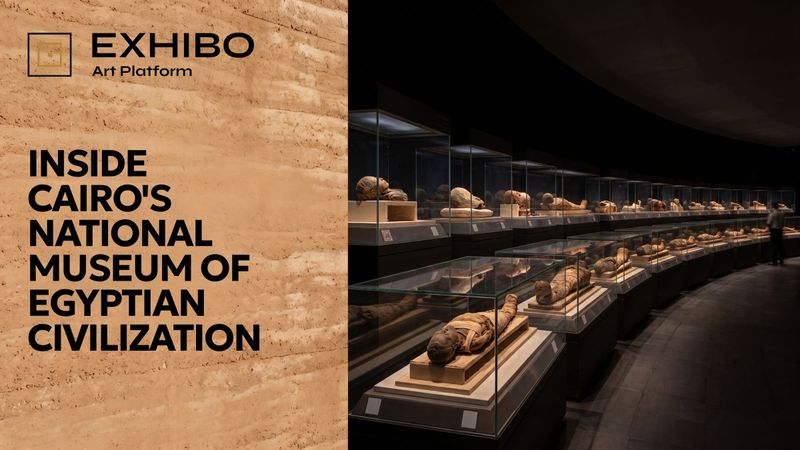
Egypt built a museum to tell the story of an entire civilisation — seven thousand years of it, from flint tools to the present. The public knows it for one thing: the room where twenty dead kings lie in the dark.
In a black, hushed hall beneath the National Museum of Egyptian Civilization in Old Cairo lie the mummified bodies of Ramesses II, Hatshepsut, and eighteen other rulers of the New Kingdom — carried here in 2021 in a televised parade watched around the world.
Where Is Agrabah? The City Disney Assembled From Real Places
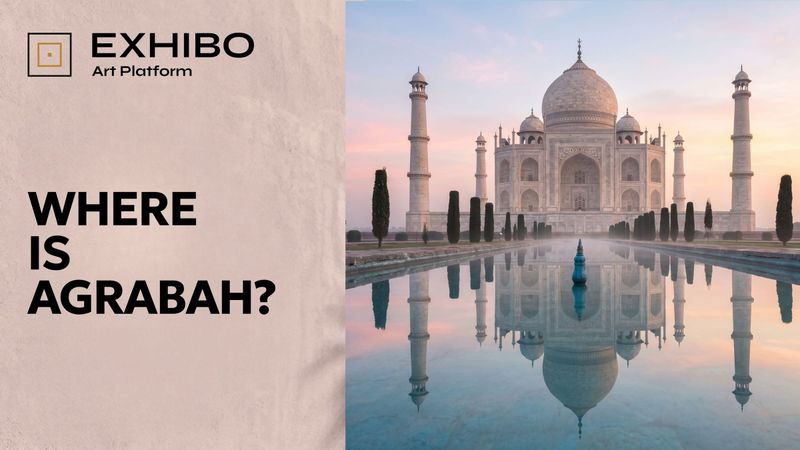
Agrabah was going to be Baghdad. A war made it fictional — and then Disney built it back out of real places, from a tomb in Agra to a valley in Jordan that usually plays Mars.
The Sultan's palace where Princess Jasmine feels trapped has the silhouette of the Taj Mahal — which is not a palace at all, but a tomb. That is how Agrabah works. Disney's fairy-tale city was going to be Baghdad, until the Gulf War made the name impossible; the studio invented a place that could not be found on a map, then quietly rebuilt it out of real ones — Isfahan and Agra, Marrakesh and Mandalay, a Jordanian desert that has played both Arabia and Mars.
The House Whose Famous Guests All Moved Out
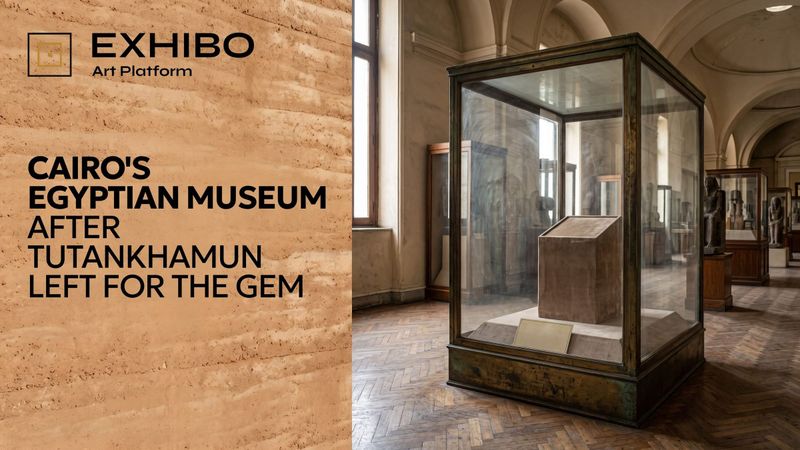
When Tutankhamun's mask left Cairo's Egyptian Museum for the Grand Egyptian Museum, it took the crowds with it — but not the collection. What remains in the old building on Tahrir Square turns out to be a stranger and more interesting museum than the one that emptied.
For most of a century, the golden mask of Tutankhamun stood behind glass on the upper floor of the Egyptian Museum in Cairo. In October 2025 it was driven out to Giza, and it was not the only thing to go: the royal mummies, the whole Tutankhamun collection, tens of thousands of objects have left the old museum for Egypt's gleaming new institutions.