Hanging Church (Al-Muallaqa)
Cairo's most famous Coptic church, suspended above a Roman gatehouse, reached by twenty-nine steps and lined with 110 icons.
A church built on a fortress
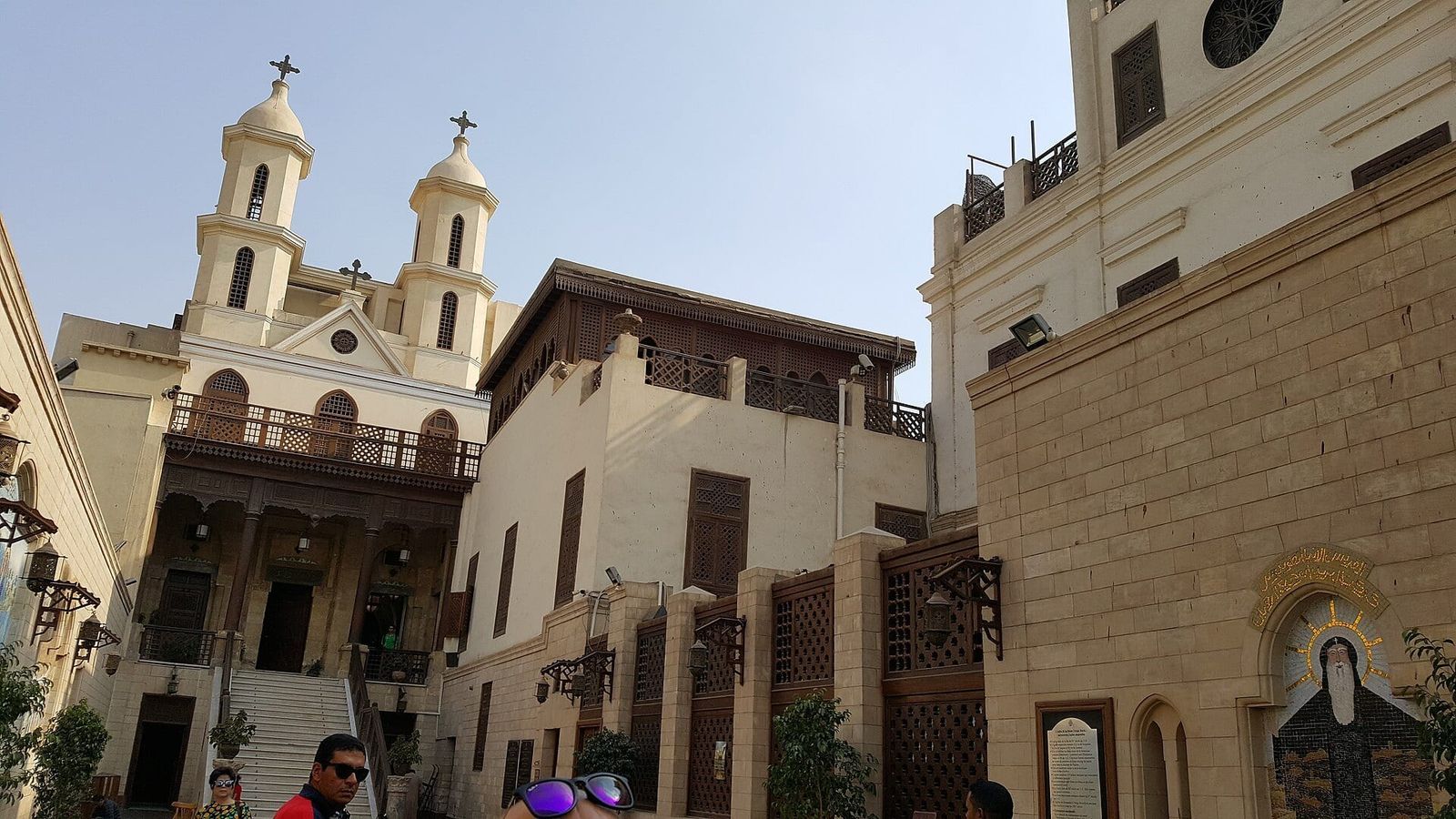
The Church of the Virgin Mary, universally known as the Hanging Church (al-Muallaqa, "the suspended", in Arabic), is the most famous Coptic Orthodox church in Cairo and one of the oldest. It takes its name from its position: it was built on top of the southern gatehouse of the Babylon Fortress, the Roman stronghold at the heart of what is now Coptic Cairo, so that its nave is carried over a passage between two of the fortress's bastions. Seen from below, the building appears to hang in the air. Pilgrims once called it the Staircase Church after the twenty-nine steps that lead up to its entrance.
History
The Babylon Fortress was rebuilt by the Romans around the turn of the fourth century and Christian worship in the area goes back to late antiquity; the present structure combines an earlier, smaller church on the south side with a principal church to the north, both rebuilt many times. The church rose to particular importance in the eleventh century, when the seat of the Coptic patriarchs moved from Alexandria to the Cairo area: from the reign of Patriarch Christodoulos it became the patriarchal church, where patriarchs were enthroned and synods held, until the seat moved again in the fourteenth century. After the 1992 Cairo earthquake damaged its walls and foundations, a long restoration began in 1998 and was completed in 2011, stabilising the structure, controlling groundwater and conserving its icons and woodwork.
Inside
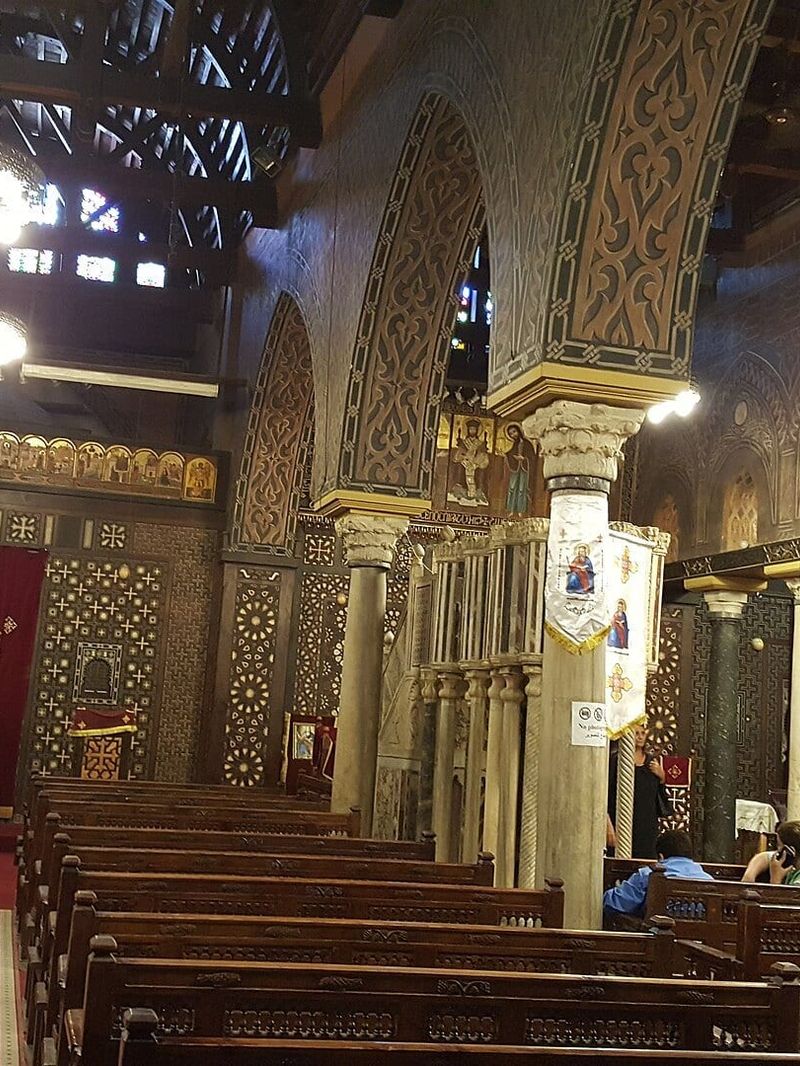
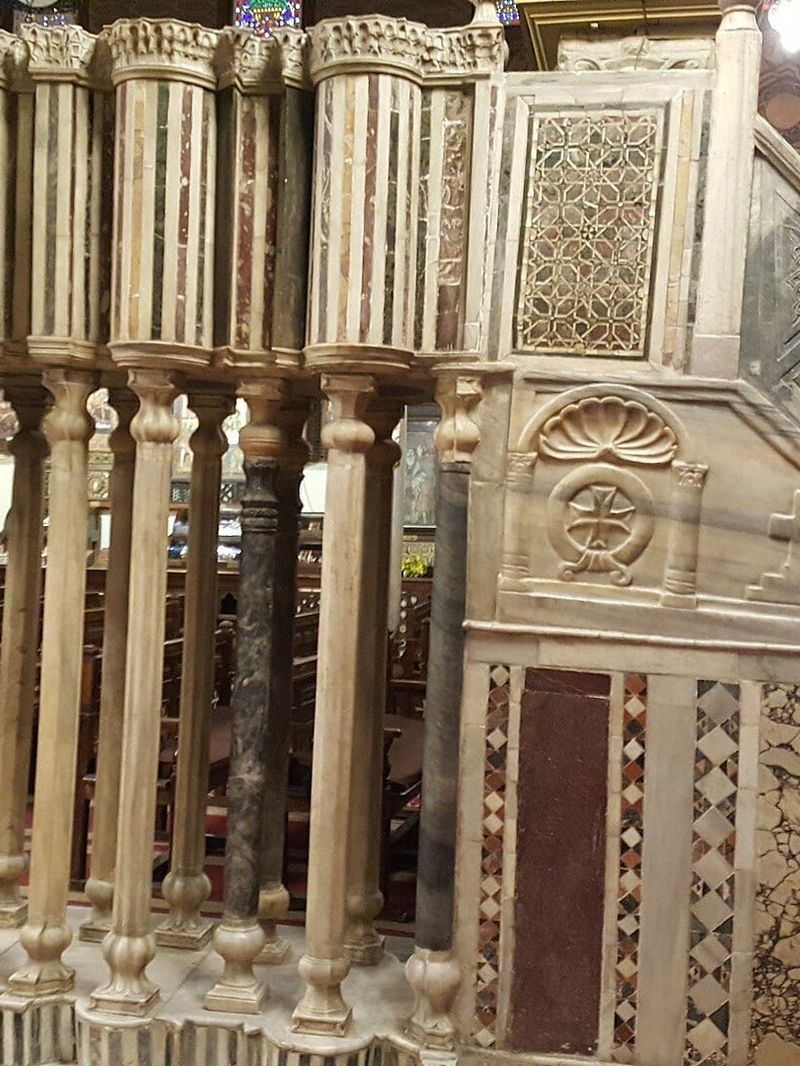
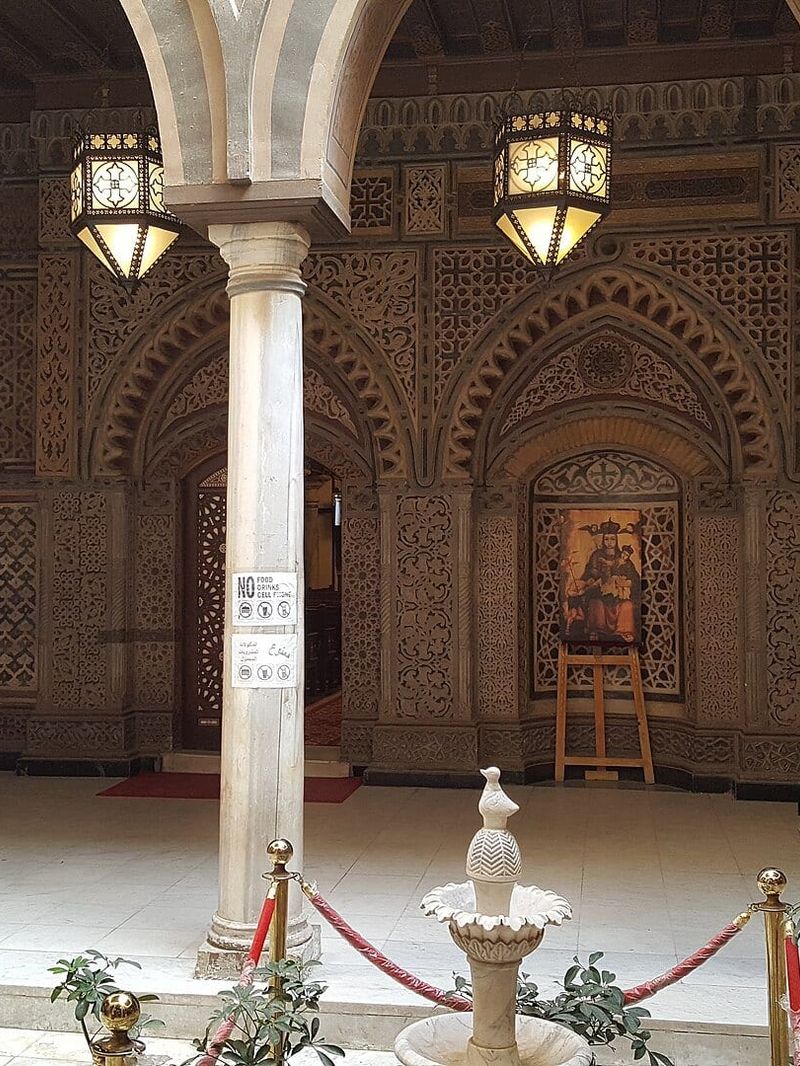
A courtyard decorated with modern mosaics leads to a nineteenth-century façade with twin bell towers. The interior is a basilica divided into a nave and side aisles by slender columns, under a wooden roof whose curved timber vault is often compared to the hull of Noah's Ark. At the east end, three sanctuaries, dedicated to the Virgin, St George and St John the Baptist, stand behind iconostases of ebony and cedar inlaid with ivory and bone in fine geometric patterns. A marble pulpit rests on a row of delicate columns, which tradition associates with Christ and the apostles. The church holds around 110 icons; the oldest date to the eighth century, while most were painted in the eighteenth century and they form one of the richest collections of Coptic religious painting still in its original setting. Through glass panels in the floor of one aisle you can look down into the fortress passage beneath the nave.
Coptic Cairo
The Hanging Church stands at the entrance to the walled enclave of Coptic Cairo, next to the Coptic Museum and a few minutes' walk from Abu Serga, St Barbara and the Ben Ezra Synagogue. Old Cairo is part of the UNESCO World Heritage Site of Historic Cairo.
Exhibo editorial
Most churches announce themselves with height. This one does it by being slightly impossible. You climb the steps from the street, cross the courtyard and only once inside realise you are standing on air, on the arch of a Roman gate, with the fortress passage running beneath your feet.
The icons are the reason to slow down. Hung close together, darkened by centuries of candle smoke, they are less a collection than a congregation: saints and martyrs watching the room the way relatives watch a wedding. Come on a weekday morning, before the tour groups and sit for a few minutes in the side aisle. The Roman engineers built this gate to keep people out. The Copts turned it into a door.
Gallery
How to find it
Take the metro to Mar Girgis station. The Hanging Church is just south of the station on Mar Girgis Street, beside the Coptic Museum. Steps lead up from the street through the gate into the courtyard and on to the church.
Similar places
All places
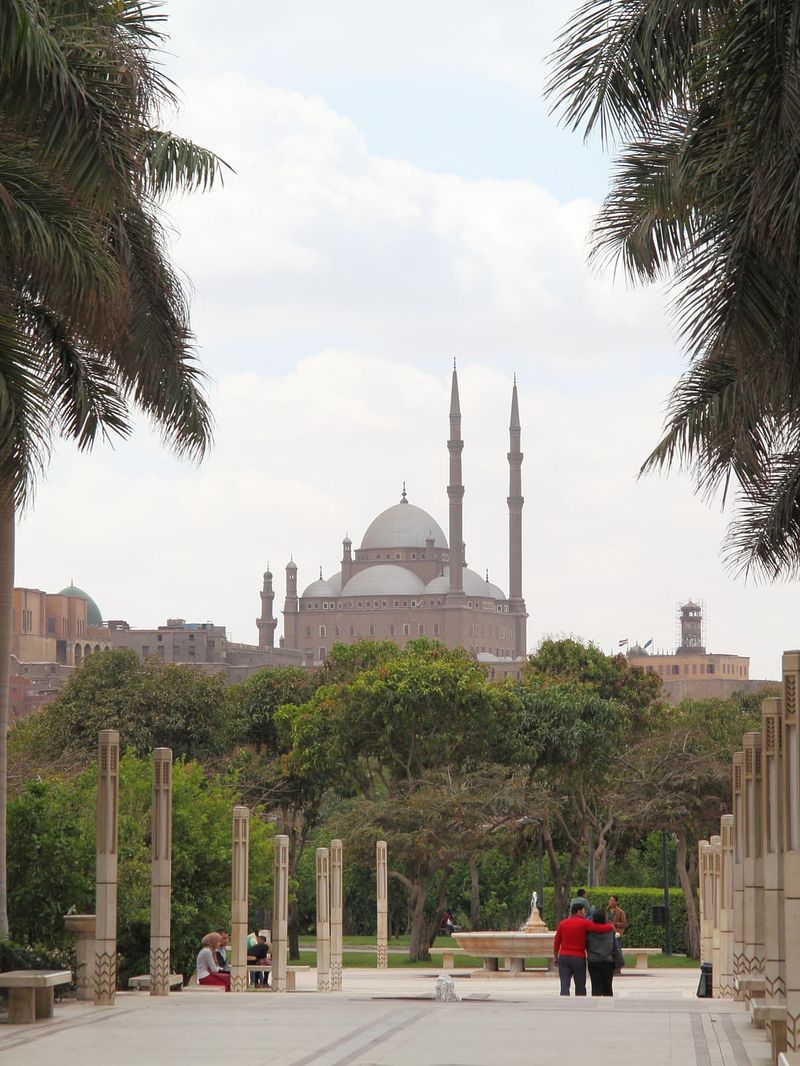
News by Exhibo
Editorial coverage on Exhibo
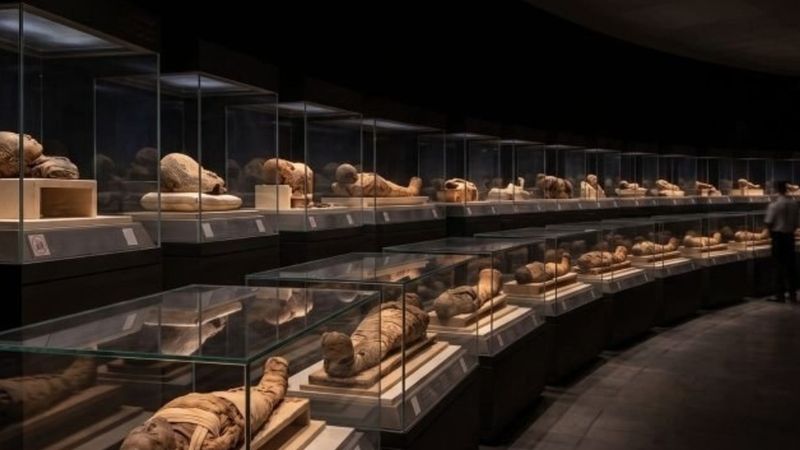
The Museum of Everything That Became a Tomb
Egypt built a museum to tell the story of an entire civilisation — seven thousand years of it, from flint tools to the present. The public knows it for one thing: the room where twenty dead kings lie in the dark.
In a black, hushed hall beneath the National Museum of Egyptian Civilization in Old Cairo lie the mummified bodies of Ramesses II, Hatshepsut, and eighteen other rulers of the New Kingdom — carried here in 2021 in a televised parade watched around the world.
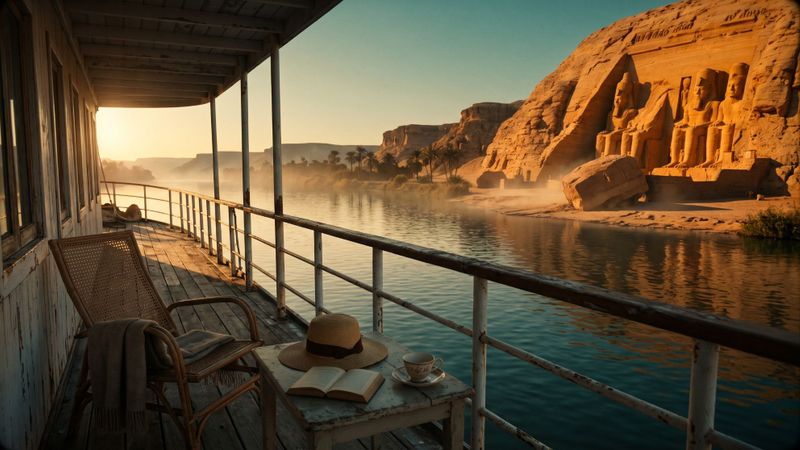
Agatha Christie's Egypt: Three Abu Simbels, a Pharaoh and a Murder on the Nile
Christie set one famous murder on the Nile and two lesser-known stories in ancient Egypt. The temples, letters and film sets behind all three.
The Abu Simbel of Death on the Nile has since moved up a hill. Christie's two other Egyptian stories lead to a pharaoh's dismantled temples at Karnak and a farmer's 4,000-year-old letters now in New York.
The Real Oasis of The Alchemist: Al-Fayoum and the Dream Coelho Borrowed
Paulo Coelho sent his shepherd to a real place in Egypt. What Santiago would have found there and where the story of the treasure at home came from.
Santiago's oasis is real. Al-Fayoum lies 100 km from Cairo, with Roman-era painted portraits, a temple on the caravan road and a dream story centuries older than Coelho.