Why the Middle East & North Africa Looks Like That
Editorial essays on the physics, geology and history behind how these places look. Why Gulf cities are white, why Petra is pink, why Chefchaouen is blue, why Jeddah was built from coral — each colour and silhouette has a reason, and most of them end in art.
Stand in a Gulf city at noon and the whole skyline throws the light back at you. Stand in Chefchaouen and the lanes run blue over your head. Petra turns from brown to rose in the last hour of daylight, and the guides call it magic. None of it is magic. Every colour, every silhouette, every strangely empty plaza has a cause — in physics, in geology, in a law someone passed, in a material someone could afford. This series of editorial essays takes one visual fact at a time and follows it all the way down to the reason, then back up to the artists working in the same palette today.
Why are Gulf cities so white?
Start with the light. White façades bounce solar radiation instead of absorbing it — high albedo, low cooling bill — and the region was building in pale limestone and lime render long before the physics had a name. What began as thermal survival hardened into an architectural code, and then into the minimalist white that reads today as simply what a Gulf city looks like. The essay traces the line from reflectance to aesthetic, and to the architects who now choose white on purpose.
Why does the same desert change colour?
Liwa is red. Petra is pink. AlUla looks carved by hand. The answer each time is a mineral and a history. Iron-oxide coatings on individual sand grains turn the Empty Quarter red; iron and manganese banding runs the sandstone at Petra from crimson to pale rose depending on the hour; erosion sculpts AlUla into forms that land artists now answer directly. We read the geology as if it were pigment — because, for the artists working there, that is exactly what it is.
Why is that city blue? Or ochre? Or coral?
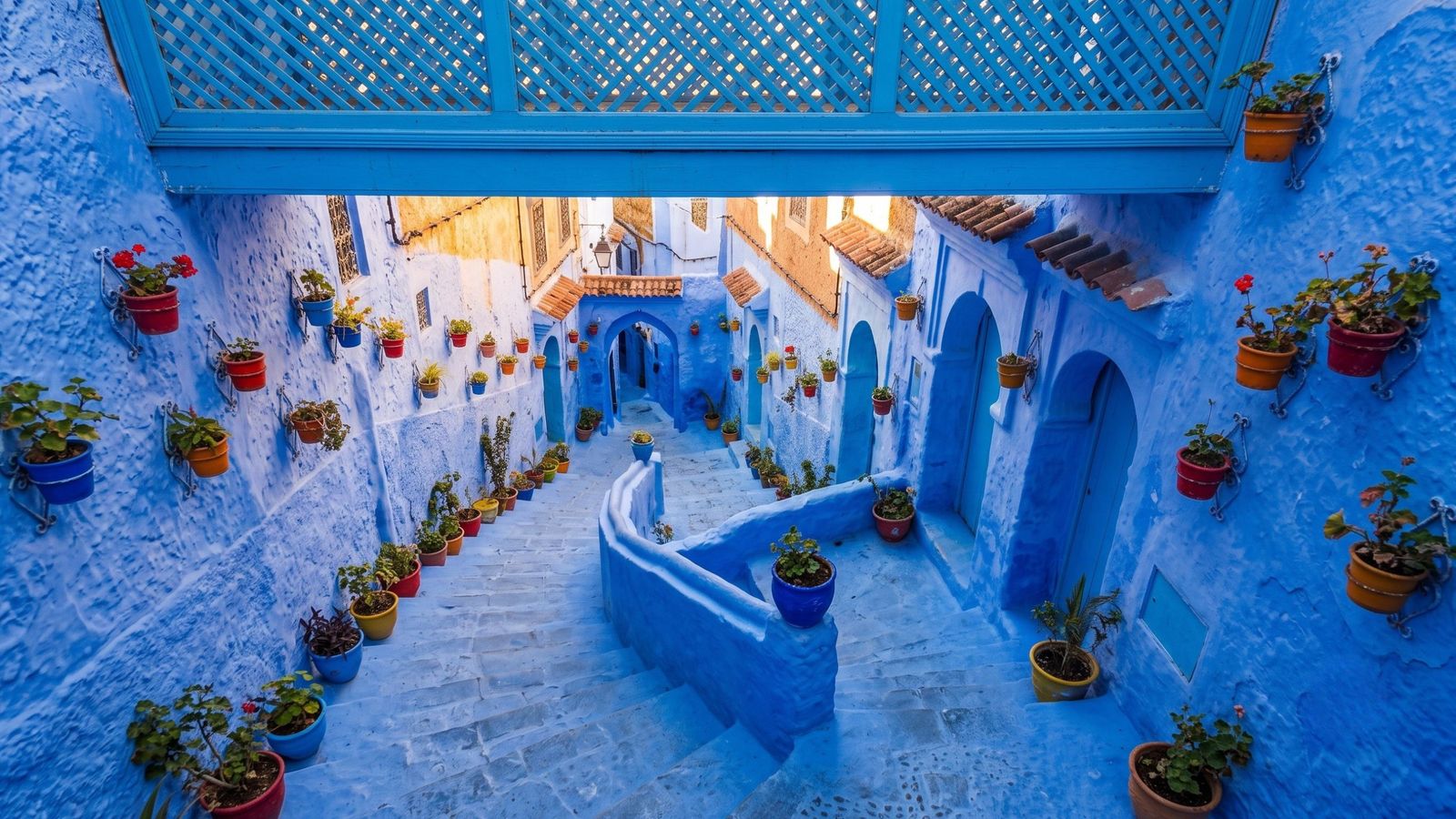
Colour in this region is rarely an accident and often a decree. Chefchaouen's blue has competing origin stories — Andalusi, Jewish, and frankly touristic — and we lay them side by side without pretending one has won. Sidi Bou Said was ordered blue and white by a single decree in 1915. Marrakech is red and Fez is ochre because of the clay under each and the colour codes their municipalities enforce. Jeddah was built from coral pulled out of the Red Sea. Each piece separates the physical cause from the human decision, because usually both are in play.
Why is this place shaped like that?
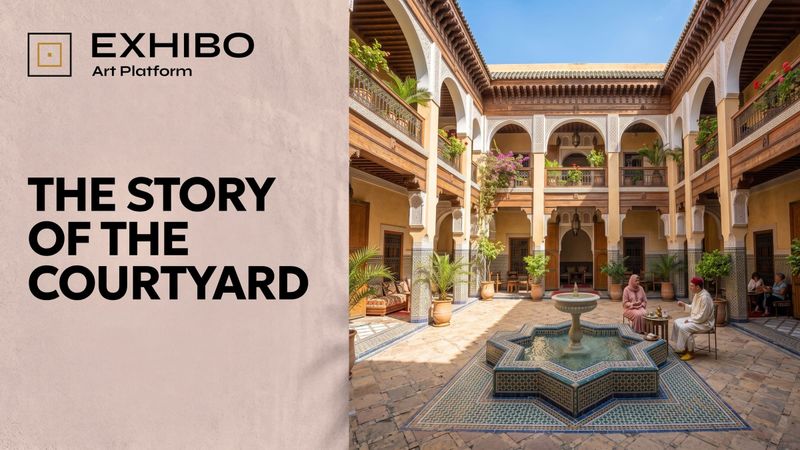
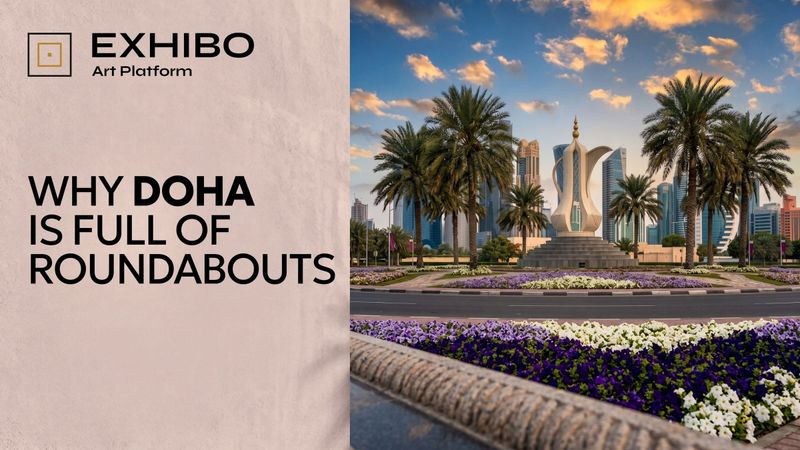
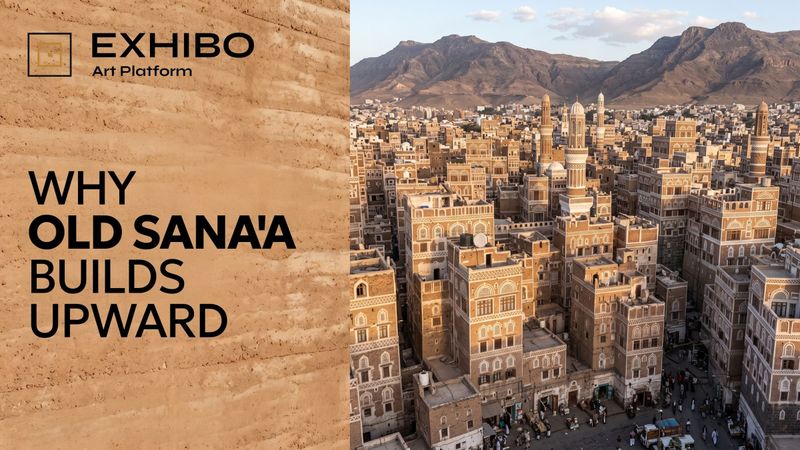
Colour is only half of it. Old Sana'a builds upward into mudbrick towers. Muscat refuses to build tall at all, by law. Abu Dhabi leaves vast deliberate emptiness between things. Doha organises itself around roundabouts that began as pedestals for public sculpture. North African cities turn inward around courtyards you never see from the street. Form here answers climate, faith, regulation and defence — and each essay names which force did the shaping.
Where the reason becomes art
This is the turn that makes the series ours rather than a geology lesson. The mashrabiya screen that once managed heat and privacy is back on Apple Dubai as 340 carbon-fibre rods that move with the sun. Egyptian mineral pigments that survived three thousand years are the same blues contemporary painters reach for now. The palette a place was built in becomes the palette its artists work in. Every essay ends where Exhibo begins — with the galleries, works and sites near each place, so the reason you came for opens straight onto the art it explains.
Articles in this series
- EditorialWhy It Looks
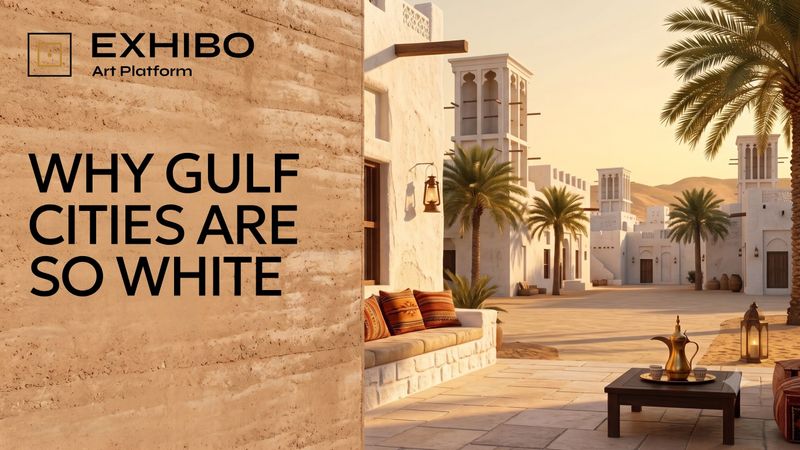
Why Gulf Cities Are So White
The dazzling white of Gulf cities looks like simple physics — sunlight, reflected. The real story runs through coral, lime, faith, oil and the way traditions acquire their reasons after the fact.
Everyone knows why Gulf cities are white: white reflects the sun. It isn't wrong — it's just one strand of a much thicker rope. Follow it back through coral walls and lime skins, a sustainability code that never mentions colour, and a desert that was never really dark and the tidy explanation starts to look like something we tell ourselves afterward.
- EditorialWhy It Looks
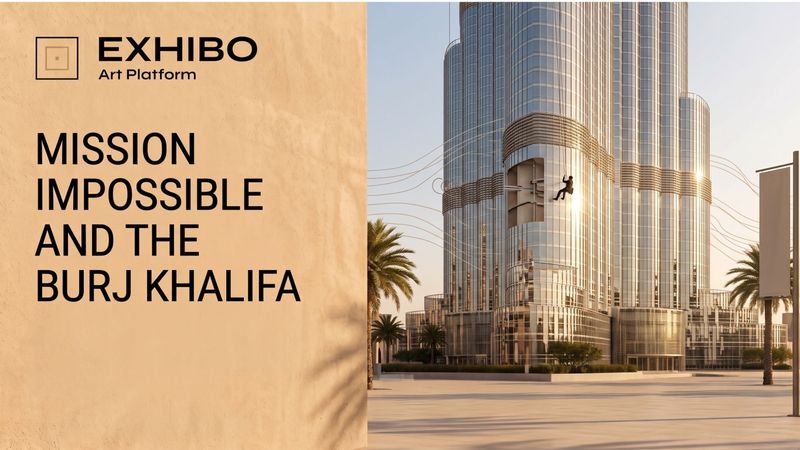
Mission Impossible and the Burj Khalifa
What the world's most famous building stunt tells you about everything it was filmed on
A film crew drilled into the world's tallest building to hang a man off the side of it. Behind that decision sits wind physics, a hundred-year-old cooling technology, a height race Dubai has quietly stepped away from, and an art scene older than the tower.
- EditorialWhy It Looks
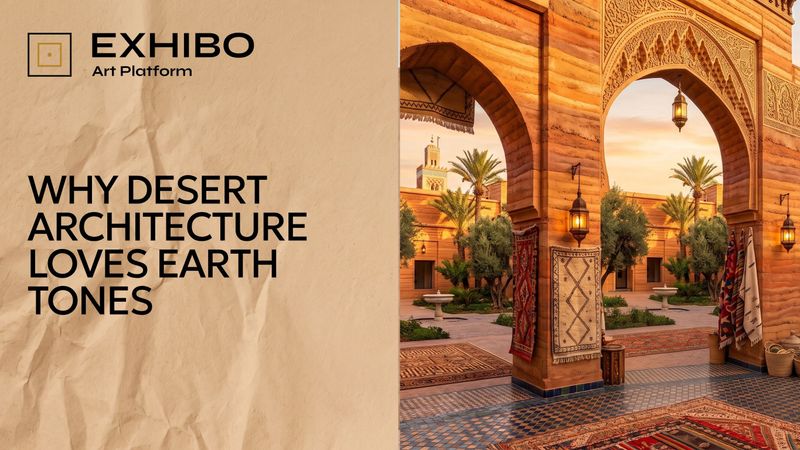
Why Desert Architecture Loves Earth Tones
In the deserts of North Africa and Arabia, ochre and terracotta were never a palette choice — they were what the wall was made of.
In most cities, colour is something you apply. In the old desert towns it was something you excavated — the red of Marrakech, the brown of Shibam and the gold of Diriyah all pulled straight from the ground underfoot. From iron-oxide chemistry to Hassan Fathy to the rammed-earth revival in Saudi Arabia, this is the story of a colour that outlived the place it came from.
- EditorialWhy It Looks
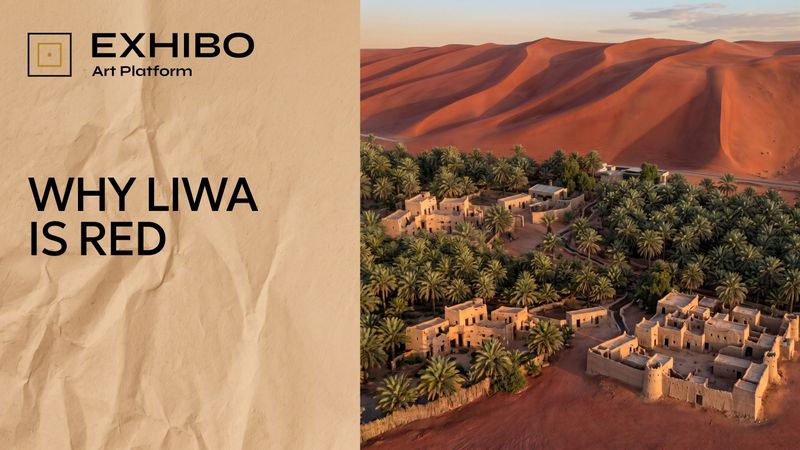
Why Liwa Is Red
The red of the world's tallest dunes isn't a fact about the sand — it's a record of everywhere the sand has been. A drowned sea, an ice-age wind and a buried green Arabia, all pressed into a single colour.
Everyone knows why Liwa is red: iron in the sand. It's true the way "the Gulf is white to reflect heat" is true — the first sentence of a much longer story. The red is a microscopically thin coat of rust on grains of clear quartz, and where those grains came from is almost impossible to picture from the dunes: the floor of a sea that no longer exists, lifted grain by grain and stacked three hundred metres high.
- EditorialWhy It Looks
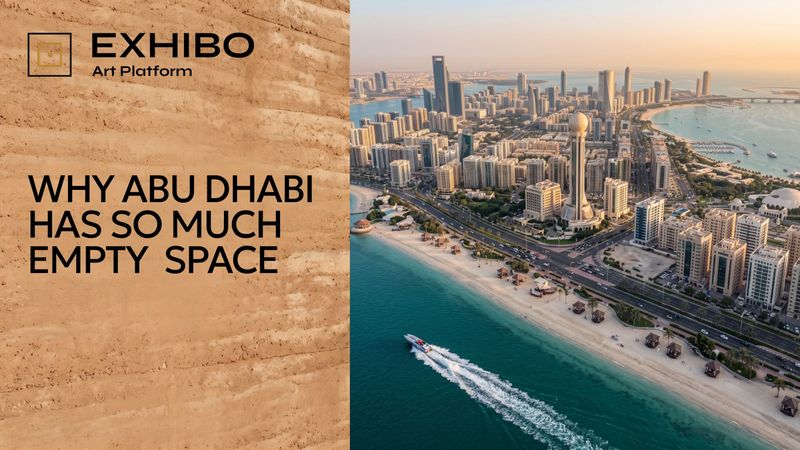
Why Abu Dhabi Has So Much Empty Space
The wide roads and open blocks of the capital look like the luxury of a place with land to spare. They are closer to the opposite — a set of deliberate decisions about planning, land and time, made on an island that was never as limitless as it feels.
The easy explanation is desert plus oil money: room to spread and the means to spread into it. But space is not what a city has — it is what a city decides to do with what it has. Abu Dhabi's emptiness turns out to be almost entirely decided: a modernist grid, a founder who wanted straight roads so the capital could be reached quickly, a land system with no yearly tax and no deadline, a vast greening programme. The room was the plan.
- EditorialWhy It Looks
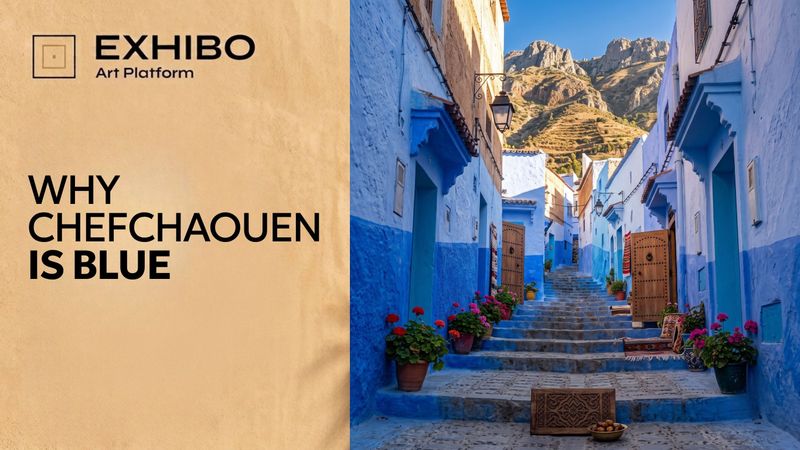
Why Chefchaouen Is Blue
Why the Rif's famous blue is not an ancient inheritance but a colour the town has to keep repainting — and what all that repainting is really for.
Chefchaouen's blue washes off in a season. Which means the real question isn't where the colour came from, but why the town keeps putting it back.
- EditorialWhy It Looks
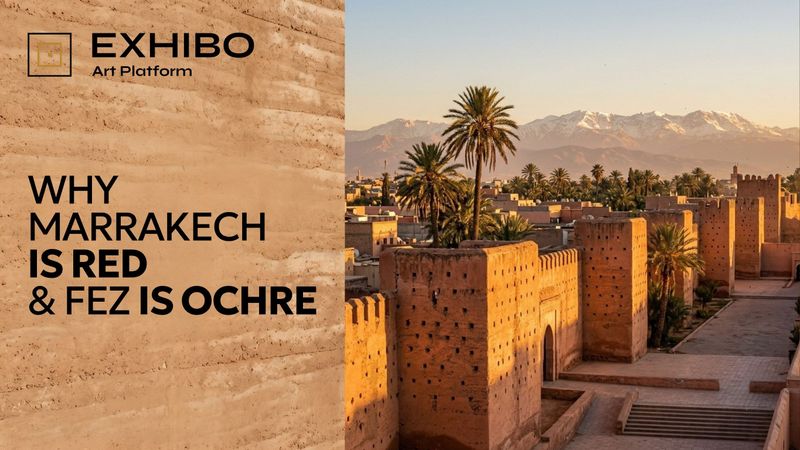
Why Marrakech Is Red and Fez Is Ochre
Two imperial cities, one element in the ground — and the difference between a red city and an ochre one turns out to be half geology, half planning law.
Marrakech shows you the iron in its earth; Fez veils the same iron under lime. What makes each city relentlessly one colour, though, isn't the ground — it's what the twentieth century did to it.
- EditorialWhy It Looks
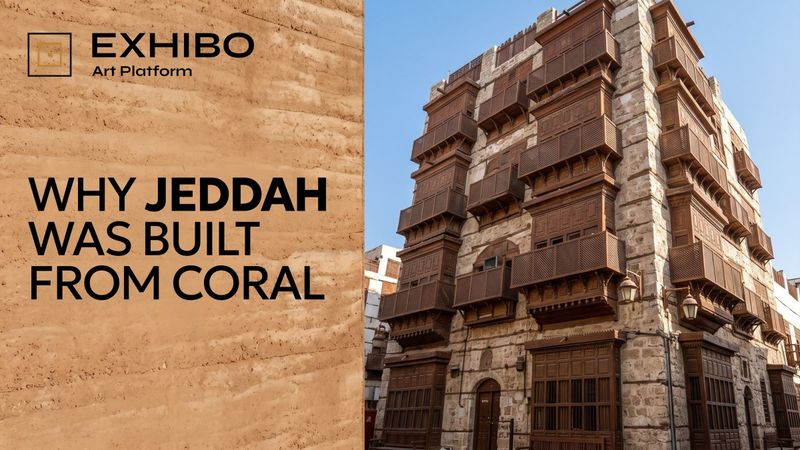
Why Jeddah Was Built From Coral
A treeless port with no stone quarried its whole city out of the reef offshore — then oil and concrete let it walk away from the sea that built it.
Jeddah's old town isn't decorated with coral. It's made of it — reef cut soft from the water and hardened into towers. The strange part is what happened when the city no longer needed the sea.
- EditorialWhy It Looks
Why North African Cities Turn Inward: The Story of the Courtyard
A courtyard plan far older than Islam turned North African houses — and the medinas built from them — to face inward. Climate and religion only half-explain why, and what finally displaced the courtyard says the rest.
The blank walls and inward courtyards of Fez, Tunis, Algiers and Cairo are usually explained by heat or religion. Both are true; neither is the whole story. The clue is in what eventually pushed the courtyard out of the modern city.
- EditorialWhy It Looks
Why Doha Is Full of Roundabouts
An old circle at a crossroads, sharpened by British road engineering, became the way an Arabian city found its way and remembered itself — and it took the bulldozers to reveal it.
In a city where a landmark was more useful than an address, Doha's roundabouts became its navigation, its landscaping and its national image all at once. Now they're being torn out for signalled junctions — and the affection for them arrived, as one scholar put it, only posthumously.
- EditorialWhy It Looks
Why Old Sana'a Builds Upward
The tower houses of Old Sana'a rise five to nine storeys of stone and mud — and the usual reasons, defence and lack of space, are both too small.
In one of the oldest cities on earth, families live stacked from the animals on the ground floor to the poetry room at the top, in mud towers nine storeys high. Why Sana'a built vertically has half a dozen answers, heat least of all — and the system that raised the towers is the same one now dissolving them.