
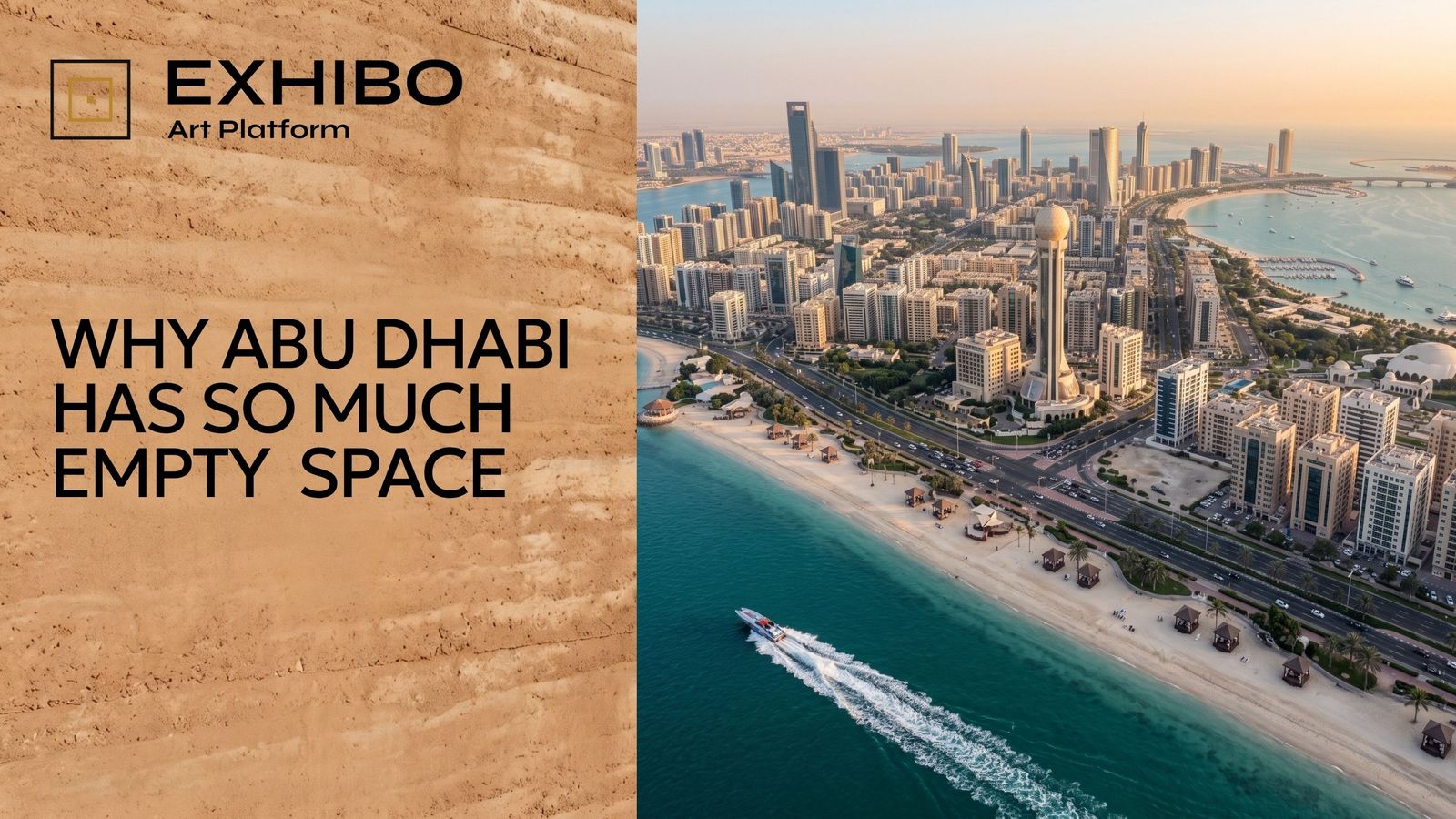
Abu Dhabi · United Arab Emirates
Why Abu Dhabi Has So Much Empty Space
The wide roads and open blocks of the capital look like the luxury of a place with land to spare. They are closer to the opposite — a set of deliberate decisions about planning, land and time, made on an island that was never as limitless as it feels.
The first thing that gets you is the width of the roads. You come in from the airport along a highway broad enough to feel like an event in itself, and the city arranges itself around you in enormous rectangles — towers along the edges, then a great breath of low buildings and gardens and parking and sky in the middle, then another road wide as a river, then another rectangle. There is a lot of everything here, and yet the dominant sensation is of space between things. Room. A city that seems to have been laid out by someone who was not, at any point, worried about running out of land.
The easy explanation is the obvious one. Abu Dhabi sits on the edge of the largest sand desert on earth and on a great deal of oil money, so of course it is spacious — there was room to spread and the means to spread into it. That is true, and it explains almost nothing, because plenty of rich cities in big empty countries are dense, and plenty of poor ones sprawl. Space is not what a city has. It is what a city decides to do with what it has.
And a great deal of Abu Dhabi's space, it turns out, is decided. Much of what feels empty is the trace of a choice — a planning theory, a land law, a tax that doesn't exist, a founder's instinct about what a capital should feel like. Some of it, of course, is the ordinary connective tissue every large modern city carries and few of us notice: road engineering and setbacks, utility corridors and infrastructure easements, government and military reserves, the buffers around an airport or a desalination plant. That kind of emptiness is real, and it isn't unique to Abu Dhabi. But the sensation of spaciousness here — the thing that strikes every visitor — is not mostly that. It is closer to design. The emptiness that defines the place is not the desert showing through the city; it is the city, built roughly as intended. The interesting question is not why there was room, but why, given the room, so much of it was left open on purpose.
The block that shaped everything
Almost all of it descends from a single unit of design: the superblock. Abu Dhabi is built from great rectangular cells, roughly five hundred by seven hundred metres, each ringed by wide arterial roads and each turned, in a sense, outward — the tall buildings line the perimeter, and the interior holds lower buildings, villas, gardens and the narrow lanes called sikkak. Researchers have a nickname for the type: the watermelon block, hard and high on the rind, soft and low inside. The pattern repeats across the island until it becomes the city.
And it is worth pausing on that word — island. The historic core of Abu Dhabi sits on a T-shaped island reaching into the Gulf, bounded on almost every side by water. This is the quiet paradox underneath the spaciousness: a city that feels limitlessly roomy was, for much of its life, working inside a genuinely finite footprint. The generosity was not the luxury of a place with nowhere to run out of land. It was a choice made despite a hard edge — which makes the wide roads and the big open blocks look more deliberate, not less. Only later did the growth spill outward onto the neighbouring islands and the mainland — Reem, Saadiyat, Yas, the expanding suburbs of Khalifa City — in districts that often depart considerably from Makhlouf's original template. The island set the terms. The mainland relaxed them.
The superblock is not an Emirati invention. It is a mid-century modernist idea — descended from the same planning-school thinking that reshaped Riyadh and other Gulf capitals — and it arrived in Abu Dhabi through a particular man at a particular moment. In 1968, an Egyptian planner named Abdulrahman Makhlouf became the young city's chief planner. He had trained in post-war Germany, studied the European "neighbourhood unit" idea, and inherited two earlier plans for Abu Dhabi: a British one by the firm Halcrow, and a linear grid by the Japanese planner Katsuhiko Takahashi. Makhlouf kept the grid. And the grid, by its nature, leaves room — it is a framework you fill in gradually, not a solid you carve into.
But the grid alone doesn't explain the sheer scale of the gaps. For that you have to listen to a conversation Makhlouf later described, between himself and the founder of the country.
"The shortest distance between two points"
Sheikh Zayed, Makhlouf recalled, wanted the roads laid out in straight lines. Makhlouf agreed, but eventually asked him why. The answer he reported is worth quoting — bearing in mind that it comes to us through the planner's own memory, decades later, rather than an independent record — because it contains the whole psychology of the city in a sentence: "The shortest distance between two points is a straight line. We want a capital city for Abu Dhabi. Therefore, we need to get there as quickly as possible."
Read that again, because it is stranger and more revealing than it first sounds. The straight, wide roads were not, in this telling, about traffic. They were about speed in a larger sense — the speed of becoming a capital. One way to read it is that a city in a hurry to be significant builds generously, because generosity reads as significance: narrow, winding, dense streets are what you inherit from centuries of not having decided yet, while wide straight ones are what you draw when you have decided, and you want the deciding to show. That is interpretation, not fact — but the instinct it points at runs all through the early city.
There is a second half to this, and it is just as telling. The British plan Makhlouf inherited, the Halcrow one, assumed Abu Dhabi would never become a large city — it planned for a modest town. Makhlouf rejected that premise outright. A real city, he argued, needs a population large enough to justify real institutions — hospitals, universities, the apparatus of a capital — and so he planned from the start for a scale the place did not yet remotely have. The emptiness, in other words, was built to be grown into. It was a set of clothes deliberately bought too big, on the confident assumption that the child would arrive to fill them. Much of what reads today as under-occupied space is really space that was dimensioned for a future rather than a present.
That is the founding instinct. But instincts don't keep land empty on their own. For that you need economics — and Abu Dhabi's economics of land are unusual enough to be worth their own chapter.
Land that costs nothing to leave alone
Here is the part that surprises people. A great deal of Abu Dhabi's land is not really on the market at all.
From the beginning, Sheikh Zayed's vision for his citizens ran on land. Makhlouf described the founder's plan as having three fronts: every Emirati family would be offered a residential plot, a commercial plot and an industrial plot, along with low-interest government loans to build on them. Land was not primarily a commodity to be traded. It was a form of citizenship, distributed. That system endures: the state still grants residential land to nationals through housing programmes, and — crucially — granted land generally cannot be freely sold, mortgaged or leased by the citizens who hold it. Large amounts of the city are held in a way that deliberately keeps them out of open circulation.
Now layer on two more facts. Abu Dhabi levies no recurring annual property tax on land of the kind familiar in many Western jurisdictions — there are municipality fees, registration charges and the like, but not the yearly bill that elsewhere punishes idle ground — and many plots carry no obligation to develop by any particular date. Put those together and you get a quietly powerful result: holding a piece of land empty costs very little. In a high-tax city, an undeveloped lot bleeds money every year it sits idle, which is a constant pressure to build, sell or densify. Remove that pressure, and remove much of the land from the market entirely, and empty land stops being a problem anyone urgently needs to solve. Land can wait. And land that can wait, does.
This doesn't explain the wide boulevards or the low density of the blocks — those came from the plan, not the tax code. But it powerfully reinforces the openness the plan laid down: it is the reason the room the planners left tends to stay room, decade after decade, instead of filling in under the ordinary pressure of a market. Foreign buyers, for their part, can only own freehold in a handful of designated investment zones, opened only in recent years, which concentrates market pressure into a few districts and leaves the rest to move at the pace of the state and the family.
So some of the space is a founding gesture, and some is the low idle cost of leaving land alone. But I have been describing the emptiness as if it were bare. Much of it isn't. Much of it was planted.
The emptiness is mostly green
Stand in one of those wide central reservations or along one of the boulevards and look at what is filling the space between the buildings, and a good deal of the time it is trees. This is not an accident of maintenance budgets. It is one of the most deliberate landscapes on earth.
Sheikh Zayed's programme of "greening the desert" was, by any measure, enormous — decades of planting trees for shade, for the softening of the raw new city, for the plain habitability of a place that is murderously hot for months at a time. He wanted, he said, to make the villages more liveable. The capital went from a single public park in 1974 to dozens, plus the tree-lined roads that greet you from the airport, plus the native ghaf spreading its shade across the reservations. A fifty-year study found the Emirati desert cities, against every intuition, growing greener as they grew.
This reframes a good part of the emptiness. Plenty of the open ground is genuinely idle — government plots, parking, undeveloped parcels, the utility land that fills the gaps in any city. But much of what reads from the car as unused space is nothing of the kind: it is used as park, as shade, as green buffer, as the deliberate breathing-room of a hot-climate city. In the older Islamic planning tradition Makhlouf worked within, open space was not leftover at all; his neighbourhood designs treated a generous share of open ground as a requirement of decent living rather than a remainder. The gap between buildings is not always where the city ran out. It is, quite often, the part of the city doing the most work — cooling it, greening it, giving it somewhere to walk in the evening after the heat has broken.
And this is where a purely admiring account would stop. But there is a harder thing to say about all this space, and the man who drew the first version of it is the one who says it best.
Plans the earth swallows
Late in his life, Abdulrahman Makhlouf sat for a long interview surrounded by boards documenting his work, and the interviewer, Todd Reisz, noticed something melancholy running underneath the pride. The roads Makhlouf drew, the residential blocks he designed, the traditional souk he built for the city — almost all of it had been razed and replaced by something wider, taller, newer. His two-storey neighbourhoods had been swapped for apartment towers by the planners who came after him. His souk was demolished and later replaced by a new market complex designed by an international firm. Asked where in Abu Dhabi one could go to see his work still standing, he answered, simply, that there was nothing left.
Reisz took the interview's title from a story Makhlouf liked to tell, in which God punishes a man's arrogance by having the earth swallow him whole. For the planner, he wrote, the next building boom is that swallowing earth — the ground opening to eat what the last generation made.
This is the more complicated half of Abu Dhabi's spaciousness, and it deserves to be said plainly and without accusation. Some of the emptiness is not land that was never built on. It is land that was built on, and cleared, and not yet rebuilt — the pause between one version of the city and the next, in a place that has remade itself with unusual speed. Any city that grows this fast turns its building stock over quickly; it is the common condition of the boom, not a fault peculiar to this one. And the fuller picture is genuinely two-sided: the same era that cleared Makhlouf's souk has also invested heavily in preservation elsewhere — the restored fort at Qasr Al Hosn, the historic quarter at Al Shindagha up the coast, the growing care for what remains. But the turnover is real, and it leaves its mark on the map. The openness you read as newness is sometimes the opposite: the brief visible gap where an older, smaller, denser Abu Dhabi used to stand. The desert did not leave those spaces. The city's own pace did.
The pace of a place that could afford to wait
It helps, at the end, to look just up the coast. Dubai, an hour away in the same desert under the same sun, made a famously different choice: it pursued visibility through vertical growth and global branding, building a skyline the whole world would recognise at a tempo that astonished it. Abu Dhabi, holding most of the federation's oil and its sovereign wealth, worked from different fiscal resources and different political priorities, and developed at a slower pace — along the water rather than into the sky. And slowness, spread across an island, looks like space.
I want to be careful not to turn this into a tidy moral, because the two cities are partners more than rivals and the contrast flatters neither if pushed too hard. But the difference in feel is real, and it comes down to something like a different relationship with time. Dubai built at the speed of a place assembling a global reputation. Abu Dhabi built at the speed of a place that already had the wealth underneath it and could afford to take the future slowly.
Which is the quiet paradox the whole city rests on. Sheikh Zayed wanted straight roads so the capital could be reached quickly — and the result of all that hurry is a place that now feels, more than almost any city its size, unhurried. The speed was spent early, in the deciding and the drawing and the sheer over-provision of room, and what it purchased was the luxury of never again seeming rushed.
So why does Abu Dhabi have so much empty space? Because a founder in a hurry to build a capital drew it too big on purpose, and a land system with no yearly tax and no deadline let the extra room sit patiently, and a greening programme filled much of that room with shade rather than buildings, and a fast-moving kind of growth kept opening gaps by clearing and remaking what it had only just built. The space is not the desert the city failed to cover. It is the city itself — its ambition, its economics, its trees and its turnover, all of it decided, none of it merely empty. The room was the plan. The plan was to have room.
Related reading
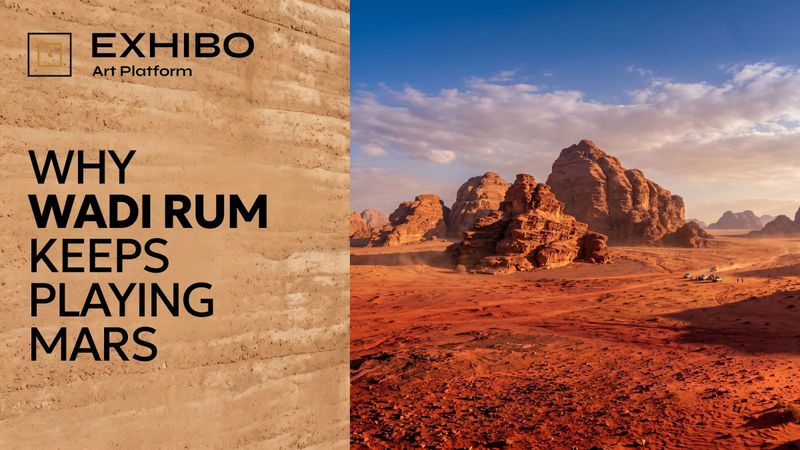
Why Wadi Rum Keeps Playing Mars: A Desert That Is Right About the Wrong Planet
A valley in southern Jordan has become cinema's favourite Mars — not because it is like the planet, but because it looks like the one we carry in our heads.
Put Wadi Rum beside a rover photograph and you can't tell which is Mars. But the desert shares almost nothing with the real planet except its colour — and lately, the illusion has grown powerful enough that real space missions have come to Jordan to rehearse.
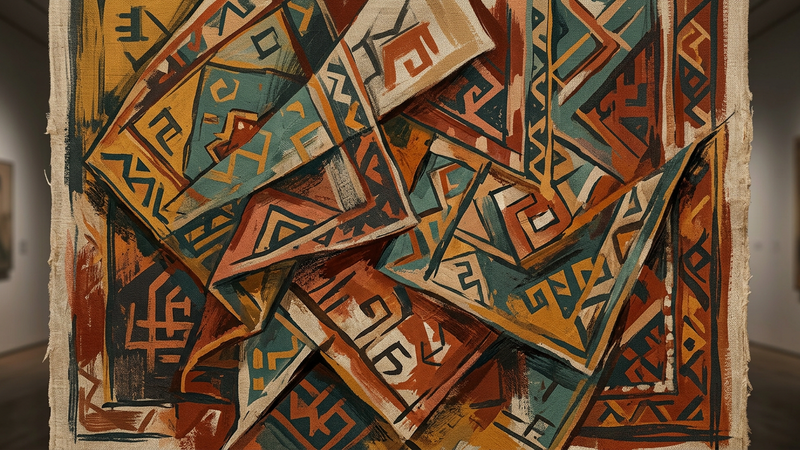
Threads of Heritage: Batima Zaurbekova's Woven Legacy
A survey of Kazakh tapestry pioneers redefines fibre art at Almaty's Kasteyev Museum
Eight decades after her birth, Batima Zaurbekova's textile innovations take centre stage in a major retrospective that bridges Central Asian craft and contemporary visual culture.
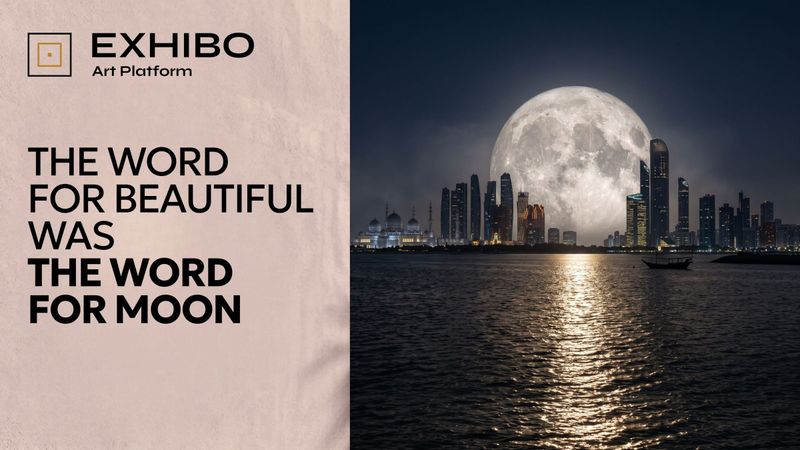
The Word for Beautiful Was the Word for Moon
The moon has been the measure of a beautiful face in Arabic verse for fifteen centuries — but beauty was only one of the things that light was ever asked to carry. A history of one disc, from a pre-Islamic ode to a glowing sphere over an Abu Dhabi harbour.
Ya qamar — you moon — is the oldest compliment in Arabic, and almost nothing about it means what we assume. The moon it praised was not always a woman, not always even a kindness, and in the end not only about beauty at all.