Explainers

Guides

Periods, techniques and visual vocabularies. The labels half-remembered from school, rebuilt through the works that earned them.

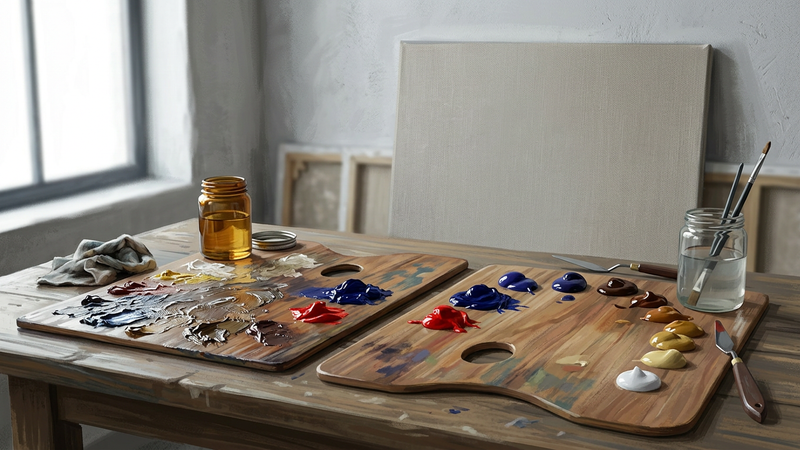
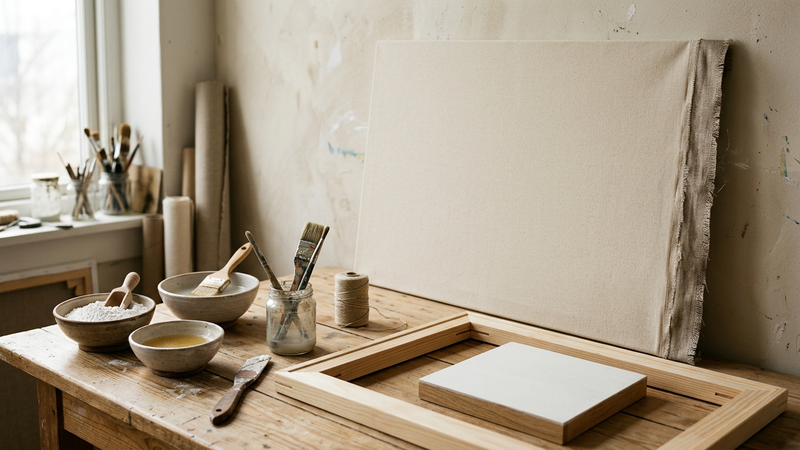
Primed linen canvas on wooden stretcher bars beside a small oak panel with chalk gesso, rabbit-skin glue jar and gesso tub in background, cool north-light studio
Guide

What Artists Paint On

Canvas, panel, linen, paper, metal and wall: how painting supports are built, prepared, and why the wrong substrate fails decades later

A painting support is the surface paint adheres to: stretched linen, oak panel, watercolour paper, copper sheet, or lime plaster on a wall. This guide maps the main support types, how sizing and gesso prepare them, linen versus cotton weave, stretcher bars and panel cradling, named works in major museums, typical failure modes, and what each option costs in a studio today without turning into a gear catalogue.

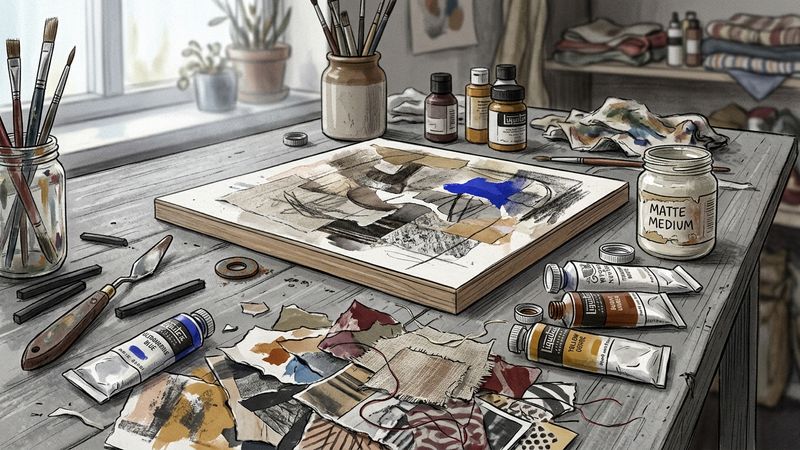
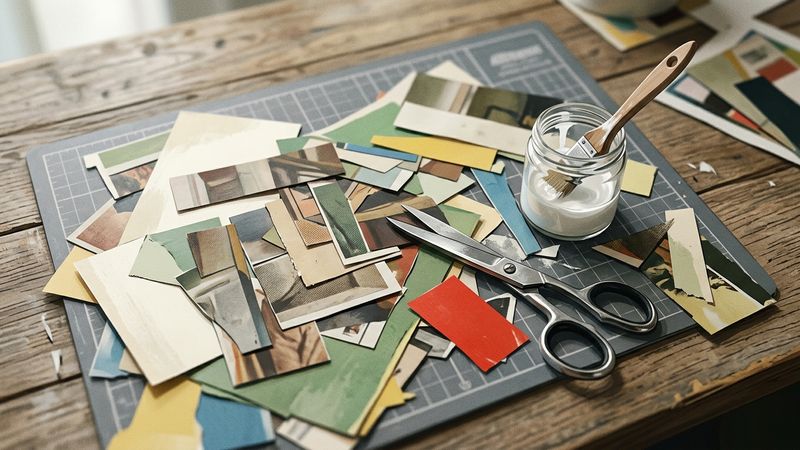
Artist workbench with acrylic paints, glue pot, cut paper scraps, charcoal and a wooden panel support, shallow depth of field, editorial art-magazine still life
Guide

What Is Mixed Media?

When paint, paste, print and found objects share one surface: how mixed media works as technique and label, from Cubist paste to Neo-Dada combines and contemporary assemblage

Mixed media art combines two or more materials or techniques in a single work so the label lists more than one substance or process. This guide defines the term against collage and assemblage, traces adhesive chemistry and layering order, reads six museum objects from Picasso to Rauschenberg, and notes how composite works fail in storage.

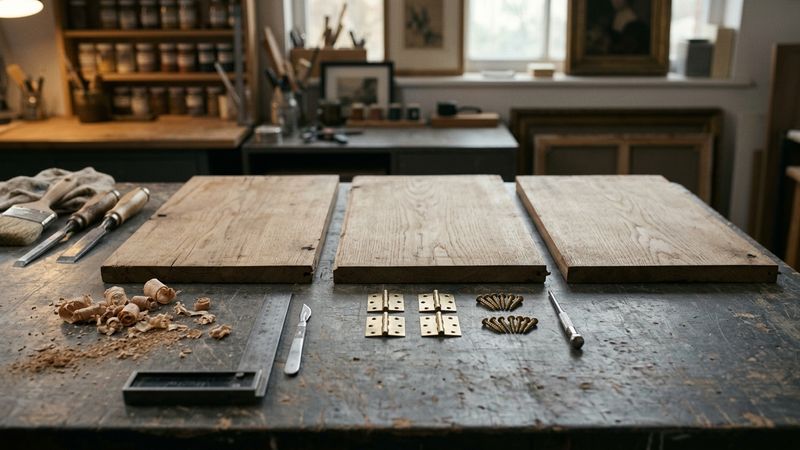
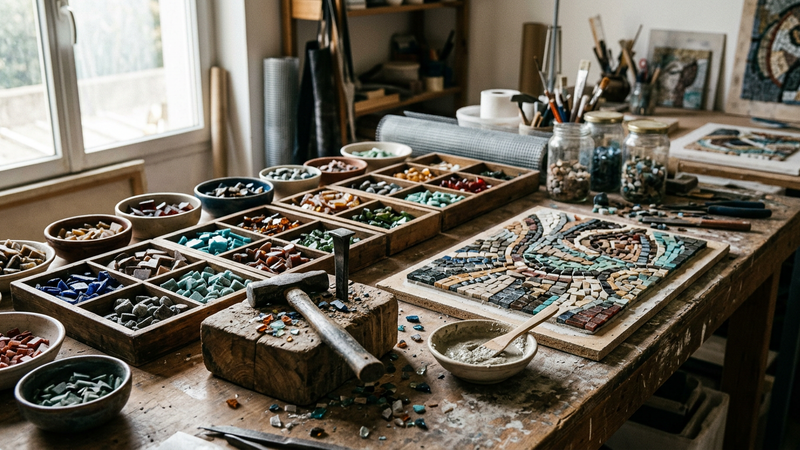
Workshop bench with three empty oak panels laid flat, brass pintle hinges and a cabinetmaker’s square beside them, cool north light, no figures.
Guide

Diptych and Triptych, Explained

Hinged panels, wings, and the move from Roman writing tablets to Bosch, van Eyck, and Rothko: how two- and three-part formats work as structure, not only as altarpiece lore.

A triptych is a work in three panels, often hinged so outer wings fold over a centre; a diptych uses two. This guide defines both formats and polyptych briefly, traces panel joinery and hardware, walks a workshop sequence, reads six museum examples including Bosch and Rothko, and notes how splits, warping, and bad hinges fail in storage.

Wide-format pigment inkjet printer feeding cotton rag paper in a fine-art print studio, with colour test strips on a side table under neutral daylight.
Guide

What Is a Giclée Print?

Archival pigment inkjet on cotton rag or canvas: how fine-art reproduction printing works, where the French trade name came from, and what separates it from a poster

A giclée print is a fine-art inkjet made with pigment inks on archival paper or canvas, usually from a high-resolution scan or born-digital file. The word is a 1990s trade coinage for spray-deposited ink. This page covers materials, process, history, lightfastness, and how the method differs from lithography and poster printing.

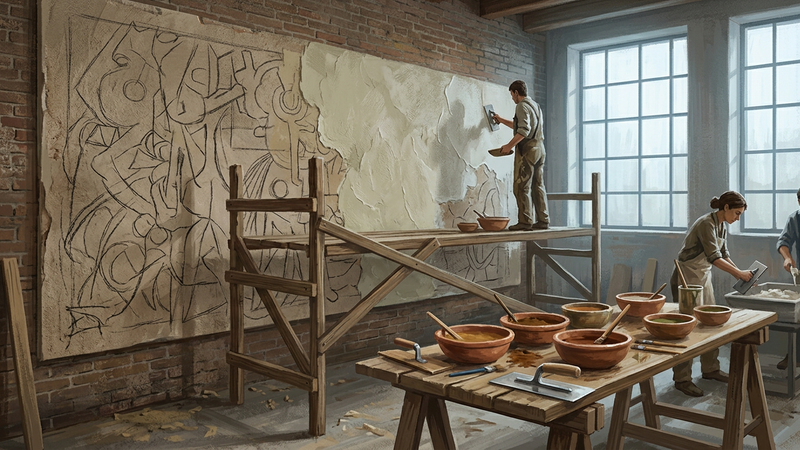
Renaissance-style workshop interior with wet lime plaster on a wall section, bowls of earth pigments and water, trowel and charcoal cartoon lines, north light, no readable text
Guide

What Is Fresco Painting?

Buon fresco, secco and a secco on lime plaster: chemistry, giornate, Giotto and Michelangelo, and what wall painting costs when pigment becomes stone

Fresco is mural painting in which water-based pigment meets wet lime plaster and fixes as the wall carbonates. This guide separates buon fresco from secco and a secco, walks the plaster layers and a giornata, then reads Pompeii, Giotto's Padua cycle and Michelangelo's Sistine vault with conservators' notes on failure and repair.