Dra Abu el-Naga Necropolis
The oldest hillside of the Theban tombs, where Hatshepsut's treasurer and the kings of the 17th Dynasty were buried.
The northern end of the Theban necropolis
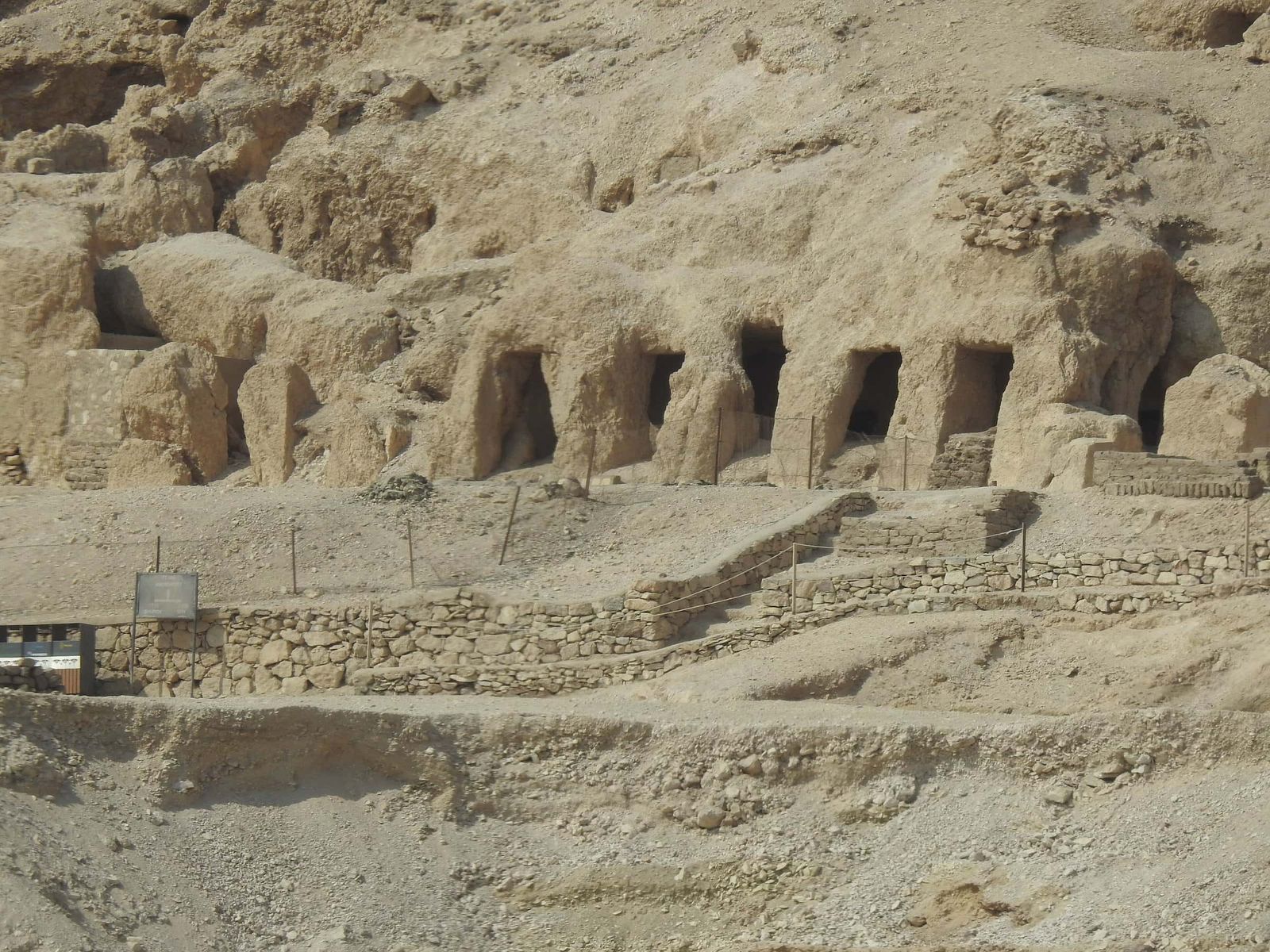
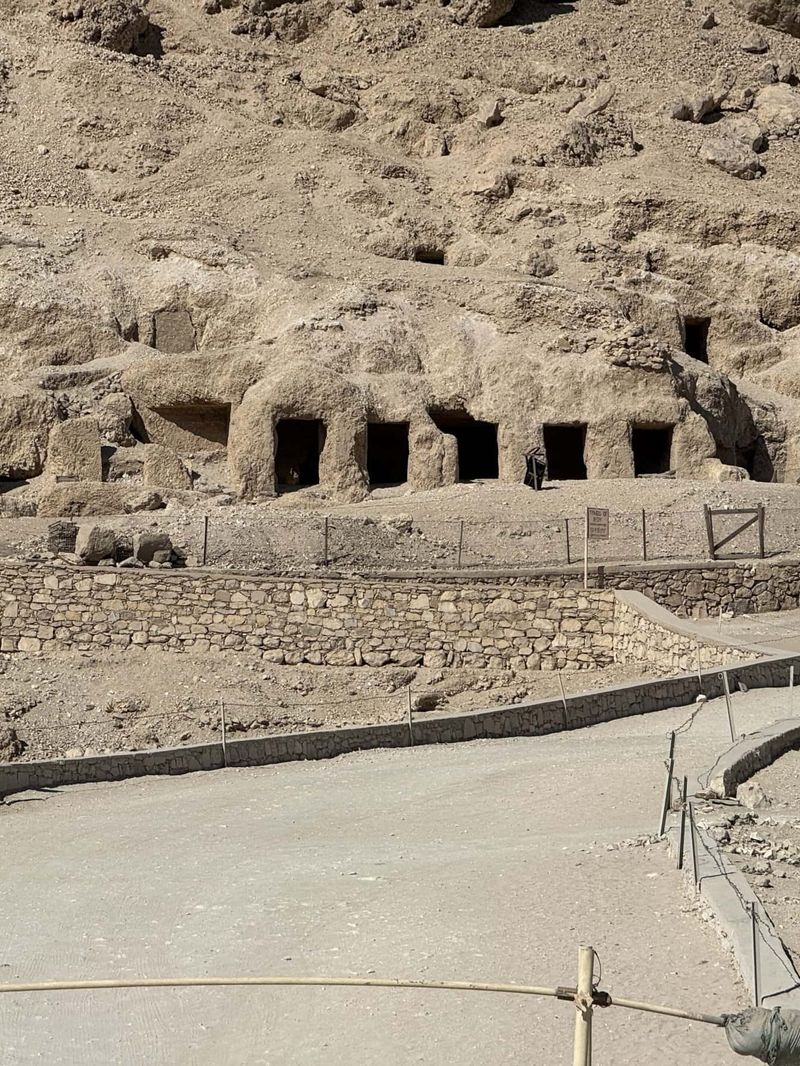
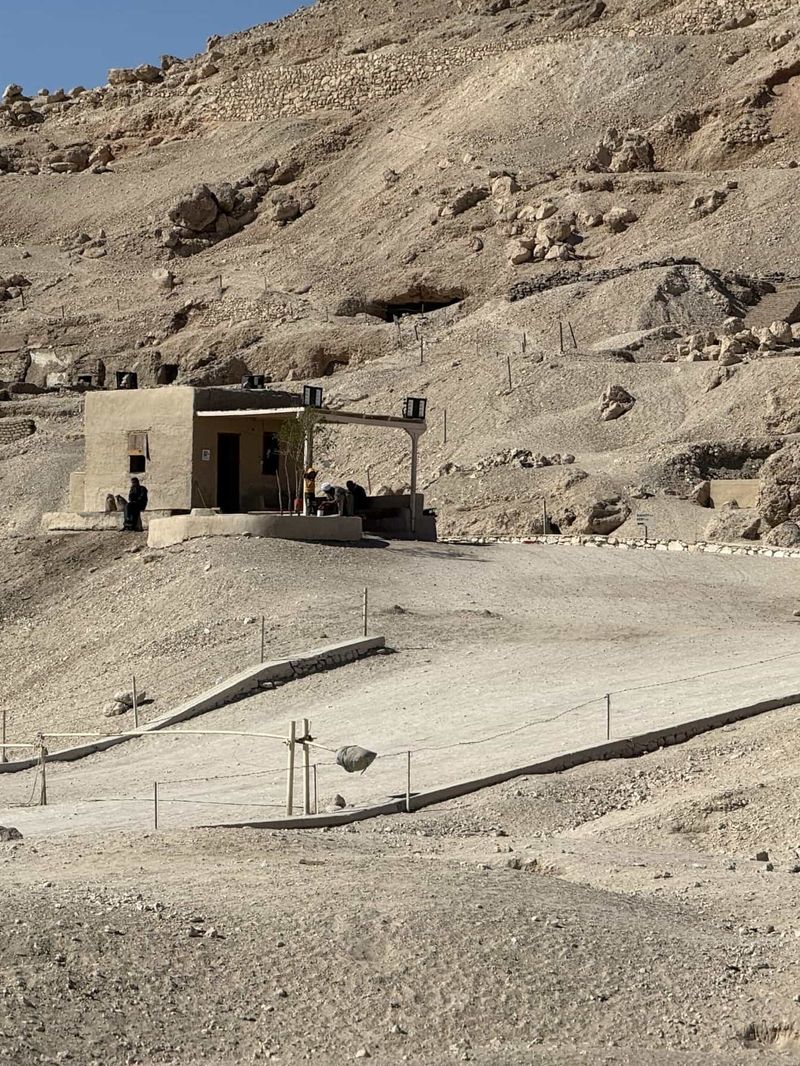
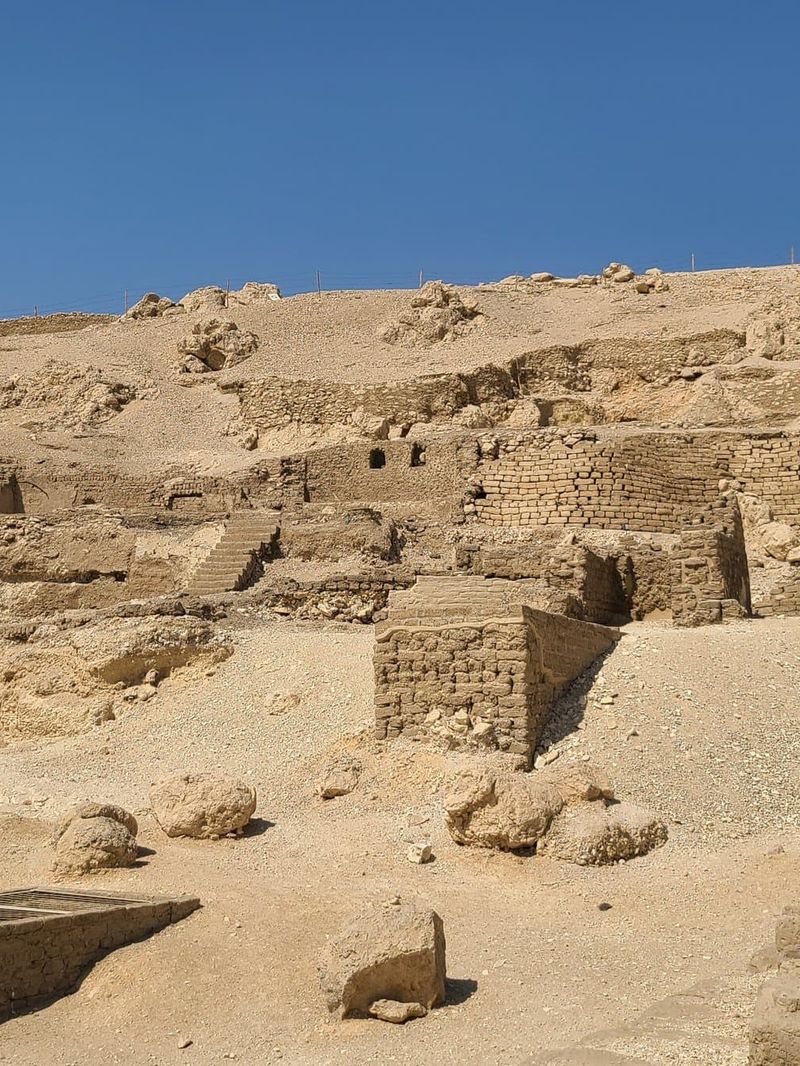
Dra Abu el-Naga is the northernmost stretch of the great cemetery of ancient Thebes on the West Bank of Luxor. Its slopes rise behind the road that leads to the Valley of the Kings, looking east across the Nile towards Karnak, a little north of Deir el-Bahari. Well over a hundred tombs are cut into the hillside, from simple shafts to decorated chapels with long corridors running into the rock.
This is the oldest part of the New Kingdom necropolis. At the end of the Second Intermediate Period the rulers of Thebes of the 17th Dynasty, the family that led the war against the Hyksos, were buried here, among them the Intef kings and Kamose. Officials of the early 18th Dynasty followed them, before royal burials moved to the Valley of the Kings.
Djehuty and Hery
Two tomb chapels opened to visitors on 9 February 2023 after twenty years of excavation and conservation by the Djehuty Project, a joint mission of the Spanish National Research Council (CSIC) and Egypt's Supreme Council of Antiquities led by the Egyptologist José Manuel Galán.
Tomb TT11 belonged to Djehuty, overseer of the treasury under Queen Hatshepsut and supervisor of her craftsmen. His chapel is covered in reliefs with long passages from the Book of the Dead. Its best-known scene shows a harpist with two singers behind him, with the words of their song carved above. After his death Djehuty's name and face were systematically hacked out of the walls, an attempt to erase his memory.
Tomb TT12 belonged to Hery, who lived about fifty years earlier. He was overseer of the double granary of Queen Ahhotep, the royal wife and mother. He died under Amenhotep I. His chapel is cut deep into the cliff. The reliefs along its long corridor are a rare surviving example of the earliest 18th Dynasty style. Both tombs are now lit with solar power.
Finds of the Djehuty Project
Excavating around the two chapels since 2002, the mission has found intact coffins and mummies, a richly equipped burial of a teenage girl, a shaft with rare leather objects, a feathered rishi coffin of the Second Intermediate Period and the remains of a prince's burial. Its most unusual discovery is a small funerary garden laid out in front of a tomb, with planted beds, the only one of its kind known so far.
Roy, Shuroy and Amenemopet
At the northern end of the hill, the decorated tombs of Roy (TT255), Shuroy (TT13) and Amenemopet (TT148) have been open for longer and form a compact group, sold on the West Bank ticket as Roy and Shuroy.
Exhibo editorial
Most visitors drive past Dra Abu el-Naga on the way to the Valley of the Kings. That is exactly why it is worth stopping. The hill holds the story before the famous valley: the Theban kings who reunited Egypt, the officials who built Hatshepsut's world, all buried within sight of Karnak.
Djehuty's tomb is the one to see. A man close enough to the queen to manage her treasury, honoured with walls of carefully cut text, then hacked out of his own tomb by someone who wanted him forgotten. Standing in front of the scraped patches where his face used to be, the politics of the 15th century BC feel strangely near.
Gallery
How to find it
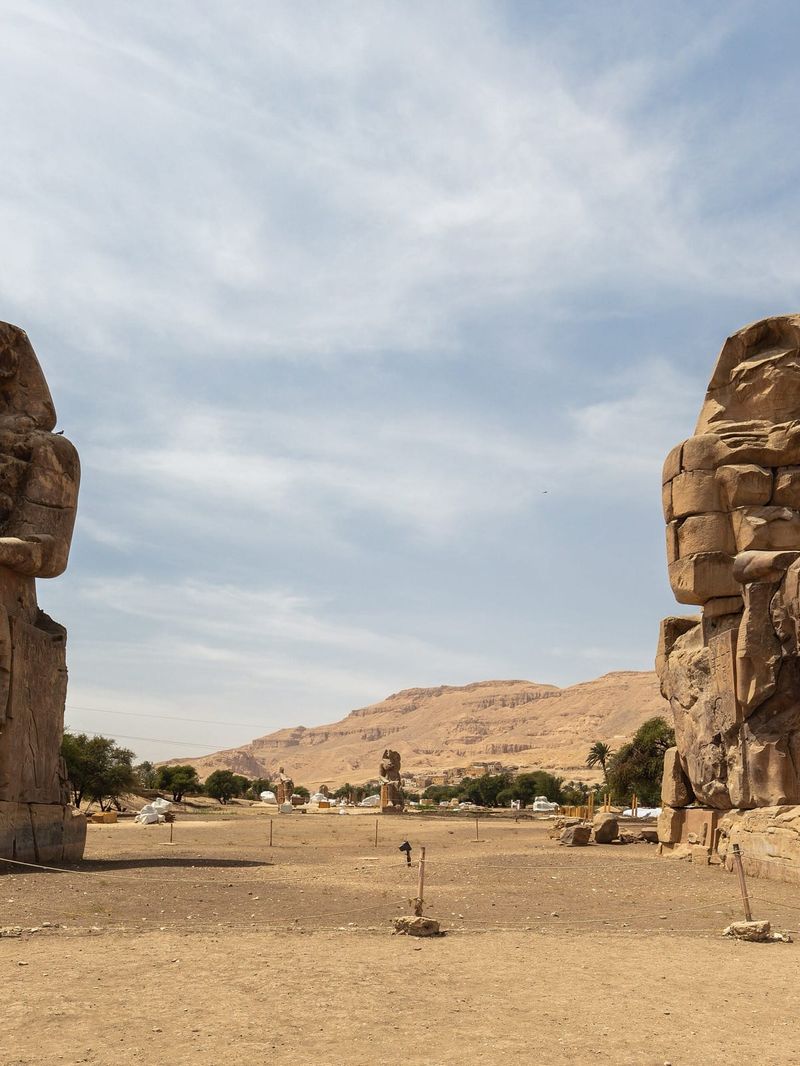
Buy tickets at the West Bank ticket office near the Colossi of Memnon. Djehuty and Hery have a ticket of their own, as do Roy and Shuroy. Dra Abu el-Naga lies near the roundabout by Carter House on the road to the Valley of the Kings, a short taxi or bicycle ride from the ticket office. Roy, Shuroy and Amenemopet are at the northern end of the hill; Djehuty and Hery are further south along the slope.
Similar places
All places
News by Exhibo
Editorial coverage on Exhibo
The Museum of Everything That Became a Tomb
Egypt built a museum to tell the story of an entire civilisation — seven thousand years of it, from flint tools to the present. The public knows it for one thing: the room where twenty dead kings lie in the dark.
In a black, hushed hall beneath the National Museum of Egyptian Civilization in Old Cairo lie the mummified bodies of Ramesses II, Hatshepsut, and eighteen other rulers of the New Kingdom — carried here in 2021 in a televised parade watched around the world.
Agatha Christie's Egypt: Three Abu Simbels, a Pharaoh and a Murder on the Nile
Christie set one famous murder on the Nile and two lesser-known stories in ancient Egypt. The temples, letters and film sets behind all three.
The Abu Simbel of Death on the Nile has since moved up a hill. Christie's two other Egyptian stories lead to a pharaoh's dismantled temples at Karnak and a farmer's 4,000-year-old letters now in New York.
Unearthing the Golden City: Daily Life in Ancient Egypt
How a newly excavated workers' quarter reframes pharaonic history
A major survey travels to the West Coast, bringing ancient artefacts that shift focus from royal opulence to the daily lives of those who built the empire.